
Today’s Current Affairs: 12th Oct 2026 for UPSC IAS exams, State PSC exams, SSC CGL, State SSC, RRB, Railways, Banking Exam & IBPS, etc
Table of Contents
Exercise INDRA 2026:

Indian Naval Ship Sahyadri is participating in Exercise INDRA 2026 which is to be conducted at Vladivostok, Russia.
- Exercise INDRA 2026 is a bilateral exercise conducted between the Indian Navy and the Russian Federation Navy (RuFN).
- Since its inception in 2003, Exercise Indra has epitomised the long-term strategic relationship between the Indian and Russian navies.
- It will comprise engagements during the harbour phase followed by coordinated operational activities at sea.
- The exercise will include a range of professional interactions and maritime evolutions aimed at enhancing mutual understanding, operational coordination and interoperability between the participating navies.
- The participation of INS Sahyadri is in consonance with the Government of India’s vision of MAHASAGAR (Mutual and Holistic Advancement for Security and Growth Across Regions).
Chocolate Mahseer:
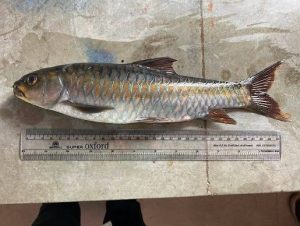
Sikkim Chief Minister released ‘Chocolate Mahseer’ fish into the Rangeet river, underlining the importance of conserving indigenous fish species and protecting the state’s aquatic biodiversity.
- Chocolate Mahseer or copper mahseer (Neolissochilus hexagonolepis) is a freshwater fish species.
- The fish species belonging to the genus Tor and Neolissocheilus under the family Cyprinidae are popularly known as ‘Mahseer’.
- It is known by the local name kha saw in Meghalaya.
- It was officially designated as state fish of Meghalaya and Sikkim.
- It thrives in nearly all the major rivers and hill-streams of Meghalaya, Assam, Arunachal Pradesh, Sikkim, Manipur, Nagaland, Mizoram, and Tripura.
- The species inhabits clear, fast flowing streams and rivers with stony, pebbly or rocky bottoms. It is considered an indicator of healthy river ecosystems.
- Its populations are in decline due to habitat degradation, overfishing and environmental changes
- Conservation Status
- IUCN Red List: Near Threatened
Bathukamma Festival:
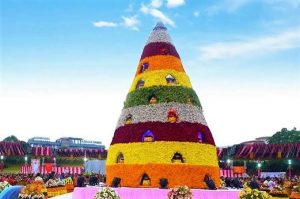
Telangana’s special festival of flowers Bathukamma, began with Engilipula Bathukamma.
- Bathukamma Festival is a floral festival celebrated by the women folk of Telangana.
- The term “Bathukamma” translates to “Mother Goddess Come Alive”, reflecting the divine feminine energy and protection.
- Folklore connects the festival to legends of Goddess Gauri and her miraculous survival as well as King Dhramangada and Queen Satyavati of the Chola dynasty.
- Historically, the Kakatiya dynasty emphasized Bathukamma as a celebration of feminine strength and agricultural prosperity.
- Every year this festival is celebrated usually in September–October of the Gregorian calendar.
- It is celebrated for nine days during Durga Navratri and the 9-day festivities will culminate on “Saddula Bathukamma” or “Pedda Bathukamma” festival.
- Bathukamma is followed by Boddemma, which is a 7-day festival.
- State Festival: It has been declared as the Telangana State Festival.
Panama:
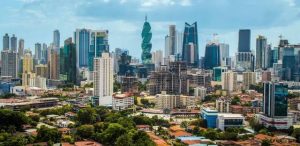
An earthquake with a preliminary magnitude of 7.7 hit Panama causing structures to collapse and shaking the capital of the Central American country.
- Panama is a country of Central America located on the Isthmus of Panama.
- It is bordered by Costa Rica and Colombia.
- It is bounded by the Caribbean Sea to the north and by the Pacific Ocean to the south.
- Capital City: Panama City.
- Geographical Features of Panama:
- Climate: Panama has a moist tropical and subtropical climate.
- Lakes: Lake Gatun which also plays a vital role in the operation of the Panama Canal.
- River: Tuira River is the longest river of Panama.
- Mountain Range: The Cordillera Central, or Central Mountain Range, runs down the middle of Panama.
- Natural Resources: It mainly consists of gold, copper, manganese, and iron.
57th GST Council Meeting:

The 57th Goods and Services Tax (GST) Council meeting, chaired by the Union Finance Minister, approved comprehensive procedural and structural reforms to simplify GST registration, refunds, input tax credit, exports and litigation, with most changes expected to take effect from 1st April 2027.
Key Outcomes of the 57th GST Council meeting:
- GST Rate Rationalisation: No rate changes were made in the meeting. GST rate decisions will now be taken once a year and implemented from the beginning of the subsequent financial year.
- Simplified Registration: The Council approved greater certainty regarding documents required for GST registration. 61% of taxpayers currently receive automatic registration within three working days.
- Faster refunds: Refund applications are proposed to be acknowledged within 10 days instead of 15 days.
- Inverted duty structure: Input services will become eligible for refunds under the inverted duty structure from 1st November 2026.
- Reduced Litigation: No GST notices will be issued for tax amounts below Rs 10,000, while existing pending notices below this threshold will be withdrawn.
- Inter-State Movement of Goods: Goods can be inspected, detained or seized only by officers of the supplier or destination State. Interception will require specific intelligence and authorisation from a Joint Commissioner-level officer.
- Decriminalisation: The Council recommended removing arrest powers under GST and raising the prosecution threshold from Rs 1 crore to Rs 5 crore.
- Faceless Assessment: The Central Government plans to introduce a faceless assessment system for Central GST, modelled on the income-tax system. A framework will be released for public consultation before Budget 2027, with implementation planned for 2027–28.
- Service exports: Services provided by an Indian company to a foreign client through its overseas branch can qualify for export benefits.
Testing, repair, certification and research conducted in India for foreign clients may also qualify as exports of services even when the goods remain in India. - Overall significance: The reforms seek to improve ease of doing business, tax certainty, compliance efficiency, movement of goods and taxpayer trust, while reducing unnecessary litigation and enforcement.
TRISHNA Satellite:
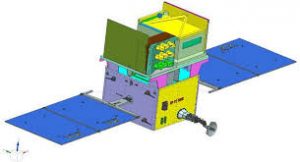
The Indo-French TRISHNA (Thermal Infra-Red Imaging Satellite for High-resolution Natural Resource Assessment) mission has entered an advanced stage of development, with ISRO expecting its launch within the next 12–16 months.
- TRISHNA is a joint Earth-observation mission of the Indian Space Research Organisation (ISRO) and France’s National Centre for Space Studies (CNES), aimed at high-resolution monitoring of Earth’s surface temperature, water resources and ecosystem dynamics.
- It will provide high spatial and temporal resolution data on surface temperature, emissivity, biophysical variables and radiation to support surface energy-budget assessment and sustainable natural resource management.
- The satellite will help monitor agricultural water use, irrigation efficiency, crop water stress, evapotranspiration, drought conditions, urban heat islands and ecosystem health, supporting climate studies and water-resource planning.
- Payloads: The satellite will carry two primary payloads:
- Thermal Infra-Red (TIR): Developed by CNES, France, to measure Earth’s surface thermal emissions.
- Visible-Near Infra-Red and Short-Wave Infra-Red (VNIR-SWIR): Developed by ISRO, to observe surface characteristics and vegetation conditions.
- Launch Vehicle: TRISHNA is planned to be launched using India’s Polar Satellite Launch Vehicle (PSLV).
- India–France Cooperation: TRISHNA is the third joint satellite mission following Megha-Tropiques and SARAL. ISRO is responsible for the satellite bus and VNIR-SWIR payload, while CNES provides the TIR payload. Scientific data will be processed jointly by India and France.
2026 Nobel Peace Prize:

South African jurist and human rights champion of Indian descent (Tamil Nadu), Navanethem “Navi” Pillay, was named the recipient of the 2026 Nobel Peace Prize. However, the historic announcement was immediately overshadowed by a major geopolitical development.
- Hours after the award was announced, the United States imposed sweeping economic sanctions on the International Criminal Court (ICC), an institution where Pillay formerly served as a judge.
- Navi Pillay, a South African jurist of Indian Tamil ancestry, pioneered anti-apartheid legal advocacy and contributed to international criminal jurisprudence.
- As a judge of the International Criminal Tribunal for Rwanda (ICTR), she contributed to landmark jurisprudence recognising rape and sexual violence as acts of genocide, particularly in the Akayesu case (1998).
- She subsequently served as a judge at the International Criminal Court (ICC), as the UN High Commissioner for Human Rights (2008–2014) and as an ad hoc judge at the International Court of Justice (ICJ) in the Rohingya genocide case concerning Myanmar.
- She also chaired the UN Independent International Commission of Inquiry on the Occupied Palestinian Territory (2021–2025).
- Navi Pillay became the first South African woman and the fifth South African overall to win the Nobel Peace Prize, joining laureates such as Nelson Mandela and Desmond Tutu.
- US Sanctions on the International Criminal Court (ICC): The US administration imposed comprehensive economic penalties targeting ICC officials and service vendors (telecom and software providers), citing resistance against the tribunal exercising jurisdiction over citizens of non-member states.
- ICC: Established by the Rome Statute of 1998 (in force since 2002) with headquarters at The Hague, Netherlands, the ICC functions as an independent permanent court prosecuting genocide, war crimes, crimes against humanity, and the crime of aggression.
- The ICC operates strictly as a “court of last resort,” stepping in only when domestic legal systems are unwilling or unable to genuinely carry out proceedings.
- State Party Status and India’s Stand: While the ICC comprises 125 member states, major powers including the US, China, and Russia are not parties.
- India is not a party to the Rome Statute, citing state sovereignty concerns, the non-inclusion of certain weapons categories, and the overarching powers given to the UN Security Council.
National Conclave on Tribal Rights:
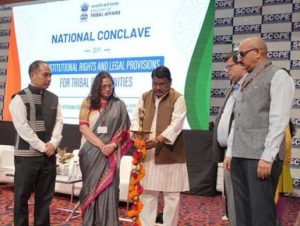
The Ministry of Tribal Affairs organised the National Conclave on “Constitutional Rights and Legal Provisions for Tribal Communities” at SCOPE Complex, New Delhi.
- Objective is to Identify difficulties faced by tribal communities in accessing constitutional rights and develop practical recommendations through field-level feedback and sharing of best practices.
- Constitutional Provisions
- Articles 15(4) and 16(4): Enable special provisions and reservation for STs in education and public employment.
- Article 19(5): Permits restrictions to protect the interests of Scheduled Tribes.
- Article 29: Safeguards the distinct language, script and culture of communities, including tribal groups.
- Article 46: Directs the State to promote STs’ educational and economic interests and protect them from social injustice and exploitation.
- Article 342: Specifies Scheduled Tribes in relation to particular States or Union Territories.
- Article 338A: Establishes the NCST to monitor safeguards and investigate complaints regarding tribal-rights deprivation.
- Fifth Schedule: Provides for Scheduled Areas, Tribal Advisory Councils and safeguards over tribal land and administration.
JOSH Teams Launched for TB Elimination:
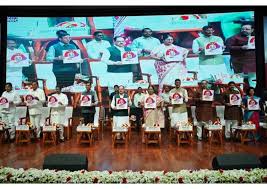
The Ministry of Health and Family Welfare has launched JOSH (Joint Squad for Health) Teams under the TB Mukt Bharat Abhiyaan at Bharat Mandapam, New Delhi, to strengthen youth-led community participation in TB elimination.
- JOSH Teams will mobilise MY Bharat Volunteers and NCC Cadets to promote TB prevention, early diagnosis, timely treatment, treatment adherence and stigma reduction at the grassroots.
- Teams will undertake household and community interactions, identify people with TB symptoms, encourage testing, support treatment completion and address myths, misconceptions and discrimination.
- In the first phase, teams have been deployed in 55 districts across 11 States and Union Territories, with nationwide expansion planned.
- The initiative brings together the Ministries of Health and Family Welfare, Youth Affairs and Sports, and Defence, promoting a whole-of-government and whole-of-society approach to TB elimination.
- 2030 Goal: JOSH Teams seek to accelerate India’s efforts towards TB elimination before 2030 by strengthening Jan Bhagidari, youth participation and last-mile community engagement.
- India has recorded a 21% decline in TB incidence, compared with a 12% global decline, while TB treatment coverage has increased to 92%, compared with 78% globally.
- In 2026, 67,933 Panchayats across 697 districts were recognised as TB Mukt, reflecting increased community-level participation in TB prevention and control.
- Technology for TB Control: India is using AI-supported portable X-ray systems and rapid molecular diagnostic technologies to strengthen early detection and identify drug resistance.
- The JOSH Flipbook, JOSH Brochure, Khushi Avatar e-Sangini service (available in 12 Indian languages) and a dedicated JOSH Teams feature on the TB Mukt Bharat App were launched to strengthen awareness, treatment adherence and community engagement.
Flash Floods in Himalayas:
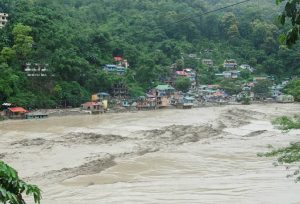
A sudden flash flood carrying dense mud, boulders, and debris swept through settlements along Nepal’s Budhi Gandaki River in Gorkha district, washing away over 35 homes and bridges.
- A flash flood is a sudden, rapid surge of water characterized by high peak discharges occurring within a very short timeframe—often under six hours—typically triggered by intense rainfall, cloudbursts, landslide-dam failures, or glacial outbursts.
- The Recent Nepal Flash Flood occurred on October 11 in Chumnubri village along the Budhi Gandaki River in Gorkha district.
- In the absence of heavy rainfall, the surge was likely triggered by the breach of an upstream landslide dam or an avalanche-induced blockage near Chekampar/Siuribas.
- The Indian Himalayan Region (IHR) is characterized by fractured bedrock, steep gradients, and high seismic sensitivity, making slopes prone to mass wasting.
- E.g., The 2021 Chamoli disaster in Uttarakhand, where a massive rock-and-ice slope detachment in the Rishiganga valley triggered a flash flood that destroyed downstream hydropower dams.
- Rapid glacial retreat in the high Himalayas creates fragile moraine-dammed lakes susceptible to catastrophic breach.
- E.g., The South Lhonak lake outburst in Sikkim triggering flash floods down the Teesta basin that destroyed the Chungthang dam.
- Localized Cloudburst Events in Micro-Catchments: Orographic lifting of monsoon winds causes concentrated, hyper-local cloudbursts along steep river valleys.
- E.g., The 2013 Kedarnath disaster, where extreme localized rainfall overwhelmed the Chorabari lake moraine and unleashed debris flows onto pilgrim settlements.
- Anthropogenic encroachment on narrow river channels leaves roads, tunnels, and human habitations directly in the path of debris flows.
- E.g., Flash flooding in Himachal Pradesh’s Beas river basin during 2023 washing away commercial properties and highways built on active riverbeds.
Causes of Flash Floods:
- Sudden Landslide Dam Outburst Floods (LDOFs): Heavy slope failures block narrow mountain gorges; the temporary debris dam pools water until hydrostatic pressure triggers a breach. E.g., Blockage of the Chumke Khola stream above Siuribas in Nepal breaking under water pressure to unleash the Budhi Gandaki surge.
- Loss ofCryospheric Cohesion: Global warming melts permafrost and interstitial glacial ice that naturally binds mountain bedrock and moraines together, causing slope collapses.E.g., Summer heatwaves accelerating moraine instability and rock avalanches across the high-altitude peaks of Ladakh and Uttarakhand.
- Massive Loose Sediment Mobilization: Pre-existing glacial deposits, moraines, and eroded gravel are picked up by surging water, transforming thin runoff into destructive, high-density slurry.E.g., Heavy boulder-and-gravel slurry visible in the Budhi Gandaki floodwaters exerting hydro-dynamic force that crushed reinforced concrete bridge pillars.
- Hydro-Meteorological Extremes: Intense convective precipitation dumping more than 100 mm of rain per hour over small catchment areas.E.g., Cloudburst-triggered flash floods sweeping through urban Leh (Ladakh) within hours in 2010.
PM Dhan-Dhaanya Krishi Yojana: First Anniversary
The Prime Minister Dhan-Dhaanya Krishi Yojana (PMDDKY) marks its first anniversary on October 11, 2026, recording an improvement in composite performance scores across 100 Aspirational Agricultural Districts.
- PM Dhan-Dhaanya Krishi Yojana (PMDDKY) is a focused, district-centric six-year agricultural development mission aimed at transforming backward agricultural pockets into high-performing agrarian hubs by addressing gaps in farm productivity, irrigation coverage, institutional credit, and post-harvest infrastructure.
- Organisation & Governance Architecture: Implemented through a three-tier administrative structure:
- National Level: National Executive Committee headed by the Union Minister for Agriculture & Farmers Welfare.
- State Level: State Dhan Dhaanya Krishi Yojana Samiti, headed by the Chief Secretary of the State.
- District Level: District Dhan Dhaanya Krishi Yojana Samiti, headed by the District Collector/District Magistrate.
- It Covers 100 Aspirational Agricultural Districts spanning across all States and Union Territories (ensuring at least one district per State).
- Districts are selected using three core deficit criteria: low crop productivity, low cropping intensity, and low agricultural credit disbursement.
CERVAVAC: India’s First Indigenous HPV Vaccine Receives WHO Prequalification
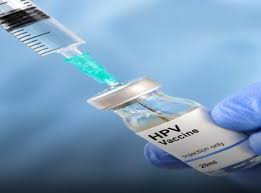
The World Health Organization (WHO) has granted prequalification to CERVAVAC, making it the first Indian-made quadrivalent human papillomavirus (HPV) vaccine to meet global standards for quality, safety, and efficacy.
- It is India’s first indigenously developed, gender-neutral quadrivalent Human Papillomavirus (qHPV) vaccine designed as a preventive oncology vaccine to protect against cervical cancer and HPV-related diseases.
- Developed by: Manufactured and developed indigenously by the Serum Institute of India (SII), Pune.
- Targeted HPV Strains:
- High-Risk Oncogenic Strains (Types 16 and 18): Responsible for over 70% to 80% of all cervical cancer cases globally.
- Low-Risk Strains (Types 6 and 11): Responsible for causing approximately 90% of anogenital warts (condyloma acuminata).
Key Features of CERVAVAC:
- First Indigenous Prequalified HPV Vaccine: Stands as the first Indian-manufactured quadrivalent HPV vaccine on the WHO List of Prequalified Vaccines, joining an international pool previously dominated by foreign manufacturers.
- Broad Age & Gender-Neutral Indication: Licensed in India for administration to both girls and boys aged 9 to 26 years, enabling herd immunity and preventing male HPV burdens such as anal cancers and genital warts.
- Affordable & Scalable Production: Engineered to be substantially more cost-effective than imported counterparts, leveraging SII’s mass-scale manufacturing to address global supply crunches.
- Flexible Dosing Regimen: Compatible with WHO-recommended schedules, supporting both single-dose or two-dose regimens for the primary target group of adolescents aged 9 to 14 years.
- Rigorous InternationalQuality Benchmark: Validated through extensive clinical evaluations, batch testing, and manufacturing facility audits to meet the stringent safety and immunogenicity guidelines of the WHO.
Sex Reversal in Animals:
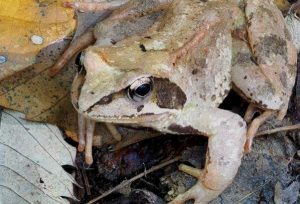
A new study published in Science Advances on wild agile frogs (Rana dalmatina) in Hungary revealed that climate change-induced sex reversal creates significant reproductive disadvantages and elevates extinction risks.
- A biological phenomenon where an individual organism develops anatomical and physiological sexual traits—including reproductive organs and fertility—that differ from its genetically determined chromosomal sex.
- Occurs in: Extensively documented across the animal kingdom, particularly among cold-blooded vertebrates (ectotherms) including amphibians, reptiles, and fish, as well as various invertebrates and certain bird species.
Working:
- Genetic Baseline: Sex is normally determined by inherited chromosomes, such as XX/XY in mammals and some frogs or ZZ/ZW in birds and some reptiles.
- Environmental Override: High temperatures during early development can interfere with genetic signals and hormones, changing how reproductive organs develop.
- Phenotypic Divergence: A genetically female (XX) animal may develop male reproductive organs and behaviour, or vice versa, sometimes remaining fertile.
Animals that Exhibit Sex Reversal:
- Amphibians: Agile frogs (Rana dalmatina), wood frogs, and common frogs.
- Reptiles: Central bearded dragons (Pogona vitticeps) and several agamid lizards.
- Fish: Clownfish, wrasses, and groupers.