
Today’s Current Affairs: 27th Oct 2026 for UPSC IAS exams, State PSC exams, SSC CGL, State SSC, RRB, Railways, Banking Exam & IBPS, etc
Table of Contents
Saidongar-1 Pumped Storage Project:
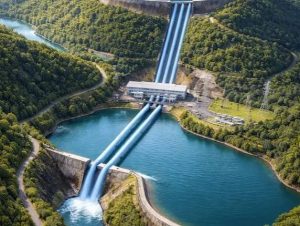
Environmental activists and opposition parties recently came out against the “rampant” cutting of hundreds of trees for Torrent Power’s Saidongar-1 Pumped Storage Project in Raigad district of Maharashtra.
- The Saidongar 1 (Karjat) Off-Stream Open Loop Pumped Storage project (PSP) is a major hydro-energy initiative located in Karjat taluka, Raigad district of
- The project is adjacent to the Bhimashankar Wildlife Sanctuary of Pune district in the Sahyadri-Western Ghats ranges.
- With a capacity of 3,000 MW, it will be India’s largest PSP.
- It is being developed by Torrent Energy Storage Solutions Private Limited, a subsidiary of Gujarat-based Torrent Power Ltd.
- Once operational, it is projected to avoid carbon dioxide emissions by 4.55 million tons per year, roughly equivalent to taking around 1 million cars off the road
- With an annual energy production of 6,241 GWh, the project is expected to contribute to grid reliability and energy security in the state and other regions.
Osbeckia assamensis:
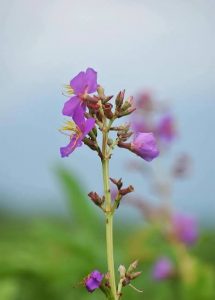
Researchers recently identified a new flowering plant species named Osbeckia assamensis in Assam’s Manas National Park.
- Osbeckia assamensis is a new species of flowering plant.
- It was discovered in the grasslands within Manas National Park of Assam. The area forms part of the foothills of the Himalayas.
- It belongs to one of the largest families of flowering plants.
- It is a perennial shrub.
- It was distinguished from the closely related Osbeckia nayarii by examining differences in its stem, leaves, flowers and seeds.
- It has pink flowers, large opposite leaves, and a largely unbranched stem.
- Its flowering and fruiting season extends from September to February.
- It also has distinctive hairs along its stem and longer seeds.
- Its conservation status has been classified as ‘Data Deficient’ under the IUCN criteria.
Oskar Klein Medal 2026:
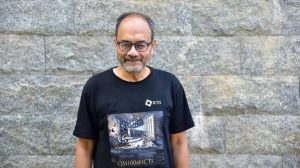
Professor Ashoke Sen has been awarded the Oskar Klein Medal for 2026, becoming the first Indian physicist to receive the honour.
- Oskar Klein Medal is a prestigious international award that recognises outstanding contributions to theoretical physics.
- Established in 1988, the medal honours the legacy of Swedish theoretical physicist Oskar Klein.
- The medal is awarded annually by Stockholm University and the Nobel Committee for Physics of the Royal Swedish Academy of Sciences.
- Past recipients of the medal have included some of the world’s top physicists, Alan Guth and Stephen Hawking, and Nobel laureates Peter Higgs, Kip Thorne, and Steven Weinberg, among others.
2026 Winner:
- Professor Ashoke Sen, a renowned Indian theoretical physicist, was awarded the Oskar Klein Medal 2026.
- He is the first Indian to receive the award.
- The award recognizes his pioneering contributions to string theory, which seeks to explain the fundamental nature of the universe, black hole entropy, and string field theory, which have significantly shaped modern theoretical physics.
String Theory:
- String theory is a scientific framework that attempts to explain how the universe works at its most fundamental level.
- According to this theory, the smallest building blocks of matter are not point-like particles but tiny, one-dimensional objects called strings.
- These strings can vibrate in different ways, with each pattern of vibration corresponding to a different particle.
- In this way, string theory offers a possible common framework for understanding the different particles and forces found in nature.
- One of its major goals is to bring gravity into the framework of quantum physics, which describes the behaviour of matter and energy at extremely small scales.
- Scientists have long struggled to reconcile the two, particularly in extreme environments such as black holes, where gravity and quantum effects become important.
International Centre for Integrated Mountain Development (ICIMOD):
The Indian Navy recently commenced trials of the Rafale Marine fighter aircraft at the Shore Based Test Facility in Goa to validate modifications required for operations from the indigenous aircraft carrier INS Vikrant.
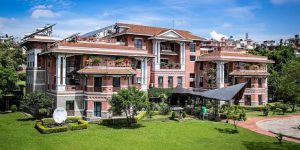
- International Centre for Integrated Mountain Development (ICIMOD) is an intergovernmental knowledge and learning centre working on behalf of the people of the Hindu Kush Himalaya (HKH).
- It was formally established and inaugurated on 5 December 1983.
- It is based in Kathmandu, Nepal.
- It works in and for its eight regional member countries (RMCs) of HKH: Afghanistan, Bangladesh, Bhutan, China, India, Myanmar, Nepal, and Pakistan.
- Mission: Build and share knowledge that drives regional policy and action and attracts investment that enables the diverse countries and communities of the HKH to transition to greener, more inclusive, and climate-resilient development.
- Globalization and climate change have an increasing influence on the stability of fragile mountain ecosystems and the livelihoods of mountain people.
- ICIMOD aims to assist mountain people to understand these changes, adapt to them, and make the most of new opportunities, while addressing upstream-downstream issues.
- It supports regional transboundary programmes through partnerships with regional partner institutions, facilitates the exchange of experience, and serves as a regional knowledge hub.
- It also strengthens networking among regional and global centres of excellence.
Key Facts about Hindu Kush Himalaya (HKH):
- It is a vast mountain region that extends 3500 km over eight countries: Afghanistan, Bangladesh, Bhutan, China, India, Myanmar, Nepal, and Pakistan.
- It is considered the Third Pole (after the North and South Poles) and has significant implications for climate.
- It forms the largest area of permanent ice cover outside of the North and South Poles and is home to 4 global biodiversity hotspots.
- It is the source of ten large Asian river systems: the Amu Darya, Indus, Ganges, Brahmaputra, Irrawaddy, Salween, Mekong, Yangtse, Yellow River, and Tarim.
- The basins of these rivers provide water to 1.9 billion people, a fourth of the world’s population.
Narcotics Control Bureau: In News
The Narcotics Control Bureau (NCB) launched ‘Operation Trident’ striking various locations simultaneously across Assam, Mizoram, and Manipur.
- Narcotics Control Bureau is the nodal drug law enforcement and intelligence agency under the Ministry of Home Affairs, Government of India.
- It was constituted under the provisions of the Narcotic Drugs and Psychotropic Substances Act, 1985 (NDPS Act).
- Headquarters: New Delhi
- Functions of Narcotics Control Bureau:
- Coordination among various Central and State Agencies engaged in drug law enforcement.
- It assists states in enhancing their drug law enforcement effort.
- Analysis of seizure data, study of trends and modus operandi.
- It prepares National Drug Enforcement Statistics.
- It liaison with International agencies such as UNDCP, INCB, INTERPOL, Customs Cooperation Council, RILO etc.
- It works as national contact point for intelligence and investigations
- It also functions as an enforcement agency through its zonal offices.
- The zonal offices collect and analyse data related to seizures of narcotic drugs and psychotropic substances, study trends, modus operandi, collect and disseminate intelligence, and work in close cooperation with the Customs, State Police, and other law enforcement agencies.
Ranthambore Tiger Reserve:
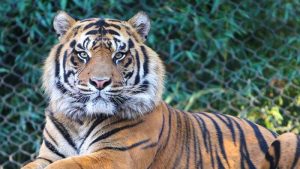
Tigress T-2403 was spotted with three cubs in Ranthambore Tiger Reserve in Sawai Madhopur.
- Ranthambore Tiger Reserve is located in Rajasthan.
- It derives its name from the Ranthambore Fort (a World Heritage Site) situated within its precincts.
- It is located at the junction (great boundary fault) of the Aravalis and Vindhyan ranges.
- It is one of the largest tiger reserves in northern India.
- It has dry deciduous forests and open grassy meadow.
- It is bounded to the north by the Banas River and to the south by the Chambal River.
- There are several lakes in the park known as Padam Talab, Raj Bagh Talab, and Malik Talab.
- Trees like Dhok, Acacia, Capparis, Zizyphus, Prosopis, etc are found here.
- It hosts leopard, caracal, jungle cat, sambar, chital, chinkara, and wild boar.
- Peacocks, partridges, green pigeons, parakeets, sparrows, prinias, warblers, etc. are also found here.
Melioidosis : Study
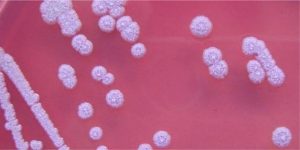
A study published in The Lancet Global Health, assessed high-risk hospitalised adults at 15 Indian tertiary-care centres between 2023 -2025 and confirmed melioidosis was found in 262 of 2,953 patients, of those diagnosed, 50 (19.1%) died in hospital.
- Melioidosis is an infectious disease caused by the environmental Gram-negative bacterium Burkholderia pseudomallei.
- Burkholderia pseudomallei is found in soil and water in tropical and subtropical regions.
- It is seasonal, with 75–85% of cases occurring during the rainy season.
- It is common in people living with: Diabetes, Alcohol use disorder, Chronic kidney disease, Chronic lung disease (like cystic fibrosis or COPD).
- Transmission:
- Infection usually occurs when contaminated soil or water enters the body through cuts or wounds.
- Inhalation of contaminated dust or water droplets and, less commonly, ingestion of contaminated water can also transmit the bacterium.
- It is not typically transmitted from animals to humans, and human-to-human transmission is exceptionally rare.
- Melioidosis can cause pneumonia, bloodstream infection, skin and soft-tissue infections, abscesses in organs such as the liver and spleen, septic arthritis and bone infections.
- It is an infectious disease endemic in Southeast Asia, northern Australia, much of the Indian subcontinent, southern China, Hong Kong, and Taiwan.
- Treatment has two phases: an initial intensive phase with intravenous antibiotics, followed by prolonged oral eradication therapy to reduce the risk of relapse.
Rugda Mushroom:
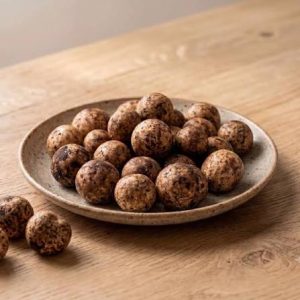
Rugda mushroom which is an important non-timber forest produce providing seasonal income for many tribal households in forested villages of Jharkhand.
- Rugda Mushroom is a wild, edible subterranean fungus.
- It is scientifically known as Astraeus hygrometricus or Astraeus asiaticus.
- It is commonly foraged by tribal communities in eastern and central India.
- It is highly prized across the Chhotanagpur Plateau, particularly in Jharkhand, Odisha, Chhattisgarh, and West Bengal
- It appears beneath the forest floor after the first monsoon showers and is hand-foraged for only a few weeks each year.
- It survives in a natural partnership with the roots of sal trees, exchanging nutrients through an underground fungal network. Scientists call this an ectomycorrhizal relationship.
- Ideal Condition for Growth:
- It relies heavily on the monsoon for growth.
- Ideal conditions include high rainfall (around 350 cm), ample sunlight, and temperatures near 30°C.
- The fallen Sal leaves decompose over time to form a nutrient-rich humus layer.
- This layer is a dark, organic part of the soil that is high in moisture and essential nutrients, creating an environment that supports the healthy growth of these mushrooms.
India’s Wetland : Ramsar Sites Expanded to 103
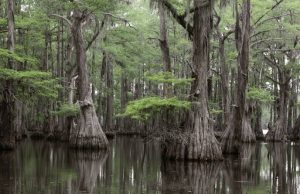
India’s network of Ramsar Sites has expanded to 103 wetlands in October 2026, with Sukhna Wetland in Chandigarh and Sauj Jheel in Uttar Pradesh as the latest additions, strengthening the country’s efforts towards biodiversity conservation, water security and climate resilience.
- Ramsar Sites are wetlands designated as Wetlands of International Importance under the Ramsar Convention because of their ecological, botanical, zoological, limnological or hydrological significance.
- An intergovernmental treaty adopted in 1971 at Ramsar, Iran, which entered into force in 1975 to promote the conservation and wise use of wetlands.
- It has 172 Contracting Parties and over 2,536 Ramsar Sites globally as of October 2026.
- India’s Membership: India became a Contracting Party to the Ramsar Convention in 1982.
Biomarkers (Chemical Signatures) and Early Disease Detection:
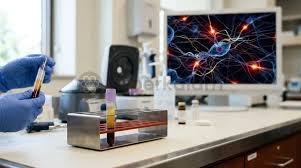
Scientists have emphasised the growing potential of chemical signatures (commonly known as biomarkers) in revolutionising early disease diagnosis, particularly for neurological conditions like Alzheimer’s and Parkinson’s.
- However, despite their promise, integrating these diagnostic tools into routine clinical practice remains hindered by significant hurdles related to accuracy, cost, and accessibility.
- Chemical Signature is a measurable biological indicator found in bodily fluids (like blood or cerebrospinal fluid) consisting of a unique pattern of specific proteins, molecules, elements, isotopes, or by-products.
- It objectively signifies what is happening inside the body, indicating a normal biological process, a pathogenic disease state, or a response to medical treatments.
- When a disease develops, it triggers changes at the molecular level long before physical symptoms appear.
- By measuring the presence, absence, or altered behaviour of specific proteins, doctors can identify underlying physiological shifts.
- Advanced analytical tools like spectrometers (which measure molecules by mass or light absorption) and chromatographs (which separate mixture components) are used to detect these minute chemical patterns.
State of Biomarkers in India:
- GenomeIndia Project: Launched in January 2020 and funded by the Department of Biotechnology (DBT), the project has completed the whole-genome sequencing of over 10,000 individuals representing diverse Indian populations.
- As one of the world’s largest genetic databases, Genome India Project serves as a critical foundation for discovering population-specific biomarkers and genetic risk factors tailored to South Asians.
- BHARAT Study: The Indian Institute of Science (IISc), under its Longevity India Programme, has launched the BHARAT (Biomarkers of Healthy Aging, Resilience, Adversity, and Transitions) Study to establish a “Bharat Baseline” tailored to the Indian population, reducing reliance on Western-derived biomarkers.
- Since ageing is influenced by molecular, cellular, environmental and socioeconomic factors, chronological age may not accurately reflect biological age. The study aims to develop biomarkers that better capture ageing patterns among Indians.
National SARAS Mela 2026:
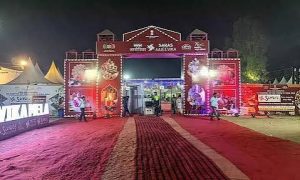
The National SARAS Mela 2026, organised in Vijayawada, Andhra Pradesh, marks the first National SARAS Mela outside Delhi-NCR, bringing together women entrepreneurs from 34 States and Union Territories to promote Self-Help Group (SHG) enterprises, market access and sustainable rural livelihoods under DAY-NRLM.
- SARAS Mela is a government-supported platform organised under the Deendayal Antyodaya Yojana–National Rural Livelihoods Mission (DAY-NRLM) to connect rural women entrepreneurs particularly Self-Help Groups (SHGs), with consumers, institutional buyers and wider markets.
- The first National SARAS Mela was organised in Delhi in 1999, with approximately 65 beneficiaries. It has since expanded to national, regional, state and district levels.
- A total of 117 National SARAS Melas have been organised, with annual sales exceeding ₹200 crore.
- States and UTs are expected to organise at least two State-level SARAS Melas annually, contributing to an average of around 50 events nationwide.
- Handlooms, handicrafts, traditional textiles, natural products, processed foods and regional cuisines, alongside an India Food Court, cultural showcases and dedicated learning spaces.
- The initiative involves collaboration with institutions such as NABARD, the National Institute of Rural Development and Panchayati Raj (NIRDPR) and other government and private-sector stakeholders.
- Digital Market Access:
- eSARAS Platform: An e-commerce initiative enabling customers to discover and purchase products made by SHG entrepreneurs beyond physical exhibitions.
- SARAS Mela Digital App (2025): Facilitates SHG nominations, attendance management and event-related information.
- Digital Payments: Promotes UPI-based transactions, while retaining alternative payment arrangements for financial inclusivity.