
Colletes Inaequalis:
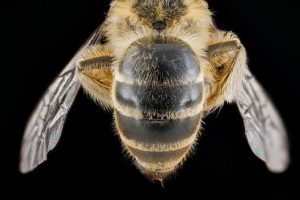
Researchers found that Cellophane bee Colletes inaequalis produces a kind of plastic that also degrades within a year.
- Colletes Inaequalis is a solitary, ground-nesting bee belongs to Colletidae family.
- They pollinate red maple, willow, and apple trees.
- These bees line the inner walls of its nest with a transparent, cellophane-like film, earning it the nickname “cellophane bee.”
- The nest lining of the ground-nesting bee is translucent, flexible, resilient and degrades within a year.
- This cellophane like film is a flexible, translucent material made from polyester and silk.
- The material is produced in a specialized gland, called the Dufour’s gland, that is connected to the bee’s stinger.
- The polyester produced by cellophane bees resembles polyethylene in its molecular packing.
Highlights of the Study:
- The analysis showed that the polyester produced by the cellophane bee has a “semicrystalline” structure, in which amorphous and crystalline regions coexist within a single material.
- The polyester nest material showed impressive degradation in a short amount of time.
- In natural soil, the amount of polyester lining fell from 73% to 40% of the nest by weight within four months.
- By seven months, the linings developed visible cracks, and by 11 months, they became brittle and prone to crumbling.