
Today’s Current Affairs: 7th Nov 2026 for UPSC IAS exams, State PSC exams, SSC CGL, State SSC, RRB, Railways, Banking Exam & IBPS, etc
Table of Contents
Kochon Prize 2026:

Resource group for Education and Advocacy for Community Health (REACH), a not-for-profit organisation working to strengthen the tuberculosis (TB) response in India, has been awarded the Kochon Prize 2026.
- Kochon Prize was established in 2006.
- It is presented by the Kochon Foundation, an independent Korean non-profit foundation, in partnership with the Stop TB Partnership.
- It recognises individuals and organisations that have made significant contributions to the fight against TB.
- It consists of cash prize of US$ 65,000.
- Previous winners from India include S. Chauhan (2006), head of the Revised National TB Control Programme, the Indian Council of Medical Research (2017) and Molbio Diagnostics (2024).
Tuberculosis:
- Tuberculosis (TB) is a bacterial infection caused by Mycobacterium tuberculosis, which primarily affects the lungs but can also impact other body parts such as the abdomen, glands, bones, and nervous system.
- Transmission: It spreads through airborne transmission, mainly inhaling tiny droplets released from the coughs or sneezes of an infected person.
- Treatment & Prevention
- BCG Vaccine: The Bacillus Calmette-Guérin (BCG) vaccine provides moderate protection, mainly for severe TB in infants and children.
Chinar Tree:
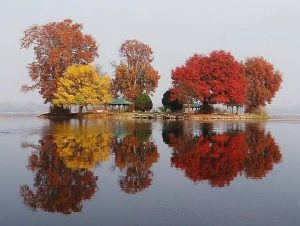
Step towards preserving Kashmir’s iconic natural heritage, around 30,000 Chinar trees across Jammu and Kashmir have been geo-tagged and digitally documented to strengthen their protection, conservation and monitoring.
- Chinar Tree is also known as Oriental plane tree, maple tree and locally it is called Boueen.
- Chinar is a distinctive feature of Kashmir’s landscape and is found in almost every part of the Valley.
- The tree is believed to have been introduced in Kashmir from Persia.
- Chinar trees characteristically grow in Eastern Himalayas. It spreads wide across a region of cool climate with sufficient water.
Geotagging of Chinar
- A QR-based digital plate has been affixed to each identified Chinar using a specialised spring-enabled metal mechanism.
- By scanning the QR code, a person can get required information about the Chinar tree including its location, health, age and other relevant characteristics.
- The Chinar tree is a protected species under J&K Preservation of Specified Trees Act, 1969 and even pruning requires official approval.
UNESCO Memory Regional Register Programme:

Manuscripts of the epic Mahabharata, Kalhana’s historical chronicle Rajatarangini, and Kautilya’s Arthashastra, have been inscribed on UNESCO’s Memory of the World Asia-Pacific Regional Register.
- UNESCO Memory of the World Register Programme was launched by UNESCO in 1992with the goal of preserving global documentary heritage and preventing what it called “collective amnesia.”
- It aims to safeguard rare documents, including manuscripts, oral traditions, audio-visual content, and archive materials, of global and universal value.
- It is operating at international, regional, and national levels, the programme recognizes globally significant documents through the International Register.
- The MoW Register serves as a global compendium of such heritage, and is updated biennially (every two years).
Arthashastra:
- It is traditionally attributed to Kautilya, also known as Chanakya.
- It is a foundational work on governance, administration, economics, diplomacy and military strategy.
- Its detailed examination of statecraft, taxation, law enforcement, intelligence networks and public administration offers valuable insights into political organisation and the functioning of ancient Indian states.
- The text remains an important reference for scholars studying the history of political and economic thought.
Rajatarangini:
- It was composed by the 12th-century Kashmiri historian Kalhana.
- It is widely regarded as one of the most important historical chronicles of medieval India.
- It was written in Sanskrit, it traces the history of Kashmir through successive dynasties, rulers, political developments and social transformations.
- Its significance lies in its attempt to present historical events through chronological narration, critical examination of sources and literary composition, making it an important resource for understanding Kashmir’s political and cultural past.
INS Amini:

The Indian Navy recently formally inducted ‘Amini’, the fifth of eight Anti-Submarine Warfare Shallow Water Craft (ASW-SWC) being built to strengthen India’s coastal defence and underwater surveillance capabilities.
- It is the fifth of eight Anti-Submarine Warfare Shallow Water Craft (ASW-SWC) being built by Kolkata-based Garden Reach Shipbuilders and Engineers (GRSE) for the Indian Navy.
- The newly launched ASW ships belong to the Arnala class of vessels and replaced the Abhay class of anti-submarine warfare corvettes.
- Amini becomes the 119th warship designed and constructed by the defence public sector undertaking GRSE and the 81st delivered directly to the Indian Navy.
- Designed for operations in coastal waters, ‘Amini’ is equipped to undertake comprehensive subsurface surveillance, search and attack missions, and coordinated anti-submarine warfare operations in conjunction with aircraft.
- Equipped with an advanced Combat Management System, lightweight torpedoes and anti-submarine warfare rockets, the warship is capable of detecting, tracking and engaging underwater threats.
- It also carries an indigenously manufactured 30 mm naval surface gun developed by GRSE for protection against surface threats.
- Its integrated systems will allow it to coordinate with naval aircraft during anti-submarine missions.
Atomic Energy Regulatory Board (AERB):

Chairperson, Atomic Energy Regulatory Board (AERB) recently sought to allay concerns regarding the entry of private players into the country’s sensitive nuclear energy sector, asserting that there will be no compromise on safety aspects.
- Atomic Energy Regulatory Board (AERB) is India’s premier regulatory authority for nuclear and radiation safety.
- The AERB was constituted on November 15, 1983, by the President of India by exercising the powers conferred by the Atomic Energy Act, 1962.
- The regulatory authority of AERB is derived from the rules and notifications promulgated under the Atomic Energy Act and the Environment (Protection) Act, 1986.
- Objective is to ensure the use of ionizing radiation and nuclear energy in India does not cause undue risk to the health of people and the environment.
- Headquarters: Mumbai.
- It comprises six members, of which two are full-time members including the chairman.
- The other whole-time member is the executive director of the AERB Secretariat, who is an ex-officio member of the Board.
- The other four members are eminent experts from various disciplines relevant to the mandate of the board.
- The Board reports to the Atomic Energy Commission (AEC), which in turn reports to the Prime Minister.
- Regional Regulatory Centres (RRCs) of AERB set up at Kolkata, Chennai, and New Delhi carry out regular surveillance of the radiation facilities in eastern, southern, and northern zones, respectively.
- AERB has a Safety Research Institute (SRI) located at Kalpakkam, Tamil Nadu, which carries out research in safety-related topics.
- Functions:
- Develop safety policies in nuclear, radiation, and industrial safety areas for facilities under its purview.
- Develop Safety Codes, Guides, and Standards for siting, design, construction, commissioning, operation, and decommissioning of different types of nuclear and radiation facilities.
- Grant consents for siting, construction, commissioning, operation, and decommissioning, after an appropriate safety review and assessment, for the establishment of nuclear and radiation facilities.
- Ensure compliance with the regulatory requirements prescribed by AERB during all stages of consenting through a system of review and assessment, regulatory inspection, and enforcement.
- Prescribe the acceptance limits of radiation exposure to occupational workers and members of the public and acceptable limits of environmental releases of radioactive substances.
- Review the emergency preparedness plans for nuclear and radiation facilities and during transport of large radioactive sources, irradiated fuel, and fissile material.
- Review the training program, qualifications, and licensing policies for personnel of nuclear and radiation facilities and prescribe the syllabi for training of personnel in safety aspects at all levels.
- Take such steps as necessary to keep the public informed on major issues of radiological safety significance.
- Maintain liaison with statutory bodies in the country as well as abroad regarding safety matters
- Promote research and development efforts in the areas of safety.
- Review the nuclear and industrial safety aspects in nuclear facilities under its purview.
- Notifying the public of the ‘nuclear incident’, occurring in the nuclear installations in India, as mandated by the Civil Liability for Nuclear Damage Act, 2010.
Namika La Pass:
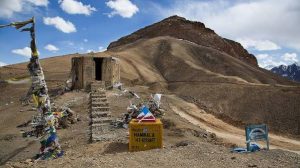
Two Army personnel were killed after their vehicle plunged into a 600-foot-deep gorge at Namika La Pass on the Kargil-Leh national highway recently.
- Namika La Pass is a high mountain pass located in the Union Territory of
- Also known as the ‘Pillar of the Sky Pass’, it lies in the Zanskar Range of the Himalayas.
- Located on the Srinagar-Leh Highway (NH-1), the Namika La Pass is situated on the way to the Mulbek Valley.
- It is one of the 2 high passes that connect Kargil and Leh, the other being the higher Fotu La Pass.
Liocheles similipalensis : New Scorpion Species
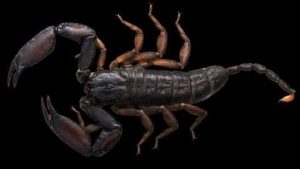
Researchers recently discovered a new scorpion species named Liocheles similipalensis in Odisha.
- Liocheles similipalensis is a new species of scorpion.
- It was discovered in Odisha’s Similipal Tiger Reserve.
- The species is lithophilic, meaning it prefers rocky habitats. The specimens were predominantly found in rock crevices and taking shelter beneath rocks.
- At present, it is known only from its type locality in Similipal.
- The scorpions were classified under the genus Liocheles based on the presence of setae (small hair-like structures) beneath tarsomere II, a segment of their legs.
- It marks the first confirmed record of the genus Liocheles in Odisha.
Self-Reliant India Fund:

The Ministry of Micro, Small and Medium Enterprises (MSME), Government of India, organised an “Awareness Workshop on the Self-Reliant India (SRI) Fund for Supporting Women-Led MSMEs”.
- Self-Reliant India Fund has been set up to infuse Rs. 50,000 crore as equity funding in those MSMEs which have the potential and viability to grow and become large units.
- Under this fund of Rs. 50,000 crore, there is a provision of 10,000 Crore from the Government of India and Rs. 40,000 Crore through Private Equity/Venture Capital funds.
- It operates through a mother-fund and daughter-fund structure for equity or quasi-equity investments.
- It is being implemented by NSIC Venture Capital Fund Limited (NVCFL), which is an Alternative Investment Fund (AIF) of Category II registered with SEBI.
- The Government of India through the Ministry of Micro, Small and Medium Enterprises (MoMSME) is the anchor investor.
- SRI fund is oriented to provide the funding support through NVCFL to the Daughter Funds for onward provision to MSMEs as growth capital, in the form of equity or quasi-equity, for the following:
- Enhancing equity/equity-like financing to MSMEs and listing of MSMEs on stock exchanges.
- Supporting faster growth of MSME businesses and thereby ignite the economy and create employment opportunities.
- Supporting enterprises which have the potential to graduate beyond the MASME bracket and become National/International Champions.
- Supporting MSSMEs, which help make India self-reliant by producing relevant technologies, goods, and services.
- The Daughter Funds shall invest at least 5 times the amount of capital contribution received from SRI Fund (net of fees and expenses) in MSMEs, covered under the Micro, Small & Medium Enterprises Development Act, 2006.