
Today’s Current Affairs: 10th Nov 2026 for UPSC IAS exams, State PSC exams, SSC CGL, State SSC, RRB, Railways, Banking Exam & IBPS, etc
Table of Contents
First Human Deep-Sea Mission:
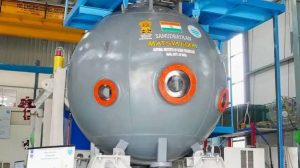
India aims to undertake its first human deep-sea mission to a depth of up to 6,000 metres by 2028 under the Samudrayaan Mission, as highlighted at the Indo-Pacific Regional Dialogue (IPRD) 2026, emphasising indigenous technological capabilities and international scientific cooperation.
- Samudrayaan Mission is India’s human deep-sea exploration initiative under the Deep Ocean Mission, aimed at developing indigenous technologies for deep-sea exploration and scientific research.
- The Deep Ocean Mission, approved by the Union Cabinet in 2021 and implemented by the Ministry of Earth Sciences, focuses on deep-sea mining technologies, ocean climate services, marine biodiversity conservation, seabed exploration, and ocean-based energy and freshwater resources.
- MATSYA-6000 Submersible is an indigenously developed human-occupied, battery-powered submersible, designed by the National Institute of Ocean Technology (NIOT), Chennai, to carry three aquanauts to depths of up to 6,000 metres.
- It is designed for 12 hours of normal operation, with 96 hours of emergency life-support capability, and incorporates a titanium-alloy personnel sphere to withstand extreme underwater pressure.
- Ocean Mineral Explorer Supports high-resolution exploration of hydrothermal sulphide deposits on the seabed, contributing to the identification and assessment of strategic deep-sea mineral resources.
- Satellite observations of ocean colour, sea-surface temperature and wind vectors strengthen ocean monitoring, climate research and assessment of marine renewable energy potential.
- It Facilitates direct observation and scientific study of deep-sea biodiversity, seabed geology and extreme marine environments, improving understanding of largely unexplored ocean ecosystems.
- India has proposed joint scientific missions, reciprocal access to research facilities and data sharing under the principle of “One Ocean, Shared Knowledge and Equitable Prosperity.”
- Key regional priorities include improving ocean observation networks, extreme-event forecasting, coastal climate services and sustainable management of marine resources.
- Strengthens India’s indigenous deep-sea technological capabilities, strategic resource security and interdisciplinary scientific research, while supporting a sustainable Blue Economy and the vision of Viksit Bharat 2047.
Tokamaks for Nuclear Fusion:
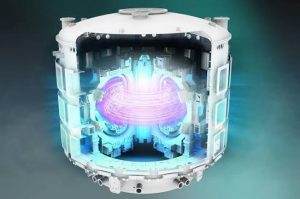
Bengaluru-based startup Pranos Fusion has unveiled PRAGYA, described as India’s first privately developed compact tokamak, marking a significant step in private-sector participation in the country’s nuclear fusion research.
- A tokamak (a Russian acronym for “toroidal chamber with magnetic coils”) is an experimental machine designed to harness fusion energy.
- Because no physical material on Earth can contain plasma heated to 150 million °C without instantly melting, a tokamak uses a ring-shaped (doughnut) vacuum vessel and powerful magnetic fields to suspend and confine the plasma in mid-air.
- It is the most researched fusion reactor design globally, serving as the basis for the International Thermonuclear Experimental Reactor (ITER) in France, of which India is a key member.
- The tokamak creates a highly stable “magnetic cage” to keep the plasma away from the walls by combining two magnetic fields:
- Toroidal Field: Generated by large external superconducting coils surrounding the chamber.
- Poloidal Field: Generated by inducing a massive electric current directly through the plasma itself.
- When fusion occurs, high-energy, uncharged neutrons escape the magnetic cage and strike the reactor’s inner wall.
- The inner wall is lined with a Lithium blanket. The kinetic energy of the neutrons heats the blanket (which boils water to spin electricity-generating turbines) and reacts with the lithium to breed fresh Tritium, ensuring the reactor sustains its own fuel supply.
RBI Constitutes Technical Consultative Committee for Financial Markets:
The Reserve Bank of India (RBI) constituted the Technical Consultative Committee for Financial Markets (TCCFM) to strengthen consultation with market participants on regulatory, operational and policy issues affecting India’s financial markets.
- The committee is chaired by RBI Deputy Governor Rohit Jain, who is in charge of the Financial Markets Regulation Department (FMRD).
- The eight-member committee comprises the RBI Deputy Governor and seven external members representing banks, market infrastructure institutions, financial research organisations and securities markets.
- Includes Money markets, government securities markets, foreign exchange markets and their associated derivatives markets.
- It Examines trading, clearing, settlement and reporting mechanisms to improve market efficiency and resilience.
- It Identifies measures to deepen and broaden financial markets, improving their functioning, liquidity, efficiency and resilience
- It Reviews domestic and international developments, financial innovations and emerging risks affecting financial markets.
- Provides a platform for market participants to highlight operational difficulties, regulatory challenges and unintended market frictions arising from regulatory measures.
- Strengthens regulatory consultation, improves financial market liquidity and efficiency, promotes robust market infrastructure and enhances India’s capacity to respond to emerging financial risks.
National Tabletop Exercise ‘VAJRA-SAT’:
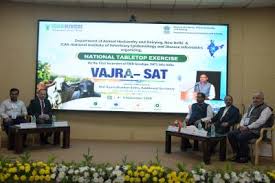
The Department of Animal Husbandry and Dairying (DAHD), in collaboration with ICAR-National Institute of Veterinary Epidemiology and Disease Informatics(ICAR-NIVEDI), conducted a two-day National Tabletop Exercise ‘VAJRA-SAT’ on preparedness against Foot-and-Mouth Disease (FMD) serotype SAT-1 in Bengaluru, Karnataka.
- Objective is Strengthen preparedness against the potential entry of FMD SAT-1, which has not been reported in India, following its geographical spread beyond Africa to parts of West Asia.
- Theme: “Detect Early, Confirm Fast, Contain Together”.
- Assessed disease detection, laboratory diagnosis, epidemiological investigations, animal movement restrictions, emergency vaccination and risk communication.
- Emphasised risk-based surveillance, epidemiological intelligence and early-warning systems.
- DAHD proposed strengthening regional FMD laboratories and Regional Disease Diagnostic Laboratories (RDDLs) under the Pandemic Fund, with technical support from ICAR-National Institute of Foot-and-Mouth Disease (ICAR-NIFMD).
- Highlighted the need for indigenous SAT-1 vaccine development and advanced vaccine readiness, as existing FMD vaccines used in India do not protect against SAT-1.
Amazon Rainforest No Longer a Carbon Sink:

A study published in the journal Nature found that the Amazon rainforest has become a net source of carbon emissions rather than a carbon sink, as deforestation, forest fires and rising temperatures have weakened its capacity to absorb carbon dioxide.
- The Amazon emitted an annual average of 1.17 billion tonnes of CO₂ more than it absorbed, with forest fires alone releasing approximately 1.47 billion tonnes of CO₂ annually.
- 2024 recorded the highest annual net emissions, approximately 2.97 billion tonnes of CO₂, during the study period.
- Precipitation declined by 17% during the dry-season peak (August–October) between 1979 and 2018, alongside a 0.9°C rise in annual temperature.
- El Niño-induced droughts and rising temperatures intensified forest fires. Only 1.6% and 1.0% of fire events were associated with lightning in 2023 and 2024, respectively, indicating that most fires were human-induced and aggravated by drought conditions.
- Expansion of mining, pastureland and soybean plantations, along with deforestation and biomass burning, are major drivers of forest degradation.
- The weakening of the Amazon’s carbon sink threatens global climate regulation, accelerates atmospheric CO₂ accumulation and underscores the need for zero-deforestation policies, fire prevention and forest restoration.
Indian Navy to Get 8 Next-Generation Corvettes:

The Ministry of Defence (MoD) signed contracts worth ₹53,866.50 crore with Garden Reach Shipbuilders & Engineers (GRSE) and Goa Shipyard Limited (GSL) for the construction of eight Next-Generation Corvettes (NGCs) for the Indian Navy, following approval by the Cabinet Committee on Security (CCS).
- The Defence Acquisition Council (DAC) granted Acceptance of Necessity (AoN) in 2022. Under the contracts signed in 2026, GRSE, Kolkata, will construct five corvettes, while GSL, Goa, will build three.
- The corvettes will be designed by the Indian Navy and constructed by Defence Public Sector Undertakings (DPSUs) selected through competitive bidding, marking a significant milestone in indigenous warship construction.
- A corvette is a relatively small surface combatant, generally smaller than a frigate or destroyer.
- Equipped with advanced missiles, weapons and sensor suites, the corvettes will undertake anti-air, anti-surface and anti-submarine warfare (ASW), maritime surveillance, coastal defence, littoral combat and protection of maritime trade routes.
- The warships will feature stealth capabilities and advanced propulsion systems. GRSE’s reported specifications indicate a length of 127.4 metres, a displacement figure of approximately 4,950 tonnes and a maximum speed of 26 knots.
- The new corvettes will complement the Navy’s four Kamorta-class corvettes, which are primarily designed for anti-submarine warfare.
- The project will strengthen India’s maritime security and surveillance capabilities in the Indian Ocean Region, reduce operational pressure on larger warships and promote Aatmanirbhar Bharat through indigenous defence manufacturing, MSME participation and employment generation.
Siddi Community:
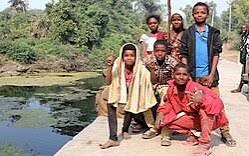
Khushbu Rajakbhai Darjada (15) won silver in the girls’ 63-kg judo category at the Dakar Youth Olympics, becoming the second Indian judoka and first athlete from Gujarat’s Siddi community to win a Youth Olympics medal.
- Siddi Community is an Afro-Indian ethnic and tribal community descended from East African peoples who settled in the Indian subcontinent centuries ago. In Gujarat, they are recognized as a Particularly Vulnerable Tribal Group (PVTG) and a Scheduled Tribe (ST) in the Saurashtra region, locally known as Siddi Badshah for their free-spirited, communal way of life.
- Primarily descended from East African Bantu populations, brought to India through medieval trade, military conquests and Portuguese enslavement during the 15th–17th centuries.
- Historically employed as palace bodyguards (angrakshaks), soldiers, and caretakers of lions by the Nawabs of Junagadh, or as workers in the agate (akik) mines of Ratanpur (Bharuch).
- Deeply rooted in Sufism, venerating the 15th/16th-century African Muslim Sufi saint Baba Gor, whose primary dargah is located in Ratanpur.
- Primarily concentrated in 18 villages of Talala taluka in Gir Somnath district (notably Jambur, known as “Mini Africa,” and Talala), adjoining Gir National Park, with smaller populations across Junagadh, Jamnagar, Bhavnagar, Rajkot, Porbandar, and Bharuch.
- Smaller Siddi populations reside across Karnataka (Yellapur/Haliyal), Maharashtra, Goa, and the Union Territory of Daman & Diu.
- Siddis have adopted Gujarati language, Kathiawadi dialect, traditional attire and local food habits, while retaining elements of their distinct African heritage.
- Predominantly Muslim, Siddis blend Sufi devotional practices with Gujarati folk traditions, particularly through Urs festivals honouring Baba Gor and Nagarshi Baba.
- Famous for Dhamal (Siddi Goma), a vibrant traditional dance featuring rhythmic drums, peacock feathers, energetic movements and imitation of animal calls.
- Concentrated around Gir Forest, Siddis traditionally depend on agriculture, forest-related occupations, safari guiding, wildlife tracking and other local employment.
- Siddis in designated Saurashtra areas of Gujarat receive Scheduled Tribe (ST) recognition and are identified as a PVTG, while some communities elsewhere fall under SEBC classification.
Just Rights for Children Alliance v. S. Harish (2026) Case:

The Supreme Court’s observations in Just Rights for Children Alliance v. S. Harish (2026) have renewed discussions on children’s right to internet access, emphasising the need to balance digital freedom with online safety through age-appropriate safeguards.
- A Supreme Court case concerning children’s online safety and digital rights, highlighting the importance of protecting minors from harmful online content without unnecessarily restricting their access to information, education and self-expression.
- The Court recognised the importance of internet access for children, linking digital participation with freedom of speech, expression and access to knowledge under Article 19(1)(a).
- Emphasised that online safety and individual freedom are complementary, and protecting children should not automatically mean restricting their digital rights.
- Highlighted the need for proportionate and context-specific safeguards, rather than blindly adopting international models of social media restrictions.
- Stressed the importance of responsible content regulation and preventive safeguards to protect children from harmful material while preserving their learning opportunities.
The Muhurat Trading:

Indian benchmark indices Nifty 50 and Sensex extended their seven-session rally into Diwali Muhurat trading, marking a positive start to Samvat 2083 amid global economic uncertainties.
- The Muhurat Trading is ceremonial, pre-scheduled, truncated one-hour trading session conducted by Indian stock exchanges (BSE and NSE) on the evening/afternoon of Diwali (Lakshmi Puja) to mark the opening of the traditional Hindu financial year, known as the Vikram Samvat.
- Stemmed from the ancient Indian merchant practice of Chopda Pujan, where Marwari and Gujarati trading communities closed existing ledgers and ritually worshipped new account books on Diwali in the presence of Goddess Lakshmi and Lord Ganesha.
- Formally institutionalized as an organized exchange session by the Bombay Stock Exchange (BSE) in 1957.
- Later adopted by the National Stock Exchange (NSE) in 1992, transitioning over subsequent decades from open-outcry ring celebrations on Dalal Street into modern electronic, mobile-based execution.
- Aim is to invoke divine blessings of wealth, prosperity, and financial well-being (Shubh Labh) for the upcoming fiscal cycle, allowing investors and broking firms to initiate new investments and set a favorable tone for the new Samvat year.
Working:
- Operates outside standard weekly trading hours via a specialized schedule notified by exchanges, typically divided into a pre-opening session, a continuous trading window of approximately one hour, and a subsequent closing auction session.
- Spans multiple asset classes, including equities, equity derivatives, commodities, and currency derivatives.
- Involves mostly symbolic retail orders, portfolio reallocation, and token token-buying rather than heavy institutional speculative volume, resulting in lower trading churn.
Key Features of Muhurat Trading:
- Historically characterized by bullish sentiment; over the last 20 years, indices have closed higher in about 75–80% of sessions (frequently recording gains between 0.1% and 1%).
- Characterized by investors purchasing blue-chip shares, index exchange-traded funds (ETFs), or gold sovereign/digital assets as long-term wealth anchors rather than intraday short positions.
- Features compressed market sessions that consolidate festive retail participation into a tight 60-minute window, minimizing broader macroeconomic volatility.
- Replaces traditional manual ledger opening with modern digital portfolio additions, enabling broking houses and family offices to execute their first trades for the new Samvat year.
- The exact session timing is synchronized with the auspicious planetary window (Shubh Muhurat) calculated by astrologers and exchange boards for Lakshmi Puja Day.