
Today’s Current Affairs: 12th Nov 2026 for UPSC IAS exams, State PSC exams, SSC CGL, State SSC, RRB, Railways, Banking Exam & IBPS, etc
Table of Contents
Exercise Sea Vigil-26:
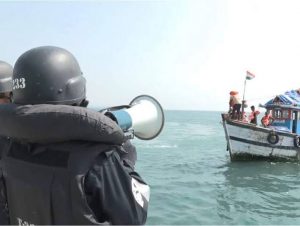
The Navy recently kicked off the fifth edition of ‘Sea Vigil-26’, the country’s largest coastal defence exercise.
- Exercise Sea Vigil-26 is the fifth edition of the pan-India Coastal Defence Exercise.
- The exercise is being coordinated by the Indian Navy as the lead agency.
- Objective is to assess and strengthen the country’s maritime security and coastal defence
- Exercise Sea Vigil was conceptualised in 2018 to validate the measures instituted to strengthen maritime security in the aftermath of the 26/11 Mumbai terror attacks.
- The 2026 edition will cover the entire Indian coastline and Exclusive Economic Zone (EEZ), involving all coastal states and Union Territories, along with various maritime stakeholders, including fishing and coastal communities.
- It is the first since India’s coastline was officially re-measured at 11,098.81 km, nearly 48 percent longer than the 7,516.6 km figure used for decades.
- The exercise is being conducted in two phases. The Coastal Defence and Security Readiness Evaluation (CDSRE) phase, followed by the Sea Phase on November 18 and 19.
- The exercise will bring together personnel and assets from the Indian Navy, the Indian Coast Guard, Coastal Security Police, Customs, and other maritime agencies.
- The exercise is being facilitated by the Ministries of Defence; Home Affairs; Ports, Shipping and Waterways; Petroleum and Natural Gas; and Fisheries, Animal Husbandry and Dairying, along with other central government agencies and coastal states and Union Territories.
- Sea Vigil also serves as a precursor to the Indian Navy’s biennial Theatre Level Readiness Operational Exercise (TROPEX).
- Together, Sea Vigil and TROPEX address the entire spectrum of maritime security challenges, from coastal defence to operations on the high seas
Coal Gasification : In News
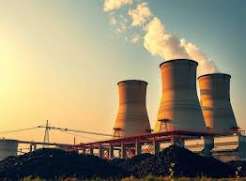
Coal Gasification is a thermo-chemical process that converts coal into syngas.
- Contrary to what the name of the process suggests, coal gasification does not burn coal directly.
- It heats crushed coal with limited oxygen and steam at very high temperatures (typically around 800–1,600°C) and pressure, producing syngas.
- Syngas typically contains:
- Carbon monoxide (CO)
- Hydrogen (H₂)
- Methane (CH₄)
- Carbon dioxide (CO₂)
- Water vapor (H₂O)
- Trace gases (e.g., sulfur compounds)
- Syngas can then be converted into:
- Methanol
- Ammonia
- Urea
- Synthetic Natural Gas (SNG)
- Hydrogen
- Liquid fuels and chemicals
Process of Coal Gasification:
- Coal is finely crushed to increase surface area.
- Moisture is removed from the coal.
- Coal is heated in the absence of oxygen to release volatile gases.
- A controlled amount of oxygen or air is added to partially combust the coal, generating heat.
- Steam reacts with hot carbon to form syngas through water-gas reactions.
Advantages of Coal Gasification:
- Fuel Flexibility: Can utilize low-grade coal and waste coal.
- Cleaner Combustion: Lower SOx, NOx, and particulate emissions than direct coal combustion.
- Feedstock for Chemicals: Syngas can be converted into ammonia, methanol, or synthetic fuels.
- Power Generation: Integrated Gasification Combined Cycle (IGCC) plants convert syngas to electricity more cleanly.
- Hydrogen Production:
- Provides a source of hydrogen for fuel cells and other industrial applications.
- With carbon capture and storage, coal-based hydrogen production can have substantially lower carbon emissions.
Swachh Survekshan 2025-26:
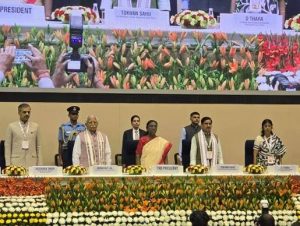
President Droupadi Murmu recently felicitated the winners of the Swachh Survekshan Awards 2025-26 at a ceremony held at Vigyan Bhawan in New Delhi,
- The 10th edition of the annual Swachh Survekshan Awards, organized by the Ministry of Housing and Urban Affairs (MoHUA) under the Swachh Bharat Mission-Urban (SBM-U)
- It is the world’s largest urban cleanliness survey and a key pillar of the SBM-U.
- Launched in 2016, the survey assesses cleanliness and sanitation standards in urban areas across the country, encouraging competition among cities to improve waste management and sanitation.
- Over 4,751 cities participated in the latest edition. It expanded its coverage to include the Hills and Himalayan cities as well as River front and coastal towns.
- This year 60 national awards have been announced, under the following categories:
- Clean Cities of Super Swachh League
- Swachh Shehar in 5 population categories
- Swachh River Front Town
- Swachh Coastal Town
- Clean Himalayan City
- Swachh Shehar Jodi (SSJ)
- State First Swachh City
- Swachh Survekshan 2025-26 Rankings:
- Super Swachh League (Recognises sustained excellence in cleanliness):
- Navi Mumbai
- Surat
- Vijayawad
- Million Plus Population Category:
- Greater Visakhapatnam (Andhra Pradesh)
- Jabalpur (Madhya Pradesh)
- Lucknow (Uttar Pradesh)
- Big Cities (Population 3–10 Lakh Category):
- Ujjain (Madhya Pradesh)
- Union Territory of Chandigarh
- Guntur (Andhra Pradesh)
- Medium Cities (Population 50000–3 Lakh Category):
- Dewas (Madhya Pradesh)
- New Delhi Municipal Council (NDMC)
- Sagar (Madhya Pradesh)
- Small Cities (Population 20000–50000 Category):
- Vita (Maharashtra)
- Aska (Odisha)
- Panaji (Goa)
- Very Small Cities (Population < 20000 Category):
- Bilha (Chhattisgarh)
- Panchgani (Maharashtra)
- Budhni (Madhya Pradesh)
- Indore, which had been ranked the cleanest city in the country for the past eight years, did not figure among the toppers this year.
- Super Swachh League (Recognises sustained excellence in cleanliness):
New Award Categories:
- Swachh River Front Town:
- Rewa (Madhya Pradesh)
- Bilaspur (Chhattisgarh)
- Varanasi (Uttar Pradesh).
- Swachh Coastal Town:
- Puri (Odisha)
- Alappuzha (Keralam)
- Ratnagiri (Maharashtra).
- Clean Himalayan City:
- Rudrapur (Uttarakhand)
- Jammu
- Shopian
- Swachh Shehar Jodi Initiative:
- It is a city-to-city mentorship and peer-learning programme launched under the SBM-U.
- 70 mentor cities have been paired with 191 mentee cities to facilitate knowledge-sharing and improve sanitation outcomes.
- Ahmedabad and its partner town Sanand secured the top position in this category.
- Indore, with its partner town, Depalpur, secured the second position, while Tirupati and its partner town, Kuppam, ranked third
Nawegaon-Nagzira Tiger Reserve:

A tiger has recently been found dead in Maharashtra’s Nawegaon-Nagzira Tiger Reserve (NNTR) in a suspected case of electrocution, prompting forest authorities to detain a farmer and seven other persons.
- Nawegaon-Nagzira Tiger Reserve is situated in the Gondia and Bhandara districts of Maharashtra.
- It lies in the heart of the central Indian tiger landscape, which contributes almost 1/6 of the total tiger population of the country.
- Officially notified as the 46th Tiger Reserve of India in 2013, it covers an area of approximately 1894.90 sq.km, out of which 656.36 sq.km. forms the core area.
- It comprises the notified areas of Nawegaon National Park, Nawegaon Wildlife Sanctuary, Nagzira Wildlife Sanctuary, New Nagzira Wildlife Sanctuary, and Koka Wildlife Sanctuary.
- It has linkages with Kanha, Pench, and Tadoba Tiger Reserves.
- The topography is undulating, and the highest point, viz., ‘Zenda Pahad’, is around 702 m above Mean Sea Level.
- It acts as a critical catchment area for the Vainganga, Chulbandh, and Gadvi rivers
- Southern Tropical Dry Deciduous
- The towering Teak (Tectona grandis) dominates the landscape, standing tall alongside Ain (Terminalia tomentosa), Haldu (Adina cordifolia), Dhaora (Anogeissus latifolia), and Bamboo (Dendrocalamus strictus).
- Tigers and leopards are the main predators, with sloth bear, dhole (wild dog), jackal, and hyena also recorded.
- Herbivores include gaur, sambar, chital, nilgai, barking deer, and wild boar.
- It is a good birding destination, with notable species like the Red-collared Dove, Spotted Dove, and Black-Winged Kite found in the reserve.
INS Betwa:
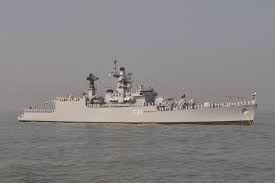
The Defence Ministry recently sealed a ₹498-crore contract with state-run Cochin Shipyard Ltd. for “refit and re-powering” of the Indian Navy’s guided-missile frigate INS Betwa.
- INS Betwa (F39) is an indigenously built guided missile frigate of the Indian Navy.
- It is the second vessel of the three-ship Brahmaputra class (Project 16A), the other two being INS Brahmaputra and INS Beas.
- It was built by the Garden Reach Shipbuilders and Engineers (GRSE), Kolkata.
- The ship is named for the Betwa River.
- It was commissioned into the Indian Navy on July 7, 2004.
- It is designed for multiple maritime operations, including anti-air, anti-surface, and anti-submarine warfare.
- The 3,600-tonne warship measures 125 metres in length.
- It currently has a steam-based propulsion system, which will be replaced by a diesel-engine-based system under the new contract signed with state-run Cochin Shipyard Ltd.
- It is capable of speeds exceeding 30 knots.
- It is manned by 40 officers and 330 sailors.
- Range: 4500 miles at 12 knots
- It was the first Indian warship to have an indigenously designed and manufactured Combat Management System (EMCCA), which had been successfully integrated with a wide array of weapons and sensors.
- Their weapon and sensor systems include surface-to-surface missiles, air-defence systems, guns, torpedo launchers, and anti-submarine warfare equipment.
- The ships are also equipped to operate naval helicopters, extending their surveillance and operational reach.
Wangala Festival:
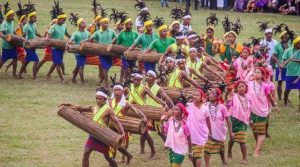
Meghalaya’s 100 Drums Wangala Festival commenced in West Garo Hills with traditional music and cultural performances.
- Wangala Festival is celebrated in the Garo Hills of Meghalaya, India.
- It is also known as a 100 drums festival.
- It is a harvest festival held in honour of Saljong, the Sun-god of fertility.
- The celebration of the Wangala Festival marks the end of a period of toil, which brings good output of the fields. It also signifies the onset of winter.
- It is the occasion when the tribals offer sacrifices to please their main deity Saljong – the Sun God.
- It is generally celebrated for two days and sometimes continues for even a week.
- The ceremony performed on the first day is known as Rugala (Ragula) is performed inside the house of the chief.
- On the second day is known as “Kakkat”.
- Basically, the Wangala Festival is a way to preserve and promote the cultural identity of Garos in Meghalaya.
Credit Guarantee Fund for Micro Units:

The Union Cabinet, chaired has approved the continuation of Credit Guarantee Fund for Micro Units (CGFMU) for a period of five years upto 31.03.2031.
- Credit Guarantee Fund for Micro Units was launched in 2016.
- It has acted as a major catalyst in enabling the growth of Pradhan Mantri Mudra Yojana (PMMY) loans in the country.
- The scheme provides credit guarantee coverage to the lending Institutions through National Credit Guarantee Trustee Company Limited (NCGTC) against default risk.
- The fund will provide guarantee coverage for loans of up to ₹20 lakh extended to eligible micro enterprises under PMMY.
- It will also cover overdrafts of up to ₹10,000 provided by banks through accounts under the Pradhan Mantri Jan Dhan Yojana (PMJDY).
- Loans granted to self-help groups (SHGs) with a portfolio ranging from ₹10 lakh to ₹20 lakh will also be eligible for coverage.
- The guarantee coverage will be linked to the actual credit exposure of lending institutions. For working capital facilities, it will be based on the amount disbursed, while for term loans, it will be linked to the outstanding loan amount.
- There will be reduction in the guarantee fee from 1 per cent per annum to 0.75 per cent per annum. The fee structure for SHG loans will remain unchanged, at 0.25 per cent for the first year and 0.50 per cent in subsequent years.
- The Scheme would be applicable to all loans extended under PMMY.
Exercise IMNEX-26:
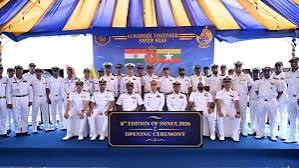
The 8th edition of the India–Myanmar Naval Exercise (IMNEX-26) is being conducted at Visakhapatnam.
- Exercise IMNEX-26 is a bilateral naval exercise conducted between India and Myanmar.
- Participating Fleets: INS Rana and INS Sumedha
- The exercise provides an opportunity for both the Navies to exchange professional expertise, enhance mutual understanding and develop greater operational synergy.
- IMNEX serves as an important platform for advancing maritime cooperation between the two neighbouring countries.
- Phases:
- Harbour Phase: It includes professional interactions, Subject Matter Expert Exchanges (SMEEs), cross-deck visits, sporting engagements and discussions on operational matters.
- Sea Phase: It will involve coordinated maritime operations, tactical manoeuvres and exercises aimed at enhancing interoperability between the participating units.
- IMNEX-26 underscores the enduring friendship and maritime partnership between India and Myanmar.
- It is aligned with India’s vision of MAHASAGAR (Mutual and Holistic Advancement for Security and Growth Across Regions) and reflects the shared commitment of both Navies to maritime cooperation and a secure and stable regional environment.
Stand-Up India Scheme : Continuation Approved
The Union Cabinet has approved the continuation of the Stand-Up India Scheme for a period of 5 years upto 31.03.2031.
- Stand-Up India Scheme was launched on 5th April, 2016 to promote entrepreneurship among the Scheduled Castes/Scheduled Tribes and Women.
- Under the recent extension period, it aims to provide financial assistance to an additional 2.5 lakh entrepreneurs in a span of five years.
- It operates under the Ministry of Finance.
- Age Requirement: The applicant must be above 18 years of age.
- Features of the Scheme:
- Eligible borrowers: Women, SC and ST entrepreneurs for setting up new/greenfield enterprises
- The loan can be in the form of either Composite (Working Capital and Term Loan) or Term Loan for amounts above Rs.10.00 lakh and upto Rs.1.00 crore (upto 85% of the project cost).
- Eligible Sectors: Manufacturing, Services, Trading and Agri-allied activities.
- Credit Guarantee coverage: 85% of the loan amount
- Guarantee Fee: Standard guarantee fee of 0.50 %
Extracellular Vesicles:

Extracellular vesicles (EVs) can modify pathological progression in Alzheimer’s disease (AD), the most common neurodegenerative disease in older adults, by spreading pathogenic factors.
- EVs are small membranous nanoparticles secreted by all types of cells into the extracellular space.
- They can be found in numerous bodily fluids, including blood, urine, cerebrospinal fluid, and more.
- The biochemical composition of EVs mainly consists of lipids, proteins, and nucleic acids.
- Derived from cells, EVs obtain their appearance based on the cargo transferred from the donor cells, known as their molecular signature.
- Unlike other cellular components, EVs are not capable of replication.
- EVs are broadly classified into:
- Exosomes (30–150 nm): Originate from endosomal compartments.
- Microvesicles (100–1000 nm): Shed directly from the plasma membrane.
- Apoptotic bodies (>1000 nm): Released by dying cells.
- EVs have a wide range of uses in various fields, and their therapeutic potential is currently being explored in many preclinical and clinical studies.
Intercellular communication: - EVs play an important role in intercellular communication by transferring biological molecules, such as proteins, lipids, and nucleic acids, between cells.
- This process can influence various physiological and pathological processes, including immune response, tissue regeneration, and cancer progression.
- EVs can serve as diagnostic markers for various diseases, as they contain biomolecules that reflect the physiological state of the parent cell.
- For example, circulating EVs have been shown to contain biomarkers for cancer and neurodegenerative diseases, and their analysis can aid in disease diagnosis and prognosis.
- EVs can be engineered to deliver therapeutic molecules, such as drugs or nucleic acids, to target cells.
- These offer several advantages over traditional drug delivery systems, including high biocompatibility, low immunogenicity, and the ability to cross biological barriers.
- EVs can promote tissue regeneration and repair by modulating cellular behavior and signaling pathways.
- These have been used in various tissue engineering applications, including bone regeneration, cartilage repair, and wound healing.
What is Red Ochre?
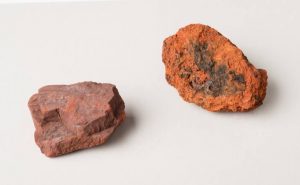
Rock paintings in red ochre, believed to be around 4,000 years old, have been recently discovered at Karadimalai in Ottampattu Thandari village in Villupuram district, Tamil Nadu.
- Red Ochre is a natural earth pigment, typically composed of iron oxide that ranges in color from yellow to deep red.
- It is one of the earliest pigments used by humankind, with a history stretching back tens of thousands of years.
- Early people applied it for frame and face painting, cave drawings, and ritual burials, which illustrates the pigment’s cultural importance.
- It was used in Ancient cave paintings.
Dibang River:
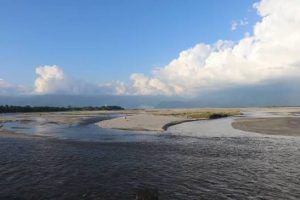
Communities living downstream of a hydropower project on the Dibang River have stepped up the heat on the governments of Assam and Arunachal Pradesh, with the latter already burning due to opposition to two other proposed mega dams.
- Dibang River is an important tributary of the Brahmaputra.
- It flows through the states of Arunachal Pradesh and Assam.
- The Dibang Valley, a district of Arunachal Pradesh, is named after this river.
- It originates near Keya Pass on the Indo-Chinese border in the Upper Dibang Valley district of Arunachal Pradesh.
- The region all along the upper course of the river is located in the Great Himalayan Mountain Range, with its northern and eastern reaches bordering Tibet.
- Cutting deep gorges through the Mishmi Hills, it enters the plains at Nizamghat (Bomjir) and meets the Lohit and then the Dihang (Siang) River near Sadiya in Assam, below which the combined stream is known as the Brahmaputra.
- It stretches from its origin in the Mishmi Hills to its confluence with the Brahmaputra River in Assam.
- Major Tributaries: Dri, Mathun, Talon, Eme, Ahi, Emra, and Awa.
- It is an important lifeline for the Idu Mishmi tribal community, supporting their traditional lifestyle, agriculture, and fishing practices.
Dibang Multipurpose Project:
- It is a flood control cum hydroelectric power project planned to be developed on the Dibang River in Arunachal Pradesh.
- At 2,880 MW installed capacity, it will be the country’s biggest hydropower facility.
- It is being developed by India’s state-run National Hydroelectric Power Corporation (NHPC).
- The Project is designed as an energy storage project, with flood moderation as one of the key objectives, besides power generation.
- It involves the construction of a 278-metre-high concrete gravity dam, which is planned to be India’s highest concrete gravity dam.
- The dam is planned to be constructed with the Roller Compacted Concrete (RCC) technique, and it will be the highest RCC dam in the world.