Today’s Current Affairs: 24th Nov 2026 for UPSC IAS exams, State PSC exams, SSC CGL, State SSC, RRB, Railways, Banking Exam & IBPS, etc
Table of Contents
Benghazi Port:
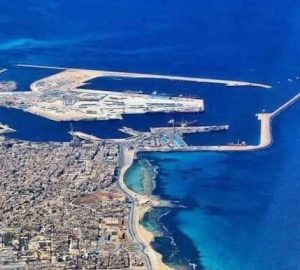
An explosion and fire were recently reported aboard a Russian ship docked at Libya’s Benghazi port, with the eastern-based Libyan government suspecting a drone attack.
- It is one of the largest commercial ports in eastern Libya, serving the eastern and southern regions.
- It is situated on the coast of the Gulf of Sidra, an arm of the Mediterranean Sea in the region of Cyrenaica.
- Major exports include oil, wool, livestock, rugs, while major imports include food, textiles, chemicals, and pottery.
- Apart from commercial maritime traffic, Benghazi port also handles humanitarian cargoes such as medicines, etc, destined for other war-torn African nations like Darfur and Chad.
- It also houses one of the world’s biggest water desalination plants, which provides fresh water to most of Libya’s cities.
- The port is well connected to major cities by roadways.
- Benghazi port suffered due to political reasons and was blocked after 2013, resuming port operations in 2018.
Short-Eared Owl:
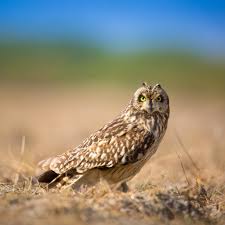
A short-eared owl was recently spotted at Sasihithlu beach and estuary in Dakshina Kannada, Karnataka, adding to recent unusual bird sightings along the coast.
- Short-Eared Owl is a medium-sized owl belonging to the family Strigidae.
- It is named after its very small ear tufts, which are usually difficult to see.
- Scientific Name: Asio flammeus
- It is one of the most widespread owls in the world; can be found on every continent except Australia and Antarctica.
- Northern populations migrate south for the winter.
- Although the species winters in suitable grassland habitat across the Indian Subcontinent, it is most abundant in the western and northwestern parts of the region.
- It utilizes a wide variety of habitats that are typically open and have low vegetation with an abundance of small mammals.
- Conservations Status:
- IUCN Red List: Least Concern
Indraprastha Communique:
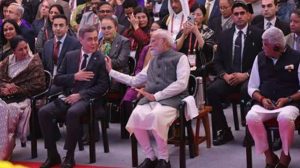
The first SCO Civilisational Dialogue Forum, held in New Delhi, concluded recently with a 12-point outcome document, the ‘Indraprastha Communique’.
- Indraprastha Communique is a 12-point outcome document adopted at the First Shanghai Cooperation Organisation (SCO) Civilisational Dialogue Forum, held at New Delhi.
- It recognises culture as a “vital bridge for friendship, good neighbourliness” among nations.
- The Communiqué affirmed respecting every civilisation as an equal voice, and acknowledging its identity and contribution to humanity.
- It recognised that cultural heritage encompasses monuments, manuscripts, literature, works of art, living traditions, cuisine, performing arts, creative endeavours and knowledge systems passed on through generations.
- The document also highlighted the role of technology, including Artificial Intelligence, in making our cultural heritage easier to understand, access and appreciate.
- It stressed that these technologies must be used responsibly while respecting the accuracy and cultural importance of our heritage.
- The interests of the communities and institutions that preserve it must also be kept in mind.
- The Communiqué also called for greater efforts to protect cultural heritage from threats such as illegal trafficking, environmental damage and natural disasters.
- It underlined the importance of sharing experiences and working together to preserve our rich heritage for future generations.
- The communique also proposed exploring joint nominations for UNESCO heritage inscription.
- The communiqué further records India’s proposal to hold the SCO Civilisational Dialogue every two years, at a venue to be decided by member states at the respective SCO summits
Kawal Tiger Reserve : Arrival Of Migratory Bird

The arrival of migratory birds from Siberia, Central Asia and other northern regions has brought renewed attention to the ecological significance of Kawal Tiger Reserve (KTR).
- Kawal Tiger Reserve is located in Telangana.
- The reserve is nestled in the Sahyadri Mountain Ranges.
- Geographically, the reserve is situated at the southernmost tip of the Central Indian Tiger landscape, having linkages with the Tadoba-Andhari (Maharashtra) and Indravati (Chhattisgarh) tiger reserves.
- It is a major catchment of the river Godavari and local rivulets like Peddavagu and Kadam.
- It has diverse habitats comprising dense forests, grasslands, rivers, streams, and water bodies.
- It mainly consists of Southern Tropical Dry Deciduous Forest.
- It consists of teak along with bamboo and other species like Anogeissus latifolia, Mitragyna parviflora, Terminalia crenulata, Terminalia arjuna, Boswellia serrata, etc.
- The major wild animals include: tiger, nilgai, chousinga, chinkara, black buck, sambar, spotted deer, wild dog, wolf, jackal, fox, leopard, and the jungle cat.
Nayi Chetna 5.0:

The Ministry of Rural Development will launch the fifth edition of its national gender campaign, Nayi Chetna 5.0 under the Deendayal Antyodaya Yojana–National Rural Livelihoods Mission (DAY-NRLM).
- Nayi Chetna 5.0 is an initiative of the Ministry of Rural Development.
- It is implemented under the Deendayal Antyodaya Yojana–National Rural Livelihoods Mission (DAY-NRLM).
- It will place women’s economic empowerment at the centre of its approach.
- It focus on four interconnected areas: recognising women as economic contributors, strengthening women’s access to and control over assets, promoting safe mobility, and redistributing unpaid care work.
- It particularly emphasises on addressing barriers that restrict women’s access to livelihood opportunities, markets, financial services, public spaces and essential services, and their ability to move freely, safely and independently.
- The campaign aims to move beyond awareness generation towards coordinated action and measurable improvements in women’s economic participation, agency and decision-making.
- The theme of Nayi Chetna 5.0: From Access to Agency: Empowering Women through Livelihoods and Equal Opportunities for a Viksit Bharat,”
Genome Language Model:
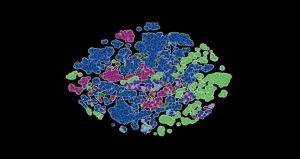
Scientists are currently using genome language models to help predict the consequences of genetic changes and to generate entirely new sequences.
- A genome language model is an AI trained to recognise patterns in Deoxyribonucleic acid (DNA).
- These are large language models trained on DNA, RNA, and related biological sequences to learn regulatory syntax, gene function, and long-range interactions across genomes.
- DNA contains four chemical building blocks called adenine, thymine, guanine, and cytosine.
- Their sequence carries the genetic instructions organisms use to build and maintain themselves.
- The complete set of instructions is called the genome.
- Working of Models:
- To train a genome language model, researchers feed an artificial neural network large quantities of DNA sequence data collected from various organisms.
- The model learns by predicting the next DNA letter in a sequence or filling in missing letters.
- Once after training, the model will be able to identify patterns of genes and the relationships between them without also learning about all the underlying biological rules.
- Potential Applications:
- Genome Language Models are helping scientists study and design simple biological systems — together with lab experiments.
- It could also help scientists to better understand genetic processes and potentially design new treatments.
- It helps scientists to predict the consequences of genetic changes and to generate entirely new sequences.
BepiColombo Mission:
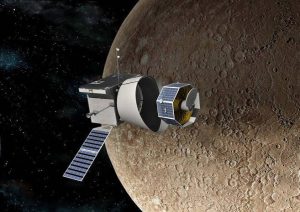
After an eight-year journey, the European-Japanese spacecraft BepiColombo has begun orbiting the solar system’s smallest and innermost planet Mercury.
- BepiColombo Mission was launched on October 20, 2018.
- It is a joint European Space Agency (ESA) and Japan Aerospace Exploration Agency (JAXA) mission to Mercury.
- The mission was named after Giuseppe “Bepi” Colombo, an Italian mathematician and engineer who made significant contributions to the understanding of Mercury’s orbit.
- It is designed to study Mercury’s surface, composition, magnetic field, and its interaction with the solar environment.
- Components of BepiColombo:
- Mercury Planetary Orbiter (MPO): It is developed by ESA, carries 11 instruments, including spectrometers and HIS cameras, and will study the interior and surface of the planet Mercury as well as its exosphere.
- Mercury Magnetospheric Orbiter (MMO): It is developed by the Japanese space agency JAXA, includes 5 scientific instruments, and aims to study the magnetic field, the exosphere as well as waves and particles located in the immediate environment of the planet.
- Objectives:
- Investigating Mercury’s surface and composition to better understand its geological history and formation processes.
- Studying Mercury’s magnetic field and magnetosphere to gain insights into its internal structure and how it interacts with the solar wind.
- Measuring Mercury’s exosphere (a thin atmosphere) and understanding its composition and dynamics.
- Conducting experiments to test certain principles of general relativity and improve our understanding of gravity.
31st Conference of the Parties (COP 31) to the UNFCCC:
The 31st Conference of the Parties (COP 31) to the United Nations Framework Convention on Climate Change (UNFCCC) concluded in Antalya, Türkiye, without adopting a final cover decision (the proposed “Antalya Pact”).
- COP 31 exposed deep divisions over fossil fuel phase-out, adaptation finance and climate equity, leading to the collapse of the proposed Antalya Pact.
- India emphasised climate justice, CBDR-RC and predictable climate finance, calling for equitable burden-sharing and stronger implementation ahead of COP 32 (Addis Ababa, 2027).
Outcomes of the UNFCCC COP 31 (Antalya, Türkiye):
- Collapse of the Overarching Cover Decision (“Antalya Pact”): In the closing plenary, COP 31 President Murat Kurum (Türkiye) formally declared a lack of consensus after the European Union, UK, Norway, Vanuatu, Marshall Islands, Panama, and Belize rejected the final Antalya Pact.
- Under Rule 16 of the UNFCCC Rules of Procedure, all unresolved items automatically carry over to the next COP 32 in Addis Ababa, Ethiopia (November 2027).
- Draft Antalya Pact:
- Fossil Fuel Phase-Out Dropped: Following strong objections from major oil- and gas-producing nations, the draft text removed all references to coal, oil, natural gas, and “transitioning away from fossil fuels (TAFF)” (agreed at COP 28 in Dubai), replacing it with a broader reference to an “irreversible global transition towards low greenhouse gas emissions and climate-resilient development”.
- Conversely, the draft retained support for scaling up Carbon Capture, Utilisation and Storage (CCUS) and Carbon Dioxide Removal (CDR) technologies, stating they should complement rather than substitute for deep emission cuts.
- 35-by-35 Electrification Target: Proposed global cooperation to raise electricity’s share of global final energy consumption to 35% by 2035, complementing COP 28 goals to triple renewable energy capacity and double energy efficiency improvements by 2030.
- However, following pushback from India, Russia, and the Arab Group, it was reframed from a rigid mandate to a call for “global cooperation” accounting for national circumstances and energy access.
- Adaptation Finance: The draft dropped the proposed USD 120 billion annual target by 2035, retaining an ambition to triple adaptation finance without a clear baseline or binding commitment.
- Developing countries face USD 305 billion in annual adaptation needs and USD 5.1–6.8 trillion in Nationally Determined Contributions implementation requirements by 2030.
- The Antalya–Addis Ababa Roadmap (jointly launched by the COP 31 (Türkiye) and COP 32 (Ethiopia), aimed at mobilising adaptation finance, was also dropped along with the Pact.
India’s Stance at UNFCCC COP 31:
- India positioned itself as a key voice of the Global South (coordinating with G77+China, BASIC and LMDC blocs) anchored in COP 31’s theme of “Dialogue, Consensus and Action”:
- Carbon Budget Equity: India emphasized that climate change is the result of two centuries of unabated industrialization by developed economies, highlighting that historical cumulative emissions have already consumed over 80% of the remaining 1.5°C carbon budget.
- Firm Anchoring in CBDR-RC: India insisted that all global climate action must uphold Equity and Common But Differentiated Responsibilities and Respective Capabilities (CBDR-RC), ensuring developing nations are not forced to compromise poverty eradication and economic growth.
- Country-Driven Just Transition Mechanism: India called for an inclusive, country-driven Just Transition framework supported by adequate concessional finance, technology transfer, and capacity building—rather than prescriptive global mandates.
- Opposition to Top-Down Targets (35-by-35): Alongside the Like-Minded Developing Countries (LMDC), India opposed embedding voluntary Action Agenda pledges (such as the 35-by-35 electrification target) into formal negotiated decisions without guaranteed finance and grid-investment support.
- India also raised concerns over unilateral climate-related trade-restrictive measures (such as the EU’s CBAM).
- Climate Finance Accountability & Party-Driven GST: India pressed developed countries to honor Article 9 of the Paris Agreement, ensure timely replenishment of the Green Climate Fund (GCF), and keep the Global Stocktake (GST) strictly Party-driven and non-punitive.
- Domestic Delivery Over Rhetoric: Expressing regret over the collapse of consensus, India emphasized that “the absence of a final agreement does not pause climate action.”
- Highlighted India’s domestic clean-energy progress, including crossing 170 GW of solar capacity and reaffirmed India’s commitment to consensus-based multilateralism heading into COP 32 (Addis Ababa, Ethiopia, 2027).
UNFCCC Conference of the Parties (COP):
- The COP is the supreme decision-making body of the UNFCCC, where member countries meet annually to review global climate progress, negotiate agreements, and update commitments such as Nationally Determined Contributions (NDCs).
- The UNFCCC was adopted on 9th May 1992 in New York, opened for signature at the Rio Earth Summit (June 1992) and entered into force in 1994. It was subsequently complemented by the Kyoto Protocol (1997) and Paris Agreement (2015).
- The 1985 Villach Conference helped establish international scientific consensus on climate risks, while the IPCC, established by WMO and UNEP in 1988, provides scientific assessments to inform global climate negotiations.
- Initiated with COP 1 in Berlin (1995), participation has expanded to 198 Parties, making COP one of the largest multilateral platforms under the United Nations.
- COP is supported by two permanent technical bodies: the Subsidiary Body for Implementation (SBI) and the Subsidiary Body for Scientific and Technological Advice (SBSTA)
- The COP oversees the UNFCCC, while the CMP and CMA govern the Kyoto Protocol and Paris Agreement, respectively. These three bodies meet alongside one another during UN climate conferences.
- COP summits rotate among five UN-designated geographical regions (Africa, Asia-Pacific, Eastern Europe, Latin America and the Caribbean, and Western Europe and Others (WEOG)) with volunteer host nations selected by regional consensus.
- Following COP 30 in Belém, Brazil (2025), Antalya, Türkiye emerged as the host for COP 31 (2026) after WEOG negotiations with Australia (partnering with Pacific Island nations). Ethiopia will host COP 32 in Addis Ababa (2027).
Small Hydro Power in India:

The Ministry of New and Renewable Energy (MNRE) highlighted India’s efforts to accelerate Small Hydro Power (SHP) development, emphasising its role in strengthening decentralised renewable energy generation, energy security and sustainable development, particularly in remote and hilly regions.
- Small Hydro Power (SHP) refers to hydropower projects with an installed capacity of up to 25 MW, generating renewable electricity by harnessing the natural flow of rivers, streams and canals.
- In India, SHP falls under the Ministry of New and Renewable Energy (MNRE), while hydropower projects exceeding 25 MW fall under the Ministry of Power.
- SHP projects include run-of-the-river, canal-based and dam-toe installations.
- Run-of-the-River Projects: Generate electricity using natural river flows without large storage dams, generally diverting water through turbines before returning it to the river.
- Canal Falls and Dam-Toe Projects: Harness the drop in water levels in irrigation canals or below dams and barrages. Water passes through turbines and is returned to the watercourse, enabling power generation from existing water infrastructure.
- Renewable Energy & Grid Stability: SHP provides relatively reliable and flexible electricity, subject to seasonal water availability, while complementing variable renewable sources such as solar and wind.
- Geographical Suitability: SHP is particularly suitable for hilly, remote, North-Eastern and border regions, where decentralised generation can improve electricity access and reduce dependence on long-distance transmission networks.
- Environmental Advantages: Compared with large reservoir-based hydropower projects, SHP generally requires less land and causes relatively limited displacement, although ecological impacts depend on project design and river flows.
- Socio-Economic Benefits: SHP promotes local employment, rural infrastructure development, regional investment and livelihood opportunities, contributing to energy security and sustainable development.
World Fisheries Day 2026:

World Fisheries Day 2026 was observed globally on 21st November 2026, to spotlight sustainable aquatic resource management, marine biodiversity conservation, and the welfare of fishing communities.
- Globally, the Food and Agriculture Organization (FAO) and the International Labour Organization (ILO) jointly hosted the flagship observance in Rome, while in India, the Department of Fisheries, National Fisheries Development Board (NFDB), and ICAR-CIFRI highlighted India’s institutional, digital, and capital-intensive transformation of the Blue Economy toward Viksit Bharat @2047.
- World Fisheries Day 2026 highlights the importance of sustainable fisheries, marine biodiversity conservation and the welfare of fishing communities, reinforcing India’s Blue Economy ambitions.
- Overfishing, climate change, IUU fishing, inadequate cold-chain infrastructure and fragmented governance threaten fisheries sustainability and livelihoods.
- Promote deep-sea fishing, modern aquaculture, digital traceability, climate-resilient technologies and inclusive governance to achieve SDG 14 and Viksit Bharat @2047.
World Fisheries Day:
- World Fisheries Day originated on 21st November 1997, in New Delhi, India, when representatives of fishing communities from 18 countries convened to establish the World Forum of Fish Harvesters and Fish Workers (WFF) and adopted a global declaration advocating sustainable fisheries management. The observance aligns directly with UN Sustainable Development Goal 14 (SDG 14: Life Below Water).
- 2026 Theme: “Empowering People for Change: Advancing Decent Work in Fisheries and Aquaculture, particularly for Youth and Women.”
- The FAO–ILO observance emphasised occupational safety, labour rights, social protection and equitable employment opportunities, particularly for women and youth in fisheries and aquaculture.