
Today’s Current Affairs: 25th Nov 2026 for UPSC IAS exams, State PSC exams, SSC CGL, State SSC, RRB, Railways, Banking Exam & IBPS, etc
Table of Contents
Lower Arun Hydroelectric Project:
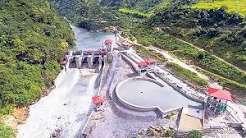
Prime Minister of India and the Prime Minister of Nepal recently laid the foundation stone of SJVN’s 669 MW Lower Arun hydroelectric project in Nepal, which is estimated to cost ₹5,792.36 crore.
- Lower Arun Hydroelectric Project is a 679 MW run-of-river project planned on the Arun River (a tributary of the Koshi River) in the Sankhuwasabha and Bhojpur districts of Eastern Nepal.
- The project will be built under the build, own, operate, and transfer (BOOT) model.
- The project is being developed by SJVN Lower Arun Power Development Company Pvt. (SLPDC), a wholly owned subsidiary of SJVN (formerly Satluj Jal Vidyut Nigam).
- SJVN Limited is a Navratna Central Public Sector Enterprise under the Ministry of Power, Government of India.
- A key feature of the Lower Arun project is its integration with SJVN’s 900 MW Arun-3 Hydroelectric Project, located upstream on the same river.
- Both projects will operate under a tandem operation system, under which water discharged from Arun-3 will be used to generate electricity at Lower Arun.
- The arrangement is designed to optimise the use of available water resources and enable additional renewable energy generation without the construction of a separate storage reservoir.
- Under the Project Development Agreement, 21 percent of the electricity generated will be provided free of cost to the Government of Nepal.
Arun-3 Hydropower Project:
- It is a 900 MW run-of-the-river hydropower project being developed on the Arun River in Sankhuwasabha District in Nepal.
- It will include the construction of a 70 m-tall and 466 m-long concrete gravity dam.
- Once completed, it will be the biggest hydroelectric facility in Nepal. It will produce 4,018.87 million units of electricity a year.
- SJVN Arun-III Power Development Company (SAPDC), a wholly owned subsidiary of India’s SJVN, is developing the project on a build-own-operate-transfer (BOOT) basis.
- SAPDC will operate the facility for a period of 25 years, excluding the construction period of five years, before transferring the ownership to the Nepal
- The project will provide surplus power to India, strengthening economic linkages with Nepal.
- The power from the project shall be exported from Dhalkebar in Nepal to Muzaffarpur in India.
Rogan Art Painting:
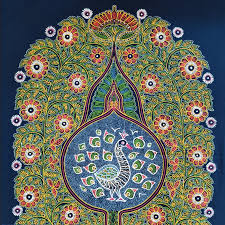
Thai Prime Minister was given a Rogan Art Painting by the Prime Minister of India.
- Rogan Art Painting has been practiced for nearly three centuries in the Nirona village of Kutch, Gujarat traditionally practised by the Khatri community.
- The word Rogan comes from Persian, meaning oil-based.
- This craft uses a thick, colourful paste prepared from castor oil and pigments to create intricate designs on fabric.
- Artists heat castor seed oil for hours, until it thickens into a rich residue, then mix it with pigments to create the vivid paint used on cloth.
- In this, artists use a metal stylus to create intricate designs by carefully guiding thread-like strands of paint onto the fabric without touching its surface.
- Traditionally, artists create one half of a motif first, and then fold the cloth so the wet paint transfers onto the other side. This creates the mirror like patterns Rogan art is famous for.
- It is traditionally practiced on silk, tussar silk, jute, wool, and cotton.
- The general features are curvilinear patterns repeated geometrically.
- The linear forms and symmetry is created by the double impression done by folding and peeling cloth, which leaves a mirror image.
- Phool (flower), Trikhani (three dots), Vesur (wavy border motif) and Jhad (trees) are the oldest found motifs.
- The contemporary motifs include circular/ concentric patterns, motifs forming architectural elements like the Jalis/screens and the tree-of-life motifs.
Katarniaghat Wildlife Sanctuary: In News

A 45-year-old man was recently killed in a leopard attack in the Sujauli area of the Katarniaghat Wildlife Sanctuary in Uttar Pradesh’s Bahraich district.
- Katarniaghat Wildlife Sanctuary is located in the Terai belt of the Upper Gangetic Plains in the Bahraich district of Uttar Pradesh, close to the Indo-Nepal border.
- In 1987, it was brought under the purview of the ‘Project Tiger’, and together with the Kishanpur Wildlife Sanctuary and the Dudhwa National Park, it forms the Dudhwa Tiger Reserve.
- It provides strategic connectivity between the tiger habitats of Dudhwa and Kishanpur in India and the Bardia National Park in Nepal.
- Katarniyaghat’s vegetation consists of grasslands, mixed deciduous forests, and moist deciduous forests.
- Primarily composed of dense sal forests, mixed with teak, jamun, and other deciduous trees.
- The sanctuary is also home to numerous medicinal plants, adding to its ecological significance.
- It is home to a number of endangered species, including the gharial, tiger, rhino, Gangetic dolphin, Swamp deer, Hispid hare, Bengal florican, the White-backed and Long-billed vultures.
- The Gairwa River (tributary of the Ghaghara River), which flows in the area, is declared a sanctuary for Mugger and Gharial. It is also home to rare turtles, freshwater fish, and a host of aquatic life.
- It is among the few places in India where freshwater dolphins, also known as Gangetic dolphins, are found in their natural habitat.
Domestic Systemically Important Banks (D-SIBs) : In News
The RBI has retained State Bank of India (SBI), HDFC Bank and ICICI Bank in its 2026 list of Domestic Systemically Important Banks (D-SIBs), maintaining their respective positions under the same bucketing structure as in 2025.
- D-SIBs are those considered too big to fail due to their size, cross-jurisdictional activities, complexity, lack of substitutability and interconnectedness.
- The disorderly failure of these banks has the potential to cause significant disruption to the essential services they provide to the banking system and, in turn, to overall economic activity.
- The D-SIB framework, issued in 2014 by the RBI, requires the central bank to disclose the names of banks designated as D-SIBs and place these banks in appropriate buckets depending on their Systemic Importance Scores (SISs).
- Based on the bucket in which a D-SIB is placed, an additional common equity requirement has to be applied to it, with higher buckets attracting larger additional capital requirements.
- It means that these banks have to earmark additional capital and provisions to safeguard their operations.
- The RBI had designated SBI and ICICI Bank as D-SIBs in 2015 and 2016, respectively.
- Further, in 2017, HDFC Bank was classified as a D-SIB along with SBI and ICICI Bank.
- The RBI has retained SBI, HDFC Bank, and ICICI Bank in its 2026 list of D-SIBs, keeping their classification and additional capital requirements unchanged from the previous year.
- SBI remains in bucket 4, attracting an additional Common Equity Tier 1 (CET1) capital requirement of 0.80 percent of risk-weighted assets (RWAs).
- HDFC Bank continues to be placed in bucket 2, with an additional CET1 requirement of 40 per cent, while ICICI Bank remains in bucket 1, with a requirement of 0.20 per cent.
- These additional capital requirements will be over and above the capital conservation buffer.
20th edition of exercise Suryakiran:
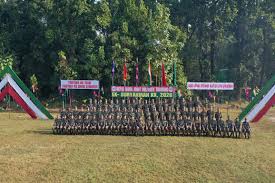
India and Nepal are set to hold the 20th edition of exercise Suryakiran.
- Exercise Suryakiran is a joint bilateral military exercise conducted between India and Nepal.
- It is conducted annually and alternately hosted by India and Nepal.
- It is aimed at further strengthening military cooperation and deepening the defence partnership between the two neighbouring countries.
- This exercise is described as a reflection of the close bond between the two countries, with the tagline, “Two Nations. One Mission. An Enduring Bond.”
- It is a key bilateral military engagement between India and Nepal, providing an opportunity for the two armies to enhance interoperability, exchange operational experiences and strengthen coordination through joint training.
Manjeera River:
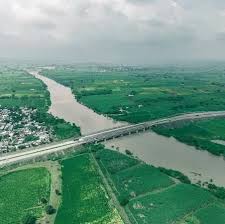
It was observed that thick white foam has covered the Manjeera after Nakkavagu carried industrial effluents and residential wastewater into the river.
- Manjeera River is a tributary of the river Godavari.
- It passes through the states of Maharashtra, Karnataka and Telangana.
- It originates in the Balaghat range of hills near Ahmednagar District
- The final stretch of the River forms the border between Maharashtra to the West and Telangana to the East.
- It drains into Godavari River at Basara near Nizamabad, Telangana.
- The confluence is traditionally known as the Triveni Sangamam, associated with the meeting of the Manjira, Godavari and Haridra rivers.
- Some of its notable tributaries are Haldi (Haridra), Lendi, Nalla, Manyad, Terna, Tawarja, Gharni, etc.
- Key Projects on Manjeera:
- Singur Dam/Singur Reservoir
- Nizam Sagar Project.
Santhal Tribe : In News
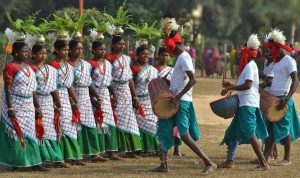
In a significant ruling on the inheritance rights of women in the Santhal Adivasi community, the Jharkhand High Court held that daughters cannot be excluded from their father’s property solely on the basis of traditional beliefs.
- Santhals are the third largest scheduled tribe community in India after Gonds and Bhils.
- They mainly reside in the states of Bihar, Jharkhand, West Bengal, and Orissa.
- They speak Santhali, a dialect of Kherwari, a Munda (Austroasiatic) language.
- Santhali, written in OI-Chiki script, is recognised as one of the scheduled languages in the Eighth Schedule to the Constitution.
- They are nature worshippers and could be seen paying obeisance at Jaher (sacred groves) in their villages.
- Divorce is not a taboo in Santhal society. Either of the couple could divorce the other.
- Their traditional dress includes dhoti and gamuchha for men and a short-check saree, usually blue and green, for women, who generally put on tattoos.
- Most Santhals are agriculturists, depending on their farmlands or forests.
- Seasonal forest collection is one of the important sources of their subsidiary income.
- Dance (enej) and music (sereng) are integral parts of the Santal life.
- Their homes, called Olah, have a particular three-colour patternon the outer walls. The bottom portion is painted with black soil, the middle with white, and the upper with red.
Pyrene:
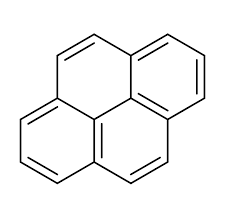
A novel material developed by scientists through incorporating metallic nanowires into metal–organic framework (MOF), can harness a broad range of light wavelengths to efficiently degrade environmental pollutants like pyrene.
- Pyrene is a persistent polycyclic aromatic hydrocarbon (PAH).
- It belongs to the highly toxic class of PAHs, with carcinogenic and mutagenic properties.
- It is an ortho- and peri-fused polycyclic arene consisting of four fused benzene rings, resulting in a flat aromatic system.
- Pyrene is formed from incomplete combustion of organic chemicals.
- It is primarily found in the distillate of coal tar pitch.
- It is a pale yellow crystalline powder that possesses an aromatic odor, is flammable, insoluble in water, and readily soluble in ethanol and diethyl ether.
- It can undergo electrophilic substitution reactions such as halogenation, nitration, and sulfonatio
- Pyrene has excellent properties such as thermal stability, high fluorescence quantum efficiency and high carrier mobility.
- Applications:
- Pyrene serves as a raw material for organic synthesis.
- It can be oxidized to produce 1,4,5,8-naphthalenetetracarboxylic acid, which is used in the production of dyes, synthetic resins, disperse dyes, and engineering plastics.
- It gets lodged into the environmental matrices like soil, water and atmosphere, resulting in widespread environmental pollution.
Ashank- Anti-Submarine Warfare Shallow Water Craft:
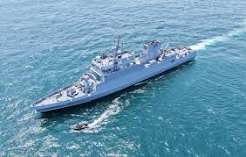
The Ashank- Anti-Submarine Warfare Shallow Water Craft was delivered to Indian Navy at Visakhapatnam.
- Ashank- Anti-Submarine Warfare Shallow Water Craft is an indigenously designed anti-submarine warfare shallow water craft (ASW SWC).
- It is built by Garden Reach Shipbuilders and Engineers (GRSE), Kolkata.
- The ASW SWCs have been designed and constructed in accordance with the Classification Rules of Indian Register of Shipping (IRS).
- The ship’s name, Ashank, means fearlessness and an undaunted spirit.
- Key Features:
- Armaments: It is equipped with state-of-the-art lightweight torpedoes, indigenous rocket launchers and advanced sonar systems,
- Propulsion: These ships are among the largest Indian Naval warships propelled by waterjets.
- The ship will strengthen the Navy’s Anti- submarine, coastal surveillance and mine-laying capabilities.
- It is a potent platform designed to strengthen the Navy’s underwater surveillance and Anti-Submarine Warfare capabilities, particularly in coastal water.
- It has over 80 percent indigenous content, the ship stands as a testament to the growing strength of the domestic defence manufacturing ecosystem and reducing dependency on imports.