
Today’s Current Affairs: 27th Nov 2026 for UPSC IAS exams, State PSC exams, SSC CGL, State SSC, RRB, Railways, Banking Exam & IBPS, etc
Table of Contents
Beddome’s bronzeback: New Tree Snake Species
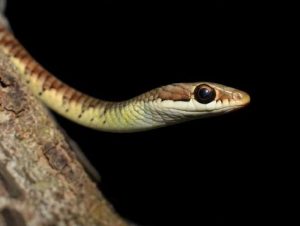
Scientists recently described a new tree snake species, Beddome’s bronzeback, from the Western Ghats.
- Beddome’s bronzeback is a newly identified species of tree snake from the Western Ghats.
- Scientific Name: Dendrelaphis beddomei
- It has been named after Colonel Richard Henry Beddome (1830–1911) in recognition of his contributions to the study of biodiversity in the Western Ghats, particularly reptiles and amphibians.
- The discovery resolves a longstanding taxonomic confusion with the closely related large-eyed bronzeback (Dendrelaphis grandoculis).
- The two species differ in several physical characteristics, including tongue colour, scale counts, and body markings.
- The Beddome’s bronzeback has a red or pink tongue, while the large-eyed bronzeback has a black or dark-grey tongue.
- The newly described species also frequently displays a white stripe or a series of spots along the lower sides of its body and sometimes prominent black blotches on its back. These features are absent in the large-eyed bronzeback.
- It has a longer loreal scale, located between the eye and nostril, and a smaller second postocular scale, situated behind the eye.
- The number of paired scales beneath its tail can reach 168, compared with fewer than 133 in the large-eyed bronzeback.
- The large-eyed bronzeback primarily inhabits evergreen and semi-evergreen rainforests at elevations between 300 and 1,260 metres above sea level.
- Beddome’s bronzeback, by contrast, favours lower elevations on the western, windward slopes of the Western Ghats. It has been recorded at elevations ranging from 44 to 1,038 metres.
- It occurs predominantly in secondary forests, forests along waterways, and agricultural landscapes, including rubber and areca nut plantations.
- Distribution modelling suggests that the new species is most likely to occur in parts of the central Western Ghats, particularly between Puttur and Jog Falls in Karnataka.
- Other potentially suitable habitats extend from Wayanad in Kerala to Uttara Kannada in Karnataka.
- The large-eyed bronzeback, meanwhile, is predicted to occur across a wider stretch of the Western Ghats, including several mountainous regions in southern and central parts of the range.
Two New Species of Geckos:
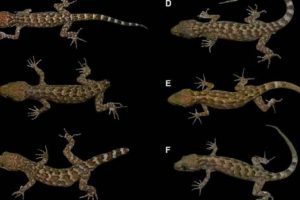
Two new species of geckos named Cyrtodactylus bossmit and Cyrtodactylus kremicola have been recently discovered in the limestone cave systems of Meghalaya, taking the number of recognised species of the genus in the state to nine.
- Cyrtodactylus bossmit and Cyrtodactylus kremicola are two new species of cave-dwelling bent-toed geckos.
- They were discovered in the limestone cave systems of Meghalaya’s Khasi and Jaintia Hills.
- The discovery takes the number of recognised species of the genus in the state to nine.
- The first species, Cyrtodactylus bossmit, commonly known as the Bossmit bent-toed gecko, has been named after Shillong’s iconic wooden bus, ‘Bossmit’.
- It was recorded at Maw Tynghiang Cave in Nongnah village of the South-West Khasi Hills.
- It is also known from other locations across the Khasi Hills.
- The second species, Cyrtodactylus kremicola, commonly known as the Krem bent-toed gecko, derives its name from the Khasi word ‘krem’, meaning cave.
- It was identified at Rupasor Cave in the Syndai village of the West Jaintia Hills district.
- It is currently known only from this locality and is associated with limestone outcrops, caves, rock crevices and surrounding forest vegetation.
- Both are moderately sized geckos, with maximum recorded body lengths of 81.7 mm for C. bossmit and 83.6 mm for C. kremicola.
Ranganathittu Bird Sanctuary:
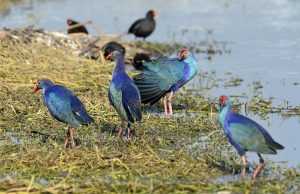
Migratory birds that usually visit Ranganathittu Bird Sanctuary in Srirangapatna taluk, Mandya district, in the first week of December have started arriving two weeks early to breed.
- Ranganathittu Bird Sanctuary is located in the Mandya district near Srirangapatna, Karnataka.
- Situated on a cluster of small islands along the Kaveri River.
- It is also known as the “Pakshi Kashi of Karnataka”
- It was designated on 15 February 2022 as a protected Ramsar site, making it the first Ramsar site in Karnataka.
- Ranganathittu’s islets were formed when an embankment across the Cauvery River was built between 1645 and 1648 by the then-king of Mysore, Kanteerava Narasimharaja Wadiyar.
- These islets, originally numbering 25, soon started attracting birds.
- The ornithologist Salim Ali observed that the islets formed an important nesting ground for a large variety of birds and persuaded the king of Mysore to declare the area a protected area in 1940.
- It is covered with dense broadleaf forests, consisting of Arjun trees (Terminalia arjuna), bamboo groves, and Pandanus trees.
- It is home to approximately 170 bird species, making it a significant breeding and nesting ground.
- Some of the regularly breeding birds include the painted stork, Asian openbill stork, common spoonbill, woolly-necked stork, black-headed ibis, lesser whistling duck, Indian shag, stork-billed kingfisher, egrets, cormorants, Oriental darter, spot-billed pelican, and various herons.
- The islands are host to numerous small mammals, including bonnet macaque, smooth-coated otter, colonies of flying foxes, and common small mammals such as common palm civet and Indian grey mongoose.
- Additionally, there is a population of monitor lizards.
- The mugger crocodile, or marsh crocodile, is a common inhabitant of the riverine reed beds, and Ranganathittu has the largest freshwater crocodile population in Karnataka state.
Nocte Community:
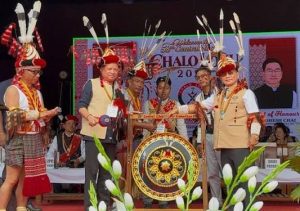
The Nocte community of Arunachal Pradesh recently celebrated its 58th Central Chalo Loku Festival at Khonsa, headquarters of Tirap district.
- They are one of the major indigenous tribal communities of Arunachal Pradesh.
- They are primarily distributed in the Patkai hills of the Tirap district of Arunachal Pradesh.
- Ethnically related to the Konyak Naga, their origins can be traced back to the Hukong Valley in Myanmar, where they migrated between 1670 and 1700.
- The Nocte society is based on patrilineal principles.
- The basic unit of the Nocte tribe is the clan. It is organized under a chief known as “Lowang” who controls a village.
- The chief and his descendants form a separate class called “Lowang Jat” while the commoners are called “Sana Jat”.
- Marriage in the same clan is strictly prohibited.
- The Nocte tribe’s traditional economy is shifting cultivation, hunting, gathering, and fishing.
- Over the last two decades, some of them have started wet or permanent cultivation. In this cultivation, paddy, millet, arum, tapioca, and a few local pulses are grown.
- They also earn money by making and selling goods made from bamboo, cane, and other natural materials.
- The Nocte were followers of Theravada Buddhism and Animism, although they have adopted Hinduism (particularly Vaishnavism) since the 18th century, under the influence of Shri Shankardeva.
- Their main festival is Chalo Loku, which is a harvest festival that is celebrated in the month of October-November annually, right after the harvest of the paddy field, and before the start of the new Jhum cultivation.
- Other agricultural festivals include Oriah and Ronghoan.
Indian Vulture: In News
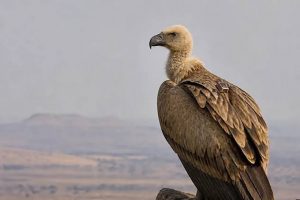
A seven-year-old female Indian vulture, released into the wild at Melghat Tiger Reserve, made a halt in Latur’s Ausa taluka after clocking 10,767 km.
- Indian Vulture is also called the long-billed vulture and is a bird of prey native to Asia.
- It is part of a group called ‘’Old World vultures’’.
- They belong to the Accipitridae family, which includes eagles and hawks.
- These are native to India, Pakistan, and Nepal.
- They are usually found in savannas and other open habitats around villages, cities, and near cultivated areas.
- It is a bulky, medium-sized bird. Females of this species are smaller than males.
- They have a small, mostly bald head with few feathers.
- It has a long, featherless neck, dark eyes, and a long, yellowish beak.
- Its large wingspan allows it to fly long distances while using minimal energy.
- Conservation Status: It is classified as ‘Critically Endangered’ under the IUCN Red List.
Mahua Tree:
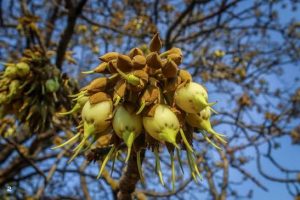
In Madhya Pradesh’s Bhimpur block, tribal communities that once extracted their own oil from mahua (Madhuca longifolia) began depending on market-bought resources.
- Mahua Tree is a medium-sized deciduous tree that grows to a height of 16–20 metres, predominantly found in the forests of Central India.
- Mahua is revered as a “Tree of Life” among tribal communities and is considered sacred.
- It is commonly found in West Bengal, Odisha, Chhattisgarh, Jharkhand, Bihar, parts of Northern and Central India, and also in Maharashtra, Gujarat, Telangana, Tamil Nadu, and Kerala.
- The flowers are consumed raw or sun-dried and are highly nutritious. They are traditionally fermented to produce a strong alcoholic drink, which is a major source of livelihood for tribal families.
- Its flowers, leaves, fruits, seeds, and even fruit shells are used in everyday tribal practices, including funeral rites.
- The collection and processing of Mahua flowers support tribal economies, offering food security, employment, and income generation, especially for women collectors.
- Mahua’s night-blooming, strong-smelling flowers attract bats, aiding in pollination and seed dispersal.
- Sloth bears and other forest animals also feed on its flowers, showing its importance in the forest food web.
ICGS Sujay:

Indian Coast Guard Ship (ICGS) Sujay concluded its three-day visit to Trincomalee, Sri Lanka.
- ICGS Sujay is a Samarth-class Offshore Patrol Vessel.
- Sujay, meaning ‘Great Victory’ is the last of the series of six new Offshore Patrol Vessels (OPV).
- It is 105 metres long, designed and built indigenously by Goa Shipyard Ltd.
- It is fitted with a 30 mm CRN 91 Gun and state of the art navigational and communication equipment, sensors and machinery.
- The ship is designed to carry one twin-engine light helicopter and five high-speed boats, including two quick reaction inflatable boats, for swift boarding operations, search and rescue, law enforcement and maritime patrol.
Estates Management Scheme:

The Union Cabinet, chaired by the Prime Minister of India, has approved the proposal of the Department of Posts for the continuation of the Estates Management Scheme.
- Estates Management Scheme is the Central Sector Scheme.
- The scheme aims to comprehensively transform and modernize the estates infrastructure of the Department of Posts.
- It focuses heavily on the construction, reconstruction, renovation, and uniform branding of post offices and residential colonies, along with the preservation of India’s heritage postal buildings.
- It is scheduled for phased implementation over a five-year horizon, starting from FY 2026-27 through FY 2030-31.
Components of the Estates Management Scheme:
- New Construction: Building 190 departmental postal buildings on vacant departmental plots to replace currently rented spaces and eliminate rental liabilities.
- Reconstruction: Demolishing and rebuilding 50 dilapidated departmental postal structures to ensure long-term structural safety.
- Renovation & Branding: Upgrading and establishing uniform branding across 2,550 departmental Sub Post Offices as per SPA guidelines.
- Rented Post Office Upgrades: Upgrading and uniformly branding 2,500 post offices operating out of rented premises.
- Heritage Preservation: Restoring and preserving 20 landmark heritage postal buildings to safeguard the historical legacy of the department.
- Allied & Inclusive Activities: Implementing sustainable features (Solar power, Rainwater Harvesting) and universal accessibility infrastructure (ramps, Braille signage) under the Sugamya Bharat Abhiyan, along with gender-focused additions like ladies’ toilets and feeding rooms.
- Integrated Technology Center: Setting up a permanent physical infrastructure for the Centre for Excellence in Postal Technology (CEPT) in Bengaluru to drive Advanced Postal Technology (APT) services and support the indigenous open-source tech stack.
Scheme for Enhancement of Construction and Infrastructure Equipment Manufacturing Ecosystem:

The Union Cabinet, chaired by the Prime Minister of India, has approved the “Scheme for Enhancement of Construction and Infrastructure Equipment (CIE) Manufacturing Ecosystem” with a financial outlay of Rs.11,000 crore.
- Scheme for Enhancement of Construction and Infrastructure Equipment Manufacturing Ecosystem is to be implemented by the Ministry of Heavy Industries (MHI).
- It aims to incentivize domestic manufacturing of
- Construction and Infrastructure Equipment CIE and its components
- To establish a dedicated CIE testing facility in the country, thereby enhancing self-reliance and positioning India as a key player in the Global CIE market.
- The duration of the scheme will be eight years, from financial year 2026-27 to 2033-34.
- Components:
- Sales-linked Incentive: Incentives will be provided on the incremental sales value of eligible CIE equipment and components to approved applicants across two categories – eligible OEMs and Component Manufacturers.
- Graded Incentive rates range from 13% to 8% of incremental sales value over a five-year period.
- Grant for CIE Testing Facility: A grant of up to Rs.375 crore, in the nature of Viability Gap Funding, for setting up a dedicated CIE testing facility.
FSSAI Sanctioned Prosecution Against Bisleri International Pvt. Ltd.:
The Food Safety and Standards Authority of India (FSSAI) sanctioned prosecution against Bisleri International Pvt. Ltd. under the Food Safety and Standards (FSS) Act, 2006, after a regulatory sample of packaged drinking water failed laboratory safety standards.While the primary test flagged excess bromate, retesting at a Referral Food Laboratory declared the sample unsafe due to polynuclear/polycyclic aromatic hydrocarbons (PAHs).Under the Food Safety and Standards (Food Products Standards and Food Additives) Regulations, 2011, Regulation 2.10.8 governs Packaged Drinking Water (other than Mineral Water) and Regulation 2.10.7 governs Natural Mineral Water.
Both mandate the absence of pathogens (coliform bacteria, Salmonella, and Shigella) and prescribe limits for turbidity, Total Dissolved Solids (TDS), and toxic substances (arsenic, lead, mercury, and bromates).
Supercomputer Rankings 2026:
China’s LineShine supercomputer retained its position as the world’s most powerful supercomputer in the 68th edition of the TOP500 rankings, released at the SC26 Conference in Chicago, USA.LineShine Supercomputer developed by the Shenzhen Cloud Computing Centre and installed at the National Supercomputing Centre, Shenzhen, it displaced the US-based El Capitan in June 2026, becoming the first Chinese system to top the TOP500 since Sunway TaihuLight (2017) and the fifth to achieve exascale performance.It became the first TOP500 system to exceed 2 exaFLOPS, achieving 2.198 exaFLOPS on the High Performance Linpack (HPL) benchmark while drawing 42.22 megawatts (MW) of power.It employs a CPU-only architecture featuring China-made LX2 processors, the LingQi interconnect, and the Kylin operating system, highlighting China’s technological capabilities amid US restrictions on advanced chip exports.Developed primarily for atmospheric and oceanographic research, including complex climate and environmental modelling.
Global Rankings: LineShine was followed by El Capitan, Frontier and Aurora (USA), and JUPITER Booster (Germany).
India’s Position: Shakti Cloud ranked 35th, making it the highest-ranked Indian supercomputer on the list.
National Milk Day 2026:
The Department of Animal Husbandry and Dairying (DAHD), Ministry of Fisheries, Animal Husbandry and Dairying, celebrated National Milk Day in Patna, Bihar, with the presentation of national awards and the launch or dedication of dairy and livestock initiatives. National Milk Day is observed annually on 26th November to commemorate the birth anniversary of Dr Verghese Kurien, the Father of India’s White Revolution, and recognise his contribution to India’s dairy cooperative movement. Operation Flood: Implemented by the National Dairy Development Board (NDDB) from 1970 to 1996, it transformed India’s dairy sector through the cooperative model and laid the foundation for the White Revolution.India is the world’s largest milk producer, accounting for nearly 25% of global milk production.
International Day for the Elimination of Violence against Women 2026:
The International Day for the Elimination of Violence against Women was observed globally on 25th November 2026. To mark the occasion, India unveiled Nayi Chetna 5.0, launched the #NumberSaveKiya? emergency helpline awareness drive, and signed a Quadripartite MoU on the Violence-Free Village Initiative.The day mobilises governments, international agencies, and civil society to prevent, prosecute, and eliminate violence against women and girls across domestic, workplace, public, and digital spaces.The date honours the Mirabal sisters (Patria, Minerva, and María Teresa), political activists in the Dominican Republic who were brutally assassinated on 25th November 1960. The observance kicks off the global 16 Days of Activism against Gender-Based Violence, concluding on 10th December (Human Rights Day). Orange serves as the official UNiTE campaign colour, symbolising hope and a future free from violence. 2026 Global Campaign: The UN Secretary-General’s UNiTE campaign focuses on “Ensure justice, protect survivors, end impunity”, emphasising survivor-centred services, safe reporting mechanisms, effective law enforcement and institutional accountability.