
Coking Coal:
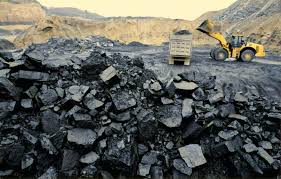
The Government of India has notified Coking Coal as a Critical and Strategic Mineral under the Mines and Minerals (Development and Regulation) Act, 1957 (MMDR Act).
- Coking Coal is a naturally occurring sedimentary rock found within the earth’s crust.
- It is also known as Metallurgical coal.
- It is a type of coal that softens and swells when heated, forming lightweight, porous coke particles, and is characterized by a free swelling index of 1 or greater.
- It typically contains more carbon, less ash, and less moisture than thermal coal, which is used for electricity generation.
- Coke is the main product of the high-temperature carbonisation of coking coal.
- Coking coal is divided into 3 sub-categories namely,
- Primary Coking Coal (Low ash , low Volatile, High Coking property)
- Medium Coking Coal (low ash, medium volatile, low caking index)
- Blendable/ Semi/Weak Coking Coal (low ash, high volatile, very low caking index).
- The largest producers of coking coal were China, Australia, Russia, USA and Canada.
- In India coking coal resources are largely located in Jharkhand, with additional reserves in Madhya Pradesh, West Bengal and Chhattisgarh.
- It is essential for metallurgical processes, as it exhibits caking properties that allow it to fuse into a solid mass during heating.
- It is an essential ingredient in the production of steel, making it one of the most widely used building materials on earth.