
Hoysala Temples:
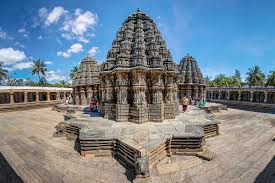
Several lesser-known 11th–13th century Hoysala-era temples across Karnataka are drawing fresh attention for their intricate soapstone carvings and distinctive star-shaped architecture.
- The Hoysala temples were developed in the period from 1050-1300 A.D., with prominent seats at Belur, Halebid and Sringeri, though the dynasty’s architectural influence spread across present-day Karnataka, including the regions near Mysore.
- Hoysala architecture represents a distinct hybrid style often termed Vesara, which uniquely blends elements of the northern Nagara and southern Dravida temple architectural traditions.
- Hoysala architects favoured chloritic schist (soapstone), soft when quarried but hardening over time. Its pliability allowed microscopic detailing- jewellery, fingernails, hair curls, rendered in stone.



