
Phulkari:
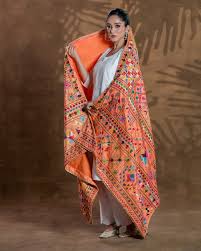
Over 40 rare pre-Partition textiles at an exhibition trace how phulkari functioned within women’s lives, and their everyday worlds.
- Phulkari, meaning “flower work,” is a traditional embroidery of Punjab and Haryana.
- The term first appeared in 18th-century Punjabi literature and may be linked to the Iranian art of gulkari.
- Historically, phulkari chaddars were an essential part of a girl’s marriage trousseau, crafted by mothers and grandmothers from the girl’s birth.
- Girls learned to embroider early, with the number of phulkaris reflecting the family’s status and marking cultural milestones.
- It is a form of counted-thread embroidery recognised by its neat, regular patterns of geometric and natural motifs.
- Phulkari embroidery uses khaddar, a handspun and handwoven cotton fabric, traditionally dyed in madder brown, rust red, indigo, or green.
- Colourful silk threads are used to create flower patterns on the fabric.
- The mix of colourful silk threads creates a beautiful and exciting design.
- The floral imagery used in phulkari includes marigolds, jasmines, lotuses, and Tree of Life motifs.
- Modern motifs such as trains, trucks, and cars have also found their way into phulkari patterns.
- Phulkari’s product range includes embroidered chaddars, dupattas, and stoles, traditionally worn by brides or for ceremonies.