
Today’s Current Affairs: 11th April 2026 for UPSC IAS exams, State PSC exams, SSC CGL, State SSC, RRB, Railways, Banking Exam & IBPS, etc
Table of Contents
Turkiye:
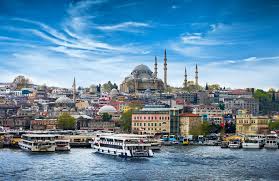
India and Turkiye held 12th round of Foreign Office Consultations (FoC) to restore bilateral relations ruptured during the India-Pakistan conflict last year.
- Turkiye is a transcontinental Eurasian country.
- The major part of the country lies in the Anatolian Plateau of Western Asia while a small part is located on Southeastern Europe’s Balkan Peninsula.
- It is bordered by Greece and Bulgaria (northwest), Georgia (northeast), Armenia and Iran (east), Iraq (southeast), Syria (south).
- Nakhchivan, an exclave of Azerbaijan also borders Turkiye to the east.
- It is surrounded on three sides by the Black Sea, the Mediterranean Sea, and the Aegean Sea.
- Capital: Ankara
- Geographical Features of Turkiye:
- Rivers: Tigras, Kizilirmak, Sakarya, and Euphrates are the most significant rivers,
- Major Lake: Lake Van which is the largest alkaline lake in the world
- Mountain Ranges: It includes the Taurus, Koroglu and Pontic ranges.
- Highest Point: Turkey’s highest point is Ararat
- Straits: Bosporus, which connects the Black Sea with the Sea of Marmara, and the Dardanelles, which connect the Aegean Sea with the Sea of Marmara.
- Natural Resources: It mainly consists of chromite, iron ore, coal, lignite, bauxite, and copper.
National Scheduled Tribes Finance and Development Corporation:

The National Scheduled Tribes Finance and Development Corporation will celebrate its 25th Foundation Day on 10th April in New Delhi.
- It was established in 2001.
- It is a Public Sector Undertaking under the Ministry of Tribal Affairs, Government of India.
- Objects is to work for socio-economic and educational upliftment of Scheduled Tribes(STs), to provide better self-employment avenues so that they can become economically independent and self-reliant.
- Functions of National Scheduled Tribes Finance and Development Corporation
- To generate awareness amongst the STs about NSTFDC concessional schemes
- To provide assistance for skill development and capacity building of beneficiaries as well as officials of State Channelizing Agencies
- To provide concessional finance for viable income generation scheme through SCAs and other agencies for socio-economic development of eligible Scheduled Tribes
- To assist in market linkage of tribal produce
- Composition of National Scheduled Tribes Finance and Development Corporation
- The Corporation is managed by a Board of Directors with representatives from:
- Central Government, State Channelizing Agencies (SCA), National Bank for Agricultural and Rural Development (NABARD), Industrial Development Bank of India (IDBI), Tribal Cooperative Marketing Development Federation of India Ltd. (TRIFED) and three eminent persons representing Scheduled Tribes.
- The Corporation is managed by a Board of Directors with representatives from:
Indravati Tiger Reserve : Set To Reopen To Tourists

Indrāvati Tiger Reserve is set to reopen to tourists, marking a shift from years of conflict towards conservation and eco-tourism.
- Indravati Tiger Reserve is located in Chhattisgarh’s Bijapur district.
- The tiger reserve and the Bhairamgarh and Pamed Wildlife Sanctuaries constitute the Indravati landscape.
- It has connectivity with several tiger reserves, viz. Kawal (Telangana), Tadoba (Maharashtra), and Kanha (Madhya Pradesh).
- The perennial river ‘Indravati’ forms the boundary of the reserve on the northern and western sides, which also happens to be the interstate boundary between Chhattisgarh and Maharashtra.
- Southern Moist Mixed Deciduous Forest with Teak, Southern Moist Mixed Deciduous Forest without Teak, and Southern Dry Mixed Deciduous Forest are the major forest types found in the Reserve.
- It consists of teak, achar, karra, kullu, shisham, semal, haldu, arjun, bel, and Jamun.
- It is home to one of the last populations of rare wild buffalo, the state animal of Chhattisgarh.
- Other animals include Nilgai, Black Buck, Sambar, Gaur, Tiger, Leopard, Chital, Sloth bears, etc.
WAVES OTT Platform: In News

The Publications Division has made its flagship journals Yojana, Kurukshetra available free of cost on Prasar Bharati’s WAVES OTT platform.
- Waves is a digital platform developed by Prasar Bharati.
- It aims to cater to India’s growing demand for streaming services.
- It offers a wide range of content, including live TV, video on demand, games, radio streaming, and e-commerce options via the ONDC network. Its offerings include:
- On-demand content: Movies, shows, ebooks, and historical visuals
- Live events: Religious programmes, cricket tournaments, and other big events
- Games: Suitable for all age groups
- Currently, the app provides access to around 65 live channels, including private broadcasters.
Prasar Bharati:
- It is the Public Service Broadcaster of the country.
- It is a statutory autonomous body established in 1997 under the Prasar Bharati Act.
- Objective: To conduct public broadcasting services intended to inform and entertain the public.
- It comprises the Doordarshan Television Network and All India Radio, which were earlier media units of the Ministry of Information and Broadcasting.
- Headquarter: New Delhi
Skills Outcomes Fund:
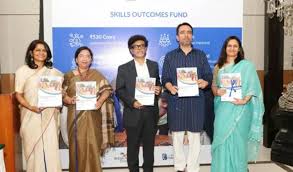
Minister of State for Education, Government of India, has launched a national campaign to establish the Skills Outcomes Fund.
- It is a first-of-its-kind initiative aimed at unlocking aspirational livelihoods for youth from low-income backgrounds.
- The fund envisages to mobilise public and private capital to scale outcomes-based financing (OBF) in India’s skilling ecosystem, linking investments directly to verified employment outcomes.
- It will be anchored by the National Skill Development Corporation (NSDC) in partnership with not-for-profit and philanthropic organizations /stakeholders.
- It would build on the success of India’s first outcomes-based initiative, the Skill Impact Bond, launched by the National Skill Development Corporation (NSDC) in 2021.
- A key innovation of the fund is its employer-led, demand-driven skilling model, ensuring alignment with industry needs. Training programs will focus on high-growth sectors including:
- IT and IT-enabled services (IT-ITeS)
- Banking, Financial Services, and Insurance (BFSI)
- Automotive and manufacturing
- Healthcare
- Logistics and supply chains
- Electronics and semiconductors
- Green jobs and sustainability sectors
Commonwealth Parliamentary Association:

The Commonwealth Parliamentary Association India Region Zone VII Conference was inaugurated in Goa by Lok Sabha Speaker.
- Commonwealth Parliamentary Association is one of the oldest established organisations in the Commonwealth.
- It was founded in 1911.
- It is a membership association which brings together Members, who are united by community of interest, respect for the rule of law and individual rights and freedoms.
- The Association is made up of over 180 Legislatures (or Branches) divided up between nine geographic regions of the Commonwealth.
- Its mission is to promote the advancement of parliamentary democracy by enhancing knowledge and understanding of democratic governance, youth engagement in democracy, gender equality and equal representation.
- Headquarters: London, United Kingdom.
CPA India Region:
- It comprises of a total of 32 Legislatures, after the Africa Region, India has the largest number of member Branches of the CPA.
Administratively, the CPA India Region is divided into 9 zones.- Zone 1: Uttar Pradesh, Uttarakhand
- Zone 2: Delhi, Haryana, Himachal Pradesh, Jammu & Kashmir, Punjab
- Zone 3: Arunachal Pradesh, Assam, Manipur, Meghalaya, Mizoram, Nagaland, Sikkim, Tripura
- Zone 4: Odisha, West Bengal
- Zone 5: Bihar, Jharkhand
- Zone 6: Chhattisgarh, Madhya Pradesh, Rajasthan
- Zone 7: Goa, Gujarat, Maharashtra
- Zone 8: Andhra Pradesh, Karnataka, Telangana
- Zone 9: Kerala, Puducherry (UT), Tamil Nadu
- The CPA India Regional Chairperson: Lok Sabha Speaker, Parliament of India
- Secretariat: It is based within the Lok Sabha at the Parliament of India.
Indian Council for Cultural Relations:
The Minister of State for External Affairs, attended a community reception in Yangon, Myanmar and underscores Indian Council for Cultural Relations efforts in strengthening cultural ties.
- It is an autonomous body under the Ministry of External Affairs, Government of India.
- ICCR was founded in 1950 by Maulana Abul Kalam Azad, independent India’s first Education Minister.
- It involved in India’s external cultural relations through cultural exchange with other countries and their people.
- It promotes, through its network of cultural centres, Indian culture abroad.
- Objectives:
- To actively participate in the formulation and implementation of policies and programmes pertaining to India’s external cultural relations;
- To foster and strengthen cultural relations and mutual understanding between India and other countries;
- To promote cultural exchanges with other countries and people;
- It administers various scholarship programs annually and awards about 3000+ scholarships under 21 different schemes to foreign students from about 180 countries.
- Amongst these 21 schemes, six are funded by ICCR from its grant, and others are administered on behalf of MEA and the Ministry of Ayush.
- The scholarships offer studies in a variety of courses from undergraduate to postdoctoral level in different leading universities and educational institutions spread all over India.
Fimbristylis wayanadensis:
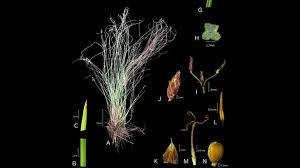
Researchers have discovered a new plant species in the high mountains of the Western Ghats and named it as Fimbristylis wayanadensis.
- It is a grass-like plant, known as sedge.
- Sedges are grass-like plants that typically feature triangular stems.
- It was identified during a recent expedition in the Wayanad district of Kerala.
- It is named to honour the place where it was first discovered.
- It was found clinging to life in the transitional zones between rocky landscapes and high-altitude grasslands.
- It possesses a unique set of characteristics like long leaves that stretch as tall as or taller than its hairy stems.
- It also produces fewer flower clusters, known as spikelets, which are rich chestnut-brown rather than yellowish.
- Furthermore, the tiny nuts it produces are larger and smoother, with microscopic rectangular patterns on their surfaces.
Emperor Penguin:
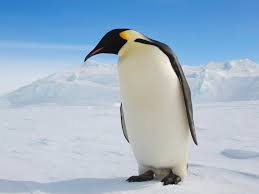
The International Union for Conservation of Nature (IUCN) Red List of Threatened Species has uplisted Emperor penguin (Aptenodytes forsteri) to Endangered category.
- Emperor penguins are the tallest and heaviest penguin alive today.
- They evolved about one million years ago, and are highly adapted to life in one of Earth’s harshest environments.
- They are found throughout the Antarctic continent and sub-Antarctic islands.
- It is the most ice-adapted of any penguin species, inhabiting pack ice and surrounding marine areas. They spend their entire lives on Antarctic ice and in its waters.
- Features of Emperor Penguins:
- It is flightless, with a streamlined body, and wings stiffened and flattened into flippers for a marine habitat.
- They also huddle close together in large groups to keep themselves and each other warm.
- They are capable of diving to depths of approximately 550 metres (1,800 feet) in search of food; they are the world’s deepest-diving birds.
- It is a carnivore (piscivore and molluscivore), feeding exclusively upon aquatic animals.
- Conservation Status: IUCN Red List: Endangered
India’s Fisheries Sector:
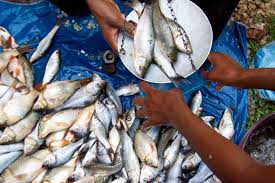
India has emerged as the world’s 2nd-largest fish-producing nation (after China), accounting for approximately 8% of global output and establishing the fisheries sector as the fastest-growing segment within agriculture and allied activities.
- Fisheries account for 7.43% of Agricultural Gross Value Added (GVA), with total production doubling to 197.75 lakh tonnes in FY 2024–25.
- Seafood exports reached Rs 62,408 crore in FY 2024–25, dominated by frozen shrimp, with the US and China as primary markets.
- The Union Budget 2026–27 allocated a record Rs 2,761 crore to the sector, with Rs 2,500 crore specifically earmarked for the Pradhan Mantri Matsya Sampada Yojana (PMMSY).
- The Fisheries and Aquaculture Infrastructure Development Fund (FIDF) and the extension of Kisan Credit Cards (KCC)—with limits raised to Rs 5 lakh—have institutionalized credit and boosted processing capabilities.
- Rapid adoption of high-efficiency models like Recirculatory Aquaculture Systems (RAS) and Bio-floc technology is driving sustainable, high-density farming.
- RAS is a high-density fish farming technology that uses a closed-loop filtration system to treat and continuously reuse water, minimizing environmental impact and land requirements.
- Bio-floc Technology is a sustainable aquaculture method where a carbon source is added to the water to grow beneficial microbial protein (floc), which simultaneously treats waste and serves as a direct food source for the fish.
- The National Fisheries Digital Platform (NFDP), launched in 2024, provides digital identities to over 30 lakh stakeholders, streamlining access to insurance and subsidies.
- The Pradhan Mantri Matsya Kisan Samridhi Sah-Yojana (PM-MKSSY), with an outlay of Rs 6,000 crore, focuses on formalizing the unorganized fisheries value chain and enhancing traceability.
- The Marine Fisheries Census 2025 and new rules for the Exclusive Economic Zone (EEZ) ensure data-driven governance and alignment with Sustainable Development Goal 14 (Life Below Water).
Madman Theory:
The Madman Theory has returned to global strategic discourse amid debates over the foreign policy posture of Donald Trump during the ongoing West Asia crisis.The Madman Theory is a foreign policy and strategic doctrine in which a leader deliberately cultivates an image of being unpredictable, irrational, or willing to take extreme action.The aim is to make adversaries believe that escalation—including war or even nuclear confrontation—is possible, thereby forcing concessions.The term is most closely associated with Richard Nixon and his National Security Adviser Henry Kissinger during the Cold War, especially in the context of the Vietnam War.
Hydropower Projects in Arunachal Pradesh:
The Cabinet Committee on Economic Affairs approved investments of about ₹40,175 crore for two major hydroelectric projects in Arunachal Pradesh—the 1,720 MW Kamala Hydro Electric Project and the 1,200 MW Kalai‑II Hydro Electric Project.Kamala Project: The Kamala project, on the Kamala River(tributary of the Subansiri River) across Kamle, Kra Daadi and Kurung Kumey districts, is expected to generate about 6,870 million units annually and will be developed by NHPC Limited in a joint venture with the Arunachal Pradesh Government.Kalai-II Project: The Kalai‑II project, on the Lohit River(a major tributary of the Brahmaputra) in Anjaw district, is expected to generate around 4,853 million units annually and will be implemented as a joint venture between THDC India Ltd and the State Government.
CAPF (General Administration) Act, 2026:
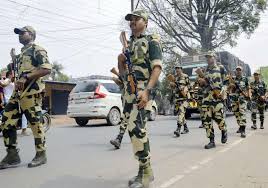
The notification of the Central Armed Police Forces (General Administration) Act, 2026, has triggered protests by retired personnel and families, raising concerns over service conditions, cadre rights, and leadership structure in India’s internal security forces.
- Demonstrations were held at Raj Ghat on 9th April 2026 coinciding with CRPF Valour Day (commemorating the 1965 Battle of Rann of Kutch). Protesters are demanding the restoration of the Old Pension Scheme (OPS), time-bound promotions, and dignified career progression.
- CAPF (General Administration) Act, 2026
- The Act legally cements the reservation of top leadership posts for Indian Police Service (IPS) officers across all five CAPFs (BSF, CRPF, CISF, ITBP, and SSB). Specifically, it mandates:
- 50% of posts at the Inspector General (IG) rank.
- At least 67% of posts at the Additional Director General (ADG) rank.
- 100% of posts at the Special DG and Director General (DG) ranks.
- The legislation designates the Ministry of Home Affairs (MHA) as the defining administrative body. It states that rules made under this Act regarding recruitment, deputation, and service conditions will explicitly override any other existing laws, orders, or court judgments.
- The Centre argues that because CAPFs must frequently work in close coordination with state police and civil administrations (which are led by IPS and IAS officers), having IPS officers lead the CAPFs ensures smooth operational synergy.
- The government claims the umbrella law is necessary to provide legislative clarity and preserve the operational distinctiveness of the forces.
- The CAPF personnel argue that the Act undermines the 2025 Supreme Court directive asking the Centre to “progressively reduce” IPS deputation up to the IG rank within two years, impacting force morale.
- Around 13,000 Group A officers face severe promotion delays, often waiting 15–18 years due to limited senior posts. They also highlight that CAPF officers handle frontline combat while IPS officers occupy senior roles.
- The Act legally cements the reservation of top leadership posts for Indian Police Service (IPS) officers across all five CAPFs (BSF, CRPF, CISF, ITBP, and SSB). Specifically, it mandates:
Naphthalene Diimide (NDI):
Researchers from CeNS and JNCASR have discovered a way to switch the structural and electrical properties of organic nanomaterials using only temperature.Naphthalene diimide (NDI) is a specialized amphiphilic molecule, meaning it possesses both water-attracting and water-repelling parts.This unique chemical nature allows it to organize itself into complex architectures when placed in water.Discovered: Centre for Nano and Soft Matter Sciences (CeNS) and Jawaharlal Nehru Centre for Advanced Scientific Research (JNCASR).



