
Today’s Current Affairs: 11th December 2025 for UPSC IAS exams, State PSC exams, SSC CGL, State SSC, RRB, Railways, Banking Exam & IBPS, etc
Table of Contents
Sultanpur National Park : Immigration Of Migratory birds
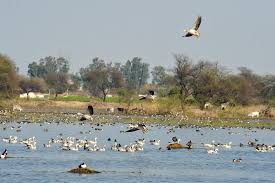
Sultanpur National Park is once again echoing with the sounds of migratory birds, with their numbers rising significantly as temperatures drop.
- Sultanpur National Park, formerly known as Sultanpur Bird Sanctuary, is located in Haryana.
- It consists primarily of marshy lakes and floodplains.
- It includes a core area has the main Sultanpur Lake/Jheel.
- The Sultanpur Jheel is a seasonal freshwater wetland with fluctuating water levels throughout the year.
- This shallow lake is mostly fed by waters from River Yamuna’s Gurgaon canal and the overflowing waters of the neighboring agricultural lands.
- It gained national attention in the late 1960s due to the conservation efforts of ornithologists Peter Michel Jackson and Dr. Salim Ali, who frequently visited the site for birding.
- It was recognised as a Ramsar site in 2021.
- It has been identified as an Important Bird Area by BirdLife International.
- The vegetation of this park is tropical and dry deciduous, and the flora includes grasses, dhok, khair, tendu, ber, jamun, banyan tree, neem, berberis, Acacia nilotica, and Acacia tortilis.
- It forms a part of the ‘Central Asian Migratory Flyway’ and thousands of migratory birds from the countries of Russia, Turkey, Afghanistan, and Europe visit the park during the winter months.
- Winter Migrants: Greater Flamingos, Northern Pintails, Eurasian Wigeons, Common Teals, and Bar-headed Geese.
- Resident Birds: Indian Peafowl, Red-wattled Lapwings, Cattle Egrets, and White-throated Kingfishers.
- Rare/Threatened Species: Sarus Crane, Black-necked Stork, and Indian Courser have been recorded here.
Large Language Models:

A government working paper released recently suggested that AI large language models (LLMs) like ChatGPT should, by default, have access to content freely available online, and that publishers should not have an opt-out mechanism for such content.
- An LLM is a type of artificial intelligence (AI) program that can recognize and generate text, among other tasks.
- LLMs are trained on huge sets of data, hence the name “large.”
- LLMs are built on machine learning: specifically, a type of neural network called a transformer model, which excels at handling sequences of words and capturing patterns in text.
- An LLM is a computer program that has been fed enough examples to be able to recognize and interpret human language or other types of complex data.
- Many LLMs are trained on data that has been gathered from the Internet—thousands or millions of gigabytes’ worth of text.
- But the quality of the samples impacts how well LLMs will learn natural language, so LLM’s programmers may use a more curated data set.
- LLMs use a type of machine learning called deep learning in order to understand how characters, words, and sentences function together.
- Deep learning involves the probabilistic analysis of unstructured data, which eventually enables the deep learning model to recognize distinctions between pieces of content without human intervention.
- LLMs are then further trained via tuning: they are fine-tuned or prompt-tuned to the particular task that the programmer wants them to do.
- LLMs can perform various language tasks, such as answering questions, summarizing text, translating between languages, and writing content.
- Businesses use LLM-based applications to help improve employee productivity and efficiency, provide personalized recommendations to customers, and accelerate ideation, innovation, and product development.
- LLMs serve as the foundational powerhouses behind some of today’s most used text-focused generative AI (GenAI) tools, such as ChatGPT, Claude, Microsoft Copilot, Gemini, and Meta AI.
- Since LLMs are now becoming multimodal (working with media types beyond text), they are now also called “foundation models”.
- LLMs face challenges that may include computational requirements, ethical concerns, and limitations in understanding context.
Solar Storm : In News

India’s first solar observatory Aditya-L1 played a key role in helping scientists decode why the strongest solar storm in more than two decades that struck Earth in May 2024 behaved so unusually, ISRO said recently.
- A solar storm is a sudden explosion of particles, energy, magnetic fields, and material blasted into the solar system by the Sun.
- The Sun creates a tangled mess of magnetic fields.
- These magnetic fields get twisted up as the Sun rotates — with its equator rotating faster than its poles.
- Solar storms typically begin when these twisted magnetic fields on the Sun get contorted and stretched so much that they snap and reconnect (in a process called magnetic reconnection), releasing large amounts of energy.
- These powerful eruptions can generate any or all of the following:
- a bright flash of light called a solar flare.
- a radiation storm, or flurry of solar particles propelled into space at high speeds.
- an enormous cloud of solar material, called a coronal mass ejection, that billows away from the Sun.
- When directed toward Earth, a solar storm can create a major disturbance in Earth’s magnetic field, called a geomagnetic storm, that can produce effects such as radio blackouts, power outages, and beautiful auroras.
- They do not cause direct harm to anyone on Earth, however, as our planet’s magnetic field and atmosphere protect us from the worst of these storms.
Solar Flares:
- A solar flare is an intense burst of radiation, or light, on the Sun.
- These flashes span the electromagnetic spectrum — including X-rays, gamma rays, radio waves, and ultraviolet and visible light.
- Solar flares are the most powerful explosions in the solar system — the biggest ones can have as much energy as a billion hydrogen bombs.
- Solar eruptions can accelerate charged particles electrons and protons into space at incredibly high speeds, initiating a radiation storm.
AviSpray-10c:
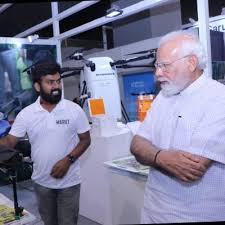
AvironiX Drones, a Chennai-based deep-tech drone company, recently announced the launch of its latest agricultural innovation, the AviSpray-10c.
- AviSpray-10c is a compact spraying drone smaller than the current generation.
- It was developed by the AvironiX Drones, a Chennai-based deep-tech drone company focused on precision farming and defence technologies.
- It is designed to significantly reduce the cost, operational complexity, and manpower requirements of drone-based crop spraying in India.
- Unlike many agricultural drones developed primarily under laboratory conditions, the AviSpray-10c has been validated through extensive real-world deployment.
- Advantages:
- Small-sized form factor for transport on scooters and bicycles
- No requirement for bulky transport vehicles
- Elimination of permanent drone mounting boxes
- Single-operator deployment with no assistant required
- Reduced battery count, lower upfront capital costs, and lower fuel consumption
- Higher improvement in spraying accuracy
- Terrain-following radar and collision-avoidance systems
- Multiple nozzle configurations
- Swappable chemical tanks.
Asemonea dentis and Colyttus nongwar:
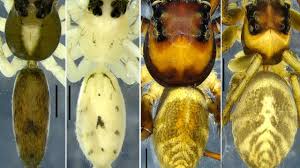
Scientists of the Zoological Survey of India (ZSI) recently identified two new species of jumping spiders, Asemonea dentis and Colyttus nongwar, in the forested terrains of the Northeast.
- These are two new species of jumping spiders discovered in Meghalaya.
- Both species belong to the Salticidae family, the tribe of “jumping spiders” known for their sharp vision, rapid reflexes and predatory precision.
- Unlike traditional web-weavers, these spiders stalk their prey with stealth before springing in a split-second leap.
- Asemonea dentis:
- Only the third Indian species identified under the Asemonea genus, a group that remains sparsely documented in the country.
- The species is named ‘dentis’ for a distinctive tooth-like projection on the male’s palpal femur.
- Colyttus nongwar:
- It is the second Indian member of the little-known Oriental genus Colyttus.
- It draws its name from Nongwar, the Khasi Hills village where it was documented.
Buxa Tiger Reserve: Wildlife Survey
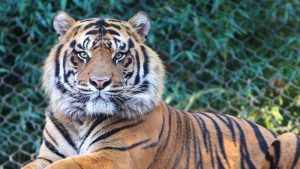
Mega 4 months wildlife survey has begun across the Buxa Tiger Reserve.
- Buxa Tiger Reserve is located in West Bengal.
- Its northern boundary runs along the international border with Bhutan.
- The fragile “Terai Eco-System” constitutes a part of this reserve.
- It serves as an international corridor for elephant migration between India and Bhutan.
- The reserve has corridor connectivity across the border with the forests of Bhutan, Kochugaon forests, Manas Tiger Reserve and Jaldapara National Park.
- Two rivers, namely the River Raidak and the River Jayanti, flow through the forest of Buxa.
- The forests of the reserve can be broadly classified as the ‘Moist Tropical Forest’.
- Some of the important species are Sal, Champa, Gamar, Simul, and Chikrasi.
- The main species include the Tiger, elephant, leopard cat, gaur, wild boar, sambar, hog deer, Chinese pangolin, etc.
Blue Corner Notice:

Interpol has issued a Blue Corner Notice for the missing owners of the Goa’s nightclub, where a devastating fire took place.
- The Blue Corner Notice is an international alert issued under Interpol’s colour-coded system, which allows member countries to share information and requests for information across borders.
- It is also known as an “enquiry notice” allows police forces in member states to share critical crime-related information such as obtaining a person’s criminal record, and location and, having his or her identity verified among others.
- Blue corner notices are issued prior to the filing of criminal charges.
- Other types of notices of INTERPOL include:
- Red Notice: To locate and arrest individuals wanted for prosecution or to serve a sentence
- Yellow Notice: It is issued to trace missing persons—especially children—or identify individuals unable to confirm their identity.
- Black Notice: To gather information about unidentified bodies.
- Green Notice: Alerts member countries about someone with a history of criminal behaviour who may pose a threat.
- Orange Notice: Warns about a person, object, or event that could pose an immediate risk to public safety.
- Purple Notice: Shares details on criminal methods, tools, or concealment techniques.
- Silver Notice (pilot): Helps identify and trace assets linked to criminal activities.
- INTERPOL:
- The International Criminal Police Organization (INTERPOL), is commonly known as Interpol, is an international organization facilitating international police cooperation against cross-border terrorism, trafficking, and other crime
- Members: 196 member India joined Interpol in 1949.
- It has enjoyed a special role, that of Permanent Observer at the United Nations – since 1996.
- Headquarter: Lyon, France.
African Penguin:
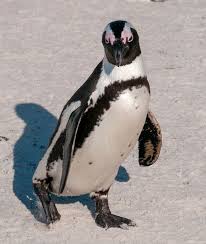
A new study found that over 60,000 African penguins starved to death between 2004 and 2011 after sardine stocks collapsed.
- The African penguin (Spheniscus demersus) is a species of penguin that lives in southern African waters.
- The species breeds naturally in burrows dug into guano (a natural substance composed of the excrement of birds, bats, and seals), which protects them from the extreme heat of their environment.
- Penguins can lose almost half their body mass during their annual 21-day moult.
- During this period, the birds come ashore, shed their feathers and cannot enter the water to feed.
- It is mainly found along the coast of Namibia and the Atlantic coast of South Africa.
- Global-warming-induced shifts in the marine and atmospheric environment are destructive to the African penguin’s habitat.
- IUCN Status: Critically Endangered.
Global Environment Outlook 2025:
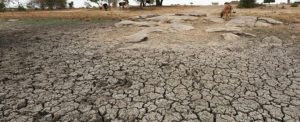
The United Nations Environment Programme (UNEP) has released the 7th edition of Global Environment Outlook 2025 (GEO-7) during the 7th session of the UNEP in Nairobi.
Key Highlights of Global Environment Outlook Report 2025:
- Greenhouse gas (GHG) emissions have increased by 1.5% annually since 1990, reaching record highs (1.55°C) in 2024 and intensifying climate impacts.
- One million species out of an estimated eight million are threatened with extinction. 20–40% of the global land area is degraded, affecting over 3 billion people.
- Climate-related extreme weather events cost approximately USD 143 billion annually over the last two decades; air pollution induced health damages alone cost USD8.1 trillion in 2019 (6.1% of global GDP).
- 9 million deaths occur annually from pollution-related causes.
- The report states that strategic investments in climate stability, biodiversity, and pollution reduction could yield USD 20 trillion annually by 2070, whereas inaction risks devastating both economies and ecosystems.
- 8,000 million tonnes of plastic waste pollute the planet, with toxic chemical exposure causing USD1.5 trillion in annual health-related economic losses.
DHRUVA Framework:
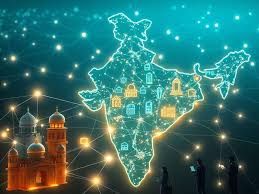
The Department of Posts has prepared a draft of proposed amendments to the Post Office Act, 2023 to provide the necessary legislative backing for the Digital Hub for Reference and Unique Virtual Address (DHRUVA) framework.
- The amendments aim to support DHRUVA’s ecosystem reforms and enable its nationwide rollout.
- DHRUVA is proposed as a Digital Public Infrastructure (DPI), similar to Aadhaar and Unified Payments Interface (UPI).
- It will allow logistics companies, e-commerce firms, and gig platforms to receive a user’s digital address “label” instead of a full physical address.
- Once the user authorises this label, the platform can access both the descriptive address and the geo-coded DIGIPIN (Digital Postal Index Number).
- DIGPIN is an open-source, in-house location pin system developed by India Post, assigning a unique code to every 12 sq. metre block in the country.
- DIGIPIN uses a 10-digit alphanumeric code derived from latitude–longitude coordinates. It divides India into a grid using 16 unique characters (2 to 9, C, J, K, L, M, P, F, T), enabling a hierarchical and precise location encoding system.
- It is especially useful in rural areas where clear descriptive addresses may be unavailable, providing delivery personnel with precise geo-location as a fallback alongside the traditional PIN code.
Nahargarh Biological Park:
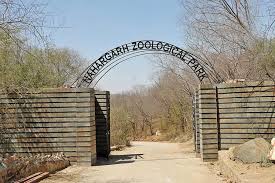
A bus caught fire during a lion safari at Nahargarh Biological Park (part of Nahargarh Wildlife Sanctuary) in Jaipur, Rajasthan, raising serious concerns over safety standards, vehicle maintenance, and environmental protection in ecotourism zones.
- Nahargarh Biological Park located roughly 12 km from Jaipur, it lies within the Nahargarh Wildlife Sanctuary (WLS) and is nestled in the Aravalli range.
- It hosts over 285 species of birds. Its most notable avian species is the white-naped tit, found exclusively in this region.
- Ram Sagar lake serves as a prominent location for ornithologists and bird enthusiasts.
- Nahargarh Wildlife Sanctuary (WLS) is located in the Aravalli range and is named after the 18th-century Nahargarh Fort built by Maharaja Sawai Jai Singh II.
- Nahargarh Biological Park, located within the Nahargarh WLS, is known for its lion safaris.
- It features dry deciduous forests, scrublands, and grasslands.
- It houses Asiatic lions, Royal Bengal tigers, crocodiles, sloth bears, Himalayan black bears, and wild boars.
Human Rights Day 2025:

Human Rights Day is observed every year on 10th December to commemorate the adoption of the Universal Declaration of Human Rights (UDHR) in 1948, reaffirming the global commitment to dignity, equality and freedom.
- The day was formally established in 1950 through UNGA Resolution, inviting all countries to celebrate it annually
- The 2025 theme is “Everyday Essentials”, focusing on access to basic services as a human right.
- In India, human rights protection is guided by the Constitution of India and the Protection of Human Rights Act, 1993, under which the National Human Rights Commission (NHRC) was established in 1993.
- The Protection of Human Rights Act, 1993 defines “Human Rights” as the rights relating to life, liberty, equality and dignity of the individual guaranteed by the Constitution or embodied in the International Covenants and enforceable by courts in India.
- NHRC is an independent statutory body, it acts as the guardian of human rights in India. It was set up in line with the Paris Principles (1991).
- NHRC has registered over 23.8 lakh human rights complaints and has recommended over Rs 264 crore as relief.
- NHRC uses suo motu cognizance, investigations, camp sittings and policy advisories for protection of rights.
Operation Hinterland Brew:
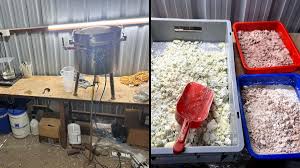
The DRI has busted an illicit Mephedrone manufacturing unit in Wardha, Maharashtra under “Operation Hinterland Brew,” seizing 128 kg of the synthetic drug worth ₹192 crore.
- Operation Hinterland Brew is a targeted anti-narcotics operation conducted by the Directorate of Revenue Intelligence (DRI) to identify and destroy clandestine drug manufacturing units operating in remote or rural regions.
- Launched by: Directorate of Revenue Intelligence (DRI)
- It is a Part of broader national efforts under Nasha Mukt Bharat Abhiyaan to curb the production, trafficking, and distribution of synthetic drugs.
- It Prevents large-scale circulation of high-purity synthetic narcotics.
- It Disrupts organised drug networks using rural areas as camouflage.
- It Strengthens India’s enforcement credibility under the NDPS Act, 1985.
- It Supports national health and security goals by curbing the synthetic
C. Rajagopalachari : Birth Anniversary
Prime Minister of India paid tribute to C. Rajagopalachari (Rajaji) on his birth anniversary, recalling his role as a freedom fighter, thinker, statesman, and India’s last Governor-General.Rajagopalachari (1878–1972), popularly known as Rajaji, was a freedom fighter, jurist, writer, statesman, and the first and only Indian Governor-General of India. Gandhi famously called him “the keeper of my conscience.”Only Indian to serve as Governor-General of India.
Founder of the Swatantra Party (1959) — India’s first major liberal-conservative, pro-market political party. Gandhi’s closest ideological counsellor, described as his “moral compass.”Coined the slogan: “English ever, Hindi never” in later years, advocating linguistic choice. Known for his sharp intellect, minimalism, wit, and uncompromising integrity.
Boreendo:
UNESCO has inscribed Pakistan’s Boreendo, a rare clay vessel-flute linked to the Indus Valley musical tradition, on the Intangible Cultural Heritage in Need of Urgent Safeguarding list.The Boreendo is a spherical clay vessel-flute, producing mellow, breathy tones used in folk melodies, pastoral songs and winter gatherings in Sindh. It originates from Keti Mir Muhammad Lund in Sindh, with roots tracing back to Mohenjo-daro artefacts, indicating a long sonic lineage from the Indus Valley Civilization.
33rd Southeast Asian Games:
The 33rd Southeast Asian Games open in Thailand, featuring 13,000 athletes from 11 nations competing across 50 medal sports.Hosted across Bangkok and Chonburi province, this edition brings together thousands of athletes and spectators to celebrate athletic excellence, regional unity, and cultural pride. The Opening Ceremony is being held at the iconic Rajamangala National Stadium, signaling the commencement of an event that showcases Southeast Asia’s growing sports ecosystem
Adani Group to Invest Over $75 Billion in Energy Transition Sector:
Adani Group Chairman Gautam Adani announced that the conglomerate will invest over $75 billion in the energy transition space over the next five years. Speaking at the 100th-year celebration of IIT (ISM) Dhanbad, Adani emphasized that the global shift towards clean energy is poised to become one of the biggest industries of the future, and India must be at the forefront of this transformation.India is the third-largest electricity consumer globally, yet per capita consumption remains relatively low at less than 1,400 kWh per year. As India expands its industrial capacity, the demand for clean, affordable power will surge.With India contributing only 4% of cumulative global emissions despite two centuries of industrial development, the country sees the green transition as an opportunity to grow without repeating the carbon-intensive pathways of developed nations.
Lithuania has announced a state of emergency after cigarette-smuggling balloons from Belarus:
Lithuania has declared a state of emergency on 9 December 2025, citing repeated airspace violations by cigarette-laden balloons launched from Belarus. These incursions, described as a form of hybrid attack, have endangered aviation safety, disrupted public life, and deepened friction between the two neighbours.
Lithuanian authorities reported:
- Multiple meteorological balloons drifting into Lithuanian airspace
- Balloons carrying smuggled cigarettes intended for black-market distribution
- Forced closures of Lithuania’s main international airport, affecting thousands of passengers
- Officials argue that the frequency and timing of these incursions indicate intentional disruption, not accidental drift.
SEBI introduces PaRRVA:
The Securities and Exchange Board of India (SEBI) has launched PaRRVA (Past Risk and Return Verification Agency) — a new verification mechanism aimed at authenticating the past performance claims made by SEBI-registered market intermediaries.Developed in collaboration with Care Ratings and the National Stock Exchange (NSE), PaRRVA was rolled out as a pilot project on December 8, 2025, and marks a strategic move to counter the growing influence of unverified investment advice and misleading content—especially by online finfluencers.PaRRVA is designed to verify the past returns and associated risks claimed by,Registered investment advisers,Research analysts,Algorithmic trading service providers.
RBI’s $5 Billion Dollar/Rupee Swap:
The Reserve Bank of India (RBI) has announced a $5 billion dollar/rupee Buy–Sell swap auction scheduled for December 16, 2025, intended to strengthen its ability to stabilise the rupee without drawing down India’s foreign exchange reserves. The rupee recently breached the psychologically crucial ₹90-per-dollar mark, prompting the central bank to deploy a strategy previously used in early 2025 to curb volatility.
US FDA Qualifies First AI Tool to Accelerate Liver Disease:
The U.S. Food and Drug Administration (FDA) has qualified the first AI-powered tool designed to assist doctors in assessing a severe form of fatty liver disease during drug trials. The tool, called AIM-NASH, marks a major advancement in how artificial intelligence can be used to accelerate drug development, improve diagnostic consistency, and reduce the resource burden on researchers.AIM-NASH is a cloud-based artificial intelligence system that analyzes liver biopsy images to help clinicians evaluate markers of liver disease, including fat accumulation, inflammation, and scarring.These biomarkers are essential in diagnosing and tracking metabolic dysfunction-associated steatohepatitis (MASH), a progressive condition affecting millions of Americans and one that can lead to liver failure or cancer.The tool uses advanced AI algorithms trained on large datasets to generate standardized scores that are then reviewed by doctors for final interpretation.By automating a key diagnostic step, AIM-NASH addresses variability and delays that currently burden clinical research.
Telangana Rising Global Summit 2025:
Telangana achieved a major economic milestone as the Telangana Rising Global Summit 2025 concluded with investment commitments worth ₹5.75 lakh crore. The two-day summit highlighted the State’s strategy to emerge as a national leader in energy transition, AI-driven data infrastructure, smart urbanisation, and next-generation technologies. With high-level participation from global investors, policymakers, and industry leaders, the summit showcased Telangana’s ambition to accelerate growth and position itself as an innovation-led powerhouse.
Andrej Babis Sworn In as Czech Republic’s New Prime Minister:
Andrej Babis, the billionaire businessman and leader of the centrist–populist ANO (YES) movement, was sworn in as the new Prime Minister of the Czech Republic on 9 December 2025. His return marks a significant shift in the Czech political landscape, coming four years after he previously held the post from 2017 to 2021. Babis was sworn in by President Petr Pavel at Prague Castle following his party’s strong performance in the October 3–4 parliamentary elections.
A’ja Wilson is TIME’s 2025 Athlete of the Year:
TIME magazine has named A’ja Wilson, superstar forward of the Las Vegas Aces, as the 2025 Athlete of the Year a recognition that crowns one of the most remarkable individual seasons in the history of professional basketball. Wilson’s excellence on court, combined with her powerful cultural presence and leadership in women’s sports, made 2025 a defining year in her career. Her journey reflects not just athletic prowess, but resilience, influence, and the evolution of the WNBA at a moment of rising global visibility.
Leonardo DiCaprio Named TIME’s 2025 Entertainer of the Year:
Leonardo DiCaprio, one of Hollywood’s most celebrated actors, has been honoured as TIME’s Entertainer of the Year 2025, an accolade that reflects not just a single performance but an entire career defined by artistic courage and emotional depth. With more than three decades in the film industry, DiCaprio continues to reinvent screen acting, bringing nuance, risk-taking, and authenticity to each role.



