
Today’s Current Affairs: 13th March 2026 for UPSC IAS exams, State PSC exams, SSC CGL, State SSC, RRB, Railways, Banking Exam & IBPS, etc
Table of Contents
Euthanasia:
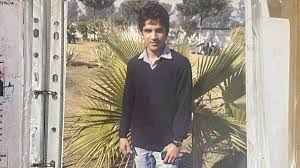
SC Allows 1st Passive Euthanasia in Harish Rana Case.
- The Supreme Court (SC), in Harish Rana vs Union of India Case (2026), permitted passive euthanasia by allowing withdrawal of life support, marking the first application of the 2018 Common Cause judgment recognising the right to die with dignity.
- The Supreme Court of India allowed passive euthanasia for Harish Rana, a 32-year-old man in a permanent vegetative state for over 13 years, permitting withdrawal of life-sustaining treatment under medical supervision.
- The ruling applies earlier guidelines recognising the right to die with dignity under Article 21, marking India’s first court-approved implementation of passive euthanasia.
- Harish Rana was a 19-year-old student in Chandigarh when he fell from a fourth-floor building in August 2013.
- The accident caused catastrophic brain injuries, leaving him in a Permanent Vegetative State (PVS) with 100% quadriplegia (paralysis of all four limbs).
- For nearly 13 years, he was sustained solely through Clinically Assisted Nutrition and Hydration (CANH) via surgically installed PEG tubes, with no sign of improvement.
- After the Delhi High Court dismissed his father’s plea in 2024, the family approached the Supreme Court, which finally permitted passive euthanasia.
- The SC accepted the unanimous recommendation of medical boards and family members to withdraw life support and directed All India Institute of Medical Sciences, Delhi, to admit Harish Rana to its palliative care department and formulate a “robust, palliative, and end-of-life care plan.”
- It emphasized that withdrawal must be carried out in a humane manner, managing pain and symptoms to ensure the patient’s dignity is preserved and that it does not amount to “abandonment” of the patient.
- SC held that Clinically Administered Nutrition (CAN) administered through PEG (percutaneous endoscopic gastrostomy) tubes constitutes “medical treatment”, not merely basic care.
- Therefore, its withdrawal falls within the scope of passive euthanasia and can be approved by the medical boards if it is not in the patient’s best interest.
- To prevent unnecessary suffering, the SC waived the standard 30-day reconsideration period, allowing for the immediate implementation of the medical boards’ decision to withdraw CAN.
European Free Trade Association: In News

The Trade and Economic Partnership Agreement (TEPA) between India and the member states of the European Free Trade Association (EFTA) has completed two years since its signing.
- It is an intergovernmental organisation established in 1960 by the Stockholm Convention.
- Objective is to Promotes free trade and economic integration between its members within Europe and globally.
- Member Countries: Iceland, Liechtenstein, Norway, and Switzerland.
- The members of this organization are all open, competitive economies committed to the progressive liberalisation of trade in the multinational arena as well as in free trade agreements.
- In contrast to the European Union (EU), it is not a customs union.
- Headquarters: EFTA Secretariat is located in Geneva.
- It assists the EFTA Council in the management of relations between the 4 EFTA States and deals with the negotiation and operation of EFTA’s FTAs.
Governance - EFTA Council: Its highest governing body is the EFTA. It generally meets 8 times a year at the ambassadorial level and twice a year at the ministerial level.
- EFTA Surveillance Authority (ESA): It monitors compliance with European Economic Area (EEA) rules in Iceland, Liechtenstein and Norway.
- EFTA Court: It is based in Luxembourg and has the competence and authority to settle internal and external disputes regarding the implementation, application or interpretation of the EEA agreement.
No-fault liability principle ordered by the Supreme Court:
The Supreme Court (SC) has directed the Union Government to formulate a “no-fault” liability compensation policy for those who suffered serious adverse effects or deaths following the Covid-19 vaccination drive.
- The SC invoked the principle of no-fault liability, ruling that victims or their families are entitled to financial relief without having to prove negligence or intentional wrongdoing by the manufacturers or the State.
- This principle, already existing in Indian law (e.g., motor vehicle accidents), is a standard feature of vaccine injury schemes in countries like Australia, the United Kingdom and Japan.
- The SC rejected the Centre’s argument that families should approach civil or consumer courts for damages for negligence or malfeasance against vaccine manufacturers.
- The SC said forcing citizens into “a multiplicity of individual legal battles” would lead to inconsistent outcomes and unequal access to relief, thereby undermining the right to equality under Article 14 of the Constitution.
- Relying on Article 21 (Right to Life, including Health), the SC asserted that the Constitution envisions the State as an “active guardian of welfare and dignity,” not a distant spectator.
- Since the mass vaccination programme was a State-led public health intervention, the State bears a positive obligation to support those who suffered grave outcomes, no matter how rare (e.g., just 0.001 per one lakh doses in India for certain blood clotting disorders).
- The petitioners argued that while the drive was officially “voluntary,” it was effectively made mandatory through administrative restrictions on unvaccinated individuals.
- While refusing to set up a separate medical board, it held that existing Adverse Events Following Immunisation (AEFI) committees are adequate, but stressed that the State’s responsibility “cannot end at surveillance alone, and must extend to providing fair compensation.”
- The SC clarified that the compensation policy does not amount to an admission of liability by the Union government.
Peptide Therapy:
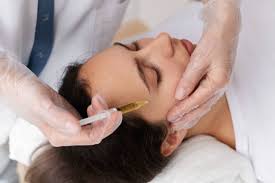
The growing global interest in peptide-based therapies for treating diseases and enhancing wellness has raised both medical opportunities and safety concerns, prompting experts to call for greater caution and regulation.
- Peptides are short chains of amino acids, which are the fundamental building blocks of life.
- They are essentially smaller versions of proteins. While proteins typically consist of 50 or more amino acids folded into complex 3D shapes, peptides usually contain between 2 and 50 amino acids.
- In the human body, naturally occurring peptides act as crucial signaling molecules.
- They function as hormones, neurotransmitters, and local regulators, instructing cells on how to behave regarding metabolism, immune response, and tissue repair.
- Peptide Therapy uses synthetic or naturally derived peptides as medicines that mimic the body’s natural signaling molecules.
- These peptides bind to specific cell receptors in a “lock-and-key” mechanism, triggering targeted biological responses with fewer side effects compared to conventional drugs.
- Since peptides are easily broken down by digestive enzymes, most peptide therapies are administered through subcutaneous injections rather than oral tablets.
- Peptide-based medicines are increasingly used to treat conditions like diabetes, cancer, infertility, growth disorders, and hormonal diseases.
- A major example is GLP-1–based peptide drugs, widely used to regulate blood sugar and appetite in diabetes and obesity treatment.
- In oncology, peptides can target tumour receptors or deliver drugs directly to cancer cells, improving treatment precision.
- In regenerative medicine, peptides are being studied for tissue repair in muscles, nerves, and tendons.
- Peptides are also being explored in dermatology, wound healing, osteoporosis, cardiovascular diseases, and viral infections.
- Driven by trends in biohacking and anti-ageing, many people are self-injecting unapproved “research chemicals” bought online.
- Since these lack human clinical trials, they pose serious threats, including endocrine imbalances, metabolic disturbances, and severe cardiovascular risks.
SC Clarifies OBC Creamy Layer Criteria:
The Supreme Court (SC) of India has ruled that parental income alone cannot determine the “creamy layer” status of Other Backward Classes (OBCs) candidates, clarifying long-standing confusion in applying reservation rules in civil services examinations.
- The judgement resolves confusion created by the 1993 Office Memorandum (OM) of the Department of Personnel and Training (DoPT) and the 2004 clarificatory letter.
- The 1993 DoPT OM had clearly stated that income from salaries and agricultural land should not be counted in the income/wealth test for creamy layer determination.
- However, the 2004 DoPT clarification directed inclusion of salary income of PSU/private sector employees, which resulted in unequal treatment between government employees’ children and PSU/private sector employees’ children.
- The SC held that creamy layer determination is status-based, not purely income-based, and must consider the parent’s employment status and post category (Group A/B/C/D), not just income.
- The SC held that the government engaged in “hostile discrimination” by allowing children of lower-tier government employees to retain OBC reservation benefits based on the status of the parent’s post, even if salaries increased.
- Children of equivalent PSU/private sector employees were denied OBC reservation solely because parental salary crossed Rs 8 lakh, treating equals unequally and violating Articles 14, 15, and 16 of the Constitution.
- The verdict may expand OBC reservation eligibility, especially for children of PSU employees and private sector workers previously excluded due to salary-based calculations.
- The Court also directed the government to create supernumerary posts if necessary to accommodate candidates wrongly excluded earlier.
- The concept of “creamy layer” was first applied in the 1992 Indra Sawhney vs Union of India judgment to exclude socially advanced OBCs from reservation benefits.
- Under Existing Rules Children of Group A officers or those promoted before age 40 are excluded from the OBC quota.
- Children of two Group B officers also fall under the creamy layer.
- For non-government occupations, the income limit for creamy layer is Rs 8 lakh annually (since 2017).
Fiscal Health Index 2026:
NITI Aayog released the second annual edition of the Fiscal Health Index (FHI) 2026, which evaluates the fiscal performance of Indian states for FY 2023–24.
- The Fiscal Health Index is a comprehensive framework designed by NITI Aayog to evaluate and compare the fiscal soundness of Indian states. It moves beyond simple deficit indicators to provide a structured assessment of fiscal strengths and vulnerabilities across states.
- Report is published By: NITI Aayog, Government of India.
Ranking (State-wise for 2023-24):
Top Performers:
- Odisha – Rank 1 (Score: 73.1)
- Goa – Rank 2 (Score: 54.7)
- Jharkhand – Rank 3 (Score: 50.5)
- Gujarat – Rank 4
- Maharashtra – Rank 5
Bottom Performing States:
- Punjab – Rank 18
- Andhra Pradesh – Rank 17
- West Bengal – Rank 16
- Kerala – Rank 15
2025 seismic code : BIS
The Bureau of Indian Standards (BIS) has withdrawn its 2025 seismic code (IS 1893) following concerns raised by the Ministry of Housing and Urban Affairs (MoHUA). The previous standard, IS 1893 of 2016, is now back in effect.
- MoHUA raised serious concerns, like huge construction cost escalation, estimated at 10-15% in Zones V and VI for buildings, and up to 50% for infrastructure projects and inadequate stakeholder consultation before finalising the code.
- The revision was based on advanced scientific methods like Probabilistic Seismic Hazard Assessment (PSHA), active fault mapping, and near-fault effects.
- A seismic code is a set of regulations and standards designed to ensure that buildings and other structures can withstand the forces generated by earthquakes.
- Its primary purpose is to protect public safety by minimizing the risk of structural collapse, reducing property damage, and safeguarding lives during a seismic event.
- As of March 2026, the seismic zonation of India is governed by IS 1893 (Part 1):2016, issued by the Bureau of Indian Standards (BIS).
- This standard divides the country into four seismic zones i.e., Zone II (Low), Zone III (Moderate), Zone IV (High), and Zone V (Very High), with approximately 59% of India’s landmass considered prone to earthquakes.
United Nations Security Council (UNSC):
India has co-sponsored a Gulf Cooperation Council (GCC) resolution at the UN Security Council demanding the immediate cessation of Iranian attacks on GCC nations and the Strait of Hormuz.The UNSC is one of the six principal organs of the United Nations, charged with the primary responsibility of maintaining international peace and security. It is the only UN body with the authority to issue binding resolutions that member states are obligated to implement.The Council was established by the UN Charter in 1945 and held its first session on January 17, 1946, at Church House, London.Headquarter: It is now permanently headquartered in New York City.
New Moth Species in the Eastern Himalayas:

Scientists from the Zoological Survey of India (ZSI) have discovered two new species of lichen moths, Caulocera hollowayi and Asura buxa, in the Eastern Himalayas.
- Researchers from the Zoological Survey of India (ZSI) discovered two previously unknown species of lichen moths (order: Lepidoptera) in the Eastern Himalayan biodiversity hotspot.
- The species were identified through detailed morphological analysis, wing pattern studies, and microscopic reproductive structures used in insect taxonomy.
Caulocera hollowayi:
- A newly identified lichen moth species belonging to the genus Caulocera.
- Discovered from Golitar region of Sikkim.
- Distinct wing colour patterns and band structures.
- Unique microscopic reproductive structures used in insect classification.
- Identified through chaetotaxy (arrangement of body scales and bristles) and morphological characteristics.
Asura buxa:
- Another newly described lichen moth species belonging to the genus Asura.
- Discovered from Panijhora in West Bengal (Eastern Himalayas).
- Characterised by distinct wing markings and structural differences in genital morphology, a key taxonomic feature in Lepidoptera identification.
- Shows unique body scale arrangement, confirming it as a species new to science.
GI-Tagged Joha Rice:
India has facilitated the export of 25 metric tonnes of Assam’s GI-tagged Joha rice to the United Kingdom and Italy, expanding access to niche agricultural products in global markets.Joha rice is a short-grain aromatic rice variety known for its distinctive fragrance, soft texture, and traditional cultivation practices.It received Geographical Indication (GI) status in 2017, recognizing its unique origin and traditional cultivation in Assam.The rice originates from Assam in Northeast India, where it has been cultivated for centuries as part of traditional agricultural systems.It is culturally associated with Assamese cuisine and festivals, often used in special dishes.



