
Today’s Current Affairs: 14th March 2026 for UPSC IAS exams, State PSC exams, SSC CGL, State SSC, RRB, Railways, Banking Exam & IBPS, etc
Table of Contents
Van Allen Probe A:
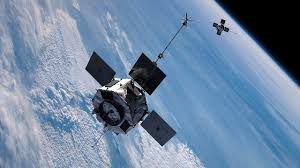
NASA’s 600 kg Van Allen Probe A satellite is falling back to Earth, raising questions about whether people on the ground should be concerned.
- NASA’s Van Allen Probes mission was the first mission to use two spacecraft in tandem to study Earth’s radiation belts.
- Originally designed for a two-year mission, the Van Allen Probes A and B gathered unprecedented data on Earth’s two permanent radiation belts — named for scientist James Van Allen — for almost seven years.
- From 2012 to 2019, the spacecraft and its twin, Van Allen Probe B, flew through the Van Allen belts, rings of charged particles trapped by Earth’s magnetic field, to understand how particles were gained and lost.
- The belts shield Earth from cosmic radiation, solar storms, and the constantly streaming solar wind that are harmful to humans and can damage technology, so understanding them is important.
- By having two spacecraft with identical instruments, with one followed by the other along nearly the same path, researchers could measure changes that occur in Earth’s radiation belts over time and through space, providing insights into the physical dynamics of the radiation belts and changes that occur in this critical region of space.
- NASA ended the mission after the two spacecraft ran out of fuel and were no longer able to orient themselves toward the Sun.
International Atomic Energy Agency : In News

Amid growing concerns over nuclear non-proliferation, the Director General of the International Atomic Energy Agency held talks with the head of Rosatom, Russia’s state nuclear energy corporation recently.
- It is the world’s leading intergovernmental organisation for scientific and technical cooperation in the nuclear field.
- The IAEA is an autonomous organization within the United Nations system.
- It reports to both the United Nations General Assembly and the UN Security Council.
- Its primary goal is to ensure that nuclear energy is not diverted for weapons purposes.
- The IAEA works with its Member States and multiple partners worldwide to promote the safe, secure, and peaceful use of nuclear technologies.
- It is widely known as the world’s “Atoms for Peace and Development” organization.
- Member Countries: The agency currently has 180 member states, reflecting its wide international mandate and credibility.
- Headquarters: Vienna, Austria.
- The General Conference, composed of all member states, meets annually to approve budgets and set general policy directions.
- The Board of Governors, comprising 35 members, meets about five times a year to: approve safeguards agreements, carry out statutory functions, and appoint the Director General.
- It is led by the Director General and handles the IAEA’s daily operations.
- Functions:
- Promoting Peaceful Uses of Nuclear Energy: The IAEA encourages the use of nuclear technology for peaceful purposes, emphasizing sustainability and safety.
- Safety and Security: The agency establishes safety standards and provides assistance to ensure that nuclear operations are conducted safely and securely.
- Verification: The IAEA conducts inspections and monitoring to verify compliance with nuclear non-proliferation agreements.
Chelonus (Carinichelonus) mahadeb : Parasitic Wasp
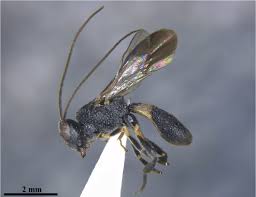
A rare parasitic wasp Chelonus (Carinichelonus) mahadeb named has been recently recorded from a tea estate in Assam.
- It is a new species of parasitic wasp.
- It was discovered from Nahortoli Tea Estate in Assam.
- Parasitic wasps of the genus Chelonus are tiny insects but play an important ecological role.
- They are known as egg–larval parasitoids, meaning they lay their eggs inside the eggs of other insects, usually moths and butterflies.
- The developing wasp larva eventually consumes the host, helping regulate insect populations
- Because many moth larvae are major agricultural pests, species of Chelonus are often considered beneficial insects that contribute to natural pest control in crop ecosystems, including plantations.
- The discovery is notable because the subgenus Carinichelonus is extremely rare and poorly documented worldwide.
- It is only the second new species of this subgenus described from India in recent times.
Four people drowned in the Beas River:
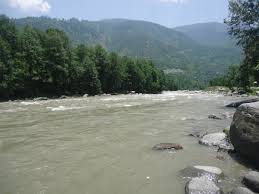
Four people drowned in the Beas River in the Kangra district, Himachal Pradesh, recently
- Beas River is a river passing through the northern Indian states of Himachal Pradesh and Punjab.
- It is one of the five rivers that give Punjab (“Five Rivers”) its name.
- It was known as Vipas in the past, meaning the “Unfettered” river.
- The Beas River was the approximate eastern limit of Alexander the Great’s invasion of India in 326 BCE.
- The river originates in the Rohtang Pass of the Himalayas in central Himachal Pradesh.
- From there it flows south through the Kullu Valley, receiving tributaries from the flanking mountains, and then turns west to flow past Mandi into the Kangra Valley.
- After crossing the valley, the Beas enters Punjab state and veers south and then southwest to its confluence with the Sutlej River at Harike.
- Major Tributaries: Bain, Banganga, Luni, and Uhal, along with Banner, Chakki, Gaj, Harla, Mamuni, Parvati, Patlikuhlal, Sainj, Suketi, and Tirthan.
- Dams: The Pong Dam, also known as the Beas Dam, is an earth-fill embankment dam constructed on the river Beas in the Kangra district of Himachal Pradesh.
National Shipping Board:
The government of India held a high-level interaction with National Shipping Board (NSB) to address sectoral challenges amid global maritime uncertainty.
- It is a permanent statutory body established in 1959, under Section 4 of Merchant Shipping Act, 1958.
- It advise the Government of India on matters related to shipping including the development.
- It has played a very distinguished role in the Maritime development of the country, as its deliberation and recommendations have contributed to the evolution of a sound and pragmatic National Maritime Policy over the years.
- It consists of Chairman and Members.
- Six Members elected by Parliament (Four from the Lok Sabha and two from Rajya Sabha from amongst its Members).
- The Chairman and other members of the Board held office for a period of two years.
- Such Members of other members not exceeding sixteen as the Central Government may think fit to appoint on the Board to represent the Central Government, Ship-owners, and Seamen.
- Nodal Ministry: Ministry of Ports, Shipping and Waterways.
Nevado Ojos del Salado:
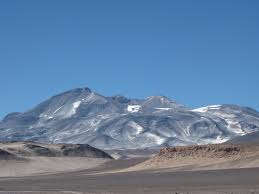
A professor at the Indian Institute of Science (IISc) has summited the Nevado Ojos del Salado.
- Nevado Ojos del Salado is located in the Andes Mountain Range on the boundary between Chile and Argentina.
- It is also the highest mountain (6,893 meters) in Chile.
- It is the world’s highest active stratovolcano.
- It was largely formed from the accumulation of lava flows and explosive volcanic material.
- The Mountain’s climate is high desert.
- The upper part of the mountain features a set of craters and elongated volcanic peaks.
- Due to its location near the Atacama Desert, the mountain has very dry conditions with snow usually only remaining on the peak during winter.
- There is a permanent crater lake about 100 m (330 ft) in diameter at an elevation of 6,390 m (20,960 ft) on the eastern side of the mountain.
What is Tephra?
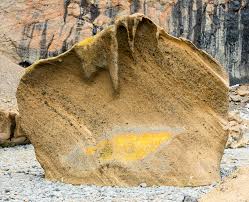
Kīlauea has been erupting episodically within Hawai Volcanoes National Park since December 23, 2024, and although lava flows remain confined to the caldera, tephra from lava fountains may impact downwind communities.
- Tephra, a volcanology term for ash, is small rock fragments ejected from a volcano into the atmosphere, which is then deposited around and downwind of the volcano.
- The size of particles that fall out is largest near the volcano and gets progressively smaller further from the volcano.
- Tephra produces a wide range of hazards.
- When the ejected material is in the atmosphere, it is electrically charged and often produces lightning.
- Several people have been killed by lightning from volcanic eruption clouds.
- Other hazards are produced when the ash is deposited on the ground.
- Ash can disrupt electricity, television, radio, and telephone communication lines; bury roads and other manmade structures; damage machinery; start fires; and clog drainage and sewage systems.
- It kills crops, damages machinery, and is a hazard to aviators.
- Tephra is heavy – a significant accumulation on a rooftop could collapse a building.
- In addition, it often blocks out the sun, creating darkness and unnecessary panic.
- Ash can produce poor visibility and cause respiratory problems.
Kurumba Painting:

It was observed that the Kurumba art form is facing the threat of extinction.
- Kurumba Painting is a prehistoric art form, estimated to be over 3000 years old.
- It originates from the Kurumba tribe in Tamil Nadu, Kerala, and Karnataka.
- The art was traditionally drawn on rocks and in caves across the high hills of the Nilgiris.
- Kurumba paintings use natural pigments sourced from the forest.
- Yellow-brown and black pigments come from Vengai tree resin, while green pigments are derived from crushed leaves.
- Artists use fine twigs, bamboo sticks, and natural fiber brushes for application.
- The paintings are traditionally done on walls, fabric, and handmade paper.
- Kurumba tribal paintings use natural colors—green from leaves, red and white from soil, and black from tree bark—applied with cloth on cow dung-coated walls.
- The art features simple, linear motifs with dots, lines, and geometric shapes, depicting huts, animals, and community life.
- Themes center around spiritual beliefs, rituals, festivals, and daily activities.
- This minimalist yet expressive style preserves the tribe’s cultural heritage and reflects their deep spiritual bond with nature.
India’s 1st Comprehensive Checklist of Fireflies:
Scientists compiled the first-of-its-kind checklist of Indian fireflies using more than 260 years of scattered scientific records, including documentation from 1881 to 2025, identifying 92 species across 27 genera.The checklist was created to address the lack of accessible modern literature on Indian fireflies and serve as a foundational reference for future taxonomic research.More than 60% of the documented species are endemic to India. Notably, over 50 species have not been recorded again since their original descriptions in the 1800s.The study mapped firefly occurrences across 22 States and one Union Territory. The Western Ghats emerged as the richest habitat with 25.33% of species, followed by the North East (22.66%), Gangetic Plain (17.33%), and the Deccan Peninsula (13.33%). No fireflies were recorded in Desert and Semi-Arid zones.Fireflies, often mistaken for flies or bugs, are actually soft-bodied beetles belonging to the family Lampyridae, within the order Coleoptera (beetles). They are renowned for their remarkable ability to produce light through bioluminescence.
India has shipped 500 metric tonnes (mt) of rice to Mozambique:
India has shipped 500 metric tonnes (mt) of rice to Mozambique following severe flooding that has impacted several central and southern provinces.Mozambique is a country in Southern Africa and is located in the Southern and Eastern Hemispheres of the Earth. Bordering countries: Zimbabwe (west), Eswatini and South Africa (south and southwest), Zambia, Malawi (north west), and Tanzania (North).It has a coastline on the Indian Ocean to the east.The island countries and territories of Madagascar, Comoros, and Mayotte are separated from Mozambique by the Mozambique Channel.Capital City: Maputo
‘Shenlong’ Crude Tanker:
The Liberia-flagged crude oil tanker ‘Shenlong’ carrying Saudi crude oil reached Mumbai Port after transiting the Strait of Hormuz amid escalating tensions in the Middle East.Shenlong is a Suezmax-class crude oil tanker transporting crude oil from Ras Tanura Oil Terminal to India.
It is Liberia-flagged, meaning the ship is registered under the maritime registry of Liberia, a common practice known as flag of convenience.Designed to carry around 1 million barrels of crude oil and sized to pass through the Suez Canal.Large capacity tanker: Typically 120,000–200,000 deadweight tonnes (DWT).Used for long-distance transport of crude oil between major oil-exporting and importing regions.Transited through the Strait of Hormuz, a vital global oil transit chokepoint.



