
Today’s Current Affairs: 15th December 2025 for UPSC IAS exams, State PSC exams, SSC CGL, State SSC, RRB, Railways, Banking Exam & IBPS, etc
Table of Contents
Tapanuli Orangutan:
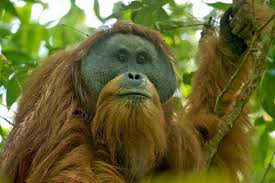
Scientists fear that Cyclone Senyar may have swept away a significant number of Tapanuli orangutans.
- The Tapanuli orangutan (Pongo tapanuliensis) is a species of orangutan found in the island of Sumatra in Indonesia.
- It is one of three known species of orangutan, alongside the Sumatran orangutan, found farther northwest on the island, and the Bornean orangutan.
- It is on the critically endangered species list.
- These species resemble Sumatran orangutans more than Bornean orangutans in body build and fur color.
- It lives in tropical and subtropical moist broadleaf forests that are located south of Lake Toba in Sumatra.
- These are exclusively arboreal and spend most of their time high up in the trees.
- Tapanuli Orangutan lead a solitary life and can be seen in pairs only when a mother is raising her young.
- Orangutans communicate with various sounds.
- Both sexes will try to intimidate conspecifics with a series of low guttural noises known collectively as the “rolling call”.
- Diet: They are omnivores.
- Tapanuli orangutans are one of the most slowly-maturing animals in the world.
- Conservation Status: IUCN: Critically endangered
Death Valley National Park:
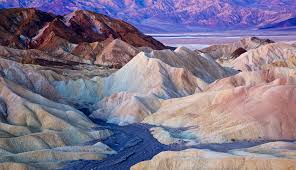
After record-breaking rains, an ancient lake in Death Valley national park that had vanished has returned to view.
- It is a desert valley located in the southeastern part of California, United States.
- It is the hottest and driest place in North America.
- It is the location of the highest temperature ever recorded in the United States.
- It is the largest national park in the continental United States.
- It is a rift valley, or a graben, that has been formed due to the sinking of a huge expanse of rock located between major block-faulted mountains running parallelly in the east and west.
- It lies in the Great Basin to the east of the Sierra Nevada Mountains, in the northern part of the Mojave Desert.
- Despite the low precipitation and extreme summer temperatures, Death Valley is home to many diverse species, several of which are endemic (found nowhere else in the world).
Chenchu Tribe:
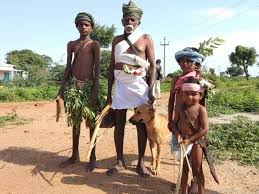
The National Sanskrit University (NSU) organised a symposium, panel discussion, and exhibition recently highlighting the unique privilege the Chenchu tribal community has with the Ahobilam shrine and the deity of Lord Narasimha.
- The Chenchus are a food-gathering tribe primarily residing in the Nallamalai forests of Andhra Pradesh.
- They are one of the Particularly Vulnerable Tribal Groups (PVTGs) in Andhra Pradesh.
- They are also found in Telangana, Karnataka and Odisha.
- They speak variants of Telugu, the Dravidian language of the region.
- A Chenchu village is known as “Penta“.
- Each penta consists of a few huts that are spaced apart and are grouped together based on kinship patterns.
- Small conjugal families predominate, women taking equal rank with men and marrying only upon maturity.
- “Peddamanishi” or the village elder, is generally the authority to maintain social harmony in a family or a village.
- Their rituals are few and simple; religious and political specializations are slight.
- The Chenchu live life with exemplary simplicity. Most of them still gather food from the forest and roam in it to find things to meet their needs.
- The bow and arrow and a small knife are all the Chenchus possess to hunt and live.
- The Chenchus collect forest products like roots, fruits, tubers, beedi leaf, mohua flower, honey, gum, tamarind, and green leaves and make a meagre income from it by selling these to traders and government cooperatives.
- Though at times they work as forest labourers, they mostly prefer to fall back on their native skills to hunt and gather food.
- The Chenchus do not care much for money or material wealth.
- Chenchus worship a number of deities. Chenchus have also adopted certain religious practices from Hindus.
- For ages, the Chenchus have been associated with the famous Srisailam temple (dedicated to Lord Shiva and Devi Brahmaramba) in Andhra Pradesh, situated at the heart of Chenchu land.
- The Chenchus enjoy special privileges at Srisailam temple.
Uchi Pillaiyar Temple:
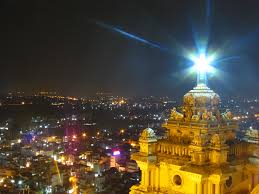
The Tamil Nadu government recently informed the Madurai Bench of the Madras High Court that the deepam (lamp) was lit at the Uchipillaiyar temple mandapam in Thirupparankundram hill during Karthigai Deepam this year too as it was done for over the last 150 years.
- The Uchi Pillaiyar Temple, also known as Rockfort Temple, is located at the top of Rockfort Hill, Trichy, in Tamil Nadu.
- It is a 7th-century-CE Hindu temple, dedicated to Lord Ganesha.
- Its construction was started by the Pallavas, but it was the Nayaks of Madurai who completed the temples’ construction.
- There are three temples located closely on the rock fort:
- Maanikka Vinayakar Temple situated at the foothill, dedicated to Lord Ganesha.
- Uchchi Pillayar Temple at the top of the hill, dedicated to Lord Ganesha.
- Thayumanaswamy Temple, dedicated to Lord Shiva, situated close to the base of the rockfort on the way to Uchchi. This Rockfort Temple gives an aerial view of the entire Trichy City along with Srirangam Temple, River Kaveri, and River Kollidam.
International Fund for Agricultural Development: In News
The Government of India highlighted country’s pioneering achievements in rural transformation and development leadership at International Fund for Agricultural Development – India Day event held in Rome.
- It is an international financial institution and a specialized agency of the United Nations.
- It was established as an international financial institution in 1977 through United Nations General Assembly Resolution.
- It is dedicated to eradicating poverty and hunger in rural areas of developing countries.
- IFAD seeks to empower rural people to increase their food security, improve the nutrition of their families.
- Its projects and programmes are carried out in remote and environmentally fragile locations, including least-developed countries and Small Island developing States.
- It is the only multilateral development institution that focuses exclusively on transforming rural economies and food systems.
- It is a member of the United Nations Development Group (UNDP).
- It grants support research, innovation, institutional change, and pro-poor technologies.
- It extends two types of grants, depending on the nature of the innovation and the scope of intervention: global or regional grants and country-specific grants.
- Membership: Currently, IFAD has 180 Member States, including India. (India is a founding member of IFAD).
- Governance: Governing Council is the highest decision-making body which meets every three years.Headquarter: Rome, Italy.
Mexico’s Senate:

The Mexico’s Senate approved tariffs of up to 50% on imports from Asian countries, including India.
- Mexico is located in the southern part of North America.
- It shares its land borders with the United States of America, Guatemala and Belize.
- It is surrounded by the Pacific Ocean to the south and west; by the Gulf of Mexico and the Caribbean Sea to the east.
- Capital City: Mexico City
- It is a part of the circum-Pacific “Ring of Fire”—a region of active volcanism and frequent seismic activity.
- It consists of Baja Peninsula and Yucatan Peninsula.
- Rio Grande river and Colorado river (which is shared with US)
- Lake Chapala and Lake Cuitzeo.
- Major mountain range: Sierra Madre.
- Natural Resources: Petroleum, silver, Antimony, Copper, Gold, Lead, zinc, natural gas.
Poverty in India : Report
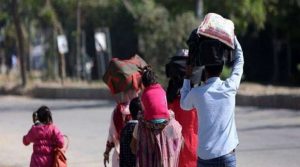
A new research paper by Arvind Panagariya, Chairman of the 16th Finance Commission, finds that India has “virtually eliminated” extreme poverty between 2011–12 and 2023–24.
Key Highlights of the Study on Poverty:
- Extreme Poverty Nearly Eliminated: Poverty fell from 21.9% to 2.3% between 2011–12 and 2023–24, indicating near-elimination of extreme poverty driven by rising consumption and better access to welfare, nutrition, and basic services.
- Poverty Declined Across all Social Groups: SCs, STs, OBCs and FCs all saw major reductions, with ST poverty dropping to 8.7%, though remaining higher than other groups.
- Religious poverty gaps have sharply narrowed, with Muslims now recording slightly lower rural poverty than Hindus, reversing the common perception of higher Muslim poverty.
- Faster Reduction in Rural Areas: Rural poverty declined by 22.5 percentage points, outpacing urban reduction of 12.6 points due to stronger welfare and consumption growth.
- Near-Zero Poverty: Himachal Pradesh, Sikkim, Goa, Delhi, Chandigarh, and Daman & Diu recorded poverty levels close to zero.
India–Italy Business Forum 2025:
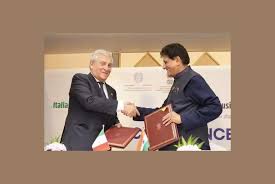
The India–Italy Business Forum 2025 in Mumbai reinforced bilateral trade and innovation within the Strategic Partnership, while advancing resilient supply chains and high-technology collaboration.
Outcomes of the India–Italy Business Forum 2025:
- Signing of the Agreed Minutes of the 22nd India–Italy Joint Commission for Economic Cooperation (JCEC), providing a clear and structured roadmap for future bilateral collaboration.
- Italy-India Joint Strategic Action Plan 2025-2029 Announced in 2024, it sets a roadmap for cooperation in Artificial Intelligence, cybersecurity, renewables, telecom, biotechnology, and mobility, aiming for concrete gains in technology transfer, innovation, and coordinated bilateral engagement.
‘Centre of Choice’ Facility for PwBD Candidates:
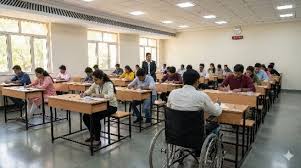
UPSC has introduced a new ‘Centre of Choice’ facility ensuring that all Persons with Benchmark Disabilities (PwBD) candidates receive their preferred exam centre.
‘Centre of Choice’ Facility for PwBD Candidates:
- A new UPSC initiative guaranteeing that every PwBD applicant is allotted the exam centre they select in their application form, irrespective of capacity constraints.
- Aim is to ensure exam accessibility, convenience, and dignity for PwBD candidates.
Key Features:
- Guaranteed preferred centre for all PwBD candidates.
- Centres will be available to PwBD candidates even after capacity limits are reached for other candidates.
- UPSC will create additional capacity where required, ensuring no PwBD applicant is denied their choice.
- Data-driven reform based on 5-year analysis of overcrowded centres such as Delhi, Patna, Lucknow, Cuttack.
Policy for Auction of Coal Linkage for Seamless, Efficient & Transparent Utilisation (CoalSETU):
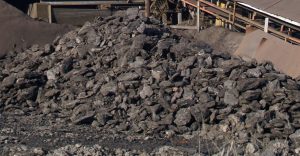
The Union Cabinet has approved creation of a new CoalSETU window under the NRS Linkage Policy, enabling long-term coal linkages for any industrial use and exports.
- CoalSETU is a new auction-based coal linkage window under the Non-Regulated Sector (NRS) Linkage Policy, allowing any domestic industrial buyer to secure long-term coal linkages for own use or export (up to 50%), except resale within India.
- Ministry: Ministry of Coal, Government of India
- Aim of the Policy:
- To ensure transparent, seamless and efficient utilisation of domestic coal resources.
- To promote ease of doing business and reduce dependence on coal imports.
- To boost availability of washed coal and support export opportunities.
- Key Features:
- New CoalSETU Window in NRS Policy (2016):
- Allows any industrial consumer to participate in coal linkage auctions.
- Existing NRS auctions for cement, sponge iron, steel, aluminium, CPPs will continue.
- These users may also bid in the CoalSETU window.
World Inequality Report 2026:

The 3rd World Inequality Report 2026 (WIR 2026), released by the World Inequality Lab, highlights unprecedented global inequality across income, wealth, gender, climate responsibility, and territorial divides, calling for urgent policy interventions.
Key Findings of the World Inequality Report 2026:
- The top 10% own three-quarters of global wealth, while the bottom half holds only 2%.
- The wealthiest 0.001% (around 60,000 multi-millionaires) control 3 times more wealth than half of humanity combined. Their share grew from 4% in 1995 to over 6% in 2025.
- Average education spending per child in Sub-Saharan Africa is Euros 220 (PPP), compared to Euros 7,430 in Europe and Euros 9,020 in North America & Oceania — over 40 times lower.
- The wealthiest 10% account for 77% of global emissions associated with private capital ownership, while the poorest half accounts for only 3%.
- Those who emit the least (populations in low-income countries) are most exposed to climate shocks, while high emitters have resources to adapt.
- Women work 53 hours per week on average vs 43 for men (including domestic and care work).
- Excluding unpaid work, women earn 61% of men’s hourly income; including unpaid labor, this falls to just 32%.
- Average daily income in North America & Oceania is Euros 125, compared to only Euros 10 in Sub-Saharan Africa — a 13-fold difference. The Top 10%/Bottom 50% income ratio reveals severe inequality within countries.
- Annually, a net financial transfer equal to 1% of global GDP—3 times total development aid—moves from poorer to wealthier nations due to demand for US and European sovereign bonds.
- The top 10% of earners capture a disproportionate 58% of the national income. In contrast, the bottom 50% of the population receives only 15%.
- The richest 10% hold around 65% of the nation’s total wealth. The top 1% alone holds about 40% of total wealth.
- The female labor force participation rate is only 15.7%, one of the lowest in the world.
- The average annual income per capita is approximately Euros 6,200 (PPP), and average wealth is about Euros 28,000 (PPP).
Proposal to rename MNREGA:
The Centre is set to amend the MGNREGA Act to rename the flagship rural employment scheme as “Pujya Bapu Gramin Rozgar Yojana” and may raise the guaranteed work limit from 100 to 125 days.MGNREGA is a demand-driven, rights-based rural wage employment programme guaranteeing unskilled manual work to rural households, aimed at livelihood security and creation of durable assets.Launched in 2005, brought into force through the MGNREGA Act, 2005.Came into effect in phases from 2006 across India



