
Today’s Current Affairs: 16th December 2025 for UPSC IAS exams, State PSC exams, SSC CGL, State SSC, RRB, Railways, Banking Exam & IBPS, etc
Table of Contents
Centralised Public Grievance Redress and Monitoring System (CPGRAMS):
India’s Centralised Public Grievances Redressal and Monitoring System (CPGRAMS) has seen a 74% reduction in public grievance pendency since 2021.
- CPGRAMS is an online platform available to the citizens 24×7 to lodge their grievances to the public authorities on any subject related to service delivery.
- It was developed and monitored by the Department of Administrative Reforms and Public Grievances (DARPG), Ministry of Personnel, Public Grievances, and Pensions.
- It is a single portal connected to all the ministries/departments of the Government of India and States.
- Every ministry and state have role-based access to this system.
- CPGRAMS is also accessible to the citizens through a standalone mobile application downloadable through the Google Play store, and mobile application integrated with UMANG.
- The status of the grievance filed in CPGRAMS can be tracked with the unique registration ID provided at the time of registration of the complainant.
- The grievances received on the CPGRAMS shall be resolved promptly as soon as they are received but within a maximum period of 21 days.
- CPGRAMS also provides an appeal facility to the citizens if they are not satisfied with the resolution by the Grievance Officer.
- After closure of grievance, if the complainant is not satisfied with the resolution, he/she can provide feedback.
- If the rating is ‘Poor’ the option to file an appeal is enabled.
- The status of the appeal can also be tracked by the petitioner with the grievance registration number.
Capacity Building for Service Providers (CBSP) Scheme:
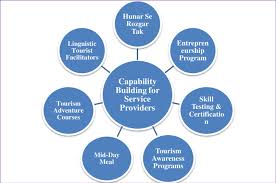
Since its inception in 2009-10, the Capacity Building for Service Providers (CBSP) Scheme has successfully trained a remarkable 643,000 individuals, resulting in over 84,000 participants securing placements within the industry.
- It is a Central Government Scheme designed to develop the tourism potential of India.
- It was launched by the Ministry of Tourism (MoT).
- It operates as a comprehensive skill development and certification framework targeting both the unorganised and organised sectors of India’s tourism and hospitality sector.
- Under the Scheme, the Ministry of Tourism conducts training programmes for the tourism stakeholders across the country, including urban, rural, and tribal areas.
- The outcome of these training includes placements by institutes, self-employment, and trainees opting for higher studies such as diploma and degree courses in the tourism and hospitality sector.
- The MoT implements the scheme through a network of central, state, and private agencies, including the following:
- India Tourism Offices
- Institutes of Hotel Management (IHMs)
- Food Craft Institutes (FCIs)
- Indian Institute of Tourism & Travel Management (IITTM)
- National Council for Hotel Management and Catering Technology (NCHMCT)
- State Tourism Departments and Corporations
- India Tourism Development Corporation (ITDC) and registered private training organisations
- Under the scheme, MoT provides financial assistance to participating institutes.
- Key Training Programmes under CBSP:
- Hunar Se Rozgar Tak (HSRT): A programme focused on skill-based employment
- Entrepreneurship Programme (EP): Designed to equip individuals with the skills required to establish their own ventures in the tourism sector.
- Skill Testing & Certification (ST&C): A re-skilling initiative that assesses and certifies existing tourism service providers.
- Tourism Awareness Programme (TAP): Aimed at creating awareness and encouraging community participation in the tourism industry.
- The beneficiaries range from organised sector workers, such as hotel and restaurant workers, to unorganised sector workers, such as dhaba staff, taxi/coach drivers, tourist police, monument staff, etc.\
- Courses are delivered either at institutional premises, such as Institutes of Hotel Management (IHMs), Food Craft Institutes (FCIs), etc., or on-site at workplaces, with practical and on-the-job components.
Project Mausam:
The Archaeological Survey of India (ASI) recently organised a National Workshop on the Project Mausam titled as – “Islands at the Crossroads of Maritime Networks within Indian Ocean Region’’.
- It is an Indian government-led cultural-diplomacy and maritime heritage initiative launched in 2014 by the Ministry of Culture.
- It aims to explore the multi-faceted Indian Ocean ‘world’ – collating archaeological and historical research in order to document the diversity of cultural, commercial, and religious interactions in the Indian Ocean.
- A total of 39 Indian Ocean countries have been identified under Project Mausam.
- The main objective of the project is to inscribe places and sites identified under Project Mausam as trans-national nominations for inscription on UNESCO’s World Heritage List.
- It also aims to promote research on themes related to the study of maritime routes through international scientific seminars and meetings and by adopting a multidisciplinary approach.
- It aims to encourage the production of specialized works, as well as publications for the general public, with an attempt at promoting a broader understanding of the concept of a common heritage and multiple identities.
- The project will have two major units:
- Project Research Unit
- World Heritage Nomination Unit.
- The project is implemented by the Archaeological Survey of India (ASI) as the nodal agency with research support of the Indira Gandhi National Centre for the Arts (IGNCA) and National Museum as associate bodies.
Exercise Ekatha 2025:
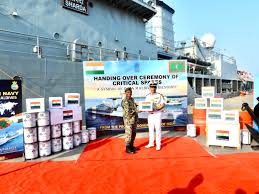
Deputy Chief of the Naval Staff (DCNS), Indian Navy, is on an official visit to Maldives to attend the closing ceremony of Ex Ekatha 2025.
- Exercise Ekatha 2025 established in 2017, Exercise Ekatha is an annual bilateral maritime exercise between the Indian Navy and the Maldives National Defence Force (MNDF).
- It aims to enhance bilateral maritime cooperation, and 2025 marks its eighth edition.
- The exercise involved a series of professional interactions designed to boost interoperability and operational collaboration between the two navies.
- Activities included technical and combat diving, boarding operations, firing drills, demolition and explosive handling, asymmetric warfare tactics, and special heli-borne operation drills.
Artemisinin:
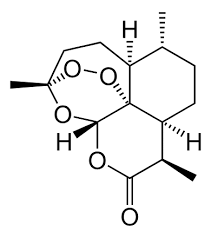
A new study has found that any place with heavy artemisinin use and favourable conditions could become a new hotspot for resistance, and that in some parts of Africa, the frequency of resistance markers is gradually increasing.
- It is an antimalarial drug derived from the sweet wormwood plant, Artemisia annua.
- The process involves drying the leaves and using a solvent to extract the active ingredient.
- Discovery of artemisinin’s therapeutic benefits in the 1970s was a breakthrough in malaria treatment.
- It offered a new option when the malaria parasite was becoming resistant to older drugs like chloroquine and sulfadoxine-pyrimethamine.
- Artemisinin is effective against all the malaria-causing protozoal organisms in the genus Plasmodium.
- It mainly targets the parasite during the blood stage, disrupting its ability to replicate within red blood cells.
- It helps significantly reduce the parasites but doesn’t stay in the body for a long time, being eliminated within hours.
- It is usually partnered with another drug that eliminates the remaining parasites over a longer period of time.
- The World Health Organization (WHO) recommends artemisinin-based combination therapies (ACTs) as the go-to treatment for Plasmodium falciparum malaria.
- Today, there are several derivatives of artemisinin, including artesunate and artemether, that are used in the treatment of malaria.
- Artesunate is highly effective at treating severe malaria as it is the only artemisinin derivative that can be given via intravenous injection
Vellode Bird Sanctuary:
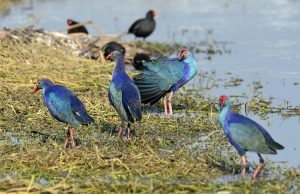
Migratory birds have begun arriving at the Vellode Bird Sanctuary at Vadamugam Vellode, located 12 km from Erode.
- Vellode Bird Sanctuary is one of the most famous bird sanctuaries located in Tamil Nadu.
- The sanctuary receives rainfall from the Northeast monsoon between September and December.
- It is part of Central Asian Flyway.
- It serves as a breeding ground for both resident and migratory birds.
- It is built around the Periyakulam lake and has been designated a protected Ramsar site.
- Source of water: Seepage from the Lower Bhavani Project (LBP) canal and rainwater are the main sources of water during the migration period.
- Fauna: Migratory birds like Northern pintail, Northern Shoveler, Garganey, Blue tailed bee-eater, Wood Sandpiper, Common Sandpiper, Green Sandpiper, Chestnut tailed starling, Blyth’s warbler, Skyes warbler are seen here.
- Flora: The Site is also an ideal habitat for notable plant species including Cayratia pedata, Tephrosia purpurea and Commelina tricolor.
Bharat Ranbhoomi Darshan : In News
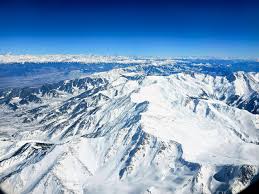
The Chief Minister of Sikkim officially declared Cho La & Dok La, two significant border destinations, open for tourists under the “Bharat Ranbhoomi Darshan” initiative.
- It is a flagship initiative by the Ministry of Defence & Ministry of Tourism.
- The initiative aims to promote border tourism while simultaneously strengthening infrastructure and improving the livelihoods of people living in remote border villages.
- It helps in promoting connectivity, tourism, and socio-economic development in border
- It features details on various battlefields and border areas, offering virtual tours, historical narratives, and interactive content.
- The Indian Army, in conjunction with the Ministry of Tourism, has shortlisted Galwan (the river valley in Ladakh ) Doklam which is a tri-junction between India, Bhutan and China.
- It even identified other forward sites to raise awareness by opening historically significant locations linked to the valor and sacrifices of the Indian Armed Forces to tourists.
- Most of these sites fall along India’s borders with China (Line of Actual Control) and Pakistan (Line of Control) that have had a history of wars after independence and other clashes in recent times.
- The Army is collaborating with local civil authorities to facilitate these efforts while maintaining high operational preparedness.
India Nears 100% Rail Electrification:
Indian Railways is close to completing the electrification of almost its entire broad-gauge network, with more than 99% already electrified, underlining India’s rapid push toward sustainable, low-emission transport systems.Near-total electrification has led to reduced diesel consumption, lower emissions, supporting Indian Railways’ goal of becoming a net-zero carbon emitter.Indian Railways aims to achieve net-zero by 2030, one of the earliest targets globally for a national railway system.Indian Railways is one of the largest electricity consumers in India, and a shift to electrification allows integration with renewable energy sources.
Illicit Cannabis Cultivation in Kandhamal:
The verdant hills of Kandhamal district in Odisha have emerged as a major hotspot of illicit cannabis cultivation, drawing national attention due to record seizures in 2025.Kandhamal is known for geographical indication (GI)-tagged Kandhamal turmeric, yet economic distress has pushed villagers towards illicit cultivation, underscoring gaps in inclusive rural development.
National Energy Conservation Awards 2025:
On National Energy Conservation Day 2025 (14th December), the President presented the National Energy Conservation Awards 2025 in New Delhi. It is an initiative of the Bureau of Energy Efficiency (BEE), instituted in 1991 to recognize outstanding achievements in reducing energy consumption while maintaining or enhancing productivity.BEE is a statutory body, established on 1st March 2002 under the Energy Conservation Act, 2001. Sectors Covered: Industries, commercial buildings, transport, institutions, and energy-efficient appliances.
Mangroves as Ecological Buffers:
A study published in Current Biology has revealed how mangrove plants survive extreme saltwater conditions, offering insights that could help develop salt-tolerant crops amid climate change and rising sea levels.A Current Biology study reveals that mangroves survive extreme salinity through unique cell-level adaptations such as thick cell walls and specialised salt management mechanisms.The findings offer actionable insights to develop salt-tolerant crops, strengthening climate resilience, food security, and sustainable agriculture amid rising sea levels.



