
Today’s Current Affairs: 16th March 2026 for UPSC IAS exams, State PSC exams, SSC CGL, State SSC, RRB, Railways, Banking Exam & IBPS, etc
Table of Contents
Lower Kopili Hydroelectric Project:
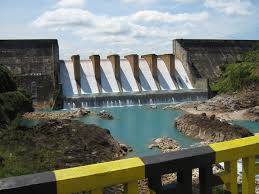
The Prime Minister virtually inaugurated the 120 MW Lower Kopili Hydroelectric Project recently.
- It is a 120 MW run-of-river hydropower project planned on the Kopili River basin in Assam.
- The project is situated in the West Karbi Anglong and Dima Hasao (also known as North Cachar Hills) Autonomous District Council (ADC) areas of Central Assam.
- The project is being developed and currently owned by Assam Power Generation Corporation Limited (APGCL).
- It is funded by the Asian Development Bank (ADB) under its Assam Power Sector Investment Program.
- Kopili River is an interstate river in Northeast India that flows through Meghalaya and Assam.
- It is the largest south bank tributary of the Brahmaputra in Assam.
- Originating in the Meghalaya plateau, it flows through the districts of Karbi Anglong and Nagaon before merging with the Brahmaputra.
United Nations Environment Programme:

In a new report, Safe disposal of unused medicines by the United Nations Environment Programme (UNEP) warned that the improper disposal of medicines poses serious risks to both environmental and public health.
- It is the leading global authority on the environment.
- It was founded in 1972 after a UN General Assembly resolution.
- It was conceived to monitor the state of the environment and coordinate responses to the world’s greatest environmental challenges.
- United Nations Environment Programme (UNEP) Structure:
- United Nations Environment Assembly (UNEA): UNEA is the world’s highest-level decision-making body on environmental issues, comprising all UN member states.
- It meets biennially to set global priorities, adopt resolutions, and guide UNEP’s overall policy direction.
- Committee of Permanent Representatives (CPR): It acts as the main advisory body to UNEA and helps in preparing its agenda.
- Secretariat: The UNEP Secretariat, led by the Executive Director, implements UNEA decisions and oversees day-to-day operations.
- UNEP functions through multiple regional offices in Asia-Pacific, Africa, Europe, Latin America, West Asia, and North America.
- United Nations Environment Programme (UNEP) Functions
- It develops and supports global environmental treaties, such as the CBD, CITES, and Minamata Convention.
- Hosts secretariats of major environmental conventions and supports the negotiation of new environmental agreements.
- It publishes authoritative research and assessments, including the Global Environment Outlook and Emissions Gap Report.
- It supports developing countries with environmental capacity building, funding, and technical assistance.
- Headquarters: Nairobi, Kenya.
Central Adoption Resource Authority : Directions to strengthen adoption procedures

Central Adoption Resource Authority issued nationwide directions to strengthen adoption procedures, safeguard records and protect children’s identity.
- It is a statutory body of the Ministry of Women & Child Development, Government of India.
- Through Section 68 of the Juvenile Justice (Care and Protection of Children) Act, 2015 (JJ Act 2015), CARA attained the status of a statutory body.
- Primarily deals with the adoption of orphan, abandoned, and surrendered children through its associated/recognised adoption agencies.
- It is designated as the Central Authority to deal with inter-country adoptions in accordance with the provisions of the Hague Convention on Inter-country Adoption, 1993, ratified by the Government of India in 2003.
- Headquarters: New Delhi.
- Functions of Central Adoption Resource Authority:
- To promote In-country adoptions and to facilitate Inter-state adoptions in coordination with State Agency;
- To regulate Inter-country adoptions;
- To frame regulations on adoption and related matters from time to time as may be necessary;
- To carry out the functions of the Central Authority under the Hague Convention on protection of Children and Cooperation in respect of Inter-country Adoption;
- It monitors and regulates bodies such as the State Adoption Resource Agency (SARA), Specialised Adoption Agency (SAA), Authorised Foreign Adoption Agency (AFAA), Child Welfare Committees (CWCs), and District Child Protective Units (DPUs).
Great Indian Bustard : fourth year of its captive breeding programme
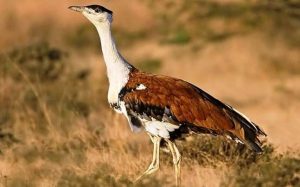
The Union Minister of Environment, Forest and Climate Change informed that Project Great Indian Bustard (GIB) has entered the fourth year of its captive breeding programme.
- Great Indian Bustard is a large terrestrial bird endemic to the Indian subcontinent.
- The bird is primarily found in dry grasslands and scrublands, which are rapidly declining due to agricultural expansion and development.
- Its core population survives in the Thar Desert, mainly in Jaisalmer and Barmer districts of Rajasthan.
- Characteristics of Great Indian Bustard:
- It is one of the heaviest flying birds in the world.
- Life Span: The bird has a lifespan of 12–15 years.
- Diet: These birds are opportunist eaters. Their diet ranges widely depending on the seasonal availability of food. They feed on grass seeds, insects like grasshoppers and beetles, and sometimes even small rodents and reptiles.
- Conservation Status:
- IUCN: Critically Endangered
- CITES: Appendix 1
- Wildlife (Protection) Act, 1972: Schedule 1
Henckelia Monophylla:

Scientists from the Botanical Survey of India have rediscovered a rare plant Henckelia monophylla, native to Arunachal Pradesh after nearly 189 years.
- Henckelia Monophylla is a rare plant species endemic to Arunachal Pradesh.
- It is a member of the Gesneriaceae family.
- The plant was first collected in 1836 by British botanist William Griffith in the Mishmi Hills.
- It is a perennial herb that typically grows in moist, forested habitats.
- Botanical Survey of India is the apex taxonomic research organization of the country which is under the Ministry of Environment, Forest & Climate Change, Government of India.
- It was established on 13th February 1890 under the direction of Sir George King.
- The mandate of the organization has been broaden to biosystematics research, floristic studies, documentation, databasing of National Botanical collection, digitization of herbarium specimens etc.
- Headquarter: Kolkata
Dimethyl Ether:
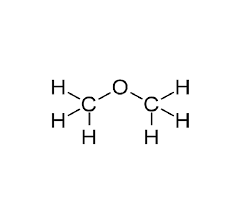
The Council of Scientific and Industrial Research- National Chemical Laboratory (CSIR-NCL) in collaboration with a processing engineering partner is ready to scale up the Dimethyl Ether technology to an industrial scale demonstration.
- It is a synthetically produced alternative to diesel for use in specially designed compression ignition diesel engines.
- It has a very high cetane number, which is a measure of the fuel’s ignitibility in compression ignition engines.
- Under normal atmospheric conditions, DME is a colorless gas.
- It burns cleaner, emitting minimal amounts of soot, nitrogen oxides (NOx), sulfur oxides (SOx), and particulate matter.
- Furthermore, DME exhibits thermal efficiency that is comparable to traditional fuels, making it a viable substitute
- It can be a viable alternative fuel and engine technology to adapt to conventional diesel engines used in India’s agricultural and transport sectors.
- Application of Dimethyl Ether:
- It is used extensively in the chemical industry and as an aerosol propellant.
- It is used in chemical industries and also to produce dyes and plastics.
Megamalai Wildlife Sanctuary:

Nine species were discovered during a faunal survey by Zoological Survey of India (ZSI) at Megamalai Wildlife Sanctuary.
- Megamalai Wildlife Sanctuary is located in Tamil Nadu.
- This wildlife sanctuary serves as a buffer zone for the Periyar Tiger Reserve in Kerala, as it is situated on the border of Tamil Nadu and Kerala.
- It is home to a diverse variety of flora and fauna shrubs and evergreen forests to mammals.
- It mainly consists of scrub forest (at the foothills) to dense evergreen forest and shola grasslands (at the top).
- Banyan Tree, Syzygium zeylanicum, Nothopegia vajravelui, Memecylon flavescens, Symplocos oligandra, Symplocos wynadense, Meiogyne ramarowii,
- The sanctuary is home to elephants, tigers, leopards, Nilgiri tahr, gaurs, spotted deer, barking deer, sambar deer, wild boar, porcupine, Nilgiri langur, lion-tailed macaque.
- The wood snake is endemic to the Megamalai Wildlife Sanctuary.
NMDC Limited has become the first mining company in India to produce 50 million tonnes:
NMDC Limited has become the first mining company in India to produce 50 million tonnes (MT) of iron ore in a single financial year.NMDC Limited (formerly National Mineral Development Corporation) is a Central Public Sector Enterprise (CPSE).Incorporated in 1958, it is under the administrative control of the Ministry of Steel, Government of India.Since inception, it has been involved in the exploration of a wide range of minerals, including iron ore, copper, rock phosphate, limestone, dolomite, gypsum, bentonite, magnesite, diamond, tin, tungsten, graphite, beach sands, etc. It is India’s largest iron ore producer and exporter.It also operates the only mechanized diamond mine in the country at Panna in Madhya Pradesh. The company has been categorised by the Department of Public Enterprises as a “NAVRATNA” Public Sector Enterprise in 2008.
It has its registered office in Hyderabad, Telangana.
Drawida vazhania:
A team of researchers recently identified a new earthworm species named Drawida vazhania from the Vazhani dam area of the Peechi-Vazhani Wildlife Sanctuary in the Thrissur district of Kerala.It is a new species of earthworm.It was discovered from the Vazhani Dam area of the Peechi-Vazhani Wildlife Sanctuary in the Thrissur district of Kerala.Belonging to the genus Drawida, which is naturally restricted to the south, southeast, and east asian region, it belongs to the family Moniligastridae.



