
Today’s Current Affairs: 18th December 2025 for UPSC IAS exams, State PSC exams, SSC CGL, State SSC, RRB, Railways, Banking Exam & IBPS, etc
Table of Contents
AH-64E Apache Attack Helicopter:
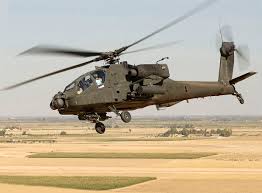
The Indian Army recently received the final batch of three AH-64E Apache attack helicopters, completing its six-unit fleet at the 451 Army Aviation Squadron based in Jodhpur, Rajasthan.
- It is the world’s most advanced multi-role combat helicopter.
- It is widely used for advanced reconnaissance, precision strikes, and close air support missions globally.
- Country of Origin: United States of America
- Manufacturer: Boein
- It is also known as the Apache Guardian.
- The AH-64E attack helicopter is the latest version of the Apache used by the US Army.
- The Indian Air Force has a fleet of 22 AH-64E Apache attack helicopters.
- Features:
- Max Speed: 300 kph
- It is a heavily armed, twin-engine ground-attack helicopter.
- Armed with Hellfire missiles, chain gun, the helicopter can engage tanks, vehicles, troop concentrations, communications and logistics centres, etc.
- It can also fire short-range air-to-air missiles like the Stinger.
- The AH-64E includes a new integrated infrared laser that allows for easier target designation and enhanced infrared imagery that blends infrared and night vision capabilities.
- It can track up to 128 targets per minute and prioritise threat levels.
Param Vir Chakra:

Portraits of all 21 Param Vir Chakra awardees are now on display at Rashtrapati Bhavan, replacing the previously displayed portraits of 96 British Aide-de-Camps (ADCs).
- It is India’s highest military decoration, awarded for displaying the most exceptional acts of valour, courage, and self-sacrifice during war.
- It was introduced on January 26, 1950, on the first Republic Day with retrospective effect from 15 August 1947.
- Param Vir Chakra means ‘Wheel (or Cross) of the Ultimate Brave’.
- It can be awarded to officers, men, and women of all ranks of the Army, the Navy, and the Air Force; of any of the Reserve Forces, of the Territorial
- Army Militia; and of any other lawfully constituted Armed Forces.
- It can be, and often has been, awarded posthumously.
- It is similar to the British Victoria Cross, the US Medal of Honor, the French Legion of Honor, or the Russian Cross of St. George.
- The medal was designed by Mrs. Savitri Khanolkar.
- The medal is cast in bronze and circular in shape.
- In the centre, on a raised circle, is the state emblem, surrounded by four replicas of Indra’s Vajra, flanked by the sword of Shivaji.
- On its reverse, it has embossed Param Vir Chakra both in Hindi and English with lotus flowers.
- First winner: Major Somanth Sharma, from the Kumaon regiment.
- Till now, only 21 people had been given the Param Vir Chakra award, of which 14 are posthumous.
Gallantry Awards:
- They have been instituted by the Government of India to honour the acts of bravery and sacrifice of the officers/personnel of the Armed Forces, other lawfully constituted forces, and civilians.
- They are announced twice in a year – first on the occasion of the Republic Day and then on the occasion of the Independence Day.
Natyashastra:
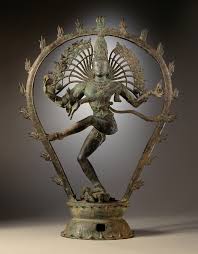
The Indira Gandhi National Centre for the Arts (IGNCA) recently organised the academic programme titled ‘Natyashastra – Synthesis of Theory and Praxis’ during the 20th Session of UNESCO’s Intergovernmental Committee for the Safeguarding of Intangible Cultural Heritage at the iconic Red Fort, Delhi.
- It is an ancient Sanskrit treatise on performing arts.
- The title is a combination of two Sanskrit words – Natya and Shastra.
- Natya refers to the technique of dance and drama, and shastra refers to science.
- It was composed by the sage Bharata Muni.
- It has been dated to between the second century BCE and the second century CE.
- It is the earliest known treatise on performative arts in South Asia.
- It comprises verses detailing drama (natya), performance (abhinaya), music (sangita), emotions (bhava), and aesthetic experience (rasa).
- One of the text’s most profound contributions is the articulation of the concept of Rasa, the essential emotional essence that lies at the heart of any great work of art.
- Bharata Muni identified eight primary Rasas – Shringara (love), Hasya (humor), Karuna (compassion), Raudra (anger), Veera (heroism), Bhayanaka (fear), Bibhatsa (disgust), and Adbhuta (wonder).
- He also explained how the skilled performer, through the skillful deployment of bhava (emotional expression), could evoke these sentiments in the audience.
- UNESCO added Natyashastra to its Memory of the World Register, recognizing its global cultural significance.
- Indira Gandhi National Centre for the Arts (IGNCA) was established as an autonomous body by the Government of India, under the Ministry of Culture.
Arun-3 Hydropower Project:
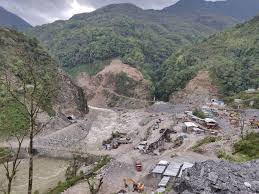
The Chairman and Managing Director (CMD) of SJVN recently visited the 900 MW Arun-3 hydroelectric project (HEP) in Nepal to review the status of construction and assess progress across key components of the project.
- Arun-3 Hydropower Project is a 900 MW run-of-the-river hydropower project located on the Arun River in the Nepal.
- Arun is a tributary of the Kosi River in Nepal.
- Once completed, it will be the biggest hydroelectric facility in Nepal.
- SJVN Arun-III Power Development Company (SAPDC), a wholly-owned subsidiary of India’s Satluj Jal Vidyut Nigam (SJVN), is developing the project on a build-own-operate-transfer (BOOT) basis.
- SJVN is a joint venture between the Government of India and the Government of Himachal Pradesh.
- The project will provide surplus power to India, strengthening economic linkages with Nepal.
- The power from the project shall be exported from Dhalkebar in Nepal to Muzaffarpur in India.
Channa bhoi:
Scientists recently discovered a new species of snakehead fish named Channa bhoi from Meghalaya.
- Channa bhoi is a new species of snakehead fish.
- It was discovered from a small mountain stream near Iewmawlong village in the Ri-Bhoi district of Meghalaya.
- It has been named Channa bhoi, after the indigenous Bhoi people of the Khasi tribe who inhabit the Ri-Bhoi region.
- It belongs to the “Gachua group” of snakehead fishes, a group known for its high diversity in the Eastern Himalayan region.
National Digital Livestock Mission:
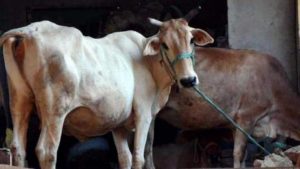
The Minister of Fisheries, Animal Husbandry and Dairying, Government of India, informed the Lok Sabha about the National Digital Livestock Mission (NDLM).
- It was launched by the Department of Animal Husbandry and Dairying, Government of India for creating a digital database of livestock and related services across the country.
- Aims is to enhance livestock productivity and breed improvement, strengthen disease surveillance and control, enable traceability of livestock products and create a farmer-centric digital ecosystem for efficient service delivery.
- It has been implemented across all States in India.
- key objectives of the NDLM:
- Improving breeding outcomes suited to India’s diverse agro-climatic conditions.
- Enabling real-time disease monitoring and control, and establishing a robust traceability mechanism for livestock products.
- The mission also focuses on empowering farmers by providing easy access to information on government schemes and livestock-related services.
- The digital backbone of the mission is the ‘Bharat Pashudhan’ platform.
- Bharat Pashudhan’ platform includes mobile and web-based applications used by field workers to record livestock-related activities.
- Under this each animal is assigned a unique 12-digit bar-coded ear tag, which serves as its digital identity.
- Using this system, field workers capture data on animal registration, artificial insemination and breeding, ownership changes, vaccinations, disease reporting, milk recording, ration balancing and e-prescriptions.
Ekam AI and SAMBHAV:
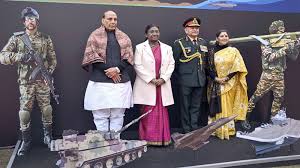
The Indian Army showcased a wide range of homegrown technologies Ekam AI and SAMBHAV project during Vijay Diwas celebration.
- Ekam AI is a fully indigenous and secure artificial intelligence platform designed for sensitive environments.
- It enables users to analyse information, manage documents, and support decision-making without dependence on foreign software or external cloud systems.
- It allows personnel at different levels to leverage AI-enabled support without requiring specialised technical expertise.
- It ensures complete data security and sovereignty. It also marks a significant step towards building trusted national digital systems.
- SAMBHAV is a portable communication system that provides mobile connectivity using satellite support.
- The system can be deployed quickly in remote or disaster-affected areas, improving communication for both soldiers and civilians.
- The project highlights how defence innovation can also strengthen national communication infrastructure.
- Vijay Diwas is commemorated on December 16 every year to honor the victory of the Indian armed forces over Pakistan in the 1971 war which led to the liberation of Bangladesh.
DHRUV64:
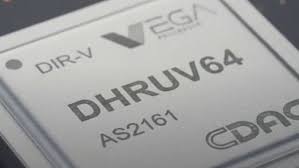
India unveiled its first fully indigenously developed microprocessor DHRUV64.
- It is a fully indigenously developed microprocessor.
- It is developed by the Centre for Development of Advanced Computing (C-DAC) under the Microprocessor Development Programme (MDP).
- Key Features of DHRUV64:
- Processor Core & Speed: It is a 64-bit dual-core processor running at 1.0 GHz, giving it the ability to handle multiple tasks smoothly.
- Execution Method: It uses superscalar execution, which allows the processor to start more than one instruction in the same moment for better speed.
- Instruction Handling: It supports out-of-order processing, meaning it can complete instructions that are ready first, improving overall efficiency.
- Packaging & Integration: It includes built-in communication and control functions inside an advanced FCBGA package, making the chip compact and ready for use in many systems.
- It is capable of supporting strategic and commercial applications.
- It is suitable for sectors such as 5G infrastructure, automotive systems, consumer electronics, industrial automation and the Internet of Things (IoT).
- It provides a homegrown microprocessor technology designed for startups, academia, and industry to build, test, and scale indigenous computing products without relying on foreign processors.
- It supports prototype development for new system architectures at lower cost.
Nitrofurans:

FSSAI launched egg safety drive after ‘nitrofurans presence’ triggers uproar.
- Nitrofurans are synthetic broad-spectrum antibiotics.
- There are four parent compounds that comprise the nitrofuran class: furazolidone, furaltadone, nitrofurazone, and nitrofurantoin.
- The defining structural component is a furan ring with a nitro group.
- Nitrofurans are synthetic chemotherapeutic agents with a broad antimicrobial spectrum.
- They are active against both gram-positive and gram-negative bacteria, including Salmonella and Giardia spp, trichomonads, amebae, and some coccidial species.
- They are much more active in acidic environments (a pH of 5.5 is optimal for nitrofurantoin activity).
- They are primarily bacteriostatic, but at high doses they are also bactericidal.
- These were once widely used in poultry, pigs, shrimp and other livestock because they are cheap and highly effective.
- Impacts on human health:
- Carcinogenic potential: Some nitrofurans have shown carcinogenic effects in animal studies
- Toxicity concerns: Potential toxicity and side effects in humans, particularly with prolonged use or high doses.
SHANTI Bill 2025:
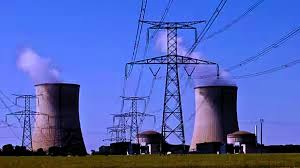
The Union Government has introduced the Sustainable Harnessing and Advancement of Nuclear Energy for Transforming India (SHANTI) Bill, 2025 in the Lok Sabha to overhaul India’s nuclear energy laws and enable private sector participation in building and operating nuclear power plants for the first time since Independence.
Key Provisions of SHANTI Bill 2025:
- Replacement of Existing Nuclear Laws: The SHANTI Bill repeals the Atomic Energy Act, 1962 and the Civil Liability for Nuclear Damage Act, 2010, creating a single, consolidated legal framework to govern India’s civil nuclear energy sector and simplify regulatory and liability procedures.
- Enabling Private and Joint Venture Participation: For the first time since Independence, the Bill permits private Indian companies, joint ventures, and foreign entities to build, own, operate, and decommission nuclear power plants, ending the monopoly of Nuclear Power Corporation of India Ltd (NPCIL) in plant operations.
- Retention of Strategic State Control: While allowing private participation, the Bill retains government control over sensitive areas such as nuclear fuel production, heavy water manufacturing, and radioactive waste management, safeguarding national security and non-proliferation commitments.
- Statutory Status to the Nuclear Regulator: The Bill grants statutory backing to the Atomic Energy Regulatory Board (AERB) and makes it accountable to Parliament, strengthening regulatory independence, transparency, and safety oversight.
- Revised Nuclear Liability Framework: The SHANTI Bill repeals the CLND Act, 2010 and removes supplier liability, ensuring that nuclear plant operators alone are responsible for compensation, thereby aligning India’s regime with international nuclear liability conventions.
Operator liability is capped and linked to the installed capacity of nuclear plants rather than the extent of damage, with graded limits to reduce financial uncertainty and encourage investment. - Creation of a Dedicated Atomic Disputes Tribunal: Proposes a dedicated atomic disputes tribunal to improve regulatory certainty and investor confidence.
- Facilitation of Advanced Nuclear Technologies: By enabling private participation and regulatory clarity, the Bill supports the deployment of Small Modular Reactors and indigenous reactor designs, contributing to India’s clean energy transition and long-term energy security.
PC&PNDT Act in the Digital Age:
The fight against sex-selective abortion in India has moved online, where influencers and self-styled doctors circumvent the Pre-Conception and Pre-Natal Diagnostic Techniques (Prohibition of Sex Selection) Act, 1994 (PC&PNDT Act) by promoting unscientific gender-prediction myths to vast audiences.The internalised bias for sons has renewed focus on gender bias, digital regulation, and reproductive rights. It was enacted in 1994 to address the issue of female foeticide and the declining child sex ratio resulting from the misuse of diagnostic technologies for sex selection. (India’s sex ratio as per 1991 Population Census – 929 females per 1,000 males).The Act was significantly amended in 2003 to strengthen its provisions, explicitly include pre-conception techniques, and prohibit sex selection more comprehensively.
Mercy Petition:
The President of India has rejected the mercy petition of a convict found guilty of kidnapping, raping, and murdering a two-year-old girl in Maharashtra in 2012, reaffirming the constitutional process governing capital punishment.A Mercy Petition is a constitutional remedy available to convicts, especially in death sentence cases, seeking pardon, commutation, remission, or suspension of sentence. The power to grant pardon, commutation, remission, or suspension of sentences is vested in the President under Article 72 and the Governor under Article 161 of the Constitution.
The President’s pardoning power is broader than the Governor’s power, as it extends to court-martial cases, while the Governor’s power is limited to offences under State laws and does not apply to military court sentences. A mercy petition may be filed on grounds such as good conduct, mental health, age, medical condition, humanitarian factors, miscarriage of justice, or rehabilitation efforts. Section 472(1) of the Bharatiya Nagarik Suraksha Sanhita (BNSS), 2023 sets a time-bound process for mercy petitions.A convict must file within 30 days of dismissal of appeals by the Supreme Court or confirmation of a death sentence by the High Court, while in cases with multiple convicts, petitions must be filed within 60 days.
DGLL Hosts 3rd IALA Council Meeting:
The Directorate General of Lighthouses and Lightships (DGLL) successfully hosted the 3rd Council Meeting of the International Organization for Marine Aids to Navigation (IALA) in Mumbai, highlighting its growing role in shaping international maritime standards and navigation safety.India launched a Digital Ticketing Portal for Lighthouse Tourism to enhance digital access, transparency, and visitor convenience across 75 lighthouse tourism destinations nationwide.IALA was established in 1957 and transitioned from a Non-Governmental Organization to an Intergovernmental Organization in 2024. Guided by the motto “Successful voyages, Sustainable Planet”. It works to harmonise marine aids to navigation, enhance safety and efficiency of maritime transport, and protect the marine environment.The IALA Council is its principal decision-making body. IALA has around 200 members and is headquartered in Saint-Germain-en-Laye, France.India has been a member of IALA since 1957. The DGLL represents India, has been a Council Member since 1982, and will host the IALA Conference in 2027.
The RESPOND Basket 2025:
ISRO has released the RESPOND Basket 2025, inviting research proposals from academia aligned with its current and future mission needs.The RESPOND Basket is a curated set of mission-oriented research problem statements identified by ISRO and Department of Space (DoS) centres.It guides academia towards targeted research that directly supports ISRO’s upcoming space missions and R&D priorities.Published by Indian Space Research Organisation (ISRO). Under the aegis of the Department of Space (DoS), Government of India.Aim is to bridge academia and national space missions through focused, collaborative research,to leverage academic innovation, advanced research and human capital for solving complex space-technology challenges.
The Tianjin Declaration:
At the 2025 Shanghai Cooperation Organisation (SCO) Summit in Tianjin, India joined other SCO members in endorsing the Tianjin Declaration, committing to deepen cooperation in Artificial Intelligence (AI) governance and capacity building.The Tianjin Declaration is the outcome document adopted by the SCO Council of Heads of States at the 2025 Tianjin Summit, outlining collective positions on security, development, technology, and institutional reforms.
Key outcomes:
- AI cooperation framework: Emphasised that all countries have equal rights to develop and use AI, aligning with the UN General Assembly resolution on AI capacity building.
- Risk mitigation in AI: SCO members committed to improving security, accountability, transparency, inclusiveness, trustworthiness and fairness of AI systems.
- Roadmap adoption: Supported implementation of the SCO AI Cooperation Roadmap to guide joint research, standards and capacity building.
- Regional AI centre: Welcomed the UNGA resolution proposing a Regional AI Centre in Dushanbe, strengthening Central Asia’s digital ecosystem.
Tigris River:
Iraq’s Tigris River is facing an acute crisis due to shrinking flows, heavy pollution and upstream water controls, raising fears that parts of the river may dry up.The Tigris River is one of the two great rivers of ancient Mesopotamia, along with the Euphrates, forming the heart of the historic Fertile Crescent, where early civilisation emerged.Originates from Lake Hazar in the Taurus Mountains of southeastern Türkiye.Flows generally southeast, parallel to the Euphrates.Nations it flows through: Türkiye (upper reaches), Iraq, Forms part of the Shatt al-Arab after joining the Euphrates, which flows into the Persian Gulf.Major tributaries of the Tigris: Greater Zab, Lesser Zab, Al-Adhaim, Diyala, and Karkheh (from Iran).



