
Today’s Current Affairs: 19th January 2026 for UPSC IAS exams, State PSC exams, SSC CGL, State SSC, RRB, Railways, Banking Exam & IBPS, etc
Table of Contents
Reserve Bank Integrated Ombudsman Scheme, 2026:
The revised Reserve Bank – Integrated Ombudsman Scheme, 2026, unveiled by the central bank recently, aims to enhance complaint resolution efficiency for bank customers.
- It is aimed at further improving the efficiency of the resolution of complaints filed by aggrieved customers of banks and other regulated entities.
- It will come into force on July 1, 2026, replacing the existing Integrated Ombudsman Scheme of 2021.
- The proceedings under the Scheme shall be summary in nature and shall not be bound by any rules of evidence.
- The Reserve Bank of India (RBI) will appoint one or more of its officers as RBI Ombudsman and RBI Deputy Ombudsman to carry out the functions entrusted to them under the Scheme.
- The appointments will be made generally for a period of three years at a time.
- The RBI will establish a Centralised Receipt and Processing Centre at one or more locations, as may be decided, to receive complaints filed under the Scheme and process them.
- The entities covered under the new scheme include commercial banks, regional rural banks, state and central co-operative banks, and urban co-operative banks with deposits of Rs 50 crore or more.
- Additionally, NBFCs that accept deposits or have assets over Rs 100 crore and engage in customer dealings are also included.
- Furthermore, all non-bank prepaid payment issuers, such as digital wallets, and credit information companies that handle credit scores, are part of this list.
- The scheme excludes housing finance and core investment companies.
- Customers can file complaints related to deficiency in service, such as delays, failure to follow RBI directions, or inadequate customer service.
- However, issues involving commercial judgment of institutions, disputes between regulated entities, employer–employee matters, or cases already before courts or tribunals are excluded.
- A key condition for filing a complaint with the ombudsman is that the customer must first approach the concerned entity.
- The ombudsman can be approached only if there is no response within 30 days or if the customer is dissatisfied with the reply.
Pratas Islands:
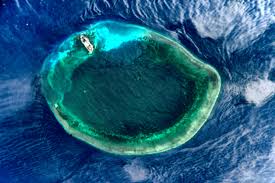
A Chinese reconnaissance drone briefly flew over the Taiwan-controlled Pratas Islands at the top end of the South China Sea recently, in what Taiwan’s defence ministry called a “provocative and irresponsible” move.
- The Pratas Islands, also known as the Dongsha Islands, are a small group of three islands located in the northern part of the South China Sea.
- These islands are characterized by a circular atoll structure, with Dongsha Island being the only island above sea level, while the other two are submerged.
- They are composed primarily of clastic coral and reef flats.
- Once discovered during the ancient Han Dynasty, Dongsha Island became an important point along trade and fishing routes through the Taiwan Strait, which separates Taiwan from mainland China, and the Bashi Channel between Y’Ami Island of the Philippines and Orchid Island of Taiwan.
- They are strategically important positions along the major sea route connecting the Pacific and Indian ocean.
- The People’s Republic of China claims them, but Taiwan controls them and has declared them part of the Dongsha Atoll National Park.
- There are no permanent residents. But Taiwanese marines are stationed there.
- The region is notable for its rich biodiversity, supporting a variety of flora and fauna, including numerous fish species, coral, and migratory birds like the Chinese Egret.
- The ongoing tensions between Taiwan and China, along with the impacts of global warming, continue to pose risks to the islands and their biodiversity.
Irrawaddy Dolphin:
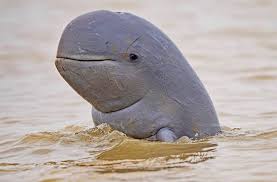
The Union Ministry of Environment, Forest and Climate Change recently launched the second nationwide range-wide estimation of riverine and estuarine dolphins under Project Dolphin, which, for the first time, includes the estimation of the Irrawaddy dolphin in the Sundarbans and in Odisha.
- It is a euryhaline species of oceanic dolphin found in discontinuous subpopulations near sea coasts and in estuaries and rivers in parts of the Bay of Bengal and Southeast Asia.
- Euryhaline organisms survive in a range of salinity. These organisms thrive in saltwater, freshwater, and brackish water.
- Scientific Name: Orcaella brevirostris
- It is found in rivers in South and Southeast Asia: the Irrawaddy (Myanmar), the Mahakam (Kalimatan, Indonesia), and the Mekong (Cambodia).
- Indian presence: Occurs mainly in Chilika Lake (Odisha); also reported in the Sundarbans region.
- Irrawaddy dolphins prefer coastal areas, particularly muddy, brackish waters at river mouths and deltas, and do not appear to venture far offshore.
- Conservation Status:IUCN Red List: Endangered
Chang’e-6 Mission:

Lunar regolith brought from the Moon by China’s Chang’e 6 mission has revealed that the Moon is formed from the remains of an ancient collision between an object with Earth.
- It is the first human sampling and return mission from the far side of the moon.
- It is part of the broader Chang’e lunar exploration program, named after a Chinese goddess of the Moon.
- Chang’e-6 consists of an orbiter, a returner, a lander, and an ascender.
- The lander was equipped with multiple sensors, including microwave, laser, and optical imaging sensors which can measure distance and speed, and identify obstacles on the lunar surface.
- The probe has adopted two methods of moon sampling, which include:
- Using a drill to collect subsurface samples
- Grabbing samples on the surface with a robotic arm.
- It marks the second time a mission has successfully reached the far side of the moon. China first completed that historic feat in 2019 with its Chang’e-4
- Though the far side of the Moon holds great scientific promise, it is harder to explore the far side of the Moon than the near side.
- Communication signals from Earth can’t directly reach the far side, so relay satellites have to be launched ahead of any mission.
- The Chang’e-6 landed on the lunar far side and collected rock and regolith samples, and launched them to eventually return to Earth nearly a month later.
- Chang’e-6 landed in the South Pole-Aitken Basin, a massive and roughly 4-billion-year-old crater covering a vast portion of the far side of the Moon.
- The samples Chang’e-6 collected there could include pieces of the Moon’s interior that would have been excavated by the giant impact that formed the basin.
Neknampur Lake:
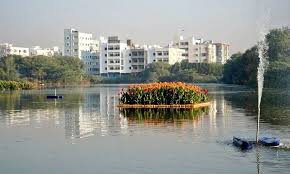
Dismissing viral social media claims, a flight safety chief said that the hot air balloon landing near Neknampur Lake in Hyderabad recently was a routine and controlled landing, standard in balloon operations, and not an emergency.
- Neknampur Lake, also known as Ibrahim Bagh Cheruvu, is a historic man-made reservoir situated in the southern part of Hyderabad, Telangana.
- It was constructed during the Qutb Shahi dynasty in the 16th century.
- Initially commissioned by Sultan Ibrahim Qutb Shah and later revitalized under Sultan Abdullah Qutb Shah through a channel built by nobleman Neknam Khan (the lake was renamed in his honor), it became part of Hyderabad’s water network.
- Once vital to the city’s water supply until urban shifts in the mid-20th century, the lake has since deteriorated due to urbanization and pollution.
- Restoration efforts since the 2010s include a large floating treatment wetland installed in 2018, recognized as India’s largest, which has improved water quality and revived biodiversity.
Bagurumba Dance:
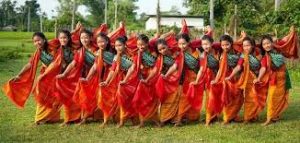
The Prime Minister of India witnessed a performance of the traditional Bagurumba dance of the Bodo community in Assam with over 10,000 artistes participating in the programme.
- It is one of the folk dances of the Bodo community, deeply inspired by nature.
- It represents peace, fertility, joy and collective harmony, and is closely associated with festivals such as Bwisagu, the Bodo New Year, and Domasi.
- The dance symbolises blooming flowers and reflects harmony between human life and the natural world.
- It features gentle, flowing movements that imitate butterflies, birds, leaves and flowers. Performances are usually organised in groups, forming circles or lines that enhance its visual elegance.
- It is traditionally performed only by women of the Bodo community, with the musical instruments being played by their male counterparts.
- The dancers dress in handwoven, bright red, yellow, and green dokhna, jwmgra, and aronai, dancing to the beautiful beats of the handmade percussion instruments.
- The musical instruments include the traditional kham (a drum made of wood and goatskin), including sifung (a bamboo flute), and other wooden instruments like jota, gongwna and tharkha.
Royle’s Pika:
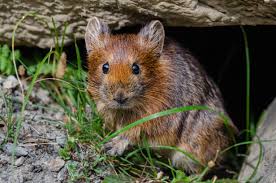
Scientist said that climate change threatens creatures like Royle’s pika that have weathered extreme environments for thousands of years.
- Royle’s pika (Ochotona roylei), also called the Himalayan mouse hare or hui shutu, is a species of pika.
- It is found in open rocky landscapes and rhododendron forests.
- It is found in northwestern Pakistan to Jammu and Kashmir, Himachal Pradesh, Uttarakhand, Sikkim and Arunachal Pradesh in India to Nepal and Tibet.
- It relies on a thick winter snowpack to act as an insulating blanket, shielding it from brutal sub-zero temperatures.
- It does not make its own nest; rather, it takes narrow creeks and existing burrow systems as its nest.
- Conservation Status: IUCN: Least Concern
- Threats: Climate change and population isolation.
Samakka-Saralamma Jatara:
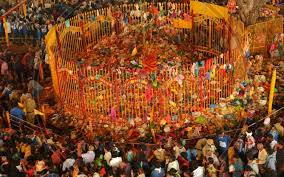
Telangana is getting prepared for the biennial Sammakka-Saralamma Jatara, one of the world’s largest indigenous spiritual gatherings.
- It is also known as Medaram Jatara.
- It is a tribal festival of honouring the goddesses celebrated in the state of Telangana, India.
- Medaram is a remote place in the Eturnagaram Wildlife Sanctuary, a part of Dandakaranya, the largest surviving forest belt in the Mulugu.
- It is held every two years (biannually). It is celebrated during the time the goddesses of the tribals is believed to visit them.
- In this festival people from all walks of life join together to commemorate the revolt led by Sammakka and Saralamma, a mother-daughter duo, against imposing taxes on the tribal populace during a period of drought by the Kakatiya rulers in the 12th century.
- People offer bangaram/gold (jaggery) of a quantity equal to their weight to the goddesses and take holy bath in Jampanna Vagu, a tributary to River Godavari.
- The rituals related to the Goddesses are entirely conducted by Koya tribe priests, in accordance with Koya customs and traditions.
- It serves as a platform for understanding and fostering harmony between the people and tribal communities.
Mt Elbrus:
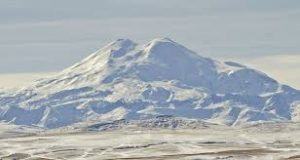
An artificially-triggered avalanche was filmed cascading down Russia’s highest mountain, Mount Elbrus.
- It is located in southwest Russia and is part of the Caucasus Mountains.
- It is believed that the Caucasus Mountains were formed due to the northward collision of the Arabian Plate with the Eurasian Plate.
- Geological studies have revealed that Mount Elbrus was formed over 2.5 million years ago and the volcano had been most active during the
- It is the highest point in Russia as well as the highest point in all of Europe.
- It makes up part of the Prielbrusye National Park.
- It is one of the Seven Summits of the world, which are the tallest mountains on each of the seven continents.
- Mount Elbrus is an inactive volcano that consists of two principal summits, both of which are dormant volcanic domes.
- The climate of Elbrus is generally cold.
- Major Glaciers: Bolshoi Azaou and Irik Glacier
- Major Rivers: Many Russian rivers like the Baksan, Malka, and Kuban rivers originate from Bolshoi Azaou and Irik Glacier glaciers.
India’s Minerals Diplomacy:
India is recalibrating its global mineral strategy following the launch of the National Critical Mineral Mission (NCMM) in 2025 and the tightening of export controls by China on rare earths.Minerals diplomacy is the strategic use of international partnerships and multilateral mineral clubs to secure a reliable supply of minerals like Lithium and Cobalt.It involves managing upstream mining, midstream processing, and downstream manufacturing collaborations to protect national economic growth and security.
Accountability in Democratic Institutions:
Lok Sabha Speaker Om Birla recently addressed the 28th Commonwealth Speakers and Presiding Officers Conference (CSPOC) in New Delhi.He emphasized that the legitimacy of democratic institutions depends on their ability to remain transparent, inclusive, and accountable amidst the rise of AI and social media.Accountability is the ethical obligation of those in power to provide an account of their actions, justify their decisions, and face consequences for their conduct. It is a relational concept where the agent (government) is answerable to the principal (citizens).Accountability bridges the gap between the rulers and the ruled by ensuring honesty.E.g. The National Critical Mineral Mission (2025) includes transparency clauses to ensure public resources are managed without bias.
Coconut root wilt disease:
Coconut Root Wilt Disease is in the news due to its rapid spread across major coconut-growing regions of Kerala, Tamil Nadu and Karnataka, affecting lakhs of palms.A debilitating, non-fatal disease of coconut caused by a phytoplasma (phloem-limited pathogen), leading to chronic decline and major yield loss.Infected palms often remain alive but become long-term inoculum sources, enabling continued spread through vectors.First reported over 150 years ago from Erattupetta (Kerala) and has remained a persistent endemic problem.Spread is vector-borne, and is accelerated by continuous coconut belts, wind-assisted vector movement, and rising abiotic stress (temperature extremes) plus biotic stress (new sucking pests like whiteflies) that increase palm susceptibility.Transmitted through sap-sucking insect vectors; commonly cited vectors in endemic areas include Stephanitis typica and Proutista moesta
Dugongs:
The Union government’s Expert Appraisal Committee (MoEFCC) has asked Tamil Nadu to revise the design of the proposed International Dugong Conservation Centre at Manora (Thanjavur).Dugong is a large, slow-moving marine mammal, commonly called a “sea cow”, that feeds exclusively on seagrass.It is a keystone species, playing a vital role in maintaining healthy seagrass meadows.Scientific name: Dugong dugon.Found in warm, shallow coastal waters of the Indian and western Pacific Oceans.Lives mainly in seagrass meadows, estuaries, lagoons, and nearshore areas.Unlike manatees, dugongs are strictly marine and do not enter freshwater.IUCN status: Vulnerable.



