
Today’s Current Affairs: 19th March 2026 for UPSC IAS exams, State PSC exams, SSC CGL, State SSC, RRB, Railways, Banking Exam & IBPS, etc
Table of Contents
Forced Labour:

The US has launched a trade investigation against India and 59 other economies under Section 301 of the Trade Act, 1974 to examine whether their supply chains include goods produced using forced labour.
- The probe aims to address unfair trade advantages arising from lower production costs, which the US Trade Representative (USTR) argues harm American industries and workers.
- The US views forced labour in global supply chains as both a human rights violation and a national security issue.
- The investigation is seen as a way to legally justify reimposing tariffs after the US Supreme Court struck down earlier reciprocal tariffs in 2026.
- The probe targets 60 economies, including India, China, the European Union, UK, Japan, Australia, Canada, Russia, Bangladesh, and Sri Lanka.
- The investigation will examine products made using imported intermediate goods such as cotton and yarn in textiles, critical minerals used in solar panels and electronics, and palm fruit used in biofuels.
- Although India prohibits forced labour under the Bonded Labour System (Abolition) Act, 1976, its export industries may face scrutiny because many rely on raw materials and components imported from China.
- Key sectors such as solar panels (using Chinese polysilicon), electronics (dependent on Chinese sub-assemblies), and textiles and garments (using imported fabrics) could be particularly vulnerable.
- India is also facing a separate US investigation on “excess manufacturing capacity” in sectors like solar modules, petrochemicals, and steel.
- If the US finds violations, it may impose heavy tariffs or trade restrictions on imports from affected countries.
- Exporters may need to adopt strict traceability mechanisms to prove that products are free from forced labour.
Economic Stabilisation Fund:
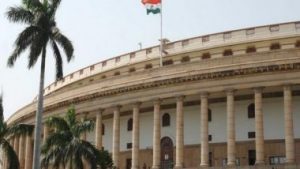
The Lok Sabha approved the 2nd batch of Supplementary Demands for Grants (2025-26), and the Finance Minister introduced the Economic Stabilisation Fund (ESF), a Rs 1 lakh crore fiscal buffer aimed at boosting macroeconomic stability and economic resilience.
- Under Article 115, Supplementary Demands for Grants are required when funds authorised by the Appropriation Act for a service prove insufficient.
- The President lays them before both the Houses of Parliament for approval before the financial year ends.
- Economic Stabilisation Fund is designed to act as a “financial shock absorber,” protecting the Indian economy from global headwinds such as the West Asia conflict, oil price spikes and supply chain disruptions (e.g, Strait of Hormuz blockade) without breaching fiscal deficit targets.
- A net outgo of Rs 57,381.84 crore is sourced through supplementary demands, while the remainder comes from savings, recoveries, and higher receipts from various ministries.
- The fund will be placed under the reserve funds managed by the Department of Economic Affairs (DEA), Ministry of Finance.
- The government has emphasized that this allocation does not entail additional borrowing and will not impact the fiscal deficit target of 4.4% for 2025–26 (Revised Estimates).
- The ESF draws parallels to Sovereign Wealth Funds or Stabilisation Funds in other economies, such as Norway (for oil price fluctuations) and Chile (for copper price shocks).
60th Jnanpith Award:
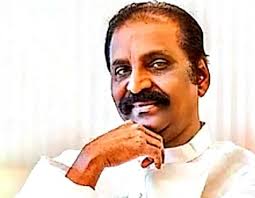
Eminent Tamil lyricist and author R. Vairamuthu has been selected for the 60th Jnanpith Award, becoming only the 3rd Tamil writer to receive the prize and the 1st to be recognised for Tamil poetry.
- He also won the Sahitya Akademi Award (2003) for his novel Kallikattu Ithikasam. He was also awarded the Padma Shri in 2003 and the Padma Bhushan in 2014.
- The award had previously been conferred on Tamil writers Akilan (1975) and Jayakanthan (2002).
Jnanpith Award - The Jnanpith Award, instituted in 1961 by the Bharatiya Jnanpith, is India’s highest literary honour recognising exceptional lifetime contributions by authors.
- Often regarded as the “Nobel Prize of Indian literature,” it highlights India’s linguistic diversity and literary integrity.
- The award was established by industrialist Sahu Shanti Prasad Jain and his wife Rama Jain via the Bharatiya Jnanpith, a cultural organization set up in 1944.
- The first award was conferred in 1965 to G. Sankara Kurup (Malayalam).
- The 1st woman recipient was Ashapurna Devi (Bengali) in 1976, and the 1st English-language winner was Amitav Ghosh in 2018.
- It is presented annually only to an Indian author for their “outstanding contribution towards literature.” From 1965 to 1981, the award was given for a specific book/work. Since 1982, it has been awarded for an author’s lifetime contribution to Indian literature.
- It covers all 22 Eighth Schedule languages as well as English (included in 2013). No posthumous awards are given.
- The recipient receives a cash prize of Rs 11 lakh, a citation, and a bronze statuette of Vagdevi (Saraswati), the goddess of knowledge. The award is often presented by the President of India.
- A high-level committee (Pravara Parishad) of eminent scholars and litterateurs evaluates nominations based on creativity, vision, and impact on Indian literature.
India’s 1st Manuscript Mapping Drive:
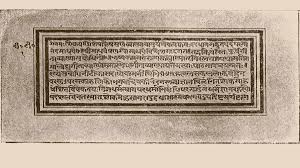
The Ministry of Culture has launched a first-of-its-kind three-month nationwide survey to map India’s manuscript heritage.
- The exercise aims to curb intellectual piracy by digitising India’s vast manuscript heritage, which includes the world’s largest collection of about 1 crore manuscripts.
- The survey will be conducted from the district level upwards to locate manuscripts across the country and create a consolidated national database.
- The collected data will be compiled into a national digital repository under the Gyan Bharatam Mission.
- The initiative aims to preserve, digitise and promote India’s vast manuscript heritage, enhancing accessibility for research and safeguarding cultural knowledge.
- Manuscripts from institutions, collections and individual custodians will be geotagged for conservation, preservation and digitisation needs.
- Gyan Bharatam app will be used by survey teams to upload details, with further standardised digitisation to make them widely accessible.
- The initiative aligns with the New Delhi Declaration (Gyan Bharatam Conference) and supports the vision of showcasing India’s culture, literature and consciousness.
- Survey will be conducted through state-level committees chaired by the Chief Secretary and district-level committees chaired by the District Magistrate.
Kharg Island–Fujairah Attacks:
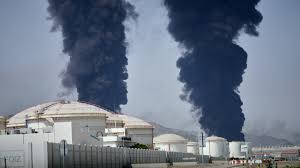
Geopolitical escalation in West Asia has intensified after the US reportedly carried out bombing strikes on Iran’s Kharg Island, a crucial oil export hub, while Iran retaliated by striking oil facilities in Fujairah in the United Arab Emirates (UAE).
- Both locations are critical nodes in the global oil supply chain, and attacks threaten international shipping lanes and oil markets.
- Kharg Island is a small Iranian island in the Persian Gulf, about 25 km off Iran’s southwestern coast.
- Kharg was once called the “orphan pearl of the Persian Gulf.” Today, it is often referred to as the “forbidden island” because access is tightly controlled by the Islamic Revolutionary Guard Corps (IRGC).
- The island became Iran’s primary export centre because it is connected by pipelines to major oil fields such as Ahvaz, Marun, and Gachsaran and has deep waters suitable for supertankers.
- About 90% of Iran’s crude oil exports pass through Kharg Island, with the terminal handling roughly 1.3–1.6 million barrels per day, and the ability to store around 30 million barrels.
- Kharg has been part of regional trade networks since the 10th century, serving pearl divers and traders moving between India and Basra (Iraq).
- It was later fortified by the Dutch in the 18th century and briefly occupied by the British in the 19th century.
Sahitya Akademi Awards 2025:
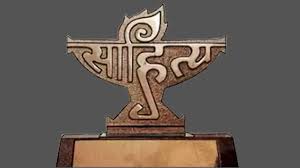
The Sahitya Akademi announced the Sahitya Akademi awards 2025 across 24 languages, honoring 8 poetry collections, 4 novels, 6 short story books, 2 essays, 1 literary criticism, 1 autobiography, and 2 memoirs.
- Notable winners include former diplomat Navtej Sarna for his English novel Crimson Spring, Hindi writer Mamta Kalia for her memoir Jeete Jee Allahabad and in the literary criticism genre, Tamil author Sa Tamilselvan for Thamiz Sirukathaiyin Thadangal.
- The award follows a July 2025 MoU between the Ministry of Culture and its 4 autonomous institutions—the National School of Drama, Sangeet Natak Akademi, Lalit Kala Akademi, and Sahitya Akademi—mandating a restructuring of awards in consultation with the Ministry.
- The Sahitya Akademi Award, established in 1954, is the 2nd highest literary honor in India (after the Jnanpith Award) that recognises exceptional literary merit and promotes the country’s rich multilingual heritage
- It is conferred annually by the Sahitya Akademi, an autonomous institution under the Ministry of Culture.
- The award is presented in 24 languages, which notably includes the 22 languages listed in the Eighth Schedule of the Constitution, plus English and Rajasthani.
- The work must be an original contribution published within the 5 years preceding the award year. The author must be an Indian citizen.
Menstrual Leave in India:
The Supreme Court of India (SC) expressed concerns that making paid menstrual pain leave a compulsory legal right could unintentionally harm women’s career prospects and employment opportunities, while hearing a petition seeking a uniform national policy on menstrual leave for working women and students.
- The petition argued that menstrual leave is part of the right to dignity under Article 21, and highlighted India’s commitment to the Convention on the Elimination of All Forms of Discrimination against Women (CEDAW) and the absence of menstrual leave provisions in the Maternity Benefit Act, 1961.
- Menstrual leave (or Period leave) refers to workplace or academic policies allowing employees or students to take time off during menstruation due to pain or discomfort (dysmenorrhea).
- The leave may be paid, unpaid, or include rest breaks during the menstrual cycle.
- Medical studies suggest that over 50% of menstruating individuals experience menstrual pain for a few days every month.
- Around 15–25% experience moderate to severe pain, which can affect daily productivity.
- The Chief Justice of India noted that making menstrual leave a mandatory statutory right could lead to unintended workplace discrimination.
- The Court cautioned that mandatory menstrual leave may discourage employers from hiring women, as they may perceive them as a costlier workforce.
- The Court feared women might be denied leadership roles, promotions, or major responsibilities due to assumptions about frequent absences.
- The Court supported voluntary menstrual leave initiatives by states and companies, rather than a compulsory legal mandate.
- The Court stated that framing such a policy falls under the executive and legislature, advising the government to examine the issue after stakeholder consultation.
Dual-Sex Crab of Silent Valley:
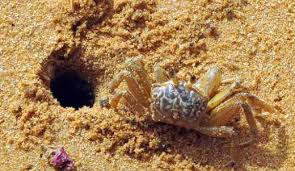
Researchers have found a rare case of gynandromorphy—a condition where an organism displays both male and female characteristics (e.g., male reproductive structures alongside female gonopores)—in a freshwater crab species, Vela carli.
- Vela carli is an endemic freshwater crab species discovered within the tree holes of Silent Valley National Park in the Western Ghats.
- This study documents the first instance of gynandromorphy in the freshwater crab family Gecarcinucidae. While known in other crustaceans, it had never before been reported in this specific family.
- Crustaceans are aquatic invertebrate animals belonging to the arthropod group (animals with jointed legs and an external skeleton). It includes Crabs, Lobsters, Shrimp, Prawns, etc.
- Silent Valley National Park, located in the Nilgiri Hills of Kerala, is a pristine tropical evergreen forest. It is renowned as one of the last undisturbed tracts of the South Western Ghats and the core of the Nilgiri Biosphere Reserve (1986), India’s first biosphere reserve.
Petroglyphs:
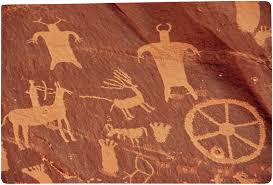
Researchers recently found two ancient rock carvings (petroglyphs) on a flat rock inside a rock shelter on a hill behind Beerappa Temple in Manchirevula, Telangana.
- Petroglyphs (also known as rock engravings) are symbolic images sculpted or engraved on the surface of rocks by removing material from its surface layer with instruments of superior hardness.
- The techniques used to create these images include pecking, incising, abrading, sculpting, polishing, drilling, and scratching.
- These processes remove part of the rock and therefore are different from images simply painted or drawn on rock, which are called petrographs.
- The word ‘’petroglyph’’ is derived from two Greek words, ‘’petros’’ meaning “stone,” and ‘’glyphein’’ meaning “to carve.”
- Petroglyphs took two primary forms, as images either appear as scratches or deeper visible indentations on rock.
- Petroglyphs are typically associated with prehistoric populations and can be found on every continent throughout the world, except Antarctica.
- However, they are especially concentrated in Africa, South America, North America (mainly in the southwestern United States), Siberia, Australia, and Europe (Scandinavia, Spanish Galicia, Ireland and Italy).
- Example of Petroglyph Site in India: Edakkal Caves in Wayanad, Kerala.
- They are among the earliest forms of art to have existed and are therefore considered the foundation of art.
- Ancient peoples also used petroglyphs as a form of communication or writing.
- For example, some petroglyphs clearly indicated the borders between tribal lands, and others were astronomical markers and maps.
- Additionally, some petroglyphs served as musical instruments and were known as “rock gongs.”
Butis bargabhimae : New Species Of Estuarine Fish
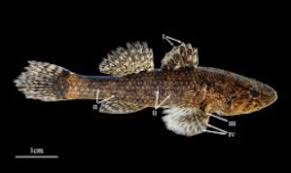
Scientists in West Bengal recently identified a new species of estuarine fish named Butis bargabhimae.
- Butis bargabhimae is a new species of estuarine fish.
- It was found in the Rupnarayan River (tributary of the Hooghly River) near Tamluk, West Bengal.
- It belongs to the butid family, a group of fish commonly known as gudgeon goby that typically live in the brackish waters where rivers meet the sea.
- While most of its cousins have smooth areas around their eyes, this new fish features unique scales between its eyes (known as interorbital scales) and additional auxiliary scales across its body.
- It also sports distinctive light and dark bands on its pectoral fins, which are missing in similar species.
- The species name, bargabhimae, is a tribute to the Hindu deity Bargabhima, a significant cultural and religious figure in the Tamluk area of West Bengal.
What is Force Majeure?

Several Gulf energy producers recently declared force majeure on oil and gas shipments after disruptions to shipping through the Strait of Hormuz.
- The concept of force majeure refers to an extraordinary event rendering the legal obligations between two or more contractually bound parties impossible to fulfill.
- The phrase comes from French and literally means “superior force’’.
- It is related to the concept of an act of God, an event for which no party can be held accountable. This type of event must be entirely beyond the parties’ reasonable control.
- As a precautionary measure against breach of contract, many commercial agreements contain force majeure contract clauses enumerating a list of major events that could result in non-performance of contractual duties.
- Force majeure does not encompass events that are predictable, preventable, or controllable, or that result from the negligence or malfeasance of one or more parties.
- Force majeure incidents typically include wars, natural disasters (e.g., earthquakes), terrorist attacks, epidemics, and civil unrest, such as riots.
- When a force majeure clause is triggered, any party affected by the event must notify the other party or parties to the contract.
- The affected parties will describe the start date and circumstances of the incident and cite the specific section in the contract that allows them to declare a force majeure incident.
- The contracting parties must also prove their reasonable efforts to mitigate the circumstances that have rendered the fulfillment of their duties impracticable.
- Such events may result in the parties delaying their obligations for a period of time, revising the contract terms, or agreeing on the contract’s cancellation.
- The application of force majeure can vary across legal systems, with some jurisdictions requiring a more stringent definition than others.
- In India, the doctrine of force majeure is governed by section 56 of the Indian Contract Act, 1872.
- It provides that a contract becomes void if an act to be performed under the contract becomes impossible after the contract is made, or, by reason of some event, which the promisor could not prevent, the act to be performed becomes unlawful.
- Force majeure conflicts with the concept of “pacta sunt servanda,” a principle in international law that agreements must be kept and not wriggled out of.
Hutchinson-Gilford Progeria Syndrome:
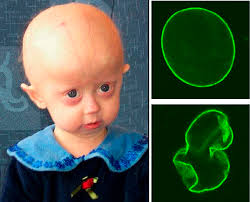
U.S.-based Sentynl Therapeutics (part of Zydus Lifesciences) recently signed a deal with South Korea’s PRG S&T to develop Progerinin, a pill aimed at treating Hutchinson-Gilford progeria syndrome (HGPS).
- Progeria, also known as HGPS, is an extremely rare genetic disease that causes rapid aging in children.
- Progeria is extremely rare.
- A genetic mutation in the LMNA gene causes progeria. The LMNA gene is responsible for making a protein called lamin A.
- Lamin A is an important part of the structural scaffolding that holds the nucleus of each cell in your body together.
- A tiny mutation in the LMNA gene causes it to create an irregular form of the lamin A protein called progerin.
- Progerin takes the place of the lamin A and makes the nuclei of your cells unstable, slowly damaging them.
- This leads to the early death of every cell in your body, which causes the process of premature aging.
- Almost all cases of progeria occur as a new, spontaneous mutation in the LMNA gene. This means there’s no biological family history of the disease.
- Newborns with the disorder appear to be healthy at birth but usually start to show signs of premature aging during their first one to two years of life.
- Their growth rate slows and they don’t gain weight as expected.
- This condition does not affect intellectual development or the development of motor skills such as sitting, standing, and walking.
- However, their rapid aging causes distinct physical characteristics, including:
- Hair loss (baldness).
- Prominent eyes.
- Aged, wrinkled skin.
- A thin, beaked nose.
- Disproportionately small face compared to head size.
- Loss of fat under the skin.
- Progeria is always fatal.
- The average age of death is 14.5 years, although some adults with progeria will live into their early 20s.
- Death most often occurs as a result of complications of severe atherosclerosis.
- Atherosclerosis occurs when plaque builds up within the walls of your arteries. This makes them less elastic and, therefore, stiffer.
- This condition greatly increases the chances of having a heart attack or stroke at a young age.
Ladakh Magmatic Arc:
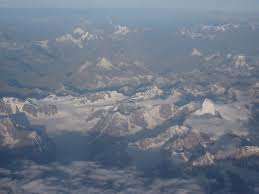
Scientists have traced the evolution of Ladakh Magmatic Arc (LMA) in North West Himalaya.
- Ladakh Magmatic Arc is a belt of igneous rocks in the Trans-Himalaya formed in the period Jurassic to Eocene.
- The LMA is a long-extinct volcanic system evolved through three major phases of geological activity over tens of millions of years.
- Process of Formation:
- Millions of years before the region that is now called Ladakh lay above an ocean called the Neo-Tethys Ocean.
- Below that ancient sea, giant slabs of Earth’s crust slowly plunged into the mantle in a process known as subduction leading to the formation of the Ladakh Magmatic Arc (LMA).
- Phases of Formation
- Island Arc Formation: In its earliest stage, Ladakh resembled a chain of volcanic islands rising from the Neo-Tethys Ocean.
- Represented by the Dras–Nidar Island Arc Complex (DNIAC)
- Magma primarily originated from the mantle
- Minimal contribution from subducted sediments
- Crustal Enrichment and Batholith Formation: As tectonic plates converged, the system evolved:
- Formation of large granite bodies known as the Ladakh Batholith (LB)
- Increased input from continental crust and recycled sediments
- Chemical signatures indicate deep crustal processes and magma mixing
- This phase coincides with the approaching collision between India and Eurasia.
- Island Arc Formation: In its earliest stage, Ladakh resembled a chain of volcanic islands rising from the Neo-Tethys Ocean.
- Post-Collision Magmatism: After the plates collided and the Neo-Tethys Ocean closed, tectonic activity continued:
- Formation of mafic dykes—vertical sheets of volcanic rock
- Magma derived from a previously enriched mantle source
- Indicates lingering tectonic and magmatic activity even after collision.
National Vaccination Day and Universal Immunisation Programme:
India celebrated National Vaccination Day (16th March) while highlighting major achievements of the Universal Immunisation Programme (UIP), including 98.4% full immunisation coverage by January 2026 and the launch of nationwide HPV vaccination and an indigenous Td vaccine in 2026. National Vaccination Day is celebrated every year on 16th March to commemorate the first dose of Oral Polio Vaccine administered in India in 1995 under the Pulse Polio Programme.The programme led to the elimination of polio in India, with the last reported case in 2011 in Howrah, West Bengal. The Universal Immunisation Programme (UIP) is a flagship public health programme of the Ministry of Health and Family Welfare aimed at providing free vaccination to children and pregnant women against vaccine-preventable diseases.



