
Today’s Current Affairs: 23rd December 2025 for UPSC IAS exams, State PSC exams, SSC CGL, State SSC, RRB, Railways, Banking Exam & IBPS, etc
Table of Contents
Financial Fraud Risk Indicator : In News

The Department of Telecommunications (DoT) recently said that the financial fraud risk indicator (or FRI) has prevented potential losses of ₹660 crore across the banking ecosystem within six months of the rollout of this initiative.
- It was launched by the Department of Telecommunications (DoT’s) Digital Intelligence Unit (DIU).
- It is a risk-based metric that classifies mobile numbers into three categories: Medium, High, and Very High Risk based on their likelihood of involvement in financial fraud.
- The classification draws from a comprehensive analysis using inputs from various platforms, including the Indian Cybercrime Coordination Centre’s National Cybercrime Reporting Portal (NCRP), DoT’s Chakshu platform, and intelligence shared by banks and financial institutions.
- By flagging high-risk numbers early, the tool enables banks, non-banking financial companies (NBFCs), and UPI service providers to take appropriate measures for customer protection and transaction validation.
- The DoT’s Digital Intelligence Unit (DIU) regularly disseminates the Mobile Number Revocation List (MNRL), which details mobile numbers disconnected due to involvement in cybercrime, failed verification, or exceeding permissible usage limits.
- These numbers often surface in financial fraud activities.
- Given that fraudulent mobile numbers are often short-lived and verification processes can take time, a preemptive indicator such as the FRI becomes highly effective.
- Thus, as soon as a suspected mobile number is flagged by a stakeholder, it undergoes multidimensional analysis, and classifies it into Medium, High, or Very High financial risk associated with it.
- It then shares this assessment about the number immediately with all stakeholders through DoT’s Digital Intelligence Platform (DIP).
- Banks and financial institutions can use FRI in real time to take preventive measures such as declining suspicious transactions, issuing alerts or warnings to customers, and delaying transactions flagged as high risk.
Paliyar Tribe:
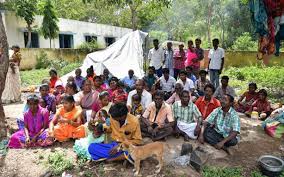
A total of 17 families belonging to the Paliyar Tribe in the Dindigul district have petitioned the Dindigul Collector, urging the district administration to recognise and develop their existing settlement as a formal village.
- They are an indigenous tribal community primarily found in the hilly regions of Tamil Nadu and Kerala.
- They are and have been known by multiple names, such as the Paliyans, Pazhaiyarares, and Panaiyars.
- Historically, the Paliyars were spread all over the Dindigul district and the Sirumalai Palani hills, adjacent to the Western Ghats.
- As they inhabited the Palani hills, they were known as Panaiyars.
- They primarily speak a dialect related to Tamil, reflecting their Dravidian linguistic heritage.
- Traditionally, the Paliyars were hunters and gatherers, residing in the forests of the Western Ghats.
- Presently, they have transformed into traders of forest products, food cultivators, and beekeepers, with some working intermittently as wage labourers, mostly on plantations.
- They are recognized for their extensive knowledge and traditional practices pertaining to the use of medicinal plants.
- Palliyars have small communities called kudis, sometimes living in caves or mud shelters.
- The Paliyar tribes never burned the dead bodies. They had the customary practice of burying the dead bodies in an area near to their residential area on the western side.
- Their festivals involve nature-based rituals, dancing, and music.
- They have a special ceremony to invoke rain and protect the forest spirits.
Khwaja Moinuddin Chishti:

The Supreme Court recently declined urgent hearing of a plea against the practice of state-sponsored ceremonial honours or offering a ‘Chadar’ by the Prime Minister at the Dargah of Khwaja Moinuddin Chishti, in Ajmer.
- He was a very important Sufi saint.
- People often call him Gharīb Nawāz, which means ‘Benefactor of the Poor’.
- A follower of Sunni Hanafi theology, he became the disciple of Hazrat Khwaja Usman Harooni, who later declared him his spiritual successor.
- He came to India around the year 1192 AD. He finally settled in the city of Ajmer during the reign of Sultan Iltutmish in Delhi and Prithviraj Chauhan in Ajmer.
- He is famous for bringing the Chishti Order of Sufism to India.
- He preached love, tolerance, charity, and detachment from materialism, and established a Khanqah in Ajmer to serve the poor.
- His tomb is known as the Dargah Sharif, or the Ajmer Sharif Dargah.
- The architectural style of Dargah Sharif purely reflects the Mughal style of architecture.
- All Mughal rulers from Humayun to Shah Jahan have made modifications in the structure.
- The Chishti Order is a group within Sufism.
- Sufism is a way of life in Islam that focuses on finding a deeper, more personal connection with God.
- The Chishti Order was started by a saint named Abu Ishaq Shami in Chisht, a town in Afghanistan.
- The Chishti Order is mostly followed in Afghanistan and South Asia.
- Moinuddin Chishti brought this order to India.
Mars Atmosphere and Volatile EvolutioN (MAVEN) Mission:

NASA has lost contact with its Mars Atmosphere and Volatile Evolution (MAVEN) spacecraft, the Mars orbiter that has worked for more than a decade to study how the planet’s atmosphere is escaping into space.
- It is the first spacecraft mission dedicated to surveying the upper atmosphere of Mars.
- It is part of NASA’s Mars Exploration Program, an unprecedented, multi-decade campaign to comprehensively understand Mars and its suitability to host past or present life.
- It aims to understand the role that loss of atmospheric gas to space played in changing the Martian climate over time.
- It carries three packages of instruments.
- One package studies the solar wind and its impact on Mars’s ionosphere.
- The second package is an ultraviolet spectrometer that studies the upper atmosphere.
- The third package is a mass spectrometer that studies the composition of the upper atmosphere.
- MAVEN found that Mars lost about 2/3 of its early atmosphere to space.
Kuttanad Wetland Agricultural System:

The soil tests in Kuttanad paddy fields which are part of Kuttanad Wetland Agricultural System in Kerala showed increased level of aluminium concentrations in paddy fields.
- It is unique and the only system in India that favours rice cultivation below sea level.
- The Kuttanad system is a complex mosaic of fragmented agricultural landscapes divided in three structures:
- Wetlands used for paddy activities and fish catching,
- Garden lands used for coconut, tubers and food crops plantation
- Water areas used as inland fishing and shells
- The Kuttanad Below Sea-level Farming System recognised under Globally Important Agricultural Heritage Systems (GIAHS) of Food And Agriculture Organisation.
- The Globally Important Agricultural Heritage Systems (GIAHS) is a Food and Agriculture Organization’s programme launched at the World Summit for Sustainable Development in 2002.
- It aims to strike a balance between conservation, sustainable adaptation and socioeconomic development.
- India’s GIAHS Include:
- Koraput region (Odisha): It is renowned for its subsistence paddy cultivation, predominantly on highland slopes.
- Kuttanad system (Kerala): It is a unique below-sea-level farming landscape.
- Saffron Park of Kashmir: It represents a rich agro-pastoral system characterized by traditional saffron cultivation.
GhostPairing:

The Indian Computer Emergency Response Team (CERT-In) has issued an advisory about an active threat campaign which targets WhatsApp users by using a new technique called GhostPairing.
- GhostPairing is a type of WhatsApp attack where hackers secretly link their own device to a victim’s WhatsApp account.
- It gives hackers almost full access without the victim noticing.
- GhostPairing’ allows cybercriminals to take complete control of WhatsApp accounts without requiring passwords or SIM swaps.
- The threat actors can take over WhatsApp accounts without authorisation by tricking potential victims into entering the pairing codes.
- By following a sequence of steps, victims unknowingly grant attackers full access to their WhatsApp accounts.
Rapid Financing Instrument:
The International Monetary Fund has approved emergency funding of USD 206 million under its rapid finance instrument to help Sri Lanka address urgent needs arising from the catastrophic Cyclone Ditwah.
- It provides prompt financial assistance to any International Monetary Fund (IMF) member country facing an urgent balance of payments need.
- It is one of the facilities under the General Resources Account (GRA) that provide financial support to countries, including in times of crisis.
- Types of Rapid Financing Instrument:
- Regular Window: It is for urgent balance of payments needs caused by sources including domestic instability, exogenous shocks and fragility. Under this, access up to 50 percent of quota per year and 100 percent of quota on a cumulative basis.
- Large natural disaster Window: It is for urgent balance of payments needs arising from natural disasters where damage is assessed to be equivalent to or exceed 20 percent of the member’s GDP. It provides access of up to 80 percent of quota per year and 133.33 percent of quota on a cumulative basis.
- Conditionality of Rapid Financing Instrument: Support provided without ex-post program-based conditionality or reviews (prior actions sometimes apply). Economic policies should aim at addressing the underlying balance of payments difficulties.
Anjadip Ship:

The ‘Anjadip’ Anti-Submarine Warfare Shallow Water Craft was delivered to the Indian Navy at Chennai.
- It is the third of eight Anti-Submarine Warfare Shallow Water Craft.
- It is indigenously designed and built by Garden Reach Shipbuilders and Engineers (GRSE), Kolkata.
- The ship derives its name from Anjadip Island located off coast of Karwar, Karnataka.
- The ship is a reincarnation of the erstwhile INS Anjadip, a Petya class Corvette decommissioned in 2003.
- The ASW SWC ships have been designed and constructed as per the Classification Rules of Indian Register of Shipping (IRS) under a Public-Private-Partnership (PPP) of GRSE with M/s L&T Shipyard, Kattupalli.
- Features of Anjadip Ship:\
- It has a maximum speed of 25 knots.
- It is the largest Indian Naval Warships propelled by Waterjets.
- These are equipped with state of the art Lightweight Torpedoes, indigenously designed Anti-Submarine Rockets and shallow water SONAR.
- The ship stands as a testament to growing domestic defence manufacturing ecosystem and reducing dependency on imports.
- The ship will strengthen Navy’s Anti-Submarine, coastal surveillance and mine laying capabilities.
Ravi Deecee Receives Prestigious French Chevalier de l’Ordre des Arts et des Lettres Award:
Malayalam publisher Ravi Deecee has been conferred the prestigious French honour Chevalier de l’Ordre des Arts et des Lettres. The award recognizes his outstanding contribution to literature, publishing, and cross cultural exchange, particularly between India and France. The honour was presented on December 4, 2025 at a ceremony held at the Embassy of France in India. Which is highlighting the growing importance of cultural diplomacy and literary collaboration.The award was conferred by Thierry Mathou the Ambassador of France to India.While presenting the honour, he praised Ravi Deecee’s role in transforming DC Books into one of India’s leading publishing houses and for promoting French literature in Indian languages, especially Malayalam.The ceremony was attended by several eminent personalities from India’s literary and cultural circles.
Oman Launches First Polymer One-Rial Banknote:
Oman has launched its first polymer one rial banknote. Which is a marking a historic shift from traditional paper based currency. Issued by the Central Bank of Oman, the new note will officially enter circulation on January 11, 2026.
The primary objectives behind introducing the polymer one rial note are,
- Improved durability, reducing replacement costs
- Enhanced security to counter counterfeiting
- Modernisation of currency in line with global best practices
- Showcasing national identity, culture, and economic progress
India’s Eight Core Sectors Output Grows by 1.8% in November 2025:
India’s infrastructure linked industries showed modest but steady expansion in November 2025. Official data released by the Ministry of Commerce and Industry indicates that the combined output of the eight core sectors rose by 1.8 per cent compared to the same month last year, reflecting mixed trends across energy, construction and manufacturing segments. Growth during November was uneven across sectors, with construction-related industries leading the expansion.
- Cement: Output surged by 14.5%, reflecting continued infrastructure and construction activity.
- Steel: Production increased by 6.1%, supported by demand from construction and manufacturing.
- Fertilizer: Recorded a 5.6% rise, indicating stable agricultural input demand.
- Coal: Grew by 2.1%, helping support power and industrial fuel requirements.
The Government of India will set up a Bureau of Port Security:
The Central Government has decided to establish a Bureau of Port Security (BoPS). The new body will enhance security at ports and on vessels through better coordination, intelligence sharing, and risk-based security planning. The decision comes at a time when India’s ports are handling increasing volumes of trade, making them critical national assets requiring robust and future-ready protection.The Bureau of Port Security (BoPS) will be a statutory body responsible for regulating and overseeing security arrangements at ports, vessels, and port facilities across India.It will be set up under the Merchant Shipping Act, 2025 and will function under the Ministry of Ports, Shipping and Waterways (MoPSW). The BoPS will be modelled on the Bureau of Civil Aviation Security (BCAS), which oversees airport and aviation security in the country.
Advocate Shubham Awasthi Honoured with Prestigious ‘40 Under 40 Lawyer Award’ 2025:
Advocate Shubham Awasthi, Supreme Court lawyer, has been honoured with the prestigious 40 Under 40 Lawyer Award 2025 for legal excellence and humanitarian contributions, recognising his impact on public interest litigation and India’s legal ecosystem.Advocate Shubham Awasthi has been conferred with the ’40 Under 40 Lawyer Award’ 2025. Which is one of the most respected honors in the Indian legal fraternity. The award acknowledges not only professional excellence but also commitment to public service and humanitarian values. The recognition highlights the growing role of young advocates in shaping India’s justice delivery system.



