
Today’s Current Affairs: 23rd March 2026 for UPSC IAS exams, State PSC exams, SSC CGL, State SSC, RRB, Railways, Banking Exam & IBPS, etc
Table of Contents
Litani River:
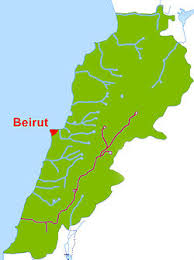
Israeli airstrikes have destroyed the Qasmiyeh Bridge, a key crossing over the Litani River on Lebanon’s southern coastal highway.
- Litani River is a major river in Lebanon.
- It rises in a low divides west of Baalbek and flowing southwestward through the Bekaa valley between the Lebanon and Anti-Lebanon mountains.
- It falls into the Mediterranean Sea.
- Tributaries: Berdawni River, Chtoura River, Qib Elias River etc
- Dams: El Wauroun Dam, Qaraoun Dam, or Albert Naqash Dam
- It provides a major source for water supply, irrigation, and hydroelectricity both within Southern Lebanon and the bekaa and the country as a whole.
- Bekaa valley is broad valley of east-central Lebanon, extending in a northeast-southwest direction for along the Litani and Orontes rivers.
- The valley contains nearly half of Lebanon’s arable land.
- It is not as intensively farmed as the country’s coastal plain because of less rainfall and a wider variation in temperature.
Bura Chapori Wildlife Sanctuary:
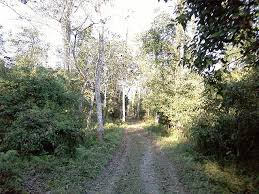
The Assam government is moving to create a new Reserved Forest adjacent to the Burhachapori Wildlife Sanctuary in Sonitpur district of Assam.
- Bura Chapori Wildlife Sanctuary is s geographically located on the south bank of the Brahmaputra, in Assam.
- It is a part of the Laokhowa-Burachapori eco-system.
- It is nestled between the Kaziranga National Park(NP) to the east and the Orang NP to the west and Laokhowa WLS to the south.
- It falls under the sub-tropical monsoon climatic regime.
- It comprises of a mosaic of wet alluvial grassland, riparian and semi-evergreen forests dotted by wetland and river systems.
- The grassland is also rich in various kinds of medicinal herbs and plants.
- It also has Hollang, Mekai, Dhuna, Udiyam, Nahar, Samkothal, Bheer,
- It is home to the Great Indian one-horned rhinoceros, tiger, leopard, wild buffalo, hog deer, wild pig, and elephants.
- It also consists of highly endangered Bengal Florican, Black-necked Stork, Mallard, Open billed Stork, Teal, and Whistling Duck among others.
Chhapgarus ngankeeae : New Crab Species
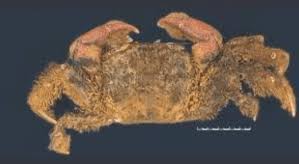
Researchers from the Zoological Survey of India discovered a new crab species from the Goan mangroves and named it as Chhapgarus ngankeeae.
- It is a new species of marine crab.
- The species has been named in honour of the late Dr Ngan Kee Ng, a not ed marine biologist from the National University of Singapore.
- It is found in the muddy intertidal mangrove forests along the west coast of India.
- Mangrove crabs play a crucial role in coastal eco systems by recycling nutrients and supporting food chains.
Sahiwal Cattle:
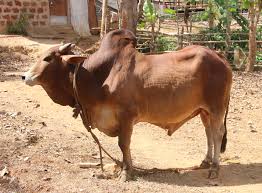
The Indian Council of Agricultural Research– Indian Veterinary Research Institute, Izatnagar, Bareilly successfully produced indigenous Sahiwal cattle calves by using ultrasound-guided ovum pick-up, in vitro fertilization, and embryo transfer (OPU–IVF–ET).
- Sahiwal Cattle is considered to be one of the best milch cattle breed of India.
- The breed derives its name from Sahiwal area in Montgomery district of Punjab in Pakistan.
- These animals are also known as “Lambi Bar”, “Lola”, “Montgomery”, “Multani” and “Teli”.
- The cows are brownish red in colour; shades may vary from a mahogany red brown to more greyish red.
- Extremities in bulls are darker than rest of body colour.
- Occasionally there are white patches.
- Its unique traits are, tick-resistant, heat tolerant, high milk production and noted for its high resistance to parasites, both internal and external
- Due to their heat tolerance and high milk production they have been exported to other Asian countries as well as Africa and the Caribbean.
- Ovum Pick-Up-In Vitro Fertilization (OPU-IVF) Technology is one of the recent and remarkable technologies in the field of reproductive biotechnology.
- It allows the collection of oocytes from the ovaries of live animals of known pedigree and additionally decreases the interval between generations.
- This procedure can be performed on pregnant animals less than 100 days in gestation.
- In OPU, ovarian follicles are punctured in a live animal with the help of a needle attached to a vacuum pump after visualizing them through ultrasonography.
- The oocytes obtained are then subjected to in vitro maturation (IVM), in vitro fertilization (IVF) and culture (IVC) for embryo production.
- The embryos thus produced can then be transferred to suitably synchronized recipients for producing offspring of known pedigree.
Guru Angad Dev:
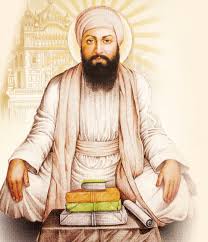
The Union Home Minister paid tributes to the second Sikh Guru, Shri Angad Dev on the occasion of his Jyoti-Jyot Diwas.
- Guru Angad (31 March 1504–29 March 1552) was born with the birth name of Lahna the village of Matte-di-Sarai in Firozpur district of Punjab, India.
- He was the second Sikh Guru (1539–52).
- He nominated Sri Guru Amar Das as his successor (The Third Nanak) before his death.
- He introduced the Gurmukhi script, standardizing the Punjabi language.
- He made extensive efforts to spread teachings of Guru Nanak Dev far and wide.
- He introduced the teaching of Punjabi in Gurmukhi script by modifying the existing alphabet.
- He improved literacy among the Sikhs and started school at Khadur Sahib to teach Gurmukhi to the children.
- He encouraged physical health building through sports and wrestling as well mental health through discipline and truthful living.
- He composed many hymns in Ragas.
- He consolidated the institution of Langar started by Guru Nanak Dev Ji.
- He also established hundreds of new Sangats (Sikh religious Institutions) and thus strengthened the base of Sikhism.
Subarnarekha River: In News
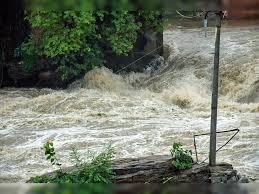
The Ministry of Environment, Forest and Climate Change has issued instruction to the state government agencies to take action to arrest illegal sand mining and smuggling from Subarnarekha river in Odisha.
- Subarnarekha River originates near Nagri village in the Ranchi District of Jharkhand.
- The Subarnarekha (meaning “Streak of Gold”) flows east through a copper-mining region and leaves the Chota Nagpur plateau by the Hundrugbagh waterfall.
- It flows into the Bay of Bengal.
- Its principal tributaries joining from right are the Kanchi, the Karkari and the Kharkai.
- The basin is bounded by:
- Chhotanagpur plateau on the north and the west, by the ridges separating it from Baitarani basin on the south, by the Bay of Bengal on the south-east and by the Kasai Valley of Kangsabati River on the east.
- River Basin: It extends over States of Jharkhand, Odisha and comparatively smaller part in West Bengal.
- The basin is generally influenced by the South-West monsoon, which onsets in the month of June and extends up to October.
- Dams and Reservoirs: Getalsud Reservoir, Chandil Dam, Galudih Barrage and Icha Dam.
Monarch Butterfly:
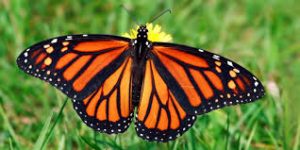
There has been a 64 per cent increase in the presence of the Monarch butterfly in Mexican overwintering forests during the 2025-2026 seasons.
- Monarch Butterfly is known by scientists as Danaus plexippus, which in Greek literally means “sleepy transformation.”
- Adult monarch butterflies possess two pairs of brilliant orange-red wings, featuring black veins and white spots along the edges.
- Males, who possess distinguishing black dots along the veins of their wings, are slightly bigger than females.
- It is found in in North America, Central America, and South America, Australia, Hawaii, India, and other locations.
- Habitat: Gardens, Managed Corridors, Agricultural Areas, and Natural and Restored Areas.
- Each adult butterfly lives only about four to five weeks.
- The mating period occurs in the spring, just prior to migration from the overwintering sites.
- Milkweed is the only plant on which monarchs lay their eggs and the only source of food for baby caterpillars
- They travel from the northeast United States, and southeast Canada to the mountain forests in central Mexico
- Threats: Illegal logging, land development, loss of milkweed plants, and climate change, all of which affect its habitat and migration.
ICC Women’s Player of the Month for February 2026:
India’s pace bowler Arundhati Reddy has been named ICC Women’s Player of the Month for February 2026,. This recognition comes after following her outstanding performance in the T20I series against Australia. She has played a key role in India’s historic series win on Australian soil and it is considered one of the toughest tours in cricket.
ICC Men’s Player of the Month February 2026:
Pakistan opener Sahibzada Farhan has been announced as the ICC Men’s Player of the Month for February 2026. This comes after his outstanding performance in the ICC Men’s T20 World Cup 2026. Farhan delivered the good performance for his team and he was tournament’s highest run getter and made history. Also he make the record as the highest runs in any single edition surpassing the Virat Kohli’s previous record,
Narendra Modi Became India’s Longest-Serving Elected Leader:
Honorable Prime Minister of India Narendra Modi has become the longest serving elected head of government in India. This feat comes after he completes 8,931 days in office and entering his 25th year in leadership. With this he has surpassed Pawan Kumar Chamling (Former Chief Minister of Sikkim). The achievement combines his tenure as Gujarat Chief Minister to Prime Minister of country.
Total tenure: 8,931 days
Surpassed: Pawan Kumar Chamling (8,930 days)
Entered: 25th year in public leadership