
Today’s Current Affairs: 25th March 2026 for UPSC IAS exams, State PSC exams, SSC CGL, State SSC, RRB, Railways, Banking Exam & IBPS, etc
Table of Contents
Beaver:

According to a new international study led by researchers at the University of Birmingham, Beavers can engineer riverbeds into promising ways to prevent carbon dioxide release into the air.
- The beaver, from the genus Castor, includes two amphibious rodent species.
- They are semi-aquatic species.
- They live in streams, marshes, rivers, and ponds and along the shorelines of large lakes
- They are native to North America, Europe and Asia.
- Beavers have long, orange, visible front teeth, called incisors. These teeth grow continuously throughout its life and are worn down through daily use.
- One important communication signal among beavers is a tail slap on the surface of the water, indicating danger. Typically performed by an adult
- They are known as “ecosystem engineers” because they construct dams of branches, stones, and mud in streams, rivers, marshes, and ponds.
- These beaver ponds which the animals use as sources of food, as well as protection from predators.
- Conservation Status: IUCN Red List: Least Concern
National Biodiversity Authority:
The National Biodiversity Authority (NBA) launched short-term Internship Programme (upto 3 months), for students who are undergoing graduation/post graduation.
- It is a statutory body established under the Biological Diversity Act, 2002.
- It was formally set up in 2003.
- Headquarters: It is located in Chennai, Tamil Nadu.
- The NBA performs facilitative, regulatory, and advisory functions for the Government of India, particularly on matters related to the conservation of biodiversity, sustainable use of biological resources, and the fair and equitable sharing of benefits derived from them.
- National Biodiversity Authority Composition
- Chairperson: An eminent person with proven knowledge and experience in biodiversity conservation, sustainable use of biological resources, and equitable sharing of benefits.
- 10 Ex-officio Members: Senior representatives from the Government of India, nominated to provide policy insights and ensure inter-ministerial coordination.
- 5 Non-Official Members: Experts and professionals from diverse fields related to biodiversity management, nominated to contribute independent perspectives and specialized expertise.
- State Biodiversity Boards (SBBs) at the state level to regulate access to biological resources within their jurisdiction.
- Biodiversity Management Committees (BMCs): Established at the local village or panchayat level to promote grassroots-level biodiversity conservation and documentation.
Great Salt Lake:
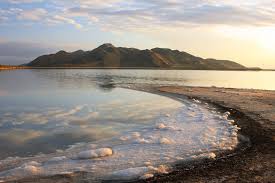
Researchers at the University of Utah have found that freshwater saturates the rock and sediment beneath the Great Salt Lake to depths of up to 13,000 feet.
- Great Salt Lake is a saline lake located in northern Utah, United States.
- It is the largest inland body of salt water in the Western Hemisphere and one of the most saline inland bodies of water in the world.
- The lake is fed by the Bear, Weber, and Jordan rivers and has no outlet.
- The lake has fluctuated greatly in size, depending on the rates of evaporation and the flow of the rivers that feed it.
- Like the Dead Sea, the Great Salt Lake exists within an arid environment and has chemical characteristics similar to that of the oceans.
- It has a much greater salinity than the oceans, however, since natural evaporation exceeds the supply of water from the rivers feeding the lake.
- It is surrounded by great stretches of sand, salt land and marsh, the Great Salt Lake remains eerily isolated from the nearby cities, towns and other human habitations.
- Some notable avian species that are found here include American avocet, Wilson’s phalarope, California gull, black-necked stilt, American white pelican, peregrine falcon, marbled godwit, etc.
Sperm Whale:
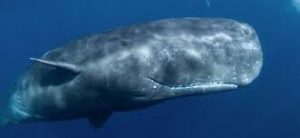
According to a statement by the University of St Andrews in the United Kingdom, Sperm whales have been caught headbutting on camera for the first time.
- It is the largest of the toothed whales, easily recognized by its enormous square head and narrow lower jaw.
- It has the largest head and the largest brain of any animal on the planet.
- They are named after the waxy substance—spermaceti—found in their heads.
- The spermaceti is an oil sac that helps the whales focus sound. Spermaceti was used in oil lamps, lubricants, and candles.
- The sperm whale is dark blue-gray or brownish, with white patches on the belly.
- It has small paddle-like flippers and a series of rounded humps on its back.
- They have one of the widest global distributions of any marine mammal species.
They are found in all deep oceans, from the equator to the edge of the pack ice in the Arctic and Antarctic. - Lifespan: Up to 60 years
- They are highly social mammals that communicate with one another using a series of clicks called codas, and that each coda has a distinct purpose.
- Ambergris, a material sometimes found floating in the sea, is formed in the sperm whale’s intestines around a core of undigested solid matter such as squid breaks.
Conservation Status - IUCN: Vulnerable
- CITES: Appendix I
Districts as Export Hubs (DEH) Initiative:
The Minister of State for Ministry of Commerce & Industry informed the Lok Sabha about the Districts as Export Hubs (DEH) Initiative.
- It was launched in 2019 to foster balanced regional development across all districts of the country.
- The objective of DEH is to identify, brand and promote products from each district, encouraging their sale in both domestic and international markets.
- It is an initiative of the Directorate General of Foreign Trade, Department of Commerce.
- Under this initiative, the export promotion activities are being decentralised to make the districts active stakeholders in boosting export growth of the identified products and services from the districts.
- An institutional mechanism has been set up in all States/UTs by forming the State Export Promotion Committee (SEPC) and District Export Promotion Committee (DEPC) at the district level.
- The initiative has identified export potential in specific districts across the country, spanning critical sectors like agriculture, toys, and GI products.
- District Export Action Plans (DEAP) detailing the existing bottlenecks in the supply chain and identifying possible interventions to mitigate the existing gaps for export of the above identified products.
- It is supporting local exporters/manufacturers to scale and find potential buyers outside India.
- The DEH initiative has identified products and services with export potential in all districts across the country, including GI products, agricultural clusters, and toy clusters.
GlobE Network: 12th Steering Committee Meeting
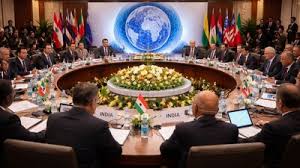
India hosted the 12th Steering Committee Meeting of the Global Operational Network of Anti-Corruption Law Enforcement Authorities (GlobE Network) in New Delhi.
- The GlobE Network is a global platform of specialised anti-corruption law enforcement authorities.
- It was established under the Riyadh Initiative during Saudi Arabia’s G20 Presidency.
- It is operating under the framework of the United Nations Convention Against Corruption (UNCAC)
- The Network comprises 135 member countries and 250 member authorities, along with 18 observers including EUROPOL, the World Bank, and the International Association of Anti-Corruption Authorities.
- The steering committee, consisting of one chair, one vice-chair, and 13 members, provides leadership and direction for the organisation.
- The Ministry of Home Affairs is the central authority for GloBE Network, while the CBI and the Enforcement Directorate are its member authorities from India.
- The GlobE Network complements formal legal assistance mechanisms by enabling faster, more flexible, and direct agency-to-agency engagement.
- It enables direct, practitioner-level cooperation among member agencies for the investigation, prosecution, and recovery of proceeds of corruption.
- The Network is governed by its members and is supported by the United Nations Office against Drugs and Crime (UNODC) which provides the Network’s secretariat.
Tonga:
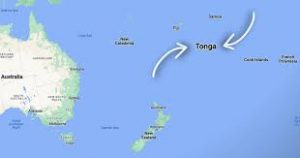
A strong preliminary magnitude 7.6 earthquake struck near Tonga in the South Pacific Ocean.
- It is a sovereign country in Polynesia, composed of an archipelago of islands located in the South Pacific Ocean.
- Neighbouring countries include Fiji to the west, Cook Islands to the east and Samoa north.
- These islands are divided into three main groups: Tongatapu in the south, Ha‘apai in the center, and Vava‘u in the north.
- The western islands (making up the Tongan Volcanic Arch) are all of volcanic origin; the eastern islands are nonvolcanic and are composed of coral limestone and sand
- The capital city of Tonga is Nukuʻalofa, situated on the northern shore of Tongatapu Island.
- It features flat terrain with limestone and coral formations.
- Mostly flat islands with limestone bedrock formed from uplifted coral formation; others have limestone overlying volcanic rock.
- The highest point in this region Kao Island in the Haʻapai group.
- Tonga is a member of the Commonwealth Clean Ocean Alliance and Marine Protected Areas Action Groups.
Moon’s titanium-rich rocks:
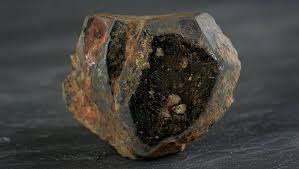
A new study by researchers from IIT-Kharagpur and the Physical Research Laboratory (PRL), Ahmedabad decoded moon’s titanium-rich rocks.
- Titanium is the fourth most abundant metal and the ninth most abundant element in the Earth’s crust.
- It often occurs in ore deposits in the form of chemical compounds with iron or oxygen.
- It is present in meteorites and the sun.
- The two prime commercial minerals are Ilmenite (FeTiO3) and Rutile (TiO2).
- Titanium is obtained by the Kroll process.
- Kroll process is a method for producing titanium metal in large quantities and high purity using a magnesium reduction process for titanium tetrachloride, developed by William Justin Kroll in the 1940s.
- It is very corrosion resistant and generally not affected by air, water, acids or bases.
- It has a low density, good strength, is easily fabricated, and has excellent corrosion resistance.
- The metal burns in air and is the only element that burns in nitrogen.
- It is useful in aircraft, spacecraft, ships, and other high-stress applications.
- It also is used in prosthetic devices, because it does not react with fleshy tissue and bone.
- Titanium oxide spectra are used by astronomers to identify cool red dwarf stars.
- It is used as an alloying agent with many metals including aluminium, molybdenum and iron.
Lok Sabha Passes Transgender Amendment Bill 2026:
Lok Sabha has passed the Transgender Persons (Protection of Rights) Amendment Bill of 2026 on March 24, 2026. The Bill changes to redefine the terminology of ‘transgender’ by excluding the sexual orientations and self-perceived gender identities from the scope of it. It was introduced by the government to bring the clarity in implementation and with this the amendment has sparked debate across political and social circles. And it also raising the concerns about identity rights, legal recognition and inclusivity of individual.The Amendment states to provide the more precise definition of who qualifies as a the transgender person under the new law. It also explicitly mention that individuals with different sexual orientations or self-perceived gender identities will not fall under this definition.Instead the Bill focuses on groups that are traditionally and socially recognized, such as hijras, kinnars, aravanis, jogtas, and individuals with intersex variations.The government argues that this clarity is necessary to ensure that benefits and protections reach the intended group.
Lviv’s Historic Architectural Ensemble:
A Russian drone strike targeted a residential building within the UNESCO World Heritage site of Lviv’s historic center, causing extensive damage near the Bernardine monastery.The Historic Centre of Lviv, Ukraine, preserves a medieval street layout and rich Baroque, Renaissance, and Neoclassical architecture. Largely spared during World War II, it reflects a unique blend of Central and Eastern European styles with Italian and German influences.Founded in the late Middle Ages (mid-13th century) by King Daniel of Galicia.The ensemble has been inscribed on the UNESCO World Heritage List since 1998.
Gujarat Becomes Second State To Passing The UCC Bill After Uttarakhand:
The Gujarat state government has created history after passing the Uniform Civil Code (UCC) Bill 2026 in the State Assembly on March 24 2026. It was tabled by Chief Minister Bhupendra Patel and the Bill proposes the common legal framework for marriage, divorce, succession and live-in relationships across all religions. The state has become the second state to implement a UCC law after Uttarakhand.The Gujarat Uniform Civil Code Bill, 2026 aims to create the single legal framework to governing personal matters such as marriage, divorce, inheritance and live-in relationships regardless of religion.Currently India follows the different personal laws for different religious communities. The UCC tends to replace these with a common set of rules which will ensuring equality before law.The Bill was introduced after the state-appointed committee submitted its report and recommends to the implementation of a uniform system.The proposed law includes various important provisions which aimed at standardizing personal laws.One of the main features is the prohibition of bigamy. With this it ensuring that a person cannot marry if they already have a living spouse.Another key provision is the mandatory registration of live-in relationships along with a formal declaration process for their termination.This is a new legal step is aimed at regulating such relationships.The Bill also seeks to establish the uniform rules for inheritance and succession and also reducing the legal complexities across communities.
Rekha Gupta Unveils Delhi’s Green Budget 2026:
Delhi Chief Minister Rekha Gupta presented the Budget 2026-27 on March 24, 2026 and with a financial outlay of ₹1,03,700 crore. With this it is marking a 3.7% increase from the previous year. This budget stands out as a ‘Green Budget’ and a strong focus on environmental protection as rising pollution concerns in the national capital of India. Alongside with sustainability the budget also prioritizes education, healthcare, infrastructure and civic services.The state government has allocated 21% of the total budget amount for the green initiatives to tackle such environmental problems.