
Today’s Current Affairs: 27th January 2026 for UPSC IAS exams, State PSC exams, SSC CGL, State SSC, RRB, Railways, Banking Exam & IBPS, etc
Table of Contents
Sepahijala Wildlife Sanctuary:

The Tripura Forest Minister recently announced that the state has received over Rs 57 crore for the modernization and further development of the Sepahijala Wildlife Sanctuary in the Sepahijala district.
- Sepahijala Wildlife Sanctuary is located in Tripura.
- It also has hosts Abasarika and Amrit Sagar lakes.
- Clouded Leopard National Park, is a part of the Sepahijala Wildlife Sanctuary.
- Vegetation: Moist deciduous forest
- It hosts various tress like Sal, Chamal, Garjan, and Kanak.
- Pichla, Kurcha, Awla, Bahera, Hargaja, Amlaki, Bamboos and grasses, are also found here.
- It is the habitat of different species of primates like the Rhesus macaque, Pigtailed macaque, Capped langur, Spectacled monkey, Slow loris and several other wild animals like Leopard, Clouded leopard, Jungle fowl, Civets, Barking, Deer, Wild pig, crab-eating mongoose.
- The avian population of the sanctuary is also rich, with a variety of winged stork, Whistling teal, and the White ibis.
Indian Ocean Naval Symposium:
Boosting maritime engagement with Indonesia, a key member of the Indian Ocean Naval Symposium (IONS), and advancing the vision of MAHASAGAR, the Indian Navy’s First Training Squadron (1TS) departed Belawan recently, after a successful three-day port call.
- It is a voluntary initiative that seeks to increase maritime cooperation among navies of the littoral states of the Indian Ocean Region by providing an open and inclusive forum for discussion of regionally relevant maritime issues.
- It promotes maritime cooperation, mutual understanding, and collaboration on issues such as maritime security and humanitarian assistance and disaster relief (HADR).
- In the process, it endeavours to generate a flow of information between naval professionals that would lead to common understanding and possibly cooperative solutions on the way ahead.
- IONS is structured around a rotating chairmanship, biennial conclaves of chiefs, and working groups.
- There are 36 littoral in the Indian Ocean, which have been geographically grouped into the following four sub-regions:
- South Asian Littorals: Bangladesh, India, Maldives, Pakistan, Seychelles, Sri Lanka, and United Kingdom (British Indian Ocean Territory)
- West Asian Littorals: Iran, Oman, Saudi Arabia, and the United Arab Emirates
- East African Littorals: France (Reunion), Kenya, Mauritius, Mozambique, South Africa, and Tanzania.
- South East Asian and Australian Littorals: Australia, Indonesia, Malaysia, Myanmar, Singapore, Thailand, and Timor-Leste.
- Observers: China, Germany, Italy, Japan, Madagascar, the Netherlands, Russia, and Spain.
Mir Alam Tank: In News

Nine workers and engineers working on the bridge across the Mir Alam tank were rescued by the Hyderabad Disaster Management and Asset Protection Agency (HYDRAA) after their boat malfunctioned in the middle of the lake recently.
- Mir Alam Tank, located in Hyderabad, Telangana, is a historic reservoir to the south of the Musi river.
- It was the primary source of drinking water for Hyderabad before the Osman Sagar and Himayat Sagar reservoirs were built by the last Nizam of Hyderabad between 1913-25.
- The tank was named after Mir Alam Bahadur, then the Prime Minister of Hyderabad during Asaf Jah III’s reign, the third Nizam of Hyderabad
- Mir Alam Bahadur is believed to have laid the foundation for the tank .
- Mir Alam had led the forces of Nizam against the battle with Tipu Sultan.
- It is believed that Mir Alam built the lake from part of the treasure that he grabbed from Srirangapatna after defeating Tipu
- The tank was designed by a French engineer and features semi-circular arches, making it an architectural marvel of its time.
Strategic Asset Allocation and Risk Governance (SAARG) Committee:

The PFRDA recently constituted a committee of Investment Experts for Strategic Asset Allocation and Risk Governance (SAARG) to review, recommend and modernize the investment framework under the NPS.
- It is a high-level committee of investment experts to review, recommend, and modernise the investment framework under the National Pension System (NPS).
- It was constituted by the Pension Fund Regulatory and Development Authority (PFRDA).
- Objective is Strengthening the long-term investment architecture of NPS by improving diversification, enhancing risk management practices, and expanding investment choices available to subscribers.
- SAARG has been tasked with undertaking a comprehensive review of existing NPS investment guidelines for both government and non-government sectors.
- The review will include benchmarking India’s pension investment framework with leading global pension systems as well as the evolving domestic investment ecosystem.
- The committee will examine a wide range of issues, including strategic asset allocation frameworks, introduction and review of asset classes, performance measurement systems, accountability mechanisms, asset-liability management (ALM) practices, valuation standards for alternative investments, portfolio stability and liquidity optimisation.
- Governance structures, intermediary architecture, and integration of sustainability considerations into investment decision-making will also fall within its scope.
Hemileccinum indicum:
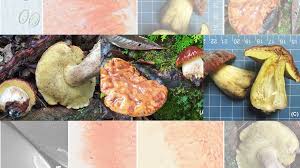
Researchers exploring the temperate forests of the Indian Himalayas have discovered a previously unknown species of mushroom named Hemileccinum indicum.
- It is a new species of mushroom.
- It was found growing among oak trees in the Bageshwar district of Uttarakhand.
- It marks the first time the genus Hemileccinum has been documented in India.
- Ecologically, these mushrooms are ectomycorrhizal, meaning they form a vital symbiotic partnership with the roots of trees, such as the Quercus (oak) species they were found under, helping the forest exchange nutrients and stay healthy.
Chatergala Pass:
The Border Roads Organisation (BRO) successfully carried out a high-altitude rescue and road restoration operation under Project Sampark at Chatergala Pass.
- It is situated in the Bhaderwah–Chatergala axis in Jammu region of Union Territory of Jammu and Kashmir.
- It is a high mountain pass that connects Bani in the Kathua district to Bhaderwah in the Doda district.
- It is tucked in the Chamba-doda ranges of the greater Himalayas.
- Terrain is surrounded by alpine meadows, snow-covered peaks, and dense forest
- Border Roads Organisation is a road construction executive force in India that provides support to the Indian Armed Forces.
- BRO was entirely brought under the Ministry of Defence in 2015
- It was formed on 7 May 1960 to secure India’s borders and develop infrastructure in remote areas of the north and northeastern states of the country.
- It develops and maintains road networks in India’s border areas and friendly neighboring countries.
Bacillus subtilis : State microbe
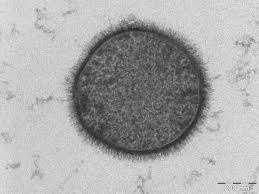
Kerala officially declared Bacillus subtilis as ‘State microbe’.
- Bacillus subtilis (B. subtilis) is a type of probiotic (“good” bacteria) found naturally in the human gut.
- It’s also found in fermented foods.
- It is a spore forming, motile, rod-shaped, Gram-positive, facultative aerobe.
- It is mostly found in soil and vegetation with an optimal growth temperature from 25-35 degrees Celsius.
- subtilis has the ability to produce and secrete antibiotics.
- The genomic structure of this microorganism contains five signal peptidase genes that are important for the secretion of these antibiotics.
- It has shown to be capable of secreting polymyxin, difficidin, subtilin, and mycobacillin.
- It is used as a model organism for studying endospore formation in bacteria.
- Endospores of B. subtilis can tolerate harsh environmental conditions, such as UV exposure and high temperatures.
- Subtilis is non-pathogenic but can contaminate food and be considered an opportunistic pathogen among the immuno-compromised.
- Bacillus subtilis is used on seeds, vegetables, and plants as a fungicide because of their ability to produce antibiotics.
- It inhabits the root system of the plant competing with disease causing organisms.
- Some B. subtilis strains are capable of producing toxins for insects. These strains are used by farms to protect their crops.
- subtilis endopores serve as one of the models for evaluating the effectiveness of sporicides and sterilants.
Jeevan Raksha Padak Awards:
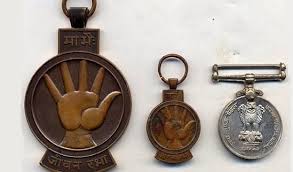
The President of India has conferred the Jeevan Raksha Padak Series of Awards-2025 to 30 persons.
- It is awarded to a person for meritorious act of human nature in saving the life of a person.
- The award is given in three categories, namely,
- Sarvottam Jeevan Raksha Padak: It is awarded for conspicuous courage in saving life under circumstances of very great danger to the life of the rescuer.
- Uttam Jeevan Raksha Padam: It is awarded for courage and promptitude in saving life under circumstances of great danger to the life of the rescuer.
- Jeevan Raksha Padak: It is awarded for courage and promptitude in saving life under circumstances of grave bodily injury to the rescuer.
- Its nominations are invited annually from States/UTs and Union Ministries.
- Its final approval is given by the Prime Minister and the President of India.
- The decoration of the award consists of a Medal, Certificate, along with a one-time monetary allowance: Sarvottam Jeevan Raksha Padak (₹2 lakh), Uttam Jeevan Raksha Padam (₹1.5 lakh) and Jeevan Raksha (₹1 lakh).
- No other facility/benefit in terms of any concession in Railways, Airfare etc. is provided by the Government.
Remount and Veterinary Corps:
During the Republic Day Parade more animals were represented the Indian Army’s Remount and Veterinary Corps.
- Remount and Veterinary Corps is a specialised Corps of the Indian Army responsible for the breeding, rearing, and training of Army animals, including horses, mules and Army dogs.
- It ensures the operational readiness of these animals for combat, reconnaissance, and logistics and also providing veterinary care and supporting counter-terrorism operations.
- Headquarters: Meerut
- The RVC is one of the oldest branches of the Indian Army, tracing its foundation to the Stud Department established in Bengal in 1779.
- It was reorganised — from Army Veterinary Corps (India) in 1920 to Indian Remount and Veterinary Corps in 1950.
- It was formally established as the Remount and Veterinary Corps in 1960.
- Motto: ‘Pashu Seva Asmakam Dharma (Service to animals is our duty)’.
Padma Awards 2026:
On the eve of the 77th Republic Day 2026, the President approved the 2026 Padma awards list of 131 recipients, comprising 5 Padma Vibhushan, 13 Padma Bhushan, and 113 Padma Shri awards.
- The Padma Awards, alongside the Bharat Ratna, are the nation’s premier awards for recognizing distinguished contributions across all fields of public service and human endeavour.
- The Padma Awards were instituted in 1954. Initially, two civilian awards were created, i.e., Bharat Ratna (the highest) and Padma Vibhushan (with three classes). In 1955, Padma Vibhushan classes were restructured into the three distinct awards in descending order of prestige:
- Padma Vibhushan: For “exceptional and distinguished service”; the 2nd-highest civilian award after the Bharat Ratna.
- Padma Bhushan: For “distinguished service of high order”.
- Padma Shri: For “distinguished service in any field.
- Awards are given across diverse disciplines, including Art, Social Work, Public Affairs, Science & Engineering, Civil Service, and more.
- All individuals, irrespective of race, occupation, rank, or gender—including Indian citizens, foreigners, NRIs, PIOs, and OCIs—are eligible for these awards.
- Since 2014, the government has been recognizing “unsung heroes” with the Padma Awards, transforming them into the “People’s Padma”.
- It is governed by the Padma Awards Committee, which is appointed annually by the Prime Minister. The committee is chaired by the Cabinet Secretary and includes the Home Secretary, Secretary to the President, and 4–6 eminent persons. Its recommendations are submitted to the Prime Minister and the President of India for final approval.
- Based on the committee recommendations, it is announced annually on the eve of Republic Day and formally conferred by the President of India in March/April, with recipients receiving a Sanad (certificate), medallion, and replica.
- Generally not conferred posthumously (with rare, highly deserving exceptions).
- A higher category Padma award is only granted after at least five years since the previous Padma award.
- The award is not a title and cannot be used as a prefix or suffix.
- Capped at a maximum of 120 awards per year (excluding posthumous, NRI, foreigner, and OCI recipients).
UGC Circular on Third Language: Tamil Nadu Opposes

Tamil Nadu has formally opposed the University Grants Commission’s (UGC) circular mandating a third language in higher educational institutions, characterizing it as an “indirect attempt to impose Hindi” and reaffirming the State’s steadfast commitment to its historic two-language policy.
- Tamil Nadu categorically rejected the three-language formula prescribed in the Centre’s National Education Policy (NEP), 2020, viewing the recent UGC circular as an infringement on State policy.
- The NEP 2020 promotes multilingualism by requiring students to learn three languages, with at least two being native Indian languages (including a regional language).
- The third language can be English or another modern Indian/foreign language.
- The State Education Policy of Tamil Nadu continues to uphold the two-language formula (Tamil and English), a policy originally formulated by former Chief Minister C.N. Annadurai in 1968.
- The State government stated that under no circumstances will it accept any alteration to its language policy.
- The issue also highlights Centre–State tensions over education, which falls under the Concurrent List of the Constitution.
- In 2022, the Assembly unanimously urged the Union government not to implement recommendations of the Parliamentary Committee on Official Language, which included proposals to make Hindi the medium of instruction in central institutions
6th ASEAN–India Digital Ministers’ Meeting:
The 6th ASEAN–India Digital Ministers’ Meeting (ADGMIN) was co‑chaired virtually by India and Vietnam, focusing on the theme “Adaptive ASEAN: From Connectivity to Connected Intelligence”.
- The ADGMIN is an annual forum of Telecom and Digital Ministers from the 11 ASEAN Member States and ASEAN’s Dialogue Partners, including Australia, China, India, and the US.
Highlights of the 6th ADGMIN Meeting:
- The meeting acknowledged the adoption of the ASEAN–India Joint Statement on Advancing Digital Transformation (2024), aimed at strengthening cooperation on Digital Public Infrastructure (DPI), Financial Technology, Cybersecurity, Artificial Intelligence (AI), capacity building, and sustainable financing.
- Progress on the ASEAN-India 2025 Digital Work Plan was reviewed, and a new ASEAN-India Digital Work Plan for 2026 was welcomed.
- The meeting also announced the operationalization of the special ‘ASEAN-India Fund for Digital Future’ to support collaborative initiatives between India and ASEAN in the domain of digital transformation and related technologies like Cybersecurity.
- India highlighted its rapid digital transformation, including near-universal 4G coverage, the world’s fastest 5G rollout, BharatNet for rural broadband, and its emergence as a mobile manufacturing hub.
- It offered to share expertise in its DPI (Aadhaar, UPI, DigiLocker) and the Sanchar Saathi initiative.
- India outlined its IndiaAI Mission with a focus on Safe and Trusted AI and expressed readiness to collaborate with ASEAN on AI capacity building, standards development, and practical use cases.
Enhancing Circular Economy of ELVs in India Report:
A NITI Aayog report “Enhancing Circular Economy of ELVs in India” has warned that end-of-life vehicles (ELVs) in India could double to nearly 50 million by 2030, posing serious safety, pollution and waste-management risks.
Enhancing Circular Economy of ELVs in India Report:
- End-of-Life Vehicles (ELVs) as those no longer roadworthy, invalidly registered, or voluntarily declared as waste by owners.
- The study emphasizes the scientific management of ELVs to recover valuable resources like steel while mitigating the hazards of unscientific dismantling.
- The number of ELVs is expected to nearly double from 23 million in 2025 to 50 million by 2030.
- Older BS-I vehicles emit up to eight times more pollutants than modern BS-VI standard vehicles.
- Approximately 98 million tonnes of steel can be recovered from vehicles manufactured between 2005 and 2023.
- India requires 500 Automated Testing Stations (ATS) by 2027, but as of September 2025, only 156 are operational.
- The informal sector handles roughly 2-3 lakh ELVs annually, while formal facilities (RVSFs) only managed 72,000 in FY 2024-25.
Wings India 2026:
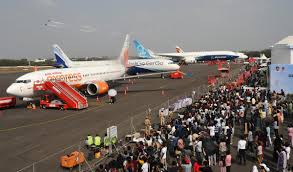
Wings India 2026, Asia’s largest civil aviation event, will be held from 28–31 January 2026 at Begumpet Airport, Hyderabad, showcasing India’s rapid rise as a global aviation hub.
- Wings India is a biennial global civil aviation exhibition and conference, combining air displays, static aircraft exhibitions, B2B/B2G meetings, and policy dialogues across the aviation ecosystem.
- Launched in The aviation airshow series began in 2008 as India Aviation, later rebranded as Wings India.
- It is organised by the Ministry of Civil Aviation, with Hyderabad designated as the permanent venue.
- Theme: Indian Aviation: Paving the Future – From Design to Deployment, Manufacturing to Maintenance, Inclusivity to Innovation and Safety to Sustainability.
- The first edition, India Aviation 2008, was held at Begumpet Airport and featured the historic landing of the Airbus A380
National Girl Child Day 2026:
National Girl Child Day is observed annually on 24th January, serving as a critical platform to reaffirm India’s commitment to eradicating gender discrimination and accelerating girls’ empowerment through holistic development. Initiated in 2008 by the Ministry of Women and Child Development (MWCD), the day serves as a platform to raise awareness about gender discrimination, promote equal opportunities, and foster an environment where girls can thrive as empowered citizens.The day highlights girls’ rights, education, health, and nutrition, addressing issues like gender bias, female foeticide, and child marriage.
MSDE–WEF India Skills Accelerator:
The Ministry of Skill Development and Entrepreneurship (MSDE), has signed a Memorandum of Understanding with the World Economic Forum (WEF) to strengthen India’s skills and Technical and Vocational Education and Training (TVET) ecosystem.Under the MoU, the partners will launch a Skills Accelerator in India to scale innovative solutions and address emerging skill gaps. It is a multistakeholder platform that brings together government, industry, academia, and global institutions to address current and emerging skill gaps in India’s workforce. The Accelerator aims to align skilling initiatives with evolving industry and global labour-market needs while scaling innovative skilling models and strengthening public–private partnerships.It will support flexible, industry-linked curricula, integrate vocational and higher education pathways, enable mutual recognition of qualifications, and promote innovative, outcome-based financing for skilling.
Sikkim Sundari:
Sikkim Sundari (Rheum nobile), a rare high-altitude Himalayan plant, has drawn attention for its unique biology and striking appearance. Rheum nobile, commonly known as padamchal, or Sikkim Sundari, is a giant herbaceous perennial plant native to the high-altitude alpine zones of the Himalayas (4,000–4,800 meters).Belongs to the Polygonaceae family and is found in North Sikkim (trekking routes near alpine passes and glacial valleys), Nepal, Bhutan, Tibet, and Myanmar. Typically grows on open alpine slopes, rock ledges, glacial valleys, and tundra-like environments. Its tall, translucent bracts form a natural glasshouse that traps heat, protects the flowers from freezing winds and intense UV radiation, and gives the plant a luminous, tower-like appearance against the Himalayan landscape.
56th Statehood Day of Himachal Pradesh:
The Prime Minister conveyed warm greetings to the people of Himachal Pradesh on their 56th Statehood Day on 25th January, 2026. Himachal Pradesh first became a Chief Commissioner’s Province on 15th April 1948, and then transitioned to a Part C State on 26th January 1950 upon the implementation of the Indian Constitution. It remained a Part-C State until 1956, when the States Reorganisation Commission (SRC) abolished the Part A, B and C classification of States.It was made a Union Territory on 1st November 1956 based on the recommendations of the SRC formed in 1953.A major territorial change occurred on 1st November 1966, when hill areas from Punjab (including Kangra, Kullu, Lahaul-Spiti) were merged into Himachal Pradesh, though it remained a Union Territory.It attained full statehood on 25th January 1971, becoming India’s 18th state, as established by the State of Himachal Pradesh Act, 1970.
Humanoid Robot ‘ASC ARJUN’:
Indian Railways has deployed a humanoid robot named ‘ASC ARJUN’ at Visakhapatnam Railway Station, marking a first-of-its-kind initiative across the railway network.ASC ARJUN is an AI-powered humanoid robot deployed to assist the Railway Protection Force (RPF) in station surveillance, crowd management and passenger assistance.Indigenously designed and developed in Visakhapatnam by a dedicated Indian Railways technical team using home-grown technology.Launched in Visakhapatnam Railway Station, Andhra Pradesh (East Coast Railway).
Urban Co-operative Banks (UCBs):
The Reserve Bank of India (RBI) has proposed reopening the licensing window for Urban Co-operative Banks (UCBs) after a gap of more than 20 years, seeking stakeholder feedback.Urban Co-operative Banks (UCBs) are member-owned, community-based banks operating mainly in urban and semi-urban areas, providing banking and credit services to small borrowers, traders, salaried employees and MSMEs.They function on co-operative principles such as mutual help, democratic control (“one member, one vote”), and local participation.The urban co-operative credit movement in India began in the late 19th century, inspired by co-operative experiments in Britain and Germany.The first urban co-operative credit society was registered in Kanchipuram (1904) under the Co-operative Credit Societies Act, 1904.
Republic Day 2026:
Republic Day 2026 marked the 77th anniversary of the Constitution of India coming into force on 26th January 1950, and was celebrated around the theme “150 Years of Vande Mataram.”The observance blended constitutional values with cultural expression and public participation, featuring 30 tableaux from States, Union Territories, and Ministries under the sub-themes Swatantrata ka Mantra – Vande Mataram and Samriddhi ka Mantra – Atmanirbhar Bharat.The celebration also saw the parade debut of the newly raised Bhairav Battalion, a specialised assault infantry unit. In addition, a military contingent from the European Union participated. It was the EU’s first participation at such an event outside Europe.
Day Zero Concept:
The concept of “Day Zero” has re-entered global focus as the United Nations warned that worsening climate change, groundwater depletion, and weak water governance could push many cities—including in India—towards acute water collapse.“Day Zero” refers to the point at which a city or region’s usable water supply falls below a critical threshold, forcing authorities to shut off regular tap water and supply water only through rationed emergency distribution points.The term gained global prominence during Cape Town’s near Day Zero crisis in 2018, when reservoir levels dropped to dangerously low levels.Since then, UN agencies have adopted the term to describe systemic urban water collapse, not just temporary droughts.



