
Today’s Current Affairs: 2nd February 2026 for UPSC IAS exams, State PSC exams, SSC CGL, State SSC, RRB, Railways, Banking Exam & IBPS, etc
Table of Contents
El Nino Phenomenon : July 2026
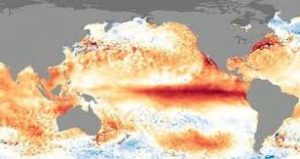
There is a chance that the El Nino phenomenon may occur after July this year, but clarity will only emerge in April, according to the director-general of the India Meteorological Department (IMD).
- In India, El Niño causes weak rainfall and more heat, while La Niña intensifies rainfall across South Asia, particularly in India’s northwest and Bangladesh during the monsoon.
- In “neutral” conditions, surface water in the Pacific Ocean is cooler in the east and warmer in the west.
- The “trade winds” tend to blow east-to-west, taking warm water from South America towards Asia.
- To replace that warm water, cold water rises from the depths — a process called upwelling.
- El Niño and La Niña are two opposing climate patterns that break normal climatic conditions.
- Scientists call these phenomena the El Niño-Southern Oscillation (ENSO) cycle.
- El Niño and La Niña can both have global impacts on weather, wildfires, ecosystems, and economies.
- Generally, El Niño occurs more frequently than La Niña.
- El Niño is a climate pattern that describes the unusual warming of surface waters in the eastern tropical Pacific Ocean.
- El Niño is the “warm phase” of the ENSO.
- During El Niño, surface temperatures in the equatorial Pacific rise, and trade winds — east-west winds that blow near the Equator — weaken.
- They falter and change direction to turn into westerlies, bringing warm water from the western Pacific towards the Americas.
- The phenomena of upwelling is reduced under El Niño.
- Warm waters also carry tropical species towards colder areas, disrupting multiple ecosystems.
- Since the Pacific covers almost one-third of the earth, changes in its temperature and subsequent alteration of wind patterns disrupt global weather patterns.
- El Niño causes dry, warm winters in the Northern U.S. and Canada and increases the risk of flooding in the U.S. gulf coast and south-eastern U.S.
- It also brings drought to Indonesia and Australia.
- La Nina the “cool phase” of ENSO, sees cooler than average sea surface temperature (SST) in the equatorial Pacific region.
- Trade winds are stronger than usual, pushing warmer water towards Asia.
- On the American west coast, upwelling increases, bringing nutrient-rich water to the surface.
- Pacific cold waters close to the Americas push jet streams — narrow bands of strong winds in the upper atmosphere — northwards.
- This leads to drier conditions in the Southern U.S., and heavy rainfall in Canada.
- La Niña has also been associated with heavy floods in Australia.
Molybdenum Disulfide:
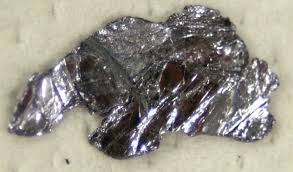
Scientists recently developed an electronic system using molybdenum disulphide only a few atoms thick; high-energy particles pass through it without causing damage.
- Molybdenum disulfide (MoS2) is an inorganic compound made up of sulfur and molybdenum.
- It exists in nature in the mineral molybdenite.
- In its bulk form, it appears as a dark, shiny solid.
- It belongs to a class of materials called ‘transition metal dichalcogenides’ (TMDCs).
- Materials in this class have the chemical formula MX₂, where M is a transition metal atom (groups 4-12 in the periodic table) and X is a chalcogen (group 16).
- Its crystals have a hexagonal layered structure that is similar to graphite.
- MoS2 has a high melting point.
- Because of its layered structure, hexagonal MoS2, like graphite, is an excellent solid lubricant.
- It can be used as surface coatings on machine parts (e.g., in the aerospace industry), in two-stroke engines (the type used for motorcycles), and in gun barrels (to reduce friction between the bullet and the barrel).
- Its stability makes it useful in high-temperature applications in which oils and greases are not practical.
- MoS2 is highly resistant to oxidation and corrosion, making it an effective lubricant for high-humidity and saltwater environments.
- In addition to its lubricating properties, MoS2 is a semiconductor.
‘CHAKRA’ – Centre of Excellence:
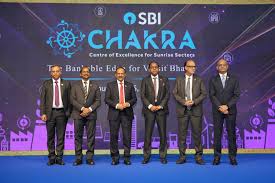
State Bank of India (SBI) recently announced the launch of ‘CHAKRA’ – Centre of Excellence (CoE) for financing sunrise sectors that are critical to India’s economic development.
- It was launched by the State Bank of India (SBI) aimed at financing sunrise sectors critical to India’s economic transformation.
- The Centre will function as a knowledge-driven platform to facilitate funding for next-generation, technology-led and sustainability-focused industries.
- CHAKRA will focus on eight sunrise sectors:
- Renewables
- Data Centres
- E-Mobility & Charging Infra
- Advanced Cell Chemistry / Battery
- Semiconductors
- Green Hydrogen and Ammonia
- Decarbonization
- The CoE will work towards enabling this investment, enhancing India’s integration into the global value chain, and accelerating progress toward the country’s sustainability and Net Zero goals.
- Additionally, the CoE will drive technology & AI innovation and play an advisory role, supporting not only the SBI’s Project Finance & Structuring team but also the broader financial ecosystem in India.
- It will engage actively with external stakeholders – with policymakers and regulatory bodies, to shape a robust manufacturing ecosystem that supports investment, innovation, and sustainability.
- The Centre will facilitate structured engagement with development finance institutions, multilateral agencies, banks, NBFCs, industry bodies, corporates, start-ups, academia, and policy think tanks.
Indian Coast Guard:
Prime Minister of India recently extended greetings to the Indian Coast Guard (ICG) on its 50th Raising Day.
- It is a maritime armed force operating under the Ministry of Defence, Government of India.
- t is a multi-mission organization, conducting round-the-year real-life operations at sea.
- It was envisioned to address emerging maritime challenges and safeguard India’s expanding marine interests.
- It was formally established by the Coast Guard Act, 1978 as an independent Armed force of India.
- The Headquarters of the ICG is located in New Delhi, and is under the command of the Director General Indian Coast Guard.
- Moto: “VAYAM RAKSHAMAH” – WE PROTECT
- Mission:
- To protect our ocean and offshore wealth, including oil, fish, and minerals.
- To assist mariners in distress and safeguard life and property at sea.
- To enforce maritime laws with respect to the sea, poaching, smuggling, and narcotics.
- To preserve the marine environment and ecology and protect rare species.
- To collect scientific data and back up the Navy during war.
Arab League:
The External affairs minister met the foreign ministers of five Arab League member states and held discussions on ways to develop ties with West Asia and the situation in the region.
- The Arab League, or League of Arab States, is a voluntary association of countries whose peoples are mainly Arabic-speaking or where Arabic is an official language.
- It is a regional organization of Arab states in the Middle East and parts of Africa.
- Its stated aims are to strengthen ties among member states, coordinate their policies and direct them towards a common good.
- It currently has 22 member states: Algeria, Bahrain, Comoros, Djibouti, Egypt, Iraq, Jordan, Kuwait, Lebanon, Libya, Mauritania, Morocco, Oman, Palestinian Authority, Qatar, Saudi Arabia, Somalia, Sudan, Syria, Tunisia, United Arab Emirates, and Yemen.
- Observer Members: Brazil, Eritrea, India, and Venezuela.
- Headquarters: Cairo, Egypt.
- The highest body of the League is the Council, which is composed of representatives of each state.
- The League makes decisions on a majority basis. The decisions are binding only on states that voted for them.
- The General Secretariat, the administrative and executive body of the League, runs the League on a daily basis.
- It is headed by a Secretary-General appointed by the Arab League Council every five years.
PM-POSHAN Scheme : In News
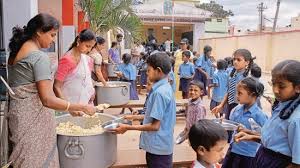
A total of 22 states and Union Territories that responded to the Education Ministry’s call for suggestions on the PM-POSHAN scheme have asked centre to hike the honorarium for PM-POSHAN scheme cooks and helpers.
- It was formerly known as the Mid-Day Meal Scheme, is a Centrally Sponsored Scheme.
- It is implemented by the Ministry of Education.
- The Scheme is implemented across the country covering all the eligible children without any discrimination of gender and social class.
- It aims to provide one hot cooked meal per school day to children studying in Balvatikas (pre-primary), and Classes 1 to 8 across government and government-aided schools.
- Objectives:
-
- Enhancing nutritional status of school-going children
- Improving enrollment, retention, and attendance in schools, especially among disadvantaged children
- Funding Pattern under POSHAN Abhiyan:
- 60:40 between Centre and States/UTs with legislature
- 90:10 for the Northeastern and Himalayan States
- 100% central funding for UTs without legislature
-
Grain ATM: Installation Of The First Set
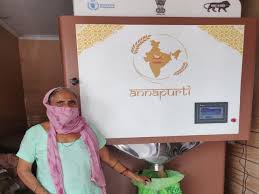
The Bihar state government approved the installation of the first set of three grain ATM machines in Patna as a pilot project.
- A grain ATM or Annapurti (meaning “provider of grain”) is an automated machine that dispenses food grains (wheat and/or rice).
- The World Food Programme (WFP) developed the technology behind the machine and has worked in collaboration with the Food Corporation of India and various state governments.
- The machines can work 24×7 like ATMs, and can be powered through solar energy.
- They also require internet connectivity to access the PDS database and the individual profile of a Below Poverty Line (BPL) cardholder.
New Ramsar Sites:

The Union Minister for Environment, Forest and Climate Change has announced the addition of two new wetlands to India’s Ramsar network, ahead of World Wetlands Day.
Patna Bird Sanctuary:
- It is located in Uttar Pradesh.
- It consists of freshwater marshes, woodlands and grasslands, and is surrounded by agricultural landscapes.
- Together, these different landscapes create a wide range of habitats and support a high level of biodiversity.
- It has been designated an Important Bird and Biodiversity Area (IBA) by Birdlife International.
Chhari-Dhand Wetland:
- It is located in Kutch, Gujarat.
- It is a seasonal saline wetland situated between the famous Banni grasslands and salt flats of Kutch.
- It is an important wintering site for waterfowl.
- It supports species such as critically endangered sociable lapwing, the vulnerable common pochard, and, notably, common cranes (Grus grus) annually.
United Nations Commission for Social Development:
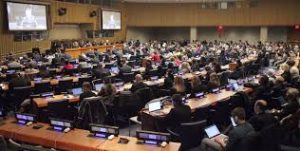
The Minister of State for Women and Child development to lead the Indian delegation at the 64th Session of the United Nations Commission for Social Development (CSocD).
- It is a functional commission of the UN Economic and Social Council (ECOSOC).
- It was formerly known as the Social Commission.
- It focuses on advancing international cooperation on social development issues, including social inclusion, equity and welfare-oriented policies.
- Its primary purpose is to advance social development and formulate policies and recommendations to address global social issues.
- It focuses on topics such as poverty eradication, social inclusion, and the promotion of equitable and sustainable development.
- Since the 1995 World Summit for Social Development in Copenhagen, the CSocD has been the key UN body in charge of the follow-up and implementation of the Copenhagen Declaration and Programme of Action.
- Membership of United Nations Commission for Social Development:
- Originally 18, membership has been increased several times, most recently in 1996, and now stands at 46.
- Members are elected by ECOSOC based on equitable geographical distribution for four-year terms.
- Meetings: The CSocD meets every year at the United Nations Headquarters in New York, typically in February.
Right to Menstrual Health as a Fundamental Right:
The Supreme Court of India, in a landmark verdict Dr. Jaya Thakur vs Government Of India, declared the right to menstrual health a fundamental right under Article 21, ordering all schools to provide free sanitary pads and gender-segregated toilets.The Supreme Court has expanded the scope of the Right to Life to include menstrual hygiene management (MHM). It ruled that menstruation is a biological reality that should not lead to structural exclusion or the loss of educational opportunities.By elevating it to a fundamental right, the Court established that providing pads and toilets is not an act of charity by the State, but a constitutional obligation to ensure dignity, privacy, and equality for girl students.
Supreme Court Judgment Outcome:
- Mandatory Free Pads: All government and private schools must provide free, bio-degradable (ASTM D-6954 standard) sanitary napkins to girls in Classes 6–12.
- Infrastructure Mandate: Schools must ensure functional, gender-segregated, and disabled-friendly toilets with consistent water supply and soap.
- MHM Corners: Establishment of Menstrual Hygiene Management Corners in schools equipped with spare uniforms, innerwear, and disposal bags for emergencies.
- Enforcement & Accountability: District Education Officers (DEOs) must conduct annual inspections and collect anonymous student feedback; non-compliant private schools face de-recognition.
Supreme Court Stays UGC Equity Regulations 2026:
The Supreme Court of India, stayed the implementation of the UGC (Promotion of Equity in Higher Education Institutions) Regulations, 2026.The court directed that the previous 2012 guidelines remain in force while expressing concerns that the new rules were vague and capable of dividing society.The controversy stems from the UGC’s attempt to replace the 14-year-old equity framework with a more stringent, enforceable set of rules.While intended to curb caste-based discrimination following high-profile tragedies (like those of Rohith Vemula and Payal Tadvi), the 2026 regulations sparked a massive backlash.
BHARAT SAMPARK – Engaging India’s Young Minds:
The Economic Survey–linked outreach initiative BHARAT SAMPARK – Engaging India’s Young Minds gained prominence after Union minster interacted with students at Indian Institute of Technology Delhi.BHARAT SAMPARK – Engaging India’s Young Minds is a government outreach and engagement initiative aimed at connecting India’s youth, especially students of premier institutions, with public institutions, policy processes, and nation-building
Nodal Ministry: Ministry of Communications.It Enables direct interaction between students and Union Ministers on technology, logistics, innovation, and public sector careers. Showcases India Post’s transition into a digitally enabled logistics and service platform, supporting e-commerce, financial inclusion, and citizen services.
National Commission for Women marks its 34th Foundation Day:
The National Commission for Women (NCW) marked its 34th Foundation Day at Bharat Mandapam, New Delhi, reaffirming its commitment to women’s rights and empowerment.The National Commission for Women (NCW) is a statutory, apex body of the Government of India tasked with protecting, promoting, and safeguarding the constitutional and legal rights of women.It acts as a watchdog, advisory body, and grievance redressal mechanism on issues affecting women.Established: 31 January 1992.Statutory basis: National Commission for Women Act, 1990 (Act No. 20 of 1990).Nature: Statutory body (not a constitutional body)
Stealth Coronal Mass Ejection (CME):
Astronomers have linked an intense geomagnetic storm that struck Earth in March 2023 to a Stealth Coronal Mass Ejection (CME)—a faint solar eruption with no obvious warning signals.Stealth Coronal Mass Ejections (CMEs) are solar eruptions that lack clear low-coronal signatures, such as solar flares, X-ray bursts, or strong radio emissions.Unlike typical CMEs, they appear optically weak or invisible in standard solar observations, yet can still travel to Earth and trigger severe geomagnetic storms.
New Consumer Price Index (CPI) series:
The Union Ministry of Statistics and Programme Implementation (MoSPI) has released details of a new Consumer Price Index (CPI) series, revising the base year from 2011–12 to 2023–24 and cutting the weight of food and beverages from ~46% to ~37%.The new CPI series is an updated framework for measuring retail inflation in India, with:
- Base year revised from 2011–12 to 2023–24
- Revised item weights based on the latest Household Consumption Expenditure Survey (HCES) 2023–24
- Expanded item coverage and improved methodology to better capture current consumption behaviour, including digital services.
- CPI is India’s headline inflation measure and the anchor for monetary policy under the inflation targeting framework.
New START nuclear treaty:
The New START nuclear treaty, the last remaining arms control agreement between the United States and Russia, is set to expire on 5 February 2026, with no successor treaty in place.The New Strategic Arms Reduction Treaty (New START) is a bilateral nuclear arms control agreement between the United States and Russia that places legally binding limits on strategic nuclear weapons.It governs weapons designed to strike an adversary’s core political, military, and industrial centres in the event of a nuclear war.
UAE central bank approves first USD-backed stable coin:
The Central Bank of the United Arab Emirates has approved the first USD-backed stable coin (USDU) under its Payment Token Services Regulation, marking a major step in regulating digital assets.A USD-backed stablecoin is a cryptocurrency pegged 1:1 to the US dollar, designed to maintain price stability while operating on blockchain networks.The newly approved USDU stablecoin is issued by Universal Digital, a crypto firm regulated by the Abu Dhabi Global Market (ADGM), making it the first foreign payment token issuer registered with the UAE central bank.



