
Today’s Current Affairs: 30th January 2026 for UPSC IAS exams, State PSC exams, SSC CGL, State SSC, RRB, Railways, Banking Exam & IBPS, etc
Table of Contents
Phosphorus:
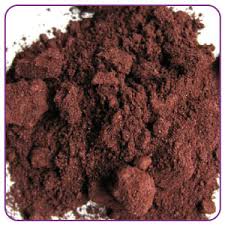
Phosphorus accumulation in US farmland is causing significant water pollution.
- It is a highly reactive nonmetallic chemical element of the nitrogen family (Group 15 [Va] of the periodic table).
- It has the symbol P and atomic number 15.
- The two main forms of phosphorus are white phosphorus and red phosphorus.
- White phosphorus is a poisonous waxy solid, and contact with skin can cause severe burns. It glows in the dark and is spontaneously flammable when exposed to air.
- Red phosphorus is an amorphous, non-toxic solid.
- White phosphorus is used in flares and incendiary devices.
- Red phosphorus is in the material stuck on the side of matchboxes, used to strike safety matches against to light them.
- By far the largest use of phosphorus compounds is for fertilisers.
- Ammonium phosphate is made from phosphate ores.
- The ores are first converted into phosphoric acids before being made into ammonium phosphate.
- Phosphorus is also important in the production of steel.
- Phosphates are ingredients in some detergents but are beginning to be phased out in some countries.
- This is because they can lead to high phosphate levels in natural water supplies, causing unwanted algae to grow.
- Phosphates are also used in the production of special glasses and fine chinawar
- The main function of phosphorus is in the formation of bones and teeth.
- It plays an important role in how the body uses carbohydrates and fats.
- It is also needed for the body to make protein for the growth, maintenance, and repair of cells and tissues.
- Phosphorus also helps the body make ATP, a molecule the body uses to store energy.
- Because phosphorus cannot naturally occur in the environment, it is typically mined from phosphates.
- Phosphates typically accumulate at the bottom of rivers and lakes, within different rocks, and in large mineral deposits around the world.
- Natural phosphates exist inside every living thing. They comprise DNA, RNA, ATP, phospholipids, and other compounds crucial for cellular function and, by extension, life.
- The main food sources are the protein food groups of meat and milk, as well as processed foods that contain sodium phosphate.
Shiveluch Volcano:
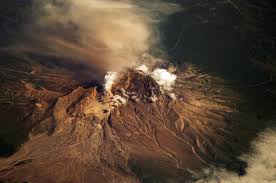
The Shiveluch volcano on Russia’s Kamchatka Peninsula erupted twice recently, sending ash plumes up to 8 kilometres above sea level.
- It is one of the largest and most active volcanoes located on Russia’s Kamchatka Peninsula, one of the most intense volcanic regions in the world.
- It is a stratovolcano—a steep-sloped volcano composed of alternating layers of solidified ash, hardened lava, and volcanic rocks.
- Kamchatka Peninsula lies in far eastern Russia, between the Sea of Okhotsk on the west and the Pacific Ocean and Bering Sea on the east.
- It is one of the world’s most concentrated areas of geothermal activity.
- The Kuril Island chain runs from the southern tip of the peninsula to a short distance from Japan’s northern Hokkaido Island.
- The volcanoes of Kamchatka have been a UNESCO World Heritage Site since 1996.
Nipah Virus : Two Case In West Bengal
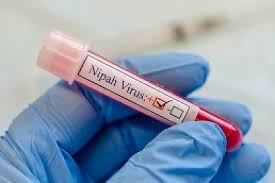
India recently confirmed two Nipah virus cases in West Bengal since December, with health authorities containing the situation amid misinformation and heightened airport screenings in parts of Asia.
- Nipah virus (NiV) is a zoonotic virus (it is transmitted from animals to humans) and can also be transmitted through contaminated food or directly between people.
- Fruit bats of the Pteropodidae family are the natural hosts of Nipah virus.
- In infected people, it causes a range of illnesses from asymptomatic (subclinical) infection to acute respiratory illness and fatal encephalitis.
- NiV infection is one of the priority diseases on the World Health Organization (WHO) R&D Blueprint because of its epidemic or pandemic potential.
- Infected people initially develop symptoms including fever, headaches, myalgia (muscle pain), vomiting and sore throat.
- There are no specifically approved treatments or vaccines available for NiV infection, either for people or animals.
- Intensive supportive care is recommended to treat severe respiratory and neurologic complications.
Rusty-Spotted Cat:
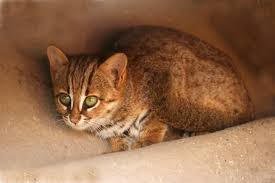
The Rusty-spotted Cat, a rare and one of the world’s smallest cats, was recently spotted in the Shergarh forest of Baran district in Rajasthan.
- Rusty-Spotted Cat is the world’s smallest and lightest known cat.
- Scientific Name: Prionailurus rubiginosus.
- The species has been recorded in dry deciduous and semi-deciduous forests in northern and central India, Western Ghats, Kachchh and Rajasthan, and peninsular India, besides Nepal and Sri Lanka.
- Conservation Status: IUCN Red List: Near Threatened.
Sea of Japan:
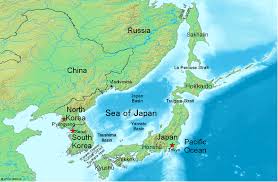
North Korea fired a ballistic missile towards the Sea of Japan.
- The Sea of Japan, or East Sea, is a marginal sea of the western Pacific Ocean.
- It is bound by Japan and Sakhalin to the east and by mainland Russia, North Korea, and South Korea to the west.
- It is connected with the East China Sea via the Tsushima and Korea straits and with the Okhotsk Sea in the north by the La Perouse and Tatar straits.
- In the east, it is connected with the Inland Sea of Japan via the Kanmon Strait and the Pacific Ocean by the Tsugaru Strait.
- Major Ports:
- Russia: Vladivostok, Sovetskaya Gavan, Nakhodka, Alexandrovsk-Sakhalinsky, and Kholmsk.
- North Korea: Hamhung, Chongjin, and Wonsan.
- Japan: Niigata, Tsuruta, and Maizuru.
JALAJ Livelihood Centres:
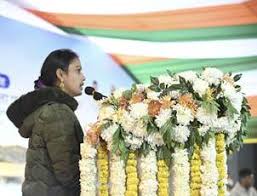
The Union Minister of Jal Shakti inaugurated 25 JALAJ Livelihood Centres.
- JALAJ Livelihood Centres is a joint initiative of the Namami Gange Mission and the Wildlife Institute of India (WII).
- It is aimed at integrating river conservation with sustainable livelihoods in the Ganga river basin.
- Jalaj is based on the circular economy model where the local people will be trained in sustainable livelihood practices and mobilized to contribute to biodiversity conservation and clean river ecosystem.
- The initiative promotes community ownership of conservation efforts while creating dignified livelihood opportunities, with a special focus on women’s participation.
- It is a concept to establish symbiotic linkages between river and people.
- The Jalaj sites are established at different locations in the Ganga basin represent the culture and communities indigenous to that area.
- These are established as holistic Centres of overall community well-being, conservation education and livelihood trainings.
- It will have facilities for dissemination of the information on aquatic biodiversity conservation, livelihood training and sale centres for the products developed by livelihood trainees.
Deuteron:
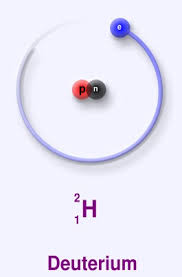
A new study out of the ALICE collaboration at CERN’s Large Hadron Collider (LHC) has explained how deuterons survive high-energy particle collisions.
- A deuteron is a stable isotope of hydrogen with a nucleus containing one proton and one neutron.
- It is denoted by the symbol “²H” or “D”.
- It is found in small amounts in natural water and in the atmosphere of Jupiter and Saturn.
- It is used in the production of heavy water, which is used as a moderator in nuclear reactors.
- It is used in the production of deuterium, which is used as a fuel in fusion reactors.
- It is used in the production of tritium, which is used in nuclear weapons.
Scabies:
According to the World Health Organization, scabies is one of the commonest dermatological conditions, accounting for a substantial proportion of skin disease in developing countries.
- It is a contagious parasitic skin infestation that occurs in all parts of the world.
- Scabies is caused by a tiny bug, the Sarcoptes scabiei mite that burrows under the skin, causing an itchy rash.
- It is more common in hot, tropical countries like India.
- Scabies spreads easily in crowded conditions and generally through close, direct contact with an infected person, and sometimes through shared clothing and bedding.
- The most common symptom is an intense itchy rash that may become worse at night.
- Treatment of scabies is usually with topical creams and oral medication.
- The World Health Organization classified scabies as a neglected tropical disease due to its significant burden on impoverished and vulnerable populations.
Indo-Pacific Leopard Shark:
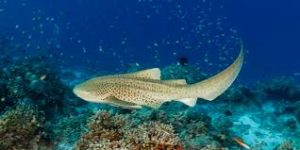
Conservationists have initiated Thailand’s first rewilding effort with the release of a young Indo-Pacific leopard shark into the waters off Maiton Island
- Indo-Pacific leopard sharks are also called zebra sharks.
- Their names come from their distinctive patterning, which changes over time.
- These are slow-swimming reef sharks whose bodies have either a spotted or striped pattern depending on their age.
- Habitat: Found in tropical waters of the Indo-Pacific usually in the coastal waters.
- Conservation Status:IUCN: Endangered
River Delta Subsidence:
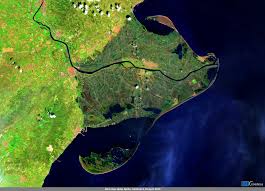
A new global study published in Nature warns that several of India’s major river deltas are sinking at alarming rates placing millions at increasing risk of flooding and displacement.
Key Findings of the Study:
- The research analysed 40 major river deltas across 29 countries, covering areas with over 236 million inhabitants exposed to near-term flood risk.
- In India, the study identifies Ganga-Brahmaputra, Brahmani, Mahanadi, Godavari, Cauvery and Kabani deltas as experiencing significant land subsidence.
- Land subsidence exceeds the global mean sea-level rise (~4 mm/year), with over half of deltas subsiding faster than 3 mm/year during 2014–2023. 35% of total delta area globally is sinking, and in 38 of 40 deltas, more than half the area shows subsidence.
- Brahmani (77%) and Mahanadi (69%) are among the fastest-sinking deltas, with large areas subsiding at over 5 mm per year.
- Nearly 50% of deltas, including the Ganga-Brahmaputra, Brahmani, and Mahanadi, are subsiding across over 90% of their area.
- 7 major deltas, Ganga-Brahmaputra, Nile, Mekong, Yangtze, Amazon, Irrawaddy and Mississippi, account for 57% of global subsiding delta area (~265,000 sq km).
- Major delta cities such as Kolkata, Alexandria, Bangkok, Dhaka, and Shanghai are sinking at rates equal to or higher than surrounding regions, increasing risks of urban flooding.
Sampoornata Abhiyan 2.0:
NITI Aayog CEO Shri B.V.R Subrahmanyam launched ‘Sampoornata Abhiyan 2.0’—a 3-month intensive campaign to achieve 100% saturation of critical development indicators in India’s most underserved regions.
- Sampoornata Abhiyan 2.0 is a mission-mode, time-bound campaign designed to accelerate progress in 112 Aspirational Districts and 513 Aspirational Blocks.
- It builds upon the historic success of the first phase launched in 2024, focusing on saturating (reaching 100% coverage) specific social sector goals.
- Start Date: January 28, 2026, End Date: April 14, 2026 (Dr. B.R. Ambedkar Jayanti)
- Duration: 3 Months
- Aim & Objectives:
- Achieving full coverage of essential government services in health, nutrition, and education.
- Driving performance through monthly tracking and healthy competition among districts and blocks.
- Ensuring that the benefits of schemes like ICDS and TB Mukt Bharat reach the most remote households.
- The campaign focuses on a specific set of metrics divided between the District and Block levels:
- 6 KPIs for Aspirational Blocks
- Supplementary Nutrition: Regular intake by children (6 months to 6 years) under ICDS.
- Measurement Efficiency: Real-time tracking of children’s growth at Anganwadi Centres.
- Anganwadi Sanitation: Percentage of centers with functional toilets.
- Clean Drinking Water: Availability of drinking water in operational Anganwadis.
- Girls’ Education: Schools with adequate and functional girls’ toilet facilities.
- Animal Welfare: Percentage of bovine animals vaccinated against Foot and Mouth Disease (FMD).
- 5 KPIs for Aspirational Districts
- Newborn Health: Proportion of live babies weighed at birth.
- TB Notification: TB case notification rates (both Public and Private sectors).
- Health Outreach: Regular conduct of Village/Urban Health Sanitation & Nutrition Days (VHSND/UHSND).
- School Infrastructure: Schools equipped with functional girls’ toilets.
- Livestock Security: Universal animal vaccination coverage.
- 6 KPIs for Aspirational Blocks
International Data Privacy Day:
The Tamil Nadu Governor walked out of the State Assembly during his customary address. Simultaneously, the Kerala Governor omitted specific paragraphs. These incidents have reignited the debate on the discretionary powers of the Governor and the sanctity of Article 176.Article 176: Mandates that the Governor shall address the Legislative Assembly, or both Houses in bicameral States, at the commencement of the first session each year to inform the Legislature of the causes of its summons.This address is a constitutional duty and functions as a policy statement of the elected State government, not as a personal expression of the Governor.Article 175: Empowers the Governor to address either House or both Houses of the State Legislature and to send messages, particularly in relation to Bills.Article 163: Establishes that the Governor shall act on the aid and advice of the Council of Ministers except in matters where the Constitution explicitly provides discretion.
Equity Infusion into SIDBI:
The Union Cabinet has approved a Rs 5,000 crore equity infusion (over 3 years) into the Small Industries Development Bank of India (SIDBI) to enhance credit flow to Micro, Small, and Medium Enterprises (MSMEs).The infusion is projected to increase the number of MSME beneficiaries from 76.26 lakh (FY25) to 102 lakh by FY28, adding approximately 25.74 lakh new MSMEs.India’s ~6.9 crore MSMEs employ 30.16 crore people, averaging 4.37 persons per unit, with new beneficiaries expected to generate ~1.12 crore additional jobs by FY 2027–28.Additional capital infusion will help SIDBI maintain a strong capital to risk-weighted assets ratio (CRAR), as risk-weighted assets are likely to rise with expanded MSME lending.
World bank’s A Breath of Change Report:
The World Bank’s 2025 report, A Breath of Change, highlights that nearly one billion people in the Indo-Gangetic Plains and Himalayan Foothills (IGP-HF) breathe the world’s most polluted air, necessitating urgent transboundary cooperation.“A Breath of Change” is a strategic solutions book that moves beyond diagnosing air pollution to providing a practical, multi-sectoral roadmap for the IGP-HF airshed, covering 13 jurisdictions across Bangladesh, Bhutan, India, Nepal, and Pakistan.It frames solutions around the “4Is” framework: Information, Incentives, Institutions, and Infrastructure.
WaSH Warriors:
The Ministry of Jal Shakti honoured WaSH Warriors from across India at a special Samvad Samaroh in New Delhi in January 2026, recognising grassroots leadership in water and sanitation.WaSH Warriors are grassroots champions—individuals from rural communities—who lead efforts in Water, Sanitation and Hygiene (WaSH), especially under the Jal Jeevan Mission and allied programmes.Aim is to promote safe drinking water, sanitation, and hygiene through community ownership (Jan Bhagidari),to ensure inclusive, equitable, and sustainable WaSH outcomes, particularly for women and vulnerable groups.
Solid Waste Management (SWM) Rules, 2026:
The Ministry of Environment, Forest and Climate Change notified the Solid Waste Management (SWM) Rules, 2026, which will supersede the 2016 rules.These regulations introduce a technology-driven, Polluter Pays framework and will come into full effect from April 1, 2026.The SWM Rules, 2026, are a comprehensive regulatory framework notified under the Environment (Protection) Act, 1986.They aim to integrate the principles of Circular Economy and Extended Producer Responsibility (EPR) into India’s waste management infrastructure to ensure zero-waste to landfills.
New Aadhaar App:
The Government of India has launched the New Aadhaar App in January 2026, dedicated to the nation.This next-generation app, introduces a Privacy-First approach, allowing users to update mobile numbers from home.dhaar App is a secure, next-generation mobile platform designed by the Unique Identification Authority of India (UIDAI).It is significantly different from the old mAadhaar app, focusing on consent-based control and data minimization in line with the DPDP Act.Developed by: This next-generation app, developed by UIDAI.
Sunabeda Wildlife Sanctuary:
The Sunabeda Wildlife Sanctuary in Odisha was officially declared ‘Maoist-free’ in January 2026, leading to a major breakthrough in wildlife monitoring.Recent camera trap data reveals a flourishing leopard population (estimated over 70), marking its transition from a conflict zone to a potential Leopard Haven.Sunabeda Wildlife Sanctuary is a sprawling biodiversity hotspot and a proposed Tiger Reserve located in the western reaches of Odisha.Established in 1983, it is part of the Deccan Peninsula biogeographic zone and serves as a vital ecological bridge in Central India.



