
Today’s Current Affairs: 31st March 2026 for UPSC IAS exams, State PSC exams, SSC CGL, State SSC, RRB, Railways, Banking Exam & IBPS, etc
Table of Contents
Solar Radio Burst:

Researchers from the Indian Institute of Astrophysics (IIA) have made a significant breakthrough in understanding a long-standing solar mystery regarding solar radio burst.
- Solar Radio Burst is defined as an intense solar radio emission associated with solar flares.
- These are observed in radio wavelengths most frequently during solar transients, such as coronal mass ejections (CMEs) and flares.
- SRBs are direct signatures of accelerated electrons in the solar atmosphere.
- These are observed across a wide range of wavelengths, from millimetres to kilometres, corresponding to frequencies from the GHz to the kHz range.
- Observations at short wavelengths correspond to distances close to the solar surface, while those at long wavelengths correspond to the large distances from the Sun.
- Types: Considering the morphological characteristics, five main categories of solar radio bursts can be distinguished: Type I, Type II, Type III, Type IV, and Type V.
- These solar transients have a direct impact on the near-Earth atmosphere.
- It can interfere with Global Navigation Satellite System (GNSS) signals by reducing signal-to-noise ratio and causing loss of lock.
Bab el-Mandeb Strait: In News
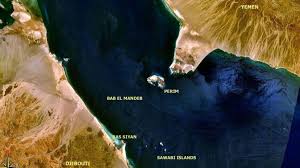
As the conflict between the United States, Israel and Iran deepens, attention is now shifting southwards to another narrow stretch of water, the Bab el-Mandeb Strait.
- It is also known as the “Gate of Tears” in Arabic, referring to the large number of shipwrecks that have occurred in this region.
- It lies at the southern tip of the Red Sea, between Yemen and the Horn of Africa. It connects the Red Sea to the Gulf of Aden and further to the Indian Ocean.
- It also separates Arabia, in the northeast, from the African continent, in the southwest.
- It further acts as a link between the Indian Ocean and the Mediterranean Sea via the Red Sea and the Suez Canal.
- The strait is divided into two channels by the Yemeni island of Perim, with the eastern channel being called Alexander’s Strait, while the western-lying Dact-el-Mayun Channel.
- It is a crucial link in the trade route connecting the Mediterranean to Asia.
- Ships transporting goods between Europe and Asia, as well as Middle Eastern oil bound for Europe and North America, pass through it when using Egypt’s Suez Canal.
Shyamji Krishna Varma:

The Prime Minister of India paid homage to freedom fighter Shyamji Krishna Varma on his death anniversary.
- Shyamji Krishna Varma was born on 4th October, 1857 in Mandvi town of Kachchh district of Gujarat.
- He was an Indian freedom fighter, lawyer and journalist.
- He became the first President of Bombay Arya Samaj and was an admirer of Dayanand Saraswati.
- Contributions
- Indian Home Rule Society (IHRS):
- It was founded by Shyamji Krishna Varma, with support from Bhikaji Cama, Dadabhai Naoroji and S.R. Rana.
- It was an Indian organisation founded in London in 1905 that sought to promote the cause of self-rule in British India.
- India House:
- It was founded by him in London.
- It was a student residence that existed between 1905 and 1910 which was opened to promote nationalist views among Indian students in Britain.
- Indian Sociologist: It was started by him in London. The monthly Indian Sociologist became an outlet for nationalist ideas
- Indian Home Rule Society (IHRS):
E-commerce Moratorium:
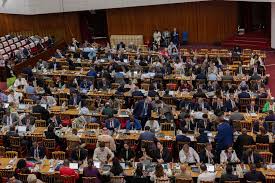
More than 200 global business organisations signed a joint statement calling for an extension of the World Trade Organization E-commerce Moratorium.
- It is a global agreement among World Trade Organization members.
- It bans customs duties being applied to electronic transmissions such as digital downloads and streaming.
- It was first adopted in 1998 at the WTO’s Second Ministerial Conference in Geneva as part of a declaration to encourage early digital trade growth.
- It covers cross-border transmissions such as software downloads, e-books, music and movie streaming and video games.
- It was originally intended to be temporary, the tariff moratorium has been renewed roughly every two years at each WTO ministerial conference.
- It was most recently extended for two years at the 13th conference in 2024.
- It is set to expire this month at the 14th WTO ministerial conference in Yaounde, Cameroon
- India argues that:
- It may lead to significant revenue loss.
- It restricts policy space in the digital economy.
- Developing countries lack the technological capacity to benefit equally.
Indonesia : Social Media Restrictions

Indonesia began implementing social media restrictions for children under 16.
- It is an archipelagic nation located off the Southeast Asian mainland in the Pacific and Indian Oceans.
- It is bordered by Malaysia, Papua New Guinea, and Timor-Leste.
- It is surrounded by the Indian Ocean in the south; by the Pacific Ocean (South China Sea) in the north.
- Capital City: Jakarta
- The major Indonesian islands are characterized by densely forested volcanic mountains in the interior that slope downward to coastal plains covered by thick alluvial swamps
- The climate of Indonesia is almost everywhere equatorial, ie hot, humid and rainy throughout the year
- Main Rivers are Kapuas, Barito, Musi, and Digul.
- Highest Peak: Puncak Jaya 16,502 ft (5,030 m)
- It is dominated by natural gas and crude petroleum. Other major mineral exports include coal, nickel, bauxite, gold, tin, and copper.
IONS Maritime Exercise (IMEX):

The Indian Navy hosted Indian Ocean Naval Symposium (IONS) Maritime Exercise (IMEX) TTX 2026 at the Maritime Warfare Centre, Southern Naval Command, Kochi.
- It focused on non-traditional maritime security threats and complex operational scenarios.
- It aimed to improve coordination among participating navies through better information sharing, streamlined decision-making processes and validation of maritime security frameworks.
- Participating Countries: Bangladesh, France, Indonesia, Kenya, Maldives, Mauritius, Myanmar, Seychelles, Singapore, Sri Lanka, Tanzania, and Timor-Leste
- It reaffirmed the role of IONS as a key platform for regional maritime cooperation and is expected to contribute to strengthening security mechanisms and ensuring stability across the Indian Ocean Region.
Indian Ocean Naval Symposium:
- It is a voluntary initiative that seeks to increase maritime cooperation among navies of the littoral states of the Indian Ocean Region.
- It promotes maritime cooperation, mutual understanding, and collaboration on issues such as maritime security and humanitarian assistance and disaster relief (HADR).
- It was conceived by the Indian Navy in 2008.
Balirajgarh site:
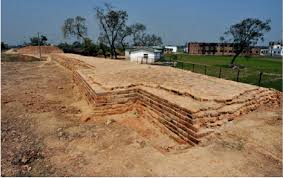
The Archaeological Survey of India (ASI) has begun excavation at Bihar’s historic Balirajgarh site.
- Balirajgarh site is located in the Madhubani district of Bihar.
- It holds great mythological and historical significance, with local folklore identifying it as the capital of the legendary King Bali.
- It is believed that this site served as a major administrative hub of the ancient Videha Kingdom.
- In 1938 Archeological Survey of India declared the site of national importance under the Ancient Monuments Preservation Act of 1904.
- It has been excavated in five phases from 1962 to 2014.
- During excavation antiquities of five phases of cultural periods, namely Northern Black soil, Sunga, Kushan,Gupta and later Pala period were discovered.
Archaeological Survey of India:
- It is a premier organisation for archaeological research and protection of the tangible heritage of the nation.
- It was established in 1861 by Sir Alexander Cunningham, with its headquarters in New Delhi.
- After independence, it was established as a statutory body under the Ancient Monuments and Archaeological Sites and Remains Act, 1958 (AMASR Act).
- It maintains ancient monuments, archaeological sites, and remains of national importance.
- It regulates all archaeological activities in the country as per the provisions of the AMASR Act.
- It also regulates the Antiquities and Art Treasure Act, 1972.
- Nodal Ministry: Ministry of Culture, Government of India
Extracellular RNA:
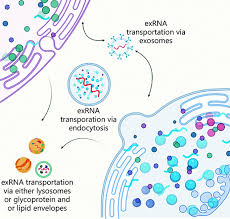
Scientists reported that extracellular RNA (exRNA) from bacteria can persist in disinfected drinking water.
- The exRNA is RNA that exists outside cells.
- It is found in body fluids such as blood, saliva, urine, and cerebrospinal fluid.
- To survive outside the cell, exRNA travels in its own molecular containers that prevent enzymes from breaking it down before it reaches its destination.
- These are heterogenous populations including small (e.g., miRNA) and long non-coding RNAs and coding RNAs (e.g., mRNA).
- It has been found to be part of a sophisticated long-distance communication system, allowing cells to deliver instructions to other cells, influencing behavior and gene activation.
- It helps coordinate responses in the immune system, tissue repair, and development.
- It enables diagnosis of diseases like cancer and heart disease through RNA pattern testing in body fluids
- It has potential for early detection and monitoring
Jungle cat:
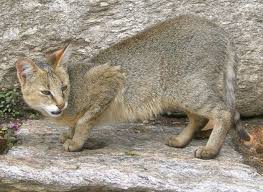
Recent studies revealed that Jungle cat’s populations are shrinking and suggested they need habitats outside protected areas.
- The Jungle cat (Felis chaus) is a medium-sized cat.
- Its name comes from the Caucasus Mountains, the place this cat was first discovered.
- Other names: Swamp Cat, Reed Cat
- It is long-legged and is the largest of the extant Felis species. Females tend to be smaller and lighter than males.
- It has a white muzzle, yellow irises, large ears ending in black tufts, and the sometimes faint striping on its long legs.
- These are found across diverse habitats, from grasslands and wetlands to deserts.
- They’re present across Asia, with large populations in India and Nepal.
- It is also found in Egypt, and throughout southwest Asia, southeast Asia, and Central Asia, extending its range as far as the south of China.
- It avoids dense forests and heavily-modified landscapes, preferring agro-pastoral and open habitats.
- It is not nocturnal and does much of its hunting in the early mornings and late afternoons.
- It is carnivorous creatures and mostly prey on rodents, lizards, frogs, snakes and livestock.
- Conservation Status
- IUCN Red List: Least concern’.
- Wildlife (Protection) Act 1972: Schedule II
Superior Kerosene Oil (SKO):
The Ministry of Petroleum and Natural Gas has issued a gazette notification allowing the distribution of Superior Kerosene Oil (SKO) under the Public Distribution System (PDS) across 21 States and UTs, including Delhi and Gujarat.Superior Kerosene Oil (SKO) is a highly refined middle distillate fraction of crude oil. It is a specific grade of kerosene that has undergone extra processing to remove impurities (like sulphur and aromatics), ensuring it meets stringent quality standards for domestic and industrial use.In India, it is primarily distributed through the Public Distribution System (PDS) to provide energy security to low-income households.The primary aim of providing SKO is to ensure a reliable and affordable fuel source for cooking and lighting in rural and semi-urban areas.
Morung Education System:
In the 132nd edition of Mann Ki Baat, Prime Minister highlighted the Naga community’s Morung education system.He praised its blend of traditional cultural learning with modern subjects like mathematics and science.Morung is a traditional community-based indigenous education system of the Naga tribes.It functioned as a youth dormitory and learning space, where elders transmitted history, customs, warfare skills, ethics, folklore, and community values to younger generations.Aim is to preserve tribal heritage, oral traditions, and community values,to ensure holistic development by integrating traditional wisdom with modern education
Government Cuts SAED:
The Union government has restructured fuel taxation by reducing the Special Additional Excise Duty (SAED) on petrol and diesel while simultaneously increasing export duties on diesel and Aviation Turbine Fuel (ATF) to manage the fiscal health of Oil Marketing Companies (OMCs).The cut is designed to reduce the “under-recoveries” (losses) absorbed by public sector OMCs (IOCL, BPCL, and HPCL) who are selling fuel below the international cost of supply.Rising prices are driven by the West Asian conflict that pushed Brent crude futures above USD 111 per barrel.Excise duty is an indirect tax levied on the manufacture or production of goods within a country. Unlike GST (which is charged at every stage of the supply chain), excise duty is specifically triggered by the act of making the product.While the manufacturer is legally obligated to pay the excise duty upon production, the tax is typically passed on to the consumer through a higher retail price. This process effectively shifts the economic burden of the tax from the producer to the final buyer.
OPU–IVF–ET Technology:
Scientists at the Indian Veterinary Research Institute (IVRI), Bareilly, have achieved a significant breakthrough by producing five healthy Sahiwal calves from a single donor cow using advanced OPU–IVF–ET technology.OPU–IVF–ET stands for Ovum Pick-Up, In Vitro Fertilization, and Embryo Transfer. It is an advanced assisted reproductive technology (ART) for livestock. It involves recovering eggs directly from a donor’s ovaries, fertilizing them in a lab, and then implanting the resulting high-quality embryos into surrogate mothers.Organization Involved: Indian Veterinary Research Institute (IVRI), Bareilly. Aim: The technology aims to accelerate genetic improvement of indigenous livestock.
Ghorad (Great Indian Bustard):
After a decade-long hiatus, a Great Indian Bustard (Ghorad) chick has been born in Gujarat’s Kutch district through a pioneering inter-state conservation effort.The Great Indian Bustard (Ardeotis nigriceps), locally known as Ghorad in Gujarat and Maharashtra, is one of the heaviest flying birds in the world. It is considered the flagship species of India’s grassland ecosystem and is often called the Guardian of the Grasslands. IUCN Status: Critically Endangered.Estimated to be fewer than 150 individuals globally, with the majority residing in Rajasthan’s Desert National Park.Listed in Schedule I of the Indian Wildlife (Protection) Act, 1972, providing it the highest level of legal protection.



