
Today’s Current Affairs: 4th February 2026 for UPSC IAS exams, State PSC exams, SSC CGL, State SSC, RRB, Railways, Banking Exam & IBPS, etc
Table of Contents
Tender Years Doctrine:

The Delhi High Court recently held that the welfare and best interests of minor children must prevail over the application of the Tender Years Doctrine.
- It is a prominent common law principle in family law and custody jurisprudence.
- It presumes that children of “tender age” (generally under 5 years) should remain with their mother unless she is proven unfit.
- The doctrine rests on several presumptions:
- Biological Bond: Infants have a natural attachment to mothers.
- Nurturing Instinct: Mothers are presumed better caregivers for young children.
- Developmental Needs: Early childhood requires maternal involvement.
- Emotional Security: Mother’s presence provides psychological stability.
- Recent Delhi High Court Ruling:
- It held that the best interests and welfare of minor children are paramount and must override the application of the Tender Years Doctrine.
- The court also held that custody disputes must be resolved based on a comprehensive evaluation of the child’s overall well-being rather than stereotypical assumptions regarding parental roles.
Dholpur–Karauli Tiger Reserve:
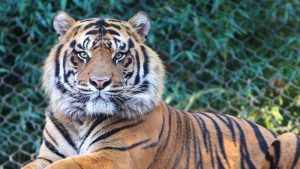
The Minister of State (Independent Charge) for Forest, Environment & Climate Change in the Government of Rajasthan recently said in the Assembly that residents of villages in Dholpur–Karauli Tiger Reserve (DTR) will not be displaced without their consent.
- It is located in the Rajasthan.
- It shares ecological continuity with the Ranthambhore Tiger Reserve to the west and lies close to the Chambal River on the east, which serves as a natural boundary and water source for the region.
- The vegetation primarily consists of dry deciduous forests.
- Some of the common tree species found here include:Dhok (Anogeissus pendula) – the dominant tree species across much of the reserve,Khair (Acacia catechu),Tendu (Diospyros melanoxylon),Babool (Acacia nilotica)
- The reserve hosts tiger, leopard, sloth bear, Indian wolf, striped hyena, herbivores such as spotted deer, sambar, nilgai, chinkara, and wild boar, and small mammals including Indian hare, porcupine and jungle cat.
Solid Fuel Ducted Ramjet (SFDR) Technology:
The Defence Research & Development Organisation (DRDO) has carried out successful demonstration of Solid Fuel Ducted Ramjet (SFDR) technology from the Integrated Test Range (ITR), Chandipur off the coast of Odisha.
- It is an advanced air-breathing propulsion system using a solid fuel gas generator.
- It uses solid Fuel instead of liquid fuel that makes the system simpler, safer, and easier to store and transport.
- Unlike conventional rockets, SFDR does not carry an oxidiser, making it lighter and more efficient.
- SFDR provides sustained thrust over a longer duration and allows thrust modulation during flight.
- The SFDR system allows missiles to fly faster, farther and remain manoeuvrable throughout their flight, unlike conventional rocket-powered missiles.
- It has been developed by Defence Research and Development Laboratory (DRDL), Hyderabad in collaboration with other DRDO laboratories.
- It significantly enhances long-range air-to-air missiles by providing sustained propulsion throughout much of the missile’s flight.
- It places India into an elite league of nations possessing this technology that enables developing long-range air-to-air missiles to give tactical edge over the adversaries.
- Ramjet is a propulsion system that relies on the missile’s high forward speed to compress incoming air, eliminating the need for a compressor and enabling efficient high-speed flight.
Pakhal Wildlife Sanctuary:
Scientists from the Botanical Survey of India (BSI) have identified a new species of flowering plant in Pakhal Wildlife Sanctuary and named it as Dicliptera pakhalica.
- Pakhal Wildlife Sanctuary is located in Warangal district of Telangana.
- It has mixed deciduous forests.
- The Pakhal Wildlife Sanctuary houses the Pakhal Lake which was excavated on the orders of King Ganapati Deva of the Kakatiya empire in 1213 AD.
- It consists of bamboo, teak, and diverse flora, including Terminalia, Pterocarpus, and Mohua.
- Leopard, wild boar, panthers, hyenas, sloth bear, chital, mountain gazelle, blackbuck etc.
- Dicliptera pakhalica is a flowering plant species, that belongs to the Acanthaceae family.
- The plant was found growing along stream banks and rocky areas.
- It flowers between November and January, with fruiting extending from December to March.
- The species occurs in association with other native plants such as Tarenna asiatica, Eranthemum purpurascens, Ruellia prostrata and Mallotus philippensis, among others.
PM VIKAS Scheme:

The Union Minister of Minority Affairs informed the Rajya Sabha about the Pradhan Mantri Virasat Ka Samvardhan (PM VIKAS) scheme.
- It is a Central Sector Scheme.
- It focuses on socio-economic empowerment of minority communities.
- It aims to ensure inclusive growth for not only the minority and artisan communities but also for the youth and women.
- Nodal Ministry: Ministry of Minority Affairs
- Objectives of PM VIKAS Scheme:
- Skill Development: To build capacity of minority communities through targeted interventions by providing skill training support in need-based courses and ensuring employment.
- Cultural Preservation: To preserve and promote the cultural heritage including traditional arts and craft forms by propagation of literature/ documents/ manuscripts and showcasing their unique ICH.
- Educational Support: To provide formal education and certification up to 8th, 10th, and 12th through open schooling to school dropouts from minority communities.
- Leadership and Entrepreneurship: To empower women from minority communities and instil confidence amongst them by providing leadership and entrepreneurship support.
- The National Minorities Development & Finance Corporation (NMDFC) has been given the responsibility of providing finance to the communities.
School dropouts are given formal education as well as certification. - The Export Promotion Council for Handicrafts provides market linkages in order to provide livelihood opportunities for beneficiaries.
- The ‘Hub and Spoke’ model is used to establish Vishwakarma Villages to support the artisans and their crafts.
Myoglobin : New Study

Researchers have developed a flexible, low-cost biosensor capable of detecting myoglobin which is associated with the early stages of a heart attack.
- It is found predominantly in striated muscle tissue, namely skeletal muscle and cardiac muscle.
- Specifically, it is in the cytoplasm of cardiac myocytes and the sarcoplasm of oxidative skeletal muscle fibers.
- It encodes a single polypeptide chain with one oxygen binding site.
- It is one of the members of the globin superfamily, which also includes hemoglobin. It often gets compared structurally and functionally to hemoglobin.
- Hemoglobin has four polypeptide chains and four oxygen binding sites.
- Composition: It is made of amino acids, iron and other molecules that work together to hold onto oxygen.
- Functions of Myoglobin:
- Transports Oxygen: It transports oxygen from bloodstream to your muscles when they need it to convert stored energy into movements.
- It serves as a sensitive indicator of cellular damage when detected in urine or plasma.
- It serves as a buffer of intracellular oxygen concentrations and as an oxygen reservoir in muscle.
- It is necessary for the decomposition of bioactive nitric oxide to nitrate. The removal of nitric oxide enhances mitochondrial respiration.
- Remove reactive oxygen species: It can do this by interacting with fatty acids.
Fuego Volcano: Explosive Eruption
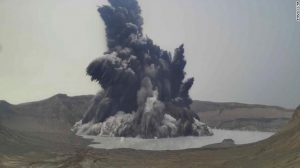
Guatemala’s Volcan de Fuego, one of Central America’s most persistently active volcanoes, produced a striking explosive eruption recently.
- Volcan de Fuego, which translates to “Volcano of Fire” in Spanish, is an active volcano located in Guatemala.
- It is a relatively young basaltic stratovolcano.
- It forms part of the Central American Volcanic Arc, a chain of volcanoes stretching from Guatemala to Panama.
- Guatemala lies on the Pacific “Ring of Fire” and experiences frequent seismic and volcanic activity.
- Stratovolcano is a tall, steep, and cone-shaped type of volcano.
- Unlike flat shield volcanoes, they have higher peaks.
- They are typically found above subduction zones, and they are often part of large volcanically active regions, such as the Ring of Fire that frames much of the Pacific Ocean.
Exercise Khanjar-XIII:
The 13th edition of the joint military Exercise KHANJAR between India and Kyrgyzstan begins recently at Misamari in Sonitpur district of Assam.It is the 13th edition of the annual India-Kyrgyzstan Joint Special Forces Exercise.The exercise has been held alternatively in India and the Kyrgyz Republic every year.Khanjar-XIII Location: Misamari in the Sonitpur district of Assam.The exercise aims to enhance interoperability between the Special Forces of both nations.The 2026 exercise will focus on joint operations in urban warfare and counter-terrorism scenarios under the United Nations mandate.
Project Himank:
A rare sighting of the elusive snow leopard recorded by Project Himank in the High Himalayas recently, has drawn attention to successful conservation efforts alongside infrastructure development in the region.It is a project of the Border Roads Organization (BRO) in the Ladakh.Objective is Development of road communication in the Ladakh region.The entire area of responsibility of the project falls in high altitude with challenging working conditions and a limited working season.The Project ensures the maintenance of communication and access to strategic areas close to the Line of Actual Control (LAC) with China.
Punatsangchhu-II Hydroelectric Project:In News
India and Bhutan recently deliberated on the commercial optimization of power output from the Punatsangchhu-II Hydroelectric Project (1020 MW) and the early commissioning of the Punatsangchhu-I Hydroelectric Project (1200 MW).It is a run-of-the-river hydroelectric power project. It is located in Bhutan on the right bank of the Punatsangchhu River.The project is being developed under an Inter-Government Agreement (IGA) between the Royal Government of Bhutan and the Government of India.It is funded by the Government of India (GoI).



