
Today’s Current Affairs: 5th December 2025 for UPSC IAS exams, State PSC exams, SSC CGL, State SSC, RRB, Railways, Banking Exam & IBPS, etc
Table of Contents
RBI Integrated Ombudsman Scheme:
According to the RBI’s Annual Report, the complaints registered under the Reserve Bank of India’s Integrated Ombudsman Scheme (RB-IOS) were up by 13.55 per cent in FY25.
- It was launched in 2021.
- Objective is to provide customers of Regulated Entities (REs) a speedy, cost-effective and expeditious alternate grievance redress mechanism.
- It integrated the erstwhile three Ombudsman schemes of RBI namely:
- The Banking Ombudsman Scheme, 2006, the Ombudsman Scheme for Non-Banking Financial Companies, 2018 and the Ombudsman Scheme for Digital Transactions, 2019.
- It adopted ‘One Nation One Ombudsman’ approach by making the RBI Ombudsman mechanism jurisdiction neutral.
- Features of RBI Integrated Ombudsman Scheme
- It defines ‘deficiency in service’ as the ground for filing a complaint, with a specified list of exclusions.
- It covers all commercial banks, Non-Banking Financial Companies (NBFCs), RRBs, Payment System Participants, most Primary (Urban) Cooperative Banks with a deposit size of ₹50 crore and Credit Information Companies.
- A Centralised Receipt and Processing Centre has been set up at RBI, Chandigarh, for receipt and initial processing of physical and email complaints in any language.
- Under this scheme, compensation up to Rupees 20 lakh, in addition to, up to 1 lakh for the loss of the complainant’s time, expenses incurred and for harassment/mental anguish suffered by the complainant can be awarded.
Green Tug Transition Programme: In News
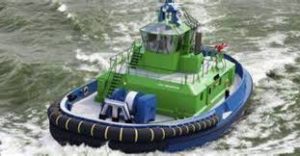
The Union Minister for Ports, Shipping and Waterways (MoPSW) virtually flagged off the steel-cutting ceremony for India’s first all-electric green tug for Deendayal Port Authority (DPA), being developed under the Green Tug Transition Programme (GTTP).
- It aims to transition India’s harbour tug fleet from conventional diesel-powered vessels to greener alternatives.
- It was launched by the Ministry of Ports, Shipping and Waterways in in 2024
- Under this programme, 50 green tugs will be inducted by 2030.
- In Phase 1, two green tugs each will be stationed at DPA, Paradip Port Authority, Jawaharlal Nehru Port Authority and V.O. Chidambaranar Port
- One tug each will be deployed at the remaining eight major ports.
- This is achieved through a phased approach spanning five phases from 2024 to 2040.
- Nodal Agency: National Centre of Excellence in Green Port & Shipping (NCoEGPS) will act as the nodal entity for this programme.
- ‘Green Hybrid Tugs’ will be powered by Green Hybrid Propulsion systems. These Green hybrid tugs will subsequently adopt non-fossil fuel solutions like (Methanol, Ammonia, and Hydrogen).
Alaknanda Galaxy: study

Researchers at National Centre for Radio Astrophysics – Tata Institute of Fundamental Research (NCRA–TIFR), Pune, have discovered a spiral galaxy and named it as named Alaknanda.
- Alaknanda Galaxy is located about 12 billion light years away and has textbook spiral structure.
- It is named after a Himalayan river Alaknanda and the Hindi word for the Milky Way.
- It is a powerhouse of stellar birth.
- It looks remarkably similar to our own Milky Way.
- It was discovered through NASA’s James Webb Space Telescope.
- Spiral galaxies are twisted collections of stars and gas.
- In a spiral galaxy, the stars, gas, and dust are gathered in spiral arms that spread outward from the galaxy’s center.
Indian Statistical Institute (ISI) Act, 1959:
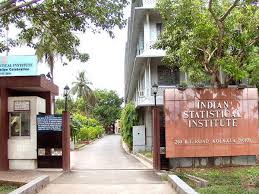
More than 1,500 academics have expressed grave concerns and held demonstrations in Kolkata to protest a Central government plan to repeal the Indian Statistical Institute (ISI) Act, 1959.
- The Indian Statistical Institute was founded by Professor P.C. Mahalanobis in Calcutta in 1931.
- The ISI, established earlier as a society, plays a crucial role in statistical research, education, and training in India.
- The ISI Act, 1959 primarily applies to the ISI, its governing body, employees, and students.
- The Act aimed to recognize the ISI’s contributions to national development and provide it with the necessary autonomy and support to carry out its functions effectively.
- The ISA Act 1959 declared the ISI an institution of national importance.
- This Act falls under the Ministry of Statistics and Programme Implementation.
- Salient Features of ISI Act, 1959:
- Empowers the ISI to grant degrees and diplomas in statistics, mathematics, quantitative economics, computer science, and related subjects.
- Provides for grants, loans, and other financial assistance from the Central Government.
Mandates the audit of the Institute’s accounts by qualified auditors. - Requires prior approval from the Central Government for certain actions by the Institute, such as altering its objectives, amending its memorandum, or disposing of certain properties.
- Provides for the constitution of committees by the Central Government to prepare the Institute’s program of work and review its activities.
- Empowers the Central Government to issue directions to the Institute.
- Allows the Central Government to assume control of the Institute under certain circumstances.
Caller Name Presentation:

The Department of Telecommunications (DoT) will mandate telecom operators to show the KYC-registered name of all incoming callers using Indian phone numbers, a feature known as Caller Name Presentation (CNAP).
- CNAP is a technology that enables mobile users to see an incoming caller’s name.
- The system retrieves the caller’s name from a telecom operator’s database and displays it on the recipient’s phone.
- Unlike third-party apps, CNAP will rely on the official Customer Application Form (CAF) details provided during SIM registration.
- Each telecom provider will maintain a database of subscriber names linked to mobile numbers.
- When a call is made, the system will fetch the caller’s registered name and display it on the recipient’s screen.
- Initially, CNAP will work only within the same network, meaning an Airtel-to-Airtel call will display the caller’s name, but cross-operator name display, such as Jio-to-Vodafone, will require regulatory approval for data sharing between telecom providers.
- Telecom Regulatory Authority of India (TRAI) recommended the adoption of CNAP for all smartphones, urging telecom operators to introduce the feature.
- The aim is to reduce customer harassment from unknown or spam callers.
Seva Teerth:
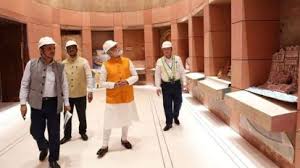
The Union Home Minister referred to the upcoming new Prime Minister’s Office (PMO) in the Central Vista complex as “Seva Teerth”, calling it a landmark in India’s administrative evolution.
- The term signifies a shift towards citizen-centric governance rooted in service, aligning with the broader ethos of Seva (service) in Indian political philosophy.
- The term ‘Teerth’, traditionally denoting pilgrimage sites, reinforces the Gandhian ideal of public office as a form of service, not privilege.
Reinforces the view of administrative spaces as citizen-centric, not aloof bureaucratic enclaves. - Echoes the principle of “Minimum Government, Maximum Governance”. Projects the PMO as a space of accountability, transparency, and citizen responsiveness.
- Central Vista Project: The revamped PMO is part of the broader Central Vista redevelopment project.
- Inaugurated in 1931, Central Vista comprised Rashtrapati Bhavan, North and South Blocks, new Parliament House, the National Archives, India Gate, and the civic gardens along kartavya path.
- Central Vista redevelopment aims to enhance administrative efficiency, sustainability, and public spaces in New Delhi.
Dudhwa Tiger Reserve:
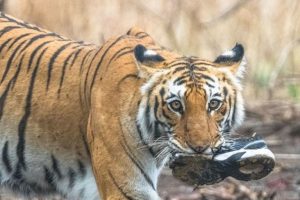
A Rainbow Water Snake was recently spotted for the first time in Uttar Pradesh, with photographic evidence collected from the buffer area of Dudhwa Tiger Reserve.
- It is located on the Indo-Nepal border in Uttar Pradesh.
- It includes the Dudhwa National Park and two nearby sanctuaries, viz. Kishanpur and Katerniaghat, besides forest areas of North Kheri, South Kheri, and Shahjahanpur forest divisions in its buffer.
- It is a typical Tarai-Bhabar habitat of the upper Gangetic plains biogeographic province.
- The Sharda River flows by the Kishanpur WL Sanctuary, the Geruwa River flows through the Katerniaghat WL Sanctuary, and the Suheli and Mohana streams flow in the Dudhwa National Park, all of which are tributaries of the mighty Ghagra River.
- The vegetation is of the Moist Deciduous type, with sal forests.
- The main mammals spotted here are Tiger, leopard, Swamp deer, Rhinoceros, chital, hog deer, barking deer, Sambhar, wild boar, and Ratel.
- It hosts various species of birds like: Florican and black-necked storks.
- Rainbow Water Snake is a slightly venomous, fish-eating water snake.
- Scientific Name: Enhydris enhydris
- It mainly inhabits freshwater habitats.
- Conservation Status: IUCN Red List: Least Concern
Ebola Outbreak:
An Ebola outbreak in the Democratic Republic of Congo is now over, Congolese health officials and the U.N.’s World Health Organization said recently, after the country went 42 consecutive days without recording a new case.
- Ebola is a severe and often deadly disease caused by a group of viruses known as orthoebolaviruses (formally ebolavirus).
- Orthoebolaviruses were discovered in the Democratic Republic of the Congo and are found primarily in sub-Saharan Africa.
- It is known as a hemorrhagic fever virus because it can cause problems with the clotting system of the body and lead to internal bleeding as blood leaks from small blood vessels.
- It gets its name from the Ebola River, which is near one of the villages in the Democratic Republic of Congo where the disease first appeared.
- Ebola can occur in humans and other primates (gorillas, monkeys, and chimpanzees).
- The virus is transmitted to people from wild animals (such as fruit bats, porcupines, and non-human primates) and then spreads in the human population through direct contact with the blood, secretions, organs, or other bodily fluids of infected people and with surfaces and materials (e.g., bedding, clothing) contaminated with these fluids.
- Ebola cannot be transmitted by air.
- Symptoms includes fever, diarrhea, vomiting, bleeding, and often, death.
- There is no known cure for Ebola. Experimental treatments have been used, but none have been fully tested to see if they work well and are safe.
- For example, there are two FDA-approved monoclonal antibody treatments for the Ebola Zaire strain (Inmazeb and Ebanga).
- Current therapy consists of maintenance of fluid and electrolyte balance and the administration of blood and plasma to control bleeding
India’s Climate Ambitions:
India is preparing to submit its next round of climate commitments (NDCs) for the 2035 horizon even as experts call for a clearer, economy-wide transition plan.
- Nationally Determined Contributions (NDCs) are each country’s self-defined climate commitments under the Paris Agreement, updated every five years (Article 4).They include targets for emissions reduction, renewable energy, adaptation, climate finance and technology deployment.
India’s Current NDC Targets:
- Reduce Emissions Intensity by 45% (2005–2030): India commits to lowering CO₂ emissions per unit of GDP by almost half, signalling a shift toward cleaner production while sustaining economic growth.
- 50% Non-Fossil Installed Capacity by 2030: India aims to ensure half of its total power capacity comes from solar, wind, hydro, nuclear and biomass, contingent on affordable global finance and technology transfer.
- Additional 2.5–3 Bt CO₂ Carbon Sink: Through large-scale afforestation and agroforestry, India plans to expand forest/tree cover to naturally sequester emissions by 2030.
- Promote LIFE Movement: India pledges to mainstream sustainable lifestyles through behavioural change campaigns encouraging low-carbon consumption and resource-efficient habits.
- Strengthen Adaptation in Vulnerable Sectors: Investments will be scaled in agriculture, water, coastal systems, Himalayan ecology, health and disaster management to reduce climate risks.
- Mobilise Climate Finance & Technology: India seeks both domestic funds and international support to expand renewable energy, adaptation systems, and indigenous research in climate technologies.
Solar Flare: In News

A huge sunspot that is more than 10 times bigger than Earth recently appeared on the surface of the sun, and scientists say it could lead to several strong solar flares in the coming weeks.
- Solar Flare is an intense burst of radiation coming from the release of magnetic energy associated with sunspots.
- A flare appears as a sudden, intense brightening of a region on the Sun, lasting several minutes to hours.
- Flares occur when intense magnetic fields on the Sun become too tangled.
- Like a rubber band that snaps when it is twisted too far, the tangled magnetic fields release energy when they snap.
- The energy emitted by a solar flare is more than a million times greater than the energy from a volcanic eruption on Earth.
- Although solar flares can be visible in white light, they are often more readily noticed via their bright X-ray and ultraviolet emissions.
- Coronal mass ejections often accompany solar flares, though scientists are still trying to determine exactly how the two phenomena are related.
- Effect of Solar Flare on Earth:
- The intense radiation emitted during a solar flare can affect satellite communications, disrupt radio signals, and even pose a risk to astronauts in space.
- Additionally, the increased solar radiation can lead to geomagnetic storms, which may impact power grids and cause auroras (northern and southern lights) at lower latitudes.
- Sunspots are areas that appear dark on the surface of the Sun.
- They appear dark because they are cooler than other parts of the Sun’s surface.
Parliament disruptions:
The 2025 Winter Session opened amid protests over electoral roll revision and a sharply curtailed sitting schedule, again stalling both Houses in the first days.Parliament is the supreme legislative body of India, consisting of the President, Rajya Sabha and Lok Sabha (Article 79). It performs four core functions: lawmaking, budget approval, executive accountability, and voicing people’s concerns.
Tensor Processing Unit (TPU):
Google’s release of the Ironwood TPU comes at a pivotal moment as the global AI boom accelerates demand for faster, specialised compute. A Tensor Processing Unit (TPU) is a custom application-specific integrated circuit (ASIC) designed by Google specifically to accelerate machine learning—especially deep neural networks and matrix-heavy computations.TPUs were first deployed internally by Google in 2015 to run TensorFlow workloads and were released for external use via Google Cloud in 2018.TPUs use large matrix-multiply units (MXUs) capable of performing tens of thousands of multiply-accumulate operations per clock cycle. They process data in matrix form, breaking inputs into vectors, running them in parallel, and feeding results back to AI models.High-bandwidth memory and optimized interconnects enable extremely fast data movement for training large neural networks.
Indian Maritime Doctrine 2025:
The Chief of the Naval Staff released the Indian Maritime Doctrine 2025 on India Navy Day, aligning it with India’s long-term strategic vision and maritime priorities. The Indian Maritime Doctrine 2025 is the Navy’s apex guidance document that defines how India plans, prepares, and operates across the entire maritime conflict spectrum. It outlines the Navy’s strategic principles, roles, force employment, capability development, and its approach to emerging maritime challenges .First issued in 2004 and updated in 2009 and 2015, the 2025 edition reflects major changes in India’s maritime environment and strategic outlook over the past decade 2025 Edition: Formally recognises “no-war, no-peace” as a distinct operational category, acknowledging the grey zone between peace and conflict as a critical space where contemporary maritime competition increasingly occurs. The doctrine prioritises jointness and interoperability among the three services to support theaterisation. Integrates lessons on grey-zone, hybrid, and irregular warfare, and multi-domain threats. The doctrine emphasises emerging domains like space, cyber, and cognitive warfare. Promotes adoption of uncrewed systems, autonomous platforms, and advanced technologies.
8th Economic Census (EC) in 2027:
India will carry out its 8th Economic Census (EC) in 2027, following the two-phase Population Census (2026–27). Economic Census (EC): It is the complete count of all establishments (i.e. units engaged in production and/or distribution of goods and services not for the purpose of sole consumption) located within the geographical boundaries of the country. The first EC was held in 1977. EC is conducted nationwide by the Ministry of Statistics & Programme Implementation (MOSPI), National Statistics Office in collaboration with the Directorates of Economics and Statistics (DES) of all States and Union Territories. Data from 8th EC will be used to create the Statistical Business Register (SBR), a unified database mapping all enterprises across states. The SBR will help track whether enterprises are active or closed, improving the accuracy of national economic statistics.The Census is the largest source of primary data at the village, town and ward level, offering detailed information on housing, amenities, demography, religion, SC/ST, language, literacy, education, economic activity, migration, and fertility.It is conducted under the legal framework of the Census Act, 1948 and the Census Rules, 1990. The Census organisation is headed by the Registrar General of India and Census Commissioner of India.The 2027 Census will be India’s 16th decennial Census since the first nationwide Census in 1872.
Samagra Shiksha:
The Union government has clarified that States will receive pending Samagra Shiksha funds only after meeting all scheme conditions, including utilisation certificates, audit reports, progress details, State share contributions, and compliance with National Education Policy (NEP) 2020. Samagra Shiksha Announced in the 2018–19 Union Budget, it is a unified programme covering pre-school to Class 12. It aims to improve school effectiveness by ensuring universal access, equal opportunities, and better learning outcomes. It merges the earlier Schemes of Sarva Shiksha Abhiyan (SSA), Rashtriya Madhyamik Shiksha Abhiyan (RMSA) and Teacher Education (TE) into a single integrated framework for holistic school education. It is implemented as a Centrally Sponsored Scheme by the Department of School Education and Literacy (DoSEL). Funding follows a 90:10 pattern for Northeastern and Himalayan States, 60:40 for other States with legislatures, and 100% central funding for UTs without legislatures. The scheme focuses on improving quality education and learning outcomes, reducing social and gender gaps, and ensuring equity and inclusion across all levels of schooling. It aims to maintain minimum standards, promote vocational education, and support states in implementing the Right of Children to Free and Compulsory Education (RTE) Act, 2009. Samagra Shiksha treats the school as a continuum from pre-school to higher secondary. It aligns with Sustainable Development Goal (SDG) 4.1 (free, equitable, quality primary and secondary education) and SDG 4.5 (removing gender disparities and ensuring access for vulnerable groups).



