
Today’s Current Affairs: 7th March 2026 for UPSC IAS exams, State PSC exams, SSC CGL, State SSC, RRB, Railways, Banking Exam & IBPS, etc
Table of Contents
7th National Report (NR7) On Biological Diversity:

India has officially submitted its 7th National Report (NR7) to the Convention on Biological Diversity (CBD), marking the first comprehensive assessment since the 2022 Kunming-Montreal Global Biodiversity Framework.
- The NR7 is a mandatory periodic submission by member nations of the Convention on Biological Diversity (CBD).
- It serves as a national report card to track progress toward the 23 global biodiversity targets set for 2030. In India, this report was coordinated by the MoEFCC and the National Biodiversity Authority, utilizing 142 national indicators to assess ecosystem health, species recovery, and policy alignment.
- According to the report, India has shown robust progress in planning and specific ecological recoveries:
- Policy Alignment: India has successfully updated its National Biodiversity Strategy and Action Plan (NBSAP) to fully align with global 2030 goals.
- Land-Use Planning (NBT1): This target is officially on track, with forest and tree cover reaching 25.17% of India’s total geographical area.
- Ecosystem Restoration (NBT2): Also on track, India has restored or put under restoration 24.1 million hectares of land, nearing its 26-million-hectare Bonn Challenge pledge.
- Flagship Species Recovery: The tiger population has reached 3,167, alongside increases in Asiatic lions and stable one-horned rhino populations.
- Carbon Sequestration: Forest carbon stock increased by 81.5 million tonnes, showcasing the role of biodiversity in climate mitigation.
- Wetland Management: National-level inventories of wetlands are complete, providing a baseline for the conservation of Ramsar sites and local water bodies.
- Digital Governance: The launch of PARIVESH 2.0 has streamlined environmental clearances, integrating biodiversity data into infrastructure planning.
NITI Aayog–UNICEF Statement of Intent on Nutrition and Health:
NITI Aayog and UNICEF India have signed a Statement of Intent (SoI) to strengthen nutrition and health outcomes in India’s aspirational regions.
- The Statement of Intent (SoI) is a collaborative framework between NITI Aayog and UNICEF India to support strategic interventions aimed at improving nutrition and health outcomes in underserved districts and blocks.
- Aim is to mprove maternal and child nutrition indicators in aspirational districts and blocks and to Strengthen implementation systems for health and nutrition programmes at the grassroots level.
- Key Features:
- CSR Mobilisation through I4N Platform: UNICEF’s IMPAct4Nutrition (I4N) platform will help channel CSR investments from businesses and industry bodies into nutrition initiatives.
- Strengthening Anganwadi Infrastructure: Focus on improving facilities and service delivery through the Integrated Child Development Services system.
- Capacity Building of Frontline Workers: Training and support for Anganwadi workers and other field-level health staff to improve programme delivery.
- Community Engagement and Nutrition Literacy: Promoting awareness campaigns to improve utilisation of nutrition and health services.
- Knowledge Sharing and Best Practices: Creation of platforms to identify and scale successful models of nutrition and health interventions across aspirational regions.
Raisina Dialogue 2026:
Prime Minister of India inaugurated the Raisina Dialogue 2026 in New Delhi on 5 March 2026, with Finland’s President Alexander Stubb delivering the keynote address.
- The Raisina Dialogue is India’s premier multilateral conference on geopolitics and geo-economics, focusing on global governance, strategic affairs, and emerging international challenges.
- It serves as a platform for dialogue among world leaders, policymakers, military commanders, academics, and industry experts to discuss global strategic issues.
- Established in in 2016.
- Hosted annually in New Delhi by the Observer Research Foundation (ORF) in partnership with the Ministry of External Affairs (MEA), Government of India.
- The first Raisina Dialogue was held 1–3 March 2016 with the theme Asia: Regional and Global Connectivity.
- 11th edition held from 5–7 March 2026 in New Delhi.
- Around 2700 participants from 110 countries attended in person.
- Participation includes ministers, former heads of state, parliamentarians, military leaders, think tanks, technology leaders, and youth delegates.
- Discussions conducted through panels, closed-door sessions, and multilateral strategic dialogues.
- Proceedings are broadcast globally through digital platforms, reaching millions of viewers.
- Theme of Raisina Dialogue 2026: Saṁskāra – Assertion, Accommodation, Advancement.
- Six Thematic Pillars (2026):
- Contested Frontiers: Power, Polarity and Periphery
- Repairing the Commons: New Groups, New Guardians, New Avenues
- White Whale: The Pursuit of Agenda 2030
- The Eleventh Hour: Climate, Conflict and the Cost of Delay
- Tomorrowland: Towards a Tech-topia
- Trade in the Time of Tariffs: Recovery, Resilience, Reinvention
- Aim of the Dialogue:
- To shape global conversations on geopolitics, geo-economics and international cooperation.
- To strengthen India’s role as a convening power in global diplomacy and strategic policy discussions.
Government Launch Mascots for Census 2027:
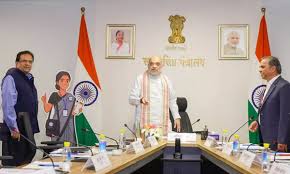
Union Home Minister unveiled the mascots Pragati and Vikas and soft-launched digital tools for Census 2027 in New Delhi.
- The Government of India has launched two official mascots for Census 2027 to increase public awareness and participation in the census exercise.
- These mascots will act as communication ambassadors, helping disseminate information about the census process across diverse communities.
- Mascot Names:
- Pragati – Female enumerator mascot
- Vikas – Male enumerator masco
- Theme of the Mascots:
- The mascots symbolize equal participation of women and men in nation-building.
- They represent the spirit of inclusive development and collective participation in achieving the goal of a Viksit Bharat by 2047.
- Key Features of Census 2027:
- World’s Largest Census Exercise: Census 2027 will be the largest population enumeration exercise globally, involving more than 30 lakh enumerators, supervisors and officials.
- First Fully Digital Census in India: Data collection will be conducted using secure mobile applications and digital platforms, replacing traditional paper-based enumeration.
- Self-Enumeration Facility Introduced: Citizens can submit household information online through a secure portal in 16 languages before the door-to-door survey.
- Two-Phase Census Process:
- Phase 1 – Houselisting and Housing Census (HLO): Data on housing conditions and amenities.
- Phase 2 – Population Enumeration (PE): Collection of demographic, social and economic details.
- Four Digital Platforms Launched:
- Houselisting Block Creator (HLBC): Web-based mapping tool using satellite imagery.
- HLO Mobile Application: Offline mobile app for enumerators to collect field data.
- Self-Enumeration Portal: Secure platform for citizens to submit census data online.
- Census Management and Monitoring System (CMMS): Real-time monitoring dashboard for administrators.
- The Population Enumeration phase will include caste-related questions, making it a significant data exercise for social policy planning.
Gravity Bomb:
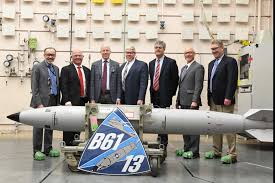
U.S. Defense Secretary announced a tactical shift to using 500, 1,000, and 2,000-pound precision gravity bombs against Iran, signaling that Iranian air defenses have been sufficiently degraded to allow direct aerial bombardment.
- A gravity bomb, often referred to as a free-fall or dumb bomb, is an unpowered munition that does not possess an internal propulsion system or engine.
- Unlike a missile, which flies under its own power, a gravity bomb relies entirely on the laws of physics and the momentum of the aircraft to reach its target.
- A gravity bomb typically consists of three main components:
- The Warhead (Body): A streamlined steel casing filled with high explosives (such as Tritonal or Composition H6). The current U.S. campaign utilizes the Mark 80 series (Mk 82, Mk 83, and Mk 84).
- The Fuse: A device (mechanical or electronic) located in the nose or tail that triggers the explosion upon impact or at a specific altitude.
- The Guidance Kit (JDAM): A modern add-on tail section that includes GPS receivers and steerable tail fins to turn a dumb bomb into a smart precision weapon.
Very Low Earth Orbit (VLEO) Satellite Systems:
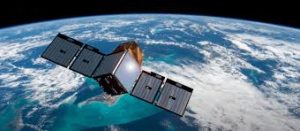
State-run defense major Bharat Electronics Limited (BEL) and space-tech startup Bellatrix Aerospace have signed an MoU to jointly develop Very Low Earth Orbit (VLEO) satellite systems.
- The collaboration is a strategic partnership to design, develop, and manufacture next-generation satellite platforms and payloads specifically for the Very Low Earth Orbit (VLEO) It combines high-end defense electronics manufacturing with innovative satellite propulsion technologies.
- Organizations Involved: Bharat Electronics Limited (BEL) and Bellatrix Aerospace.
- Aim:
- To build indigenous capabilities in VLEO satellite platforms.
- To develop integrated satellite solutions for both strategic (defense) and civilian applications.
- To combine PSU manufacturing depth with the agility of a deep-tech startup to accelerate space innovation.
- VLEO refers to altitudes between 150 km and 450 km, which is significantly lower than traditional Low Earth Orbit (LEO) (500 km – 2,000 km).
- At these altitudes, satellites encounter a thin atmosphere that creates significant aerodynamic drag.
- To prevent the satellite from falling back to Earth, Bellatrix’s specialized electric/green propulsion systems provide constant station-keeping thrust to counter the drag.
- Being closer to the surface allows for better optical resolution and faster signal transmission back to ground stations.
The Essential Commodities Act, 1955 (ECA):

In response to an energy crisis triggered by recent geopolitical strikes on Iran, the Centre invoked the Essential Commodities Act (ECA), 1955.
- The Essential Commodities Act is a central legislation enacted to control the production, supply, and distribution of specific commodities deemed essential for the general public.
- It empowers the government to prevent hoarding and black marketing while ensuring equitable distribution at fair prices.
- Aim is to ensure the steady availability of essential goods,To prevent artificial scarcity and regulate the prices at which these commodities are bought or sold,To secure commodities for the defense of India or the efficient conduct of military operations.
- Key Features
- Declaration of Commodities: Essential commodity means any item specified in the Schedule of the Act.
- Amending the Schedule: The Central Government can add or remove commodities from the Schedule in consultation with State Governments.
- Stock Limits: The government can fix the quantity of a commodity any person or trader can hold in stock.
- Price Regulation: The Act allows for the fixation of prices, particularly for items like foodgrains, edible oils, and sugar.
- Penalties: Contravention of orders under Section 3 can lead to imprisonment ranging from three months to seven years, plus fines.
- Confiscation: Authorities have the power to seize and confiscate commodities, along with the vehicles or animals used for their transport, if the Act is violated.
Chile Eliminate Leprosy:
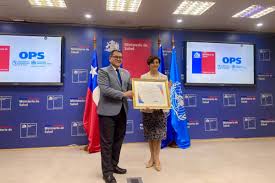
The World Health Organization (WHO) and the Pan American Health Organization (PAHO) officially verified Chile as the first country in the Americas—and the second globally—to have eliminated leprosy.
- Leprosy is a chronic infectious disease caused by the slow-growing bacterium Mycobacterium leprae.
- It primarily affects the skin, the peripheral nerves, mucosal surfaces of the upper respiratory tract, and the eyes. If left untreated, it can cause progressive and permanent damage to the skin, nerves, limbs, and eyes.
- Leprosy is one of the oldest recorded diseases in human history, mentioned in ancient civilizations’ texts from China, Egypt, and India.
- It was historically recorded in Chile at the end of the 19th century, specifically on Rapa Nui (Easter Island). It remained localized there through strict isolation and treatment until the late 1990s.
- It is transmitted via droplets from the nose and mouth during close and frequent contact with untreated cases. It is not highly infectious.
- The disease has a very long incubation period, averaging 5 years, though symptoms can take up to 20 years to appear.
- Pale or reddish skin patches with loss of sensation, painless ulcers on the soles of feet, and muscle weakness or tingling in the hands and feet.
- Treatment:
- Multi-Drug Therapy (MDT): Since the 1980s, WHO has provided MDT (a combination of rifampicin, dapsone, and clofazimine) for free globally.
- Curability: Leprosy is 100% curable. Early treatment prevents most disabilities associated with the disease.
Air Pollution in India : Report
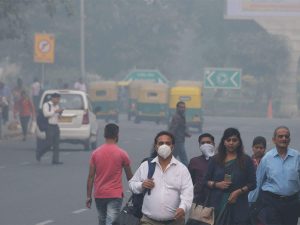
An analysis by the Centre for Research on Energy and Clean Air (CREA), a Finland-based independent research group, found that 204 out of 238 Indian cities failed to meet national air quality standards during winter 2025–26.
- The analysis used data from the Central Pollution Control Board (CPCB) collected through Continuous Ambient Air Quality Monitoring Stations (CAAQMS), and the findings highlight the severity of winter air pollution across India.
Key Findings of the CREA Analysis:
- During the winter period, 204 out of 238 cities recorded average PM2.5 levels exceeding the Indian National Ambient Air Quality Standard (NAAQS) of 40 µg/m³.
- Not a single city out of the 238 analyzed managed to meet the World Health Organization’s (WHO) safe PM2.5 standard of 5 µg/m³.
- Ghaziabad emerged as the most polluted city in the country with an average PM2.5 concentration of 172 µg/m³. It was closely followed by Noida (166 µg/m³) and Delhi (163 µg/m³).
- The majority of India’s economic hubs struggled with toxic air. Delhi (163 µg/m³), Kolkata (78 µg/m³), Mumbai (48 µg/m³), and Chennai (44 µg/m³) all recorded winter PM2.5 concentrations above the national standard.
- Chamarajanagar in Karnataka was recorded as the cleanest city in India during the winter season, boasting an average PM2.5 concentration of just 19 µg/m³.
- Bengaluru was the only megacity to keep its air quality slightly below the NAAQS limit, recording an average PM2.5 concentration of 39 µg/m³.
- Southern and Central/Northeastern India performed the best.
- The ten cleanest cities included eight from Karnataka, one from Madhya Pradesh, and one from Meghalaya.
Balen Shah Set to Become Nepal’s Prime Minister After Election:
Nepal has to see a dramatic political shift after the 2026 parliamentary elections. After the elections results coming with the Rastriya Swatantra Party (RSP) emerging as the dominant political force. The party’s leader Balendra Balen Shah. Who is the a 35 year old rapper turned politician. And he was also the former Kathmandu mayor is set to become Nepal’s next Prime Minister. The election came months after the 2025 Gen Z protests which led to the fall of the then K P Sharma Oli government.
India Forex Reserves Reach Record $728.5 Billion At End February 2026:
India’s forex reserves reached a record level of $728.49 billion in the week end February 27, 2026. This data are according to released by the Reserve Bank of India (RBI). India’s foreign exchange reserves increased by $4.88 billion during the week. The main reason for mainly due to a sharp rise in gold reserves and foreign currency assets. This surpasses the previous record of $726 billion recorded in the week ending February 13 2026.Total reserves increased by $4.88 billion during the week.Foreign currency assets (FCA) rose by $561 million.FCA represents the largest portion of India forex reserves and includes currencies such as us dollar, euro, pound sterling and Japanese yen.The rise in foreign currency assets shows changes in global currency valuations against the US dollar.Strong reserve levels help maintain financial stability and currency strength.
Lakshya Sen Reaches Semi Finals at All England Open 2026:
India’s badminton star Lakshya Sen delivered a extra ordinary performance at the All England Open Badminton Championships 2026. He defeating world No. 6 Li Shi Feng of China in the quarter finals. The Lakshya Sen All England Open 2026 victory came in straight games 21-13, 21-16 at the Utilita Arena in Birmingham. The match lasted around nearly an hour. And he showcased Lakshya Sen’s superior court control and attacking strategy. After this victory Lakshya Sen advanced to the semi final of the torunament and hope for Indian win.
Government e Marketplace (GeM) Celebrates 7 Years of SWAYATT Initiative:
The Government e Marketplace (GeM) celebrated the completion of seven years of the SWAYATT initiative. This is a flagship programme designed to promote the inclusive public procurement across India. SWAYATT Initiative was Launched on 19 February in the year 2019. The SWAYATT initiative on GeM focuses on helping startups, women entrepreneurs, youth, SHGs and micro enterprises. This also gave access government procurement markets. Over the years participation has increased significantly.The programme was introduced to democratize government procurement and expand opportunities for small enterprises.This initiative focuses on solving three major challenges faced by emerging businesses. The challenges include the limited market access, limited financial opportunities and also lack of value addition in procurement systems.
L&T Finance Launches “Spoorthi” Programme for Women Entrepreneurs:
L&T Finance has introduced the new initiative called the “Spoorthi programme” to support women entrepreneurs in India. This scheme will offers flexible loans with extended repayment tenors of up to 25 years for purchasing property or taking Loan Against Property (LAP) for business expansion and working capital needs. Through this programme the NBFC aims to improve access to credit for women-led businesses and strengthen financial inclusion. The Spoorthi programme by L&T Finance will be launched across major metropolitan cities including Mumbai, Delhi NCR Bengaluru and Ahmedabad.The Spoorthi programme for women entrepreneurs is designed to provide easier access to finance and more flexible borrowing conditions compared to traditional business loans.
Andhra Pradesh Announces ₹25,000 Incentive for Second and Third Child:
The Andhra Pradesh government has announced a financial incentive of ₹25,000 for couples who have a second or third child. This idea came up to as part of a new population boost policy introduced by Chief Minister N. Chandrababu Naidu. This initiative aims to address the state’s declining fertility rate and rising ageing population concerns. Speaking in the Legislative Assembly of the State CM Naidu said the scheme is designed to encourage families to have more children and maintain demographic balance. This Andhra Pradesh population policy reflects a shift from earlier family planning measures toward population growth management.
India to Build First Riverine Lighthouses on Brahmaputra River:
Union Minister Sarbananda Sonowal laid the foundation stones for the country’s first riverine lighthouses on the Brahmaputra River. The project will establish four modern Riverine Lighthouses along National Waterway 2 (NW-2) at Pandu, Bogibeel, Silghat and Biswanath Ghat. These solar powered navigation structures aim to improve 24*7 safe navigation, cargo movement and tourism in Northeast India. This Project will Built with an investment of ₹84 crore. The project marks a new phase in developing India’s Brahmaputra navigation infrastructure.The Riverine Lighthouses on Brahmaputra represent the first lighthouse infrastructure ever installed on an inland waterway in India.The project is being implemented by the Directorate General of Lighthouses and Lightships (DGLL) in collaboration with the Inland Waterways Authority of India (IWAI) under the Ministry of Ports, Shipping and Waterways.These Brahmaputra Riverine Lighthouses will guide vessels during night navigation and difficult weather conditions.Each lighthouse will be 20 metres tall powered by solar energy and capable of guiding vessels up to 14 nautical miles geographically and 8-10 nautical miles through luminous range.
Indonesia Social Media Ban for Children Under 16 Announced:
Indonesia has announced the major social media ban for children under 16. This path marking a significant step toward protecting minors from harmful online content. The government confirmed that the regulation will prevent children below sixteen from creating accounts on major digital platforms. This Indonesia social media ban was announced by Communication and Digital Affairs Minister of Indonesia’s Meutya Hafid. And he stated that children face serious threats online including cyberbullying, pornography exposure, online fraud and social media addiction.
Lt Gen Pushpendra Pal Singh has been appointed as the next GOC-in-C of the Indian Army’s Western Command:
The Indian Army has appointed the Lt Gen Pushpendra Pal Singh as the next General Officer Commanding-in-Chief (GOC-in-C) of Western Command. He will assume the position at Chandimandir headquarters at the end of the month following the retirement of Lt Gen M K Katiyar. He is Currently serving as the Vice Chief of Army Staff (VCOAS) since July 31 2025. Lt Gen Pushpendra Pal Singh brings extensive operational and leadership experience.



