
Today’s Current Affairs: 7th February 2026 for UPSC IAS exams, State PSC exams, SSC CGL, State SSC, RRB, Railways, Banking Exam & IBPS, etc
Table of Contents
Sharda River Corridor:
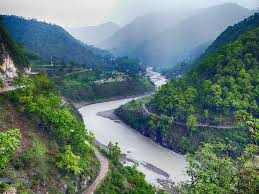
The Uttarakhand Chief Minister recently laid the foundation stone of the Sharda river corridor at Tanakpur in Champawat district.
- It is a transboundary river of northern India and western Nepal.
- It rises as the Kali River in far northern Uttarakhand in the Great Himalayas on the eastern slopes of the Nanda Devi massif.
- Its major tributaries are the Dhauliganga, Goriganga, and Sarju.
- The Sharda Barrage (dam), near Banbasa (Uttarakhand), is the source of the Sharda Canal (completed 1930), one of the longest irrigation canals in northern India.
Kondaveedu Fort:
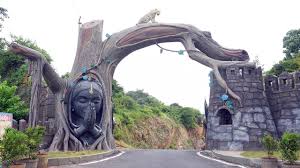
The Union Minister of state recently announced plans for the comprehensive development of the historic Kondaveedu Fort.
- Kondaveedu Fort, also known as Kondavid Fort, is located in Andhra Pradesh.
- It was constructed during the period of the Telugu Chodas, strengthened by the Kakatiyas and occupied by Prolaya Vema Reddy, who shifted his capital from Addanki to Kondaveedu in 1323 AD.
- Later it was taken over by the Gajpathis of Orissa and ravaged by the Bahmani Sultans in 1458.
- The fort later came under the control of the Vijayanagara Empire, the Golconda Sultanate, the Mughals, the French, and the British.
- The architecture displays a blend of Hindu and Islamic styles.
- It was mainly constructed with granite stones and lime mortar.
- It features two main entrances called Kolepalli Darwaza and Nadella Darwaza.
- The fort is also known for its ancient water conservation system with several ponds supplying water to inhabitants.
- Recent archaeological findings include Buddhist stupa remains dating back to the 1st or 2nd century CE.
Dalma Wildlife Sanctuary:
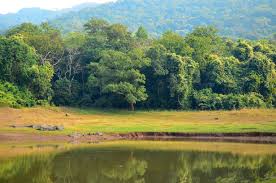
The Jharkhand tourism minister recently launched a jungle safari and laid the foundation for 30 eco-cottages at Dalma Wildlife Sanctuary in East Singhbhum.
- It is located in Jharkhand.
- It is situated around the Dalma Hills on the Chottanagpur Plateau.
- The Sanctuary gets its name from the “Dalma mai” a local goddess who is revered and worshipped by the local people and the people of adjoining villages of Dalma.
- The entire forest of Dalma Sanctuary falls in the catchment of the Subarnarekha River and Dimna Lake of Jamshedpur.
- It features two prominent waterfalls: Sitaguldi and Dassam.
- The forests of Dalma come under the category “Dry peninsular Sal” and “Northern dry mixed deciduous Forest“.
- Most of the Dalma forests shed leaves in the summer and attain their full bloom at the onset of monsoon.
- Medicinal plants like Ananatmula, Satawari, Sarpgandha, are abundant in the sanctuary.
- Besides elephants, the sanctuary has a considerable population of other wildlife like barking deer, wild boar, giant squirrel, porcupine, pangolin, sloth bear, etc.
- Commonly seen birds in the sanctuary are falcons, golden orioles, Indian tree pies, paradise fly catchers, grey hornbills, Indian peafowl, etc.
Polyrhachis garbhangaensis: New Species Of Ant
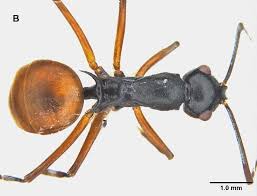
Garbhanga Reserve Forest on the outskirts of Guwahati has yielded a newly identified ant species named Polyrhachis garbhangaensis.
- It is a new species of ant.
- It was discovered in Garbhanga Reserve Forest on the outskirts of Guwahati, Assam.
- It has been named after its place of discovery and is proposed to be known as the “Assamese Spiny Ant.”
- It belongs to a rare and specialised group of spiny ants called the mucronata group.
- It is only the third species of this group ever recorded in India.
- Unlike its close relatives, which are usually black, this species has a bright yellow-orange abdomen.
- It also has curved spines on its body that likely help protect it from predators.
Global Teacher Prize:

Indian teacher Rouble Nagi received the Global Teacher Prize 2026 during the World Government Summit.
- It is an annual award presented to an exceptional teacher who has made a significant impact on their students and community.
- The prize aims to highlight the importance of educators and recognize the outstanding contributions they make to society.
- It is open to teachers from all countries, working in various educational settings including public, private, and alternative schools.
- Candidates are evaluated based on their innovative teaching practices, achievements in the classroom, and efforts to improve the quality of education in their community.
- The selection process also considers the teacher’s impact on their students’ learning and their ability to overcome challenging environments.
- Teachers can be nominated by others or can apply themselves.
- The award comes with a cash prize of $1 million, making it one of the most prestigious recognitions in the field of education.
- It is presented by GEMS Education and organised by the Varkey Foundation in collaboration with UNESCO.
Graphics Processing Units:

India and the United States have announced that they will “significantly increase trade in technology products, including Graphics Processing Units (GPUs) and other goods used in data centers.
- A GPU is an electronic circuit board that can quickly perform many mathematical calculations.
- Like a Central Processing Unit (CPU), a GPU is also a chip component in computing devices.
- The technology was originally designed to speed up 3-D graphics rendering.
- Traditional GPUs are of two types:
- First, there are standalone chips, which often come in add-on cards for large desktop computers.
- Second are GPUs combined with a CPU in the same chip package, which are often found in laptops and game consoles.
- In both cases, the CPU controls what the GPU does.
- GPUs work by using parallel processing, where multiple processors handle separate parts of a single task.
- A GPU also has its own RAM to store the data it is processing. This RAM is designed specifically to hold the large amounts of information coming into the GPU for highly intensive graphics use cases.
- It is used in areas including high-performance computing, machine learning, Artificial Intelligence (AI), weather forecasting, and crypto currency mining.
Veerangana Durgavati Tiger Reserve: In News

The standing committee of the National Board for Wildlife has recommended approval for the diversion of about 272 hectares of forest for the Kopra medium irrigation project in the core area of the Veerangana Durgavati Tiger Reserve in Madhya Pradesh.
- It is located in Madhya Pradesh.
- It encompasses areas within the Nauradehi Wildlife Sanctuary and Durgavati Wildlife Sanctuary.
- It straddles parts of the Narmada and Yamuna River basins.
- It mainly consists of Dry deciduous type vegetation.
- The chief floral elements include Teak, Saja, Dhaora, Ber, Amla, etc.
- Tiger, leopard, wolf, jackal, Indian fox, striped hyena, Nilgai, Chinkara, Chital, Sambhar, Black Buck, Barking deer, Commom Langur, Rhesus Macaque, etc.
- It is one of the few remaining strongholds for the White-Rumped and the Indian Vultures, critically endangered raptors of India.
Central Sector Scheme of Formation and Promotion of 10,000 Farmer Producer Organizations:
The Government of India has completed the formation of 10,000 Farmer Producer Organisations (FPOs) under a central sector scheme, with 21.96 lakh women farmers.A central sector scheme to form and nurture 10,000 new FPOs across India, enabling small and marginal farmers to collectivized production, processing, and marketing for better incomes and market power.Launched in: 29 February 2020
Implementing Agencies (IAs):
- Small Farmers’ Agribusiness Consortium (SFAC)
- National Bank for Agriculture and Rural Development (NABARD)
- National Cooperative Development Corporation (NCDC)
- National Agricultural Cooperative Marketing Federation of India (NAFED)
- Aim is o build a sustainable, income-oriented farming ecosystem by strengthening farmer collectives, improving access to inputs, credit, technology, value chains, and markets, and enhancing farmers’ bargaining power.
Changing blue-collar labour dynamics in the Gulf:
The United Arab Emirates has emerged as the top overseas destination for Indian blue-collar workers, overtaking Saudi Arabia in 2025.The trend signifies a reorientation of Indian blue-collar migration within the Gulf Cooperation Council (GCC), with workers increasingly preferring destinations offering higher wages, better safety, and stable employment conditions.UAE surge In 2025, 200,686 Indian workers migrated to the UAE, surpassing Saudi Arabia (136,812), reversing earlier patterns.
Chemical Gas Leak in India:
The recent gas leak at Sainex Met Chem Pharma in Sarigam GIDC, Valsad, has sparked fresh concerns regarding industrial safety in India’s chemical hubs after four individuals, including the unit owner, were hospitalized.A chemical gas leak is the unintentional release of hazardous gaseous substances or vapors into the environment, often resulting from equipment failure, human error, or chemical reactions.
These leaks can involve toxic gases (e.g., Chlorine, Ammonia), flammable gases (e.g., LPG, Methane), or asphyxiants that displace oxygen.
Global Climate Governance:
The global climate governance discourse shifted after COP30 at Belém, Brazil, branded as the Global Mutirão (collective effort).However, the summit drew criticism for procedural optimism without substantive action, as it implicitly accepted a 1.5°C overshoot while failing to secure binding climate finance or fossil-fuel phase-out.Climate governance refers to the web of international treaties, domestic laws, and institutional frameworks (like the UNFCCC) designed to coordinate global action to mitigate greenhouse gas emissions and adapt to climate impacts.
Current Architecture of Global Climate Governance:
Governance revolves around the CMP (Kyoto Protocol) and the CMA (Paris Agreement), operating like hop-on, hop-off buses that maintain diplomatic motion but lack a mandatory final destination.Decisions require consensus among nearly 200 nations, which effectively grants every party a veto and leads to diluted final texts that prioritize political face-saving over ecological necessity.Introduced at COP30, this framework emphasizes voluntary, people-led, and multi-stakeholder cooperation (civil society, youth, indigenous groups) rather than strictly binding state obligations. A shift toward stricter Measurement, Reporting, and Verification (MRV) systems intended to hold countries accountable for their Nationally Determined Contributions (NDCs).
Private Bill Seeks Mandatory 10-Year Census:
A Private Member’s Bill was introduced in the Rajya Sabha to amend the Census Act, 1948, to mandate a nationwide Census every ten years.The Bill highlights that although India has followed a decennial Census practice, it is not legally mandated, and stresses that regular Census data is crucial for effective delivery of welfare schemes and public services.Private Member’s Bill are legislative proposals introduced by Members of Parliament (MPs) who are not Ministers (i.e., not part of the government), enabling them to raise issues and suggest laws or amendments on matters significant to their constituencies.Only non-government MPs can introduce these bills, offering a chance for independent legislative proposals.MPs can also introduce resolutions to call attention to specific matters.