
Today’s Current Affairs: 26th February 2026 for UPSC IAS exams, State PSC exams, SSC CGL, State SSC, RRB, Railways, Banking Exam & IBPS, etc
Table of Contents
Celiac Disease:
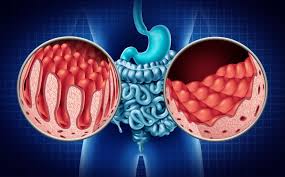
A recent study indicates that a drug already approved for use in humans could help to reduce the inflammation associated with celiac disease.
- It is an inherited autoimmune condition where the immune system reacts to gluten, sometimes causing damage to the small intestine.
- Gluten is a protein found in foods containing wheat, barley, or rye.
- In celiac disease, eating gluten triggers an immune response to the gluten protein in small intestine.
- Over time, this reaction can damage small intestine’s lining and prevent it from absorbing nutrients. This condition is called malabsorption.
- The intestinal damage often causes symptoms such as diarrhea, fatigue, weight loss, bloating, or anemia.
- It also can lead to serious complications if it is not managed or treated.
- In children, malabsorption can affect growth and development in addition to gastrointestinal symptoms.
- It can develop at any age after people start consuming gluten.
- It is estimated to affect 1 in 100 people worldwide.
- There’s no definite cure for celiac disease. But for most people, following a strict gluten-free diet can help manage symptoms and help the intestines heal.
Impatiens nagorum:
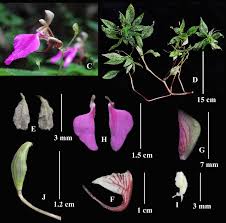
A team of botanists recently discovered and described a new species of flowering plant named Impatiens nagorum from Northeast India.
- It is a new species of flowering plant.
- It was discovered in Fakim Wildlife Sanctuary in Nagaland.
- The species name “nagorum” honours the Naga tribes of Nagaland.
- Impatiens — commonly known as balsams or “touch-me-nots” — are flowering plants famous for their brightly coloured blooms and seed pods that burst open when touched.
- The Eastern Himalayas and Northeast India are among the world’s richest regions for this group of plants.
- Found in moist temperate broadleaf forests, the newly described species is currently known only from its type locality.
- The plant bears distinctive purple flowers.
- It differs from closely related species in having serrated leaves, slightly hairy lateral sepals, and a deeper lower sepal that gradually tapers into a hooked spur.
National Science Day 2026:
Indian Space Research Organisation Chairperson V. Narayanan will visit Shivamogga to take part in the National Science Day programme, and release a biography of former ISRO scientist B.N. Suresh.
- It is celebrated every year on February 28 to mark the contributions of scientists towards the development of the country.
- It commemorates the discovery of the Raman Effect by the Indian physicist, Dr. Chandrasekhara Venkata Raman, on the same day in the year 1928.
- For this discovery, he was also awarded the Nobel Prize in Physics in 1930.
- In 1986, the Government of India declared 28 February as National Science Day.
- The first National Science Day was celebrated in 1987, and since then, it is observed every year with a special theme.
- National Science Day 2026 Theme: “Women in Science: Catalysing Viksit Bharat”.
- On this day, schools, colleges, coaching institutes, and research organisations across the country will come together to honour scientists, inspire students, and promote a scientific way of thinking.
- Raman Effect is the change in the wavelength of light that occurs when a light beam is deflected by molecules.
- When a beam of light traverses a dust-free, transparent sample of a chemical compound, a small fraction of the light emerges in directions other than that of the incident (incoming) beam.
Smew:
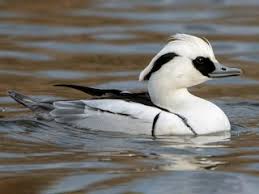
The smew was recently sighted for the first time in the Kaziranga during the 7th Waterbird Count at Rowmari-Donduwa beels (Laokhowa) buffer of Kaziranga Tiger Reserve sites.
- It is a small diving duck.
- Scientific Name: Mergellus albellus
- Smews breed in the northern taiga of Europe and the Palearctic.
- They need trees for breeding and prefer to live on fish-rich lakes and slow rivers.
- Smews spend winters on sheltered coasts or inland lakes of the Baltic Sea, the Black Sea, northern Germany, and the Low Countries, with a small number reaching Great Britain.
- Conservation Status:
- IUCN Red List: Least Concern
Peatlands:
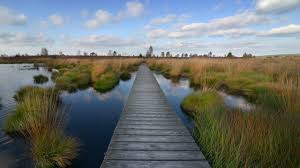
Researchers found that two lakes namely Mai Ndombe and Tumba in the Democratic Republic of Congo are releasing carbon that has been locked away for thousands of years in surrounding peatlands.
- Peatlands are terrestrial wetland ecosystems in which waterlogged conditions prevent plant material from fully decomposing.
- Consequently, the production of organic matter exceeds its decomposition, which results in a net accumulation of peat.
- Peat, formed from the accumulation of dead plant material, does not decompose in a water-logged state but when it dries, the organisms that break down plant material revive and the carbon seeps back into the atmosphere.
- In cool climates, peatland vegetation is mostly made up of Sphagnum mosses, sedges and shrubs and are the primary builder of peat,
- In warmer climates graminoids and woody vegetation provide most of the organic matter.
- The swamps and peatlands of the Congo Basin cover only 0.3% of the earth’s land surface, yet hold one-third of the carbon stored in its tropical peatlands.
- The majority of the world’s peatlands occur in boreal and temperate parts of the Northern Hemisphere.
- Types:
- Northern and temperate peatlands: Found especially, Europe, North America and Russia where they have formed under high precipitation-low temperature climatic regimes.
- Tropical peatlands: Found in Southeast Asia, mainland East Asia, the Caribbean, Central America, South America, Africa, parts of Australasia and a few Pacific Islands.
RAMP Programme:
The Ministry of Micro, Small and Medium Enterprises, Government of India organised the fifth meeting of the National MSME Council to review progress of World Bank–Supported RAMP Programme in New Delhi.
- The Raising & Accelerating MSME Performance (RAMP) programme was launched in 2022.
- It aims at improving access to market and credit, strengthening institutions and governance at the Centre and State, improving Centre-State linkages and partnerships, addressing issues of delayed payments and greening of MSMEs.
- It is assisted by the World Bank.
- Objectives of RAMP Programme:
- Improving access to market and credit for MSMEs
- Strengthening institutions and governance at the central and state levels
- Improving center-state linkages and partnerships
- Addressing issues of delayed payments
- The National MSME Council has been set up by the Ministry to work as an administrative and functional body of the RAMP Programme.
- It is implemented by the Ministry of Micro, Small and Medium Enterprises (MoMSME) over the five year period 2022-23 to 2026-27.
- It provides grants to States for preparation of Strategic Investment Plan (SIP).
- Sub schemes under RAMP:
- MSME GIFT Scheme: MSME Green Investment and Financing for Transformation Scheme intends to help MSMEs adopt green technology with interest subvention and credit guarantee support.
- MSE SPICE Scheme:The MSE Scheme for Promotion and Investment in Circular Economy aims to support circular economy projects which will be done through credit subsidy and will lead to realising the dream of MSME sector towards zero emissions by 2070.
- MSE ODR Scheme: The MSE Scheme on Online Dispute Resolution for Delayed Payments is a first of its kind scheme to synergise legal support with modern IT tools and Artificial Intelligence to address the incidences of delayed payments for Micro and Small Enterprises.
Staphylococcus aureus:
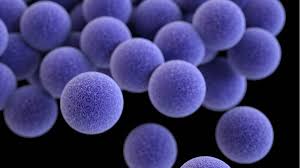
An institute of the Department of Science and Technology (DST) based in North East India has synthesised a novel biosurfactant which has been found to act effectively against bacterium Staphylococcus aureus.
- It is a type of bacteria belongs to the family Staphylococcaceae.
- It stains Gram positive and is non-moving small round shaped or non-motile cocci.
- It is found in grape-like (staphylo-) clusters.
- It may occur commonly in the environment.
- It affects all known mammalian species, including humans.
- Further due to its ability to affect a wide range of species, S. aureus can be readily transmitted from one species to another.
- aureus is transmitted through air droplets or aerosol. When an infected person coughs or sneezes.
- It can also transmit through direct contact with objects that are contaminated by the bacteria or by bites from infected persons or animals.
- It causes Minor skin infections, such as pimples, impetigo etc.
- It may cause boils (furuncles), cellulitis folliculitis, carbuncles
- It is the cause of scalded skin syndrome and abscesses
- It may lead to lung infections or pneumonia
- Treatment: Healthcare providers can treat most staph infections with antibiotics.
Employees’ State Insurance Corporation:75 Year of Service
The Employees’ State Insurance Corporation (ESIC) commenced the celebration of its 75th Year of Service at Bharat Mandapam, New Delhi.
- It is a statutory body formed under the ESI Act 1948.
- It is functioning under the aegis of Ministry of Labour and Employment, Government of India.
- It manages the ESI scheme, which provides medical, maternity, and financial benefits to employees.
- ESIC provides various social security benefits like Medical Benefit, Monetary benefits to the workmen and their family working in the private and public sector.
- Composition of ESIC:
- The Union Minister of Labour heads the ESIC as its Chairman.
- The Central Government appoints a Director General as the Chief Executive Officerof ESIC.
- The ESIC comprises members representing crucial interest groups, including employers, employees, the Central and State Governments, representatives of the Parliament and the medical profession.
Tsomgo Lake:
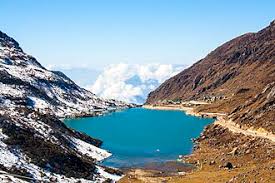
Over 2,700 tourists stranded due to heavy snowfall near Tsomgo Lake in East Sikkim were rescued recently.
- Tsomgo Lake, also known as Tsongmo Lake or Changu Lake, is a glacial lake located in East Sikkim.
- The lake derives its water from the melting snow of the mountains surrounding the lake.
- After the winter season ends in the middle of May, the periphery of the lake has scenic blooms of flower species of rhododendrons (the state tree of Sikkim), primulas, blue and yellow poppies, irises, and so forth.
- Also seen in the precincts of the lake are several species of birds, including Brahminy ducks.
- Wildlife seen includes the red panda.
- The lake surface reflects different colours with the change of seasons and is held in great reverence by the local Sikkimese
- Buddhist monks prognosticated after studying the changing colours of the lake.
CM-302 Missile:
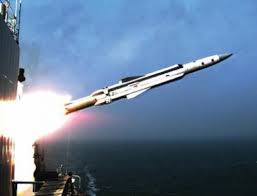
Reports are emerging that Iran is close to finalizing a deal with China to buy CM-302 supersonic anti-ship missiles.
- It is a supersonic anti-ship cruise missile developed by China.
- It is an export version of the YJ-12 missile used by the Chinese Navy.
- It is intended to strike large naval vessels and other maritime targets.
- It is equipped with a liquid direct-flow air-breathing jet engine and four air intakes.
- The missile travels at sustained supersonic speeds, reportedly around Mach 2.5–3 or higher, making it very hard and challenging to intercept once launched.
- It has a range of about 290 km.
- It is equipped with a conventional high-explosive warhead.
- It can be launched from both ships and ground-based launchers.
- The CM-302 approaches its target at extremely low altitudes.
- The guidance system of the missile combines inertial navigation with China’s BeiDou satellite navigation for mid-course guidance, along with an active radar seeker for terminal homing.
- It has a high hit probability, nearly 90 percent, owing to its sea-skimming flight profile and advanced guidance suite.
Human Papillomavirus:
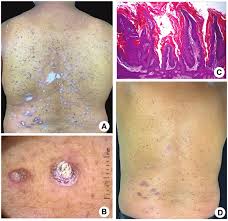
The Union Health Ministry is set to launch a nationwide Human Papillomavirus (HPV) vaccination programme targeting girls aged 14 years
- HPV is the most common sexually transmitted infection (STI).
- More than 95% of cervical cancer is caused by the HPV virus.
- The virus that causes HPV infection is transmitted through skin-to-skin contact.
- Most people get a genital HPV infection through direct sexual contact, including vaginal, anal, and oral sex.
- There’s no cure for HPV.
- HPV vaccination is the most effective way to prevent HPV-related cancers.
- The HPV vaccine is a series of shots that can protect from an HPV infection.
- The HPV vaccination is more efficacious if given between the age group of 9-26 years.
SUJVIKA Portal:
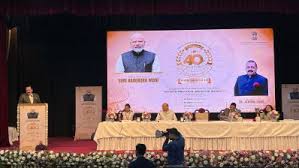
The Union Minister of Science & Technology launched the SUJVIKA Portal during the 40th foundation day of the Department of Biotechnology.
- It is an AI driven Biotech Product Data Portal.
- It is developed in collaboration with Industry partners ABLE.
- SUJVIKA is a Trade Statistics Digital Intelligence Platform that presents authenticated biotechnology product import data in a structured and accessible format.
- The portal provides sector-wise insights into biochemical products, industrial enzymes, and other biotechnology imports.
- It enables researchers, startups, and industry to identify high-value and high-volume imports, assess import dependency and prioritise indigenisation and R&D efforts.
- The portal also supports evidence-based planning and promotes public–private partnerships for strengthening domestic biomanufacturing.
National Counter-Terrorism Policy and Strategy: PRAHAAR
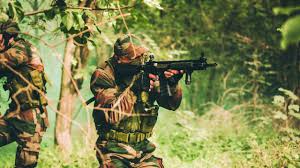
The Ministry of Home Affairs (MHA) unveiled India’s first-ever comprehensive National Counter-Terrorism Policy and Strategy, titled ‘PRAHAAR’. This marks a paradigm shift from a reactive security stance to a proactive, intelligence-driven doctrine.
PRAHAAR: The strategy is an acronym representing the core pillars of India’s proactive defense mechanism:
- Prevention of terror attacks to protect Indian citizens and interests;
- Responses, which are swift and proportionate to the threat posed;
- Aggregating internal capacities for achieving synergy in a whole-of-government approach;
- Human rights and ‘Rule of Law’ based processes for mitigation of threats;
- Attenuating the conditions enabling terrorism, including radicalization;
- Aligning and shaping the international efforts to counter terrorism;
- Recovery and resilience through a whole-of-society approach.
IEA Full Membership for India:
The International Energy Agency (IEA) welcomed progress on India’s request for full membership, marking a significant step in integrating the world’s 3rd-largest energy consumer into global energy governance.India, an IEA associate member since 2017, faces a complex path to full membership as the IEA framework restricts it to Organisation for Economic Cooperation and Development (OECD) countries, an organization India has no inclination to join. The IEA is an intergovernmental body established in 1974 by 17 OECD countries in response to the global oil crisis caused by the Arab oil embargo (1973–1974) during the Yom Kippur War (1973). Its original mandate was to ensure stable oil supplies and manage energy emergencies.
16th Edition of Exercise Vajra Prahar:
The 16th edition of the India-US joint special forces exercise ‘Vajra Prahar’ began at the Special Forces Training School in Bakloh, Himachal Pradesh.Vajra Prahar First conducted in India in 2010, the exercise is held alternately in India and the US. The previous edition was held in Idaho, US.It involves personnel from the Indian Army’s Special Forces and the US Army’s Green Berets.The primary aim is to promote robust military cooperation by enhancing interoperability, jointness, and the mutual exchange of tactical expertise.It will enable the sharing of best practices and experience in areas such as joint mission planning capabilities and operational tactics.
7th edition of the annual Joint Military Exercise ‘Dharma Guardian:
The 7th edition of the annual Joint Military Exercise ‘Dharma Guardian’ between the Indian Army and the Japan Ground Self-Defense Force (JGSDF) commenced in Chaubattia, Uttarakhand.The primary objective is to strengthen military collaboration and enhance combined capabilities to undertake joint operations in a semi-urban environment.The Indian Army contingent is drawn from the Ladakh Scouts, while the JGSDF is represented by troops from the 32nd Infantry Regiment.



