
Bascule Bridge:
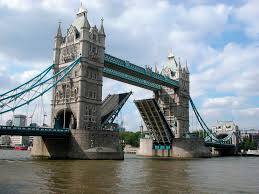
The Union government recently approved a Rs 117.54 crore project for the renovation of the Bascule Bridge at Syama Prasad Mookerjee Port, Kolkata.
- Bascule Bridge is a type of bridge that can be raised to provide clearance for waterway traffic and is also referred to as a lifting bridge or a drawbridge.
- It makes use of a counterweight to balance a span or leaf through its upward trajectory.
- The balance of the weight is sometimes adjusted according to the frequency of waterway traffic.
- The counterweight is usually heavier than the leaf itself, which makes lifting easier and reduces the energy needed to operate the bridge.
- The span can be single or double, and in rare cases it may even be triple or quadruple.
- A pulley system helps raise and lower the bridge.
- Cables or chains connected to the counterweight run through pulleys and are attached to the leaf.
- This mechanical system helps reduce the force needed to lift the leaf, using something called “mechanical advantage.”
- The word ‘bascule’ is French in origin and translates loosely as a seesaw or a balancing mechanical device.
- It is thought that bascule bridges were first designed during the mediaeval era in Europe, when they served defensive purposes.
- The longest double-leaf bascule bridge in the world is the Broadway Bridge in Portland, Oregon, USA.



