
Hutchinson-Gilford Progeria Syndrome:
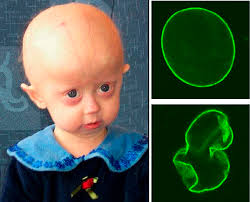
U.S.-based Sentynl Therapeutics (part of Zydus Lifesciences) recently signed a deal with South Korea’s PRG S&T to develop Progerinin, a pill aimed at treating Hutchinson-Gilford progeria syndrome (HGPS).
- Progeria, also known as HGPS, is an extremely rare genetic disease that causes rapid aging in children.
- Progeria is extremely rare.
- A genetic mutation in the LMNA gene causes progeria. The LMNA gene is responsible for making a protein called lamin A.
- Lamin A is an important part of the structural scaffolding that holds the nucleus of each cell in your body together.
- A tiny mutation in the LMNA gene causes it to create an irregular form of the lamin A protein called progerin.
- Progerin takes the place of the lamin A and makes the nuclei of your cells unstable, slowly damaging them.
- This leads to the early death of every cell in your body, which causes the process of premature aging.
- Almost all cases of progeria occur as a new, spontaneous mutation in the LMNA gene. This means there’s no biological family history of the disease.
- Newborns with the disorder appear to be healthy at birth but usually start to show signs of premature aging during their first one to two years of life.
- Their growth rate slows and they don’t gain weight as expected.
- This condition does not affect intellectual development or the development of motor skills such as sitting, standing, and walking.
- However, their rapid aging causes distinct physical characteristics, including:
- Hair loss (baldness).
- Prominent eyes.
- Aged, wrinkled skin.
- A thin, beaked nose.
- Disproportionately small face compared to head size.
- Loss of fat under the skin.
- Progeria is always fatal.
- The average age of death is 14.5 years, although some adults with progeria will live into their early 20s.
- Death most often occurs as a result of complications of severe atherosclerosis.
- Atherosclerosis occurs when plaque builds up within the walls of your arteries. This makes them less elastic and, therefore, stiffer.
- This condition greatly increases the chances of having a heart attack or stroke at a young age.



