
Ras Laffan and South Pars:
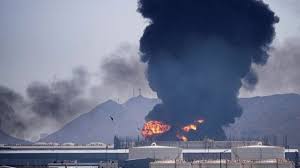
The West Asian conflict has escalated significantly following Israeli strikes on Iran’s South Pars gas field and retaliatory Iranian missile attacks on Qatar’s Ras Laffan LNG facilities.
Ras Laffan:
- It is the world’s largest Liquefied Natural Gas (LNG) export hub, housing major liquefaction plants and export terminals.
- Located in Northeastern Qatar, along the Persian Gulf coast
- Ras in Arabic means headland or cape, indicating its coastal geographic position
- Developed as a strategic LNG export hub by QatarEnergy
- Key Features:
- Global LNG hub: Accounts for nearly 20% of global LNG supply.
- Integrated infrastructure: Houses liquefaction plants, storage tanks, export terminals.
- QatarEnergy base: Core operational center for Qatar’s LNG exports.
- High export capacity: Over 77–80 million tonnes per annum LNG production.
- Importance:
- Critical supplier of LNG to countries like India, Japan, Europe.
- Key node in global gas supply chains.
- Supplies ~40% of India’s LNG imports.
South Pars Gas Field:
- It is The world’s largest natural gas field, shared between Iran (South Pars) and Qatar (North Field).
- Located Beneath the Persian Gulf, shared by:
- Iran (South Pars)
- Qatar (North Field)
- South Pars refers to the southern portion of the larger gas reservoir located in Iranian territory
- Pars is derived from Persia (ancient Iran)
- Key Features:
- Largest gas reserve: Holds one of the world’s biggest proven natural gas reserves.
- Shared resource: Divided between Iran (South Pars) and Qatar (North Field).
- Offshore extraction: Consists of multiple offshore platforms and processing units.
- Energy backbone: Central to Qatar’s LNG dominance and Iran’s gas economy.



