
Smog-eating Photocatalytic Coating:
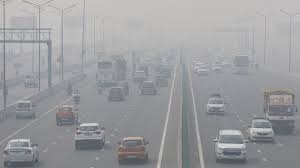
The Delhi government and Indian Institute of Technology (IIT) Madras collaborated to study “smog-eating” photocatalytic coatings on roads.
- Smog-eating Photocatalytic Coating is designed to neutralize harmful gases like nitrogen dioxide and volatile hydrocarbons that contribute to toxic air.
- It usually uses titanium dioxide as a coating which has advantages for being low-cost and chemically stable.
- Titanium dioxide is also known for its compatibility with traditional construction materials.
- It has been “demonstrated that TiO₂-based photocatalytically active construction materials can be useful for gaseous depollution and environmental cleaning processes.
- Photocatalytic activity helps fight pollution by breaking down harmful substances and organic waste into less toxic or harmless matters using light energy, thereby making air and water cleaner.
- Smog is used to refer to a type of air pollution caused by a combination of smoke (and other pollutants) and fog.
- Smog encompasses a broad category of air pollutants created through a multitude of processes that relate specifically to the atmospheric conditions of the formation region.
- Two distinct types of smog are recognized:
- Sulfurous smog: It results from a high concentration of sulfur oxides in the air and is caused by the use of sulfur-bearing fossil fuels, particularly coal.
- Photochemical smog: It occurs most prominently in urban areas that have large numbers of automobiles.



