
Birth Anniversary of Dr. Bhimrao Ramji Ambedkar:
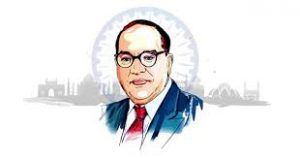
On 14th April 2026, the nation celebrates the 135th Birth Anniversary of Dr. Bhimrao Ramji Ambedkar, the chief architect of the Indian Constitution, a pioneering social reformer, an eminent jurist, and a towering intellectual who dedicated his life to the eradication of social inequality in India.
- Dr. B.R. Ambedkar born on 14th April 1891, in Mhow, Central Provinces (now Madhya Pradesh), into the Mahar caste. He faced severe socio-economic discrimination from a young age.
- He was a brilliant scholar, earning doctorates in economics from both Columbia University (USA) and the London School of Economics (UK).
- He served as the First Law Minister of Independent India and was the Chairman of the Drafting Committee of the Constituent Assembly.
- Dr. B. R. Ambedkar founded key organizations such as the Bahishkrit Hitakarini Sabha (1924) for socio-economic upliftment of depressed classes, the Independent Labour Party (1936) for workers’ rights, and the Scheduled Castes Federation (1942) to advocate for Dalit rights.
- He also used print media through journals like Mooknayak (1920), Bahishkrit Bharat (1927), Samatha (1929), and Janata (1930) to spread social awareness.
- His major works, including Annihilation of Caste (1936), The Untouchables (1948), Buddha or Karl Marx (1956), and The Buddha and His Dhamma (1957), remain foundational texts on social justice and equality.
- Posthumous Honor: He was awarded India’s highest civilian honor, the Bharat Ratna, in 1990.
- He led the Mahad Satyagraha to assert the rights of the untouchables to draw water from the public Chavdar tank in Mahad, Maharashtra.
- He actively led movements advocating for the right of marginalized castes to enter Hindu temples (e.g., Kalaram Temple entry movement, 1930).
- Poona Pact (1932): Following Mahatma Gandhi’s fast unto death against the Communal Award (which granted separate electorates for depressed classes), Ambedkar signed the Poona Pact, securing reserved seats for the depressed classes within the general Hindu electorate.
- As Chairman of the Drafting Committee, he ensured that the Constitution incorporated robust safeguards for minorities, marginalized sections, and women.
- Ambedkar believed India’s foundation should rest on liberty, equality, and fraternity, inspired by the French Revolution (1789-1799).
- Article 32: He famously called Article 32 (Right to Constitutional Remedies) the “heart and soul” of the Indian Constitution.
- The conceptual framework for the Reserve Bank of India (RBI) was based on the guidelines presented by him to the Hilton Young Commission, derived from his book “The Problem of the Rupee: Its Origin and Its Solution.”
- As the Labour Member of the Viceroy’s Executive Council, he introduced significant reforms including the reduction of factory working hours (from 14 to 8 hours), equal pay for equal work irrespective of gender, and maternity benefits.
- He introduced the Hindu Code Bill in the Parliament to grant women equal rights in inheritance, marriage, and divorce.
- When the bill was stalled due to orthodox opposition, he resigned from his post as the Law Minister in 1951.
- Navayana (New Vehicle) Buddhism, founded by B.R. Ambedkar in 1956, is a reinterpretation of Buddhism that emphasizes social equality and class struggle over traditional spiritual doctrines.
- It rejects core Buddhist doctrines like the Four Noble Truths, karma, rebirth, nirvana, and monasticism, considering them pessimistic and irrelevant to social justice.
- Dhammachakra Pravartan Din is observed annually on 14th October to commemorate the historic mass conversion of B. R. Ambedkar and his followers to Buddhism at Deekshabhoomi, Nagpur, in 1956.



