
Today’s Current Affairs: 17th April 2026 for UPSC IAS exams, State PSC exams, SSC CGL, State SSC, RRB, Railways, Banking Exam & IBPS, etc
Table of Contents
Subacute sclerosing panencephalitis:
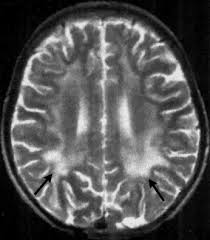
The Maharashtra state government recently informed the Bombay High Court that it is yet to frame a policy to deal with Subacute Sclerosing Panencephalitis (SSPE), an extremely rare but fatal neurodegenerative disease affecting children that has a fatality rate of 95%.
- SSPE, also known as Dawson disease, is a progressive, disabling, and deadly brain disorder related to measles (rubeola) infection.
- The disease develops many years after the measles infection, even though the person seems to have fully recovered from the illness.
- SSPE has been reported in all parts of the world, but in western countries it is a rare disease.
- Males are more often affected than females. The disease generally occurs in children and adolescents.
- SSPE is a rare condition.
- Normally, the measles virus does not cause brain damage.
- However, an abnormal immune response to measles or, possibly, certain variant forms of the virus may cause severe illness and death.
- This response leads to brain inflammation (swelling and irritation) that may last for years.
- High mortality rates are associated with SSPE, and there is no cure for SSPE.
- Treatment is generally aimed at regulating symptoms.
- Certain antiviral medicines and medicines that boost the immune system may be tried to slow the progression of the disease.
Lakhwar Hydroelectric Project:
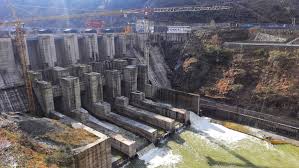
North India’s water and energy security is set to receive a significant boost as the 300 MW Lakhwar multipurpose project on the river Yamuna in the district Dehradun, Uttarakhand, gathers pace following a high-level review by the Secretary at Ministry of Jal Shakti.
- It is a multipurpose hydroelectric project planned on the Yamuna river near Lohari Village in the Dehradun District of Uttarakhand.
- The project is being developed and currently owned by Uttarakhand Jal Vidyut Nigam.
- It provides drinking water supply to states like Delhi, Uttar Pradesh, Haryana, Uttarakhand, Himachal Pradesh, and Rajasthan.
- It is linked with the downstream Vyasi Hydroelectric Project (120 MW), forming part of the Yamuna river basin development.
Hokersar Lake:
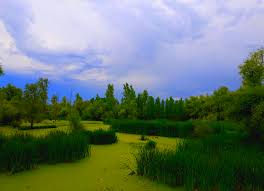
The Comptroller and Auditor General (CAG) recently warned of severe ecological degradation of Hokersar Lake, with over 2,500 kanals encroached.
- Hokersar, also known as Hokera, is a large natural wetland near Srinagar in Jammu and Kashmir.
- The wetland lies in the Jhelum River basin and receives water mainly from the Doodhganga River (a tributary of Jhelum).
- It is located in the northwest Himalayan biogeographic province of Kashmir, behind the snow-draped Pir Panchal.
- It is the largest bird sanctuary in the Kashmir Valley and a designated Ramsar site, recognized for its international ecological importance.
- It serves as a critical habitat and resting place for various migratory waterbirds from Siberia, Central Asia, and Northern Europe, hosting around 68 waterfowl species, including some endangered ones.
- Hokersar is rich in aquatic vegetation such as reedbeds and water chestnuts, which provide food and shelter for fish and birds.
- Apart from biodiversity conservation, the wetland acts as a floodwater absorption basin and supports local livelihoods.
- However, it faces threats from human encroachment, pollution, and conversion to agriculture, which have reduced its size over time.
CAR-T Cell Therapy:
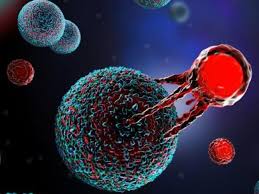
For the first time, scientists have used a cutting-edge cell therapy called CAR-T to treat a patient with three different life-threatening autoimmune diseases that had resisted years of treatment.
- CAR T-cell therapy, or chimeric antigen receptor T-cell therapy, is an advanced form of immunotherapy used to treat certain types of cancer by modifying a patient’s own immune cells to fight the disease.
- This treatment is designed for specific types of blood cancer and is given to patients whose cancer has either relapsed or not responded to first-line treatment.
- For any CAR T-cell therapy, a patient’s immune T cells are collected by filtering their blood.
- T cells, also known as T lymphocytes, are a type of white blood cell.
- T cells are key players in the body’s immune system because of their ability to identify and attack cells that don’t belong in the body, such as germs and cancer cells.
- In the lab, these T cells are modified to produce synthetic proteins called chimeric antigen receptors (CARs).
- The modified cells are called CAR-T cells. The cells are grown to much higher numbers in the lab and then infused back into the person’s bloodstream.
- The synthetic CARs allow the T cells to bind to specific proteins called antigens on cancer cells. This binding activates the T cells to kill the cancer cells.
- Dying cancer cells trigger further immune responses against the cancer.
- In addition, CAR-T cells can keep multiplying in the body, producing lasting anticancer results.
- In some cases, CAR T-cell therapy can cure blood cancer. Other times, it helps people with certain blood cancers live longer.
- CAR-T cell therapy is used to treat cancers that affect blood cells. This includes
- B-cell acute lymphoblastic leukemia (ALL).
- Diffuse large B-cell lymphoma.
- Follicular lymphoma.
- High-grade B-cell lymphoma.
- Mantle cell lymphoma
- Multiple myeloma.
- Primary mediastinal large B-cell lymphoma.
- A serious immune overreaction causing hyperinflammation and organ damage, seen in 12% of participants, resulting in at least one death.
- Low red blood cell count, reported in 61% of participants, causing fatigue and weakness.
- Thrombocytopenia: Low platelet count, increasing the risk of bleeding, reported in 65% of patients.
- Neutropenia: Low neutrophil count, seen in 96% of participants, raising the risk of infections.
Red Sea : In News
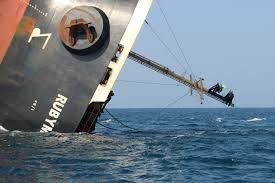
Iran’s military warned it would block trade through the Red Sea, if the US naval blockade continues.
- It is s semi-enclosed inlet of the Indian Ocean between Africa and Asia.
- It is connected to the Arabian Sea and the Indian Ocean to the south through the Gulf of Aden and the narrow strait of Bab el Mandeb.
- The northern portion of the Red Sea is bifurcated by the Sinai Peninsula into the Gulf of Aqaba and the Gulf of Suez, where it is connected to the Mediterranean Sea via the famous Suez Canal.
- Bordering Countries: Egypt, Saudi Arabia, Yemen, Sudan, Eritrea and Djibouti.
- The Red Sea’s unique color changes are due to algae blooms. Geologically, it lies in a fault depression between the Arabian and North African tectonic plates.
- It is known for its hot and salty waters and is a crucial maritime route between Europe and Asia.
- Five major types of mineral resources are found in the Red Sea region: petroleum deposits, evaporite deposits, sulfur, phosphates, and the heavy-metal deposits.
- Islands:
- Tiran Island: Located near the mouth of the Gulf of Aqaba.
- Shadwan Island: Located at the entrance of the Gulf of Suez
Water Hyacinth : Study
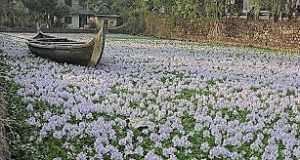
The rapid return of water hyacinth in the Mula-Mutha River, barely weeks after clean-up drives, has renewed concerns over the lack of a long-term solution.
- Water Hyacinth is a free-floating, aquatic plant in the pickerelweed family.
- Scientific Name: Eichhornia crassipes
- It is native to tropical regions of South America and is now present on all continents except Antarctica.
- It is one of the world’s most serious water weeds because of its aggressive, fast-growing nature.
- Water hyacinth grows in tropical, subtropical, and warm temperate It grows best in still or slow-flowing fresh water with high nutrient levels.
- It can form dense mats that reduce the water quality, change water flows, and increase sediment.
- It crowds out native aquatic plants and animals, altering ecosystems, destroying habitats, and blocking irrigation systems.
- Cutting a water hyacinth plant into pieces will not kill The plants can reproduce using a process called fragmentation. Each plant also produces thousands of seeds each year.
- This plant varies in size from a few inches to over three feet tall.
- They have showy lavender flowers, and the leaves are rounded and leathery, attached to spongy and sometimes inflated stalks.
- It was introduced to India during the British colonial rule as an ornamental aquatic plant from South America.
- The plant has been used as a biofertilizer in some organic agriculture practices.
- The plant produces beautiful purple flowers that have high aesthetic value.
- It is rich in fibrous stems that can be processed into a wide array of handbags, interior decorative material, table mats, baskets, and other products.
- It has been reported that this plant is a good phytoremediation species, suggesting it has the ability to trap and remove toxic metabolites and harmful heavy metals from water.
- Mula-Mutha River are very important rivers passing through the centre of Pune
- The Mula and Mutha Rivers originate in the Sahyadri ranges.
- River Mula originates from Mulshi Dam, which forms Mulshi Lake. River Mutha originates from Panshet Dam via Khadakwasla Dam.
- They traverse across Pune city and form the Mula-Mutha River, which eventually joins the Bhima River.
Marine heatwaves:
A new study reveals that tropical cyclones passing over marine heatwaves are far more destructive, resulting in 60% more billion-dollar disasters due to rapid intensification.A marine heatwave (MHW) is a prolonged period of unusually high ocean temperatures in a specific region. They are defined by their duration (lasting several days to months) and intensity (deviations from average sea surface temperatures, known as temperature anomalies).
While exact thresholds vary, an anomaly of 1 degree Celsius to 3 degree Celsius above the long-term average for a particular season is typically characterized as a marine heatwave event.
India’s First Chip Fabrication Plant at SEZ Dholera:
The Government of India has notified the country’s first semiconductor fabrication plant (fab) at Dholera SEZ, Gujarat, led by Tata Semiconductor Manufacturing Private Limited.It is India’s first semiconductor fabrication (fab) facility, designed to manufacture advanced chips domestically.The project is being developed as a sector-specific Special Economic Zone (SEZ) focused on electronics, IT/ITES, and semiconductor production. Located in Dholera Special Investment Region (SIR), Gujarat — a major industrial smart city initiative.Aim is to reduce import dependence: Build domestic capacity in semiconductor manufacturing for strategic and economic security,Boost high-tech manufacturing: Promote innovation, investment, and global competitiveness in electronics and chip design.
Project Him Sarovar:
The Centre initiated Project Him Sarovar to address year-round water scarcity in Ladakh, where much of the melting snow and glacial water currently flows unused into rivers and streams.It is a sustainable water management initiative aimed at capturing and utilising underutilised meltwater in the high-altitude cold desert region. Ladakh faces chronic water scarcity due to low precipitation and glacial retreat, while increasing tourism and the presence of armed forces have significantly raised water demand in the region.
Objective is to utilise stored water for irrigation, rural needs and long-term climate-resilient water management.
Rising Labour Protests in India:
Factory workers in industrial hubs like Noida and Manesar have launched violent protests over stagnant wages and poor working conditions.Labour protests in India represent a growing friction between the industrial workforce and the state/employer apparatus. Currently, thousands of factory workers are agitating against the decoupling of wages from the rising cost of living, while also demanding clarity on the newly notified but yet-to-be-implemented Labour Codes.The all-India inflation rate for industrial workers (CPI-IW) rose by 24.8% between 2021 and 2026, while wage hikes in states like Haryana only averaged 15% in the same period.Before recent revisions, the monthly wage for unskilled workers in Haryana was ₹11,274.60, significantly lower than the Central Sphere rate of ₹20,358, causing widespread resentment.



