
Haemophilia : Study
The World Health Organization has advanced a resolution aimed at improving equity in care for people living with haemophilia.
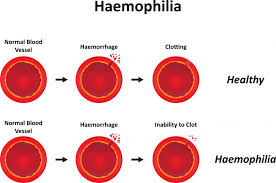
- It is a rare, inherited bleeding disorder in which the blood does not clot properly.
- It is due to low or absent levels of clotting factors, mainly factor VIII in haemophilia A and factor IX in haemophilia B.
- Haemophilia is typically inherited in an X-linked recessive pattern, meaning it predominantly affects males, while females are usually carriers.
- Research has shown that nearly one-third of haemophilia cases arise from spontaneous mutations, meaning the condition can occur even without a known family history.
- Individuals with severe haemophilia often experience frequent spontaneous bleeding episodes.
- Common manifestations include prolonged bleeding, easy bruising, and frequent nosebleeds
- In rare but serious cases, bleeding can occur in critical areas such as the brain.
- The standard treatment is clotting factor replacement therapy, administered either to control active bleeding or as a preventive measure.



