
US Waiver Ends on Chabahar Port:
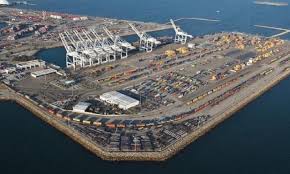
The U.S. sanctions waiver on Iran’s Chabahar Port ended on 26th April 2026, creating uncertainty over India’s long-standing connectivity project through Iran to Afghanistan and Central Asia.
- India now faces a strategic choice between reducing/exiting its involvement in the project or risking exposure to U.S. sanctions.
- To minimise sanctions risk, the government has withdrawn personnel from Chabahar, prepaid its $120 million investment commitment, and is considering transferring India’s stake in the Shahid Beheshti Terminal to an Iranian company. However, this transfer is still under discussion and has not yet been implemented.
- Chabahar is Iran’s closest oceanic port to India, located in Sistan-Baluchistan province on the Makran coast along the Gulf of Oman.
- It consists of two terminals—Shahid Kalantari and Shahid Beheshti, with India involved in developing the latter.
- The Chabahar port agreement was signed in 2003, with a trilateral pact (India–Iran–Afghanistan) in 2016 to operationalise connectivity.
- The project provides access to Afghanistan and Central Asia bypassing Pakistan.
- Provides an alternative route to Afghanistan and Central Asia bypassing Pakistan.
- Acts as a gateway to the International North-South Transport Corridor (INSTC) connecting India to Russia, Central Asia and Europe.
Economic & Connectivity Advantage: Reduces transport cost and time, improving trade efficiency while providing India direct access to Central Asian markets like Kazakhstan and Uzbekistan. - Enhances India’s regional influence as an alternative to China’s Gwadar Port, while enabling delivery of humanitarian aid to Afghanistan.



