
Sacred Groves:
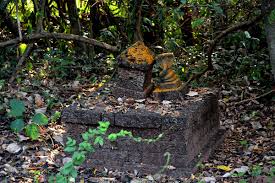
The Kerala State Biodiversity Board (KSBB) recently initiated a pilot restoration programme for sacred groves in collaboration with the local Biodiversity Management Committees.
- A sacred grove comprises patches of natural vegetation – from a few trees to several acres – that are dedicated to local deities or tree spirits.
- These spaces are protected by local communities because of their religious beliefs and traditional rituals that run through several generations.
- These are some of the most valuable, primitive practices of nature conservation.
- They act as repositories of biodiversity, sheltering rare plant and animal species.
- Hunting and deforestation are usually prohibited, while sustainable activities such as honey collection or gathering deadwood are permitted.
- The total number of sacred groves in India is more than 1,00,000. These groves are found all over the country with local names and associated deities.
- They are particularly found in regions like:
- The Western Ghats
- The Himalayas
- The northeastern hill tracts
- Central India
- Regional Names for Sacred Groves:
- Dev Van in Himachal Pradesh
- Bugyal or Dev Van in Uttarakhand
- Than and Madaico in Assam
- Matagudi, Devgudi, or Sarana in Chhattisgarh
- Jaherthan or Sarana in Jharkhand
- Devarakadu in Karnataka
- Kavu or Sarpa Kavu in Kerala
- Kovilkaadu in Tamil Nadu
- Devrai or Devgudi in Maharashtra
- Law Kyntang or Asong Khosi in Meghalaya
- Orans in Rajasthan.
- Jahera or Thakuramma in Odisha



