
Cauvery Water Management Authority:
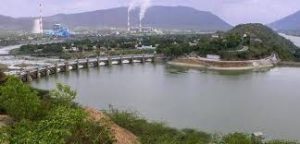
The Cauvery Water Management Authority (CWMA) has reaffirmed the 2018 Supreme Court verdict by directing Karnataka to ensure the timely release of water to Tamil Nadu for the month of May 2026.
- The Central Government, in June 2018, established two key bodies under the Cauvery Water Management Scheme 2018, i.e., the Cauvery Water Management Authority (CWMA) and the Cauvery Water Regulation Committee (CWRC).
- Notified under Section 6A of the Inter-State River Water Disputes Act, 1956, the CWMA is a statutory, quasi-judicial body. It ensures the implementation of the modified Cauvery Water Disputes Tribunal (CWDT) award as directed by the 2018 Supreme Court ruling.
- The authority is headquartered in New Delhi and operates under the Union Ministry of Jal Shakti.
- A senior eminent engineer or an IAS officer (Secretary/Additional Secretary rank) appointed by the Centre for a 5-year term.
- Members:
- Two Full-Time Members (Water Resources and Agriculture).
- Two Part-Time Members from the Central Government.
- Four Part-Time Members representing the basin states (Karnataka, Tamil Nadu, Kerala, and Puducherry).
- Secretary: An engineer from the Central Water Engineering Services.
- Key Functions: The CWMA’s primary goal is to “secure compliance and implementation” of the final water-sharing formula:
- Water Apportionment: It regulates and controls the release of water from reservoirs in the Cauvery basin (like Krishnarajasagara and Kabini in Karnataka, and Mettur in Tamil Nadu).
- In years of poor rainfall, the CWMA determines how the “distress” (water shortage) will be shared proportionately among the states.
- It collects daily data on water levels, inflows, and storage positions with the help of its subordinate body, the CWRC.
- It advises states on improving water-use efficiency through micro-irrigation and changing cropping patterns.
- The CWMA was created to replace the earlier ad-hoc Cauvery River Authority and provide a permanent, independent mechanism for water management.
- It aims to reduce frequent litigation and political conflicts between Karnataka and Tamil Nadu by providing a technical and administrative platform for monitoring and decision-making.



