
Cell Broadcast System:
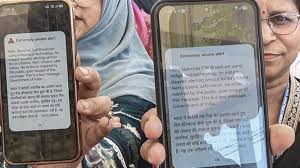
The Ministry of Communications has launched the indigenous Cell Broadcast System (CBS), marking a shift in India’s disaster management from a reactive to a proactive framework through its first large-scale nationwide demonstration of capability.
- The system has already been deployed in disaster situations in States like Andhra Pradesh, Odisha, and Uttarakhand, and for events such as the Char Dham Yatra.
- Cell Broadcast is a method of simultaneously sending short messages to multiple mobile phones within a defined geographic area. It was developed in the early 1990s by the European Telecommunications Standards Institute. It was first demonstrated in 1997 in Paris before becoming a global standard for disaster mitigation.
- India is using an SMS-based alert system which is operational across all 36 states and Union Territories.
- It integrated with the Common Alerting Protocol (CAP)-based SACHET platform, allowing alerts to be sent to mobile devices without needing individual phone numbers or internet connectivity.
- SACHET is India’s Integrated Alert System (also known as the National Disaster Alert Platform), developed for real-time dissemination of disaster and emergency warnings (e.g., flash floods, tsunamis, or gas leak).
- It was developed indigenously by the Centre for Development of Telematics (C-DOT) under the Department of Telecommunications (DoT), in partnership with the National Disaster Management Authority (NDMA) and the Ministry of Home Affairs (MHA).
- Messages override silent/do-not-disturb modes, include siren, vibration, and a pop-up message, and support multiple languages (English, Hindi, and regional languages).
- Unlike traditional SMS, CBS is a one-to-many broadcast system that delivers geo-targeted alerts simultaneously to millions of devices within seconds, without requiring phone numbers, user registration, apps, or subscriptions.
- It is unaffected by network congestion, works across 2G to 5G networks, ensures coverage for roaming and last-mile populations, and does not use personal data.
- It strengthens India’s early warning capabilities, supporting the goal of “Alert Citizens, Safe Nation.”
C-DoT has also successfully demonstrated CBS internationally in countries such as Mauritius, Cambodia, El Salvador, and Sri Lanka, aligning with the United Nations “Early Warnings for All” initiative. - India joins over 30 countries, including Japan (J-Alert, 1st to adopt in 2007) and the USA (Wireless Emergency Alerts) in deploying this technology.



