
Today’s Current Affairs: 14th May 2026 for UPSC IAS exams, State PSC exams, SSC CGL, State SSC, RRB, Railways, Banking Exam & IBPS, etc
Table of Contents
Kukke Subrahmanya Temple:
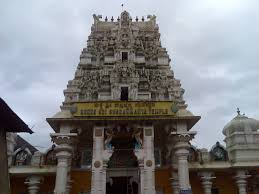
The Popular Nagaradhana temple in Karnataka, the Kukke Sri Subrahmanya temple in Subrahmanya of the Dakshina Kannada district, has registered a revenue of ₹167.89 crore during 2025-26, the highest so far.
- Kukke Subrahmanya Temple is a 5000-year-old Hindu temple located in the village of Subramanya, in the Dakshina Kannada district, Karnataka.
- It stands on the banks of the Kumaradhara River at the foot of Kumara Parvatha, in a dense pocket of the Western Ghats.
- Lord Subramanya (also known as Kartikeya, Murugan, and Skanda) is worshiped as the lord of all serpents in this temple.
- It is one of the foremost centers for Sarpa (serpent) worship in the country.
- Kukke Subramanya is considered one of the seven holy places created by Saint Parashurama.
- It is adorned with classic Dravidian design – intricate columns, majestic gateways, while the inner chamber is serene.
- Inside, there are rooms for ceremonies, peaceful spots for meditation, together with smaller temples dedicated to other gods.
One Case One Data’ Initiative:

The Supreme Court recently launched the “One Case One Data” initiative alongside “Su Sahay”, an AI-powered chatbot.
- ‘One Case One Data’ Initiative is a major digital initiative launched by the Supreme Court of India.
- It is a comprehensive digital platform designed to integrate case-related information from the Supreme Court, High Courts, district courts and taluka courts into a unified system.
- It is aimed at strengthening the case management framework through integrated judicial data access in courts across India.
- It will automate data retrieval from the concerned courts’ database and facilitate swift online verification of case-related information.
- Each case will be assigned a single unique digital identity, allowing all related records to be linked in one continuous case file.
- When a case moves from a lower court to a higher court, existing records will not be recreated but will be seamlessly integrated and updated , ensuring continuity and easier access to complete case history.
- Reciprocal access to case information shall also be provided to High Courts and Government departments as and when required.
- The integration could significantly reduce procedural delays arising from manual verification and fragmented judicial records while improving coordination between courts.
- Su Sahay is an Artificial Intelligence-powered assistance chatbot integrated with the Supreme Court website to facilitate easier access to justice and court-related services for litigants.
- It was developed by the National Informatics Centre (NIC) in collaboration with the Supreme Court Registry.
- The tool provides essential guidance on accessing services, filing procedures, and general court-related inquiries.
Valley Fever: Rare fungal Infection
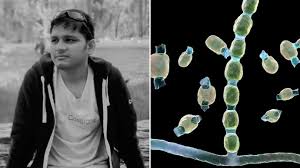
A 37-year-old Indian tech professional based in California recently died after battling Valley fever, a rare fungal infection that damaged his lungs and led to respiratory failure.
- Valley fever, also known as acute coccidioidomycosis, is a fungal infection that primarily affects the lungs.
- It is caused by the Coccidioides fungus, which grows in dry and dusty soil in parts of the southwestern United States, Mexico, and regions of Central and South America.
- The fungi’s spores can be stirred into the air by anything that disrupts the soil, such as farming, construction, and wind.
- People can then breathe the fungi into their lungs.
- Pets can also become infected.
- It does not spread from person to person or between people and animals.
- Treatment:
- Mild cases of valley fever usually resolve on their own.
- In more-severe cases, doctors treat the infection with antifungal medications.
- Sometimes surgery is needed to remove the infected part of the lung (for chronic or severe disease).
- There is no vaccine to prevent valley fever.
Tholpetty Wildlife Sanctuary:
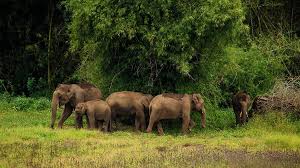
A wild gaur that had strayed into densely populated areas of Kannur District, Kerala, was captured by a Forest department expert team and later released into the forest area of the Tholpetty Wildlife Sanctuary recently.
- Tholpetty Wildlife Sanctuary is located in the Wayanad district in Kerala.
- It is part of the larger Wayanad Wildlife Sanctuary and the Nilgiri Biosphere Reserve.
- Tholpetty in the north is one of the two discontinuous pockets of Wayanad Sanctuary, the other being Muthanga in the south.
- The forests consist of both tropical moist dry deciduous and semi-evergreen
- Plantations of teak, eucalyptus, silver oak, and rosewood cover about one-third of the sanctuary.
- Elephants, tigers, panthers, jungle cats, civet cats, monkeys, wild dogs, bison, deer, bears, and snakes can be spotted in the sanctuary.
- The sanctuary is also a bird watcher’s paradise, hosting over 300 species of birds.
- Some notable avian residents include the Malabar grey hornbill, crested serpent eagle, peafowl, and various species of woodpeckers and kingfishers.
- Gaur also known as Indian bison, is the largest species among the wild cattle and the Bovidae.
- Scientific Name: Bos gaurus
- Gaurs are indigenous to the South and Southeast parts of Asia.
- They are found in Vietnam, Cambodia, Laos, Thailand, Peninsular Malaysia, Myanmar, India, Bangladesh, Bhutan, China, and Nepal.
- They are primarily found in evergreen and semi-evergreen forests along with moist deciduous forests with open grasslands.
- They prefer hilly-terrains below an altitude of 1,500-1,800 m with large and undisturbed forest tracts and abundant water.
- Gaur is a large animal with a sturdy build.
- It has a short and deep neck, a massive head, and frequently a large dewlap on the throat and chest.
- The color of their body varies from reddish or brown to black, while the limbs are pale colored.
- Both males and females have upwardly curved horns, growing from the sides of their heads. Their horns have a yellow base and black tip.
- These animals have a hump on their shoulders, which is especially prominent in adult males.
- Conservation Status:
- IUCN Red List: Vulnerable
Limestone:
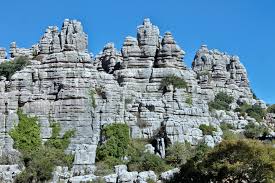
The Ministry of Mines is set to launch the second tranche of the auction of limestone blocks in Jammu and Kashmir.
- It is a sedimentary rock made of calcium carbonate (CaCO3), usually in the form of calcite or aragonite.
- It occurs across almost all geological sequences from Pre-Cambrian to recent, except in Gondwana formations.
Composition of Limestone: - It often contains magnesium carbonate, either as dolomite CaMg (CO3 )2 or magnesite (MgCO3 ) mixed with calcite.
- It also contains minor constituents of clay, iron carbonate, feldspar, pyrite, and quartz.
- Distribution of Limestone in India: Karnataka has the largest share (28%) of total resources, followed by Andhra Pradesh, Rajasthan, Gujarat, Meghalaya, and Chhattisgarh.
- Uses of Limestone:
- The principal use of limestone is in the Cement Industry.
- Metallurgical Processes: It is used as a flux in iron and steel production.
- Chemical Production: It is used in production of Calcium carbide, alkali, bleaching powder.
- Agriculture: It is used as soil conditioning agent, fertilizer (calcium ammonium nitrate).
- Consumer Products: Whiting (chalk and precipitated limestone) in rubber, paint, cosmetics, toothpaste, and shoe polish.
National Mission for Sustainable Agriculture:
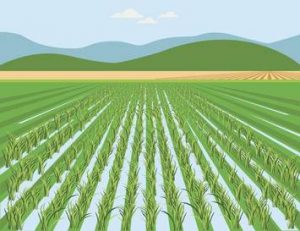
The Government has set a target of bringing 100 lakh hectares under micro-irrigation over the five-year period from 2025-26 to 2029 under the National Mission for Sustainable Agriculture.
- National Mission for Sustainable Agriculture was launched in 2014-15 under the framework of the National Action Plan on Climate Change (NAPCC).
- It was envisaged as a strategic intervention to mitigate the adverse impacts of climate variability on agriculture while ensuring long-term food and livelihood security.
- Since 2022-23 it has been included under the umbrella of Pradhan Mantri Rashtriya Krishi Vikas Yojana (PMRKVY).
- It promotes climate-resilient farming through a set of targeted and integrated interventions.
- It provides a strong foundation for sustainable agricultural development by enhancing water-use efficiency, improving soil health, and strengthening climate resilient agriculture.
- Key interventions under NMSA:
- Rainfed Area Development (RAD): It encourages Integrated Farming Systems (IFS) for diversified and risk-resilient agriculture.
- Per Drop More Crop (PDMC) initiative: It promotes micro-irrigation to improve water-use efficiency.
- Soil Health Management (SHM): It is supported by the Soil Health Card (SHC) Scheme, which promotes balanced nutrient use and sustains long-term soil fertility.
- Climate Change and Sustainable Agriculture: Monitoring, Modeling and Networking (CCSAMMN): It provides creation and bidirectional (land/farmers to research/scientific establishments and vice versa) dissemination of climate change related information and knowledge.
- Nodal Ministry: Ministry of Agriculture and Farmers Welfare.
Fermented Organic Manure:
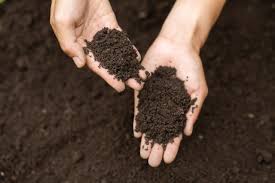
The Indian Biogas Association (IBA) has called for 10% mandatory blending of fermented organic manure with chemical fertilizers by 2030.
- It is a type of organic fertilizer produced through a controlled fermentation process of organic materials like manure, crop residues, and compost.
- It is a byproduct of operational biogas or compressed biogas (CBG) plants used as a fertilizer.
- It involves organic materials like animal manure, crop residues, and kitchen scraps which are combined with water and allowed to ferment in a controlled environment.
- This fermentation process breaks down the organic matter, releasing nutrients and beneficial microorganism
- Benefits of Fermented Organic Manure
- It improves soil fertility
- It enhances soil structure
- It is beneficial for microorganisms
- It helps in waste management
- It also helps in sustainable farming
SEHAT Mission:
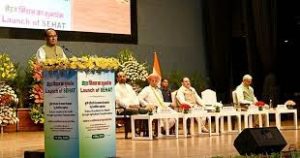
The Union Minister for Health and Family Welfare and Union Minister for Agriculture and Farmers’ Welfare launched the ‘SEHAT Mission’ in Delhi.
- SEHAT (Science Excellence for Health through Agricultural Transformation) is a national mission-mode programme designed to translate agricultural advancements into tangible health outcomes for the people of India.
- It has been jointly launched by the Indian Council of Agricultural Research (ICAR) and the Indian Council of Medical Research (ICMR).
- Launched with the objective of building a framework for ‘Healthy Food, Healthy Farms and a Healthy India’.
- It strategically align agricultural research and innovation with national priorities in nutrition, preventive and promotive healthcare and One Health.
- The mission focuses on five priority areas
- Development and evaluation of biofortified and nutrient-dense crop varieties to address malnutrition and improve nutritional status;
- Strengthening integrated farming systems to promote dietary diversification, enhance farm incomes, and build resilience;
- Addressing occupational health risks among agricultural workers through targeted, evidence-based interventions;
- Advancing agriculture-enabled strategies: It is for the prevention and management of non-communicable diseases through the promotion of functional foods and nutritionally superior crop varieties
- It is through integrated surveillance, diagnostics, and research at the human–animal–environment interface.
Jute Crop Information System:
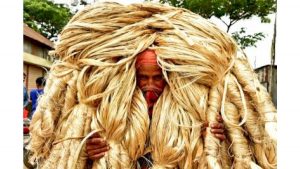
The National Jute Board has stepped up implementation of the Jute Crop Information System (JCIS).
- Jute Crop Information System is a technology-driven platform developed in collaboration with Indian Space Research Organisation and the Jute Corporation of India.
- It is being implemented since 2023.
- Purpose is to improve crop monitoring and production assessment in the jute sector.
- It integrates satellite imagery, weather analytics, vegetation indices and field-level inputs to enable near real-time monitoring of jute cultivation and production trends.
- It includes two digital tools
- BHUVAN JUMP: It is a mobile application for field-level monitoring.
- PATSAN: It is a web-based analytics platform designed to provide surveillance and crop-related assessments for officials and stakeholders.
- This new system has introduced a more structured and evidence-based approach to crop monitoring by combining multiple data sources on a single platform.
- The framework supports automated reporting, near real-time crop estimation and early warning alerts linked to weather and crop stress conditions.
- Through its I-CARE field network, the National Jute Board has facilitated large-scale collection of geo-tagged field data using the BHUVAN JUMP application.
- It has supported Crop Cutting Experiments using geospatial smart-sampling techniques aimed at improving the accuracy of yield estimation and production modelling.
- It has also been used to develop flood impact assessment models based on satellite data and field validation to estimate crop and quality losses in affected areas.
- Weather analytics integrated into the platform are supporting district-level early warning systems for rainfall variation, dry spells and temperature fluctuations.
Tristan da Cunha:
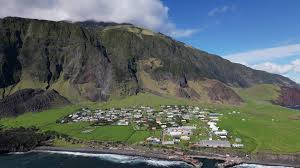
British military medics recently carried out a rare parachute mission to the remote South Atlantic island of Tristan da Cunha to assist a UK national suspected of contracting hantavirus after leaving the virus-hit cruise ship MV Hondius.
- Tristan da Cunha is both a group of islands in the South Atlantic Ocean and the largest island of that group.
- The archipelago is volcanic in origin.
- It is about midway between southern Africa and South America.
- It is considered the most remote inhabited chain of islands in the world.
- The islands were discovered in 1506 by Portuguese explorer Tristão da Cunha, after whom they are named.
- The island group is a constituent part of the British overseas territory.
- The main island, Tristan da Cunha, has a small settlement named Edinburgh of the Seven Seas. It has an estimated population of 250 permanent residents.
- Other islands in the Tristan Archipelago are uninhabited: two (Gough Island and Inaccessible Island) form a UNESCO World Heritage Site; Nightingale Island, Stoltenhoff and Alex (or Middle) Island also have globally significant biodiversity.
- The archipelago contains no airstrip and is accessible only by boat or helicopter.
- Tristan da Cunha has a unique economic and social structure in which land is communally owned and all families engage in farming.
- Outsiders cannot settle or buy land on the islands.
- In addition to agriculture, the other sectors of the economy are government and commercial fishing.
SO₂ Mitigation from Coal Plants:
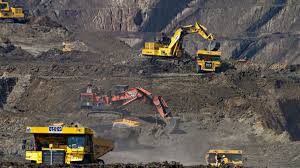
A comprehensive study by IIT Delhi, published in the Nature journal, reveals that India could prevent over 1.24 lakh annual deaths by fully mitigating Sulphur Dioxide (SO₂) emissions from Coal-Fired Power Plants (CFPP).
Key Findings of the Study:
- Rising Emission Trends: Contrary to global declines, India’s SO₂ emissions from CFPPs rose from 2.36 thousand kilotonnes (2005) to 5.05 thousand kilotonnes (2021), with a further 30% spike in 2023.
- Secondary Pollutant Formation: The study emphasizes that SO₂ emissions are a primary precursor to Secondary Inorganic Aerosols (sulphates, nitrates, and ammonium), which significantly contribute to PM2.5 levels.
- Geographic Hotspots: Maharashtra, Tamil Nadu, and Karnataka face the highest avoidable mortality due to population density, while Chhattisgarh and Odisha would see the most dramatic air quality improvements.
- Environmental Equity: The research utilizes National Family Health Survey-5 (NFHS-5) data to show that Scheduled Castes (SC), Scheduled Tribes (ST), and Other Backward Classes (OBC), along with lower-income groups, suffer disproportionately from CFPP pollution, making mitigation a matter of social justice.
- Technology Debate: The study advocates for the mandatory installation of Flue Gas Desulphurisation (FGD) systems, arguing that health-related monetary gains far outweigh the high costs of the technology.
- In July 2025, the Centre relaxed the 2015 emission norms, exempting nearly 79% of coal units from installing FGD systems.
- Policy Recommendations: Researchers call for strict enforcement of MoEFCC emission norms, prioritization of pollution hotspots, and a shift toward cleaner cooking fuels and electric vehicles.
India Hosts Kimberley Process Intersessional Meeting 2026:
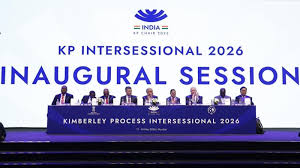
India, currently serving as the Chair of the Kimberley Process (KP) for 2026, hosted the KP Intersessional Meeting in Mumbai to fortify the global regulatory framework and ensure the integrity of the natural diamond supply chain.
- The meeting focuses on the Kimberley Process Certification Scheme (KPCS), an international initiative established under UN General Assembly Resolution 55/56 (2000) to prevent “conflict diamonds” from entering the legitimate global market.
- India is one of the founding members of the KPCS.
- India’s Strategic Theme: India’s Chairship theme for 2026 focuses on the 3Cs – credibility, compliance and consumer confidence – to enhance the transparency and sustainability of the natural diamond sector.
- Economic Significance: The event underscores India’s position as a global leader in diamond cutting and polishing, with the country processing nearly 90% of the world’s diamonds and accounting for around 75% of global diamond turnover by value.
- Although India is not a major producer, it imports rough diamonds mainly from the UAE, Belgium and Russia, with major industry hubs in Surat and Mumbai.
- India is also emerging as a major producer of Lab-Grown Diamonds (LGDs), contributing over 15% of global output in 2023.
Kimberley Process:
- The KP is an international forum launched in 2000 by Southern African countries to regulate the trade in rough diamonds.
- It aims to prevent the trade of conflict diamonds, which are diamonds used by rebel groups to finance armed conflicts against legitimate governments.
- KP is not a formal international organisation or legally binding treaty. It operates through burden-sharing contributions from participating countries with support from industry and civil society.
- Its rules are implemented through national laws rather than international legal obligations.
- The KP has 60 participants representing 86 countries (with the European Union acting as a single bloc), incorporating industry observers like the World Diamond Council and the Civil Society Coalition.
- The KP members account for approximately 99.8% of global rough diamond production.
- As the Chair, India aims to modernize the process to remain effective in a shifting geopolitical environment, ensuring that natural diamonds are recognized as a sustainable and responsibly sourced product.
Birth Anniversary of Rabindranath Tagore:

The Prime Minister paid tribute to Gurudev Rabindranath Tagore on Pochishe Boishakh, which fell on 9th May in 2026.
- Pochishe Boishakh, the 25th day of the Bengali month of Boishakh, is celebrated as Rabindranath Tagore’s birth anniversary in the Bengali tradition.
- Rabindranath Tagore was born on 7th May 1861 in Kolkata into the prominent Tagore family associated with the Bengal Renaissance.
- He became the first Asian to win the Nobel Prize in Literature in 1913 for his work Gitanjali.
- He composed “Jana Gana Mana”, the National Anthem of India, and also wrote “Amar Sonar Bangla”, the National Anthem of Bangladesh.
- His major works include Gitanjali, Ghare-Baire, Gora, Chokher Bali and Kabuliwala.
- Tagore supported the Swadeshi movement during the Partition of Bengal in 1905 and used songs to promote unity and self-reliance. He renounced his British knighthood after the Jallianwala Bagh Massacre in 1919
- He criticised aggressive Western-style nationalism and advocated an inclusive, ethical and humanistic nationalism rooted in universal values.
- He founded Visva-Bharati University at Santiniketan, promoting holistic and culturally rooted education.
- Tagore enriched Indian society through literature, music, art, education and nationalist thought, while advocating universalism and humanism.
Government Revises SOP for FDI Approvals:
The Ministry of Commerce issued a revised Standard Operating Procedure (SOP) for processing Foreign Direct Investment (FDI) applications to improve transparency and efficiency.
- The updated SOP fixes a maximum processing timeline of 12 weeks for FDI applications, compared to the earlier 10-week limit under the 2017 SOP.
- All FDI proposals must now be filed through the Foreign Investment Facilitation (FIF) Portal or National Single Window System (NSWS), making the process fully paperless.
- DPIIT will identify the concerned ministry within two days and circulate proposals to agencies such as Reserve Bank of India (RBI), Ministry of Home Affairs(MHA) and Ministry of External Affairs for examination.
- Investments in sensitive sectors like defence, telecom, broadcasting, civil aviation, space and mining will require security clearance from the Ministry of Home Affairs (MHA).
- FDI proposals involving equity investment above ₹5,000 crore will require approval from the Cabinet Committee on Economic Affairs (CCEA).
- Investments from India’s land-border countries, such as China, Pakistan, Bangladesh, Nepal, Bhutan, Myanmar and Afghanistan, or those with beneficial owners from these countries, will require MHA security clearance.
- However, select strategic sectors such as electronics, advanced battery components, and rare-earth processing will receive expedited processing within 60 days.
Global Forest Goals Report 2026:

A new United Nations assessment titled Global Forest Goals Report 2026 warned that rising demand for fuelwood and charcoal has emerged as a major driver of global forest degradation, particularly in Africa and parts of Asia.
- The Global Forest Goals Report 2026 is a UN assessment report prepared by the UN Department of Economic and Social Affairs (UNDESA) and the UN Forum on Forests Secretariat.
Key Findings in the Report:
- Global Forest Decline: Forest cover declined from 4.18 billion hectares (2015) to 4.14 billion hectares (2025), with a net annual loss of 4.12 million hectares.
- Primary Forest Loss: The world lost nearly 16 million hectares of primary forests between 2015–2025, with South America recording the largest decline.
- Fuelwood as a Major Driver: Growing demand for fuelwood and charcoal emerged as a major cause of forest degradation, especially in sub-Saharan Africa and parts of Asia.
- Agricultural Expansion: Conversion of forests into agricultural land remained the largest global driver of deforestation.
- Climate Pressures Intensifying: Droughts, heatwaves, wildfires, pests, and diseases are accelerating forest degradation worldwide.
- Restoration Gap: Although 91 countries pledged to restore 190 million hectares of forests, only 44 million hectares had been restored by 2025.
- Asia’s Progress: Asia recorded the highest restoration performance, restoring over 31 million hectares (42.2% of pledged area).
National Florence Nightingale Awards for 2026:
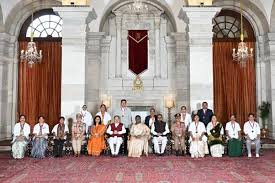
The President of India, Smt. Droupadi Murmu, presented the National Florence Nightingale Awards for 2026 to nursing personnel at Rashtrapati Bhavan.
- The National Florence Nightingale Award is the highest national honor bestowed upon a nurse in India. It recognizes nursing professionals who have rendered meritorious services to society through their compassion, devotion to duty, and tireless efforts in patient care.
- Established In: The awards were instituted in 1973 by the Ministry of Health and Family Welfare, Government of India.
- The primary aim is to recognize and reward the exemplary service and excellence of nursing personnel, including Registered Nurses, Midwives (ANMs), and Lady Health Visitors, who play a crucial role in delivering quality healthcare, often in challenging circumstances.
- Key Features:
- Annual Recognition: Presented every year on May 12th to coincide with the birth anniversary of Florence Nightingale.
- Diverse Categories: The award is given to nursing personnel working in Central and State Government facilities, as well as Private, Missionary, and Voluntary Organizations.
- Component of the Award: Each award consists of a Certificate of Merit, a Medal, and a Cash Prize (currently ₹50,000).
- Prestigious Selection: Awardees are selected through a rigorous process that evaluates their impact on community health, innovative practices, and long-term dedication to the profession.
Florence Nightingale:
- Florence Nightingale (1820–1910) was a British social reformer, statistician, and the founder of modern nursing. Known as The Lady with the Lamp for her habit of making rounds at night to tend to wounded soldiers, she transformed nursing from an untrained job into a highly respected medical profession.
India’s Forex Stress and the Call for Economic Austerity:
The Prime Minister urged citizens to reduce non-essential gold purchases, overseas travel and fuel consumption amid concerns over India’s foreign exchange reserves, which declined by USD 38 billion in two months to around USD 691 billion as of May 2026.The pressure was driven largely by a record gold import bill and volatile global oil prices, while economists warned that excessive import restrictions could slow economic growth.India’s foreign exchange reserves declined sharply due to RBI intervention, rising crude oil prices, record gold imports and high overseas spending, prompting the government to call for economic austerity and reduced non-essential dollar outflows.While measures to conserve forex can support rupee stability and reduce imported inflation, excessive import restrictions may hurt manufacturing, exports, investment flows and overall economic growth. India’s foreign exchange reserves declined sharply to around USD 690.69 billion by May 2026 as the Reserve Bank of India(RBI) intervened in currency markets to stabilise the Rupee, which recently crossed the 95 mark against the US dollar amid global uncertainties.
Healing the Rural-Urban Health Divide:
Despite the approval of 11,682 new MBBS seats and 8,967 postgraduate seats for 2025-26, India’s public health system continues to struggle with a critical shortage of doctors in rural areas due to flawed deployment policies and inadequate incentives.Despite a massive increase in PG seats since 2014, the vacancy rate for specialists in rural Community Health Centres (CHCs) stands at a staggering 79.9%, with a consistent shortfall of approximately 17,500 specialists.The situation is particularly bleak in large states such as Madhya Pradesh, Bihar, Uttar Pradesh, Rajasthan, Gujarat, and Tamil Nadu, which have a shortage of 94%, 80.9%, 74.4%, 80.3%, 88.1%, and 85.2%, respectively.While 20,649 new undergraduate and postgraduate (PG) seats have been approved, 27 of the 43 new colleges are in the private sector, which lacks obligations to serve the public health system or rural areas.
Operational Hurdles in CHCs: A functional CHC requires a team of 5 specialists (Physician, Surgeon, Obstetrician, Paediatrician, and Anaesthetist); however, current specialist numbers can fully operationalize only 882 out of 5,491 existing CHCs.While states continue to construct new CHCs to secure Central Government funds, many of these facilities function merely as Primary Health Centres (PHCs) due to the acute shortage of specialized manpower.Even 11 out of 18 AIIMS report nearly 40% vacancies in teaching and research faculty, threatening the quality of specialist training.The central health budget prioritizes infrastructure (buildings) over operational needs like drugs, diagnostics, ambulance services, and salaries. Also, there is a notable absence of a defined policy to link the increase in Postgraduate (PG) medical seats with the mandatory filling of specialist vacancies in public health institutions.