
Today’s Current Affairs: 25th May 2026 for UPSC IAS exams, State PSC exams, SSC CGL, State SSC, RRB, Railways, Banking Exam & IBPS, etc
Table of Contents
Sohagi Barwa Wildlife Sanctuary:
A leopard was found dead in the Sohagi Barwa Wildlife Sanctuary recently, with officials awaiting the results of a post-mortem to determine the cause of death.
- Sohagi Barwa Wildlife Sanctuary is situated in Uttar Pradesh.
- On the northern side, the Sanctuary shares the international boundary with Nepal, and on the eastern border is Bihar’s Valmiki Tiger Reserve.
- The sanctuary is part of the larger Terai Arc Landscape.
- It is drained by the great Gandak, the little Gandak, Pyas, and Rohin
- It features mostly flat terrain, gently sloping from northwest to southeast.
- Nearly 75% of the area consists of Sal forest, and other humid areas are covered with Jaamun, Gutal, Semal, Khair trees, etc.
- The lower region of the sanctuary, which is waterlogged during rains, consists of grasslands and patches of cane forests.
- It is inhabited by a variety of animals, which mainly includes Leopard, Tiger, Jungle Cat, Small Indian Civet, Langur, Deer, Blue Bull, Wild boar, Porcupine, etc.
- Resident and migratory birds like peafowls, parakeets, woodpeckers, drongos, and several species of eagles and owls thrive here.
- During winter, migratory birds from Central Asia visit the wetlands.
Oreshnik Missile: In News
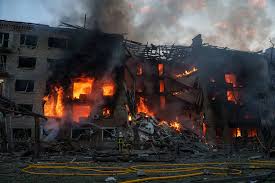
The Ukrainian President said recently that Russia used the powerful hypersonic Oreshnik ballistic missile during a mass drone and missile attack on Kyiv.
- Oreshnik Missile is a Russian-made intermediate-range hypersonic ballistic missile.
- It was first used by Russia in November 2024 to target the Ukrainian city of Dnipro.
- The missile is based on the RS-26 Rubezh ballistic missile, and, like other Russian weapons systems, Oreshnik is capable of carrying nuclear as well as conventional warheads.
- It is mounted on a mobile transporter and launcher for rapid deployment and concealment.
- Equipped with multiple independently targetable re-entry vehicles (MIRVs), the “Oreshnik” can carry six to eight warheads, hitting multiple targets simultaneously.
- With a reported range of 5,000 kilometres, the missile can strike targets across Europe and even reach the west coast of the United States.
- It can travel at Mach 10, around 10 times the speed of sound or approximately 2.5 to 3 kilometres per second, making interception extremely difficult.
Jharia Coalfield : New Study
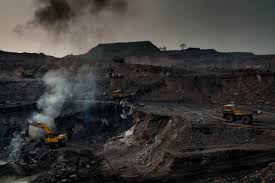
A new study has found that the long-burning underground fires in the Jharia Coalfield may be burning hotter and emitting more greenhouse gases than previously estimated.
- Jharia Coalfield is located in the Dhanbad district of Jharkhand.
- It lies in the Damodar River valley and covers about 280 sq.km.
- It is known for its vast deposits of high-quality coking coal and holds the largest coal reserves in the country, having estimated reserves of 19.4 billion tonnes.
- Coal mining began in Jharia in 1894, and there are now more than 20 underground mines and several large open-cast coal mines
- Underground fires were first noted in Jharia in 1916, and they have continued to spread, destroying properties and killing miners.
- Coking Coal (or metallurgical coal) is a naturally occurring sedimentary rock found within the earth’s crust.
- It typically contains more carbon, less ash, and less moisture than thermal coal, which is used for electricity generation.
- It is a bituminous coal with a suitable quality that allows the production of metallurgical coke, or simply named
- Coke is the main product of the high-temperature carbonisation of coking coal.
- It is an essential input material in steelmaking, as it is used to produce pig iron in blast furnaces, acting as the reducing agent of iron ore and as the support of the furnace charge.
- The largest producers of coking coal were China, Australia, Russia, USA, and Canada.
- India has an estimated 37.37 billion tonnes of coking coal resources, largely located in Jharkhand, with additional reserves in Madhya Pradesh, West Bengal, and Chhattisgarh.
Pyrite : New Discovery
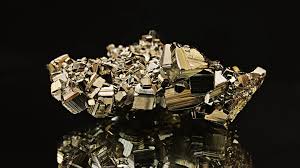
Geologists have discovered a rare, microscopic sunflower-shaped mineral, pyrite, commonly known as fool’s gold, within the lignite coal reserves of Gujarat, India.
- Pyrite is a naturally occurring iron disulfide mineral.
- It has the chemical formula FeS2 and is the most common sulfide mineral.
- It is a brass-yellow mineral with a bright metallic luster.
- The name comes from the Greek word pyr, “fire,” because pyrite emits sparks when struck by metal.
- Pyrite is called fool’s gold because its colour is deceptively similar to that of a gold
- Nodules of pyrite have been found in prehistoric burial mounds which, suggests their use as a means of producing fire.
- Pyrite is found in a wide variety of geological settings, from igneous, sedimentary, and metamorphic rock to hydrothermal mineral deposits, as well as in coal beds and as a replacement mineral in fossils.
- It can be either disseminated throughout igneous rock or concentrated in layers, depending on the depositional mechanism and environment.
- It forms in sedimentary rocks in oxygen-poor environments in the presence of iron and sulfur. These are usually organic environments, such as coal and black shale, where decaying organic material consumes oxygen and releases sulfur.
- Pyrite often replaces plant debris and shells to create pyrite fossils or flattened discs called pyrite dollars.
- In calcite and quartz veins, pyrite oxidizes to iron oxides or hydroxides such as limonite, an indicator that there is pyrite in the underlying rock. Such oxidized zones are called “gossan,” which appears as rusty zones at the surface.
- For many years, Spain was the largest producer.
- Today Italy and China are the world’s largest producers, followed by Russia and Peru.
- It is a source of iron and sulfur and is used for the production of sulfuric acid.
- It is used to create iron sulfate that is used to make nutritional supplements, ink, lawn conditioner, water treatment and flocculation, moss killer, and many other chemical processes.
- Iron sulfate, which comes from pyrite, is used to treat iron-deficiency anemia.
- Some types of pyrite contain enough microscopic gold to warrant mining them as a gold ore.
Nereid: Third-largest moon of Neptune

New observations from the James Webb Space Telescope suggest that Nereid may not have originated from the Kuiper Belt, as its crystalline water ice and unique spectral signature differ from known Kuiper Belt objects.
- Nereid is the third-largest moon of Neptune.
- It was discovered by Dutch astronomer Gerard Kuiper, who named the moon after the sea nymphs in Greek mythology.
- It is unique because it has one of the most eccentric orbits of any moon in our solar system.
- It is so far from Neptune that it requires 360 Earth days to make one orbit.
- Like so many other moons in the outer solar system, Nereid was long suspected of migrating to Neptune’s neighborhood from the Kuiper Belt.
- But using the Webb telescope, scientists determined that Nereid’s composition was inconsistent with Kuiper Belt objects — it had too much ice.
- That suggests it was part of Neptune’s system all along.
- Kuiper Belt is a large, doughnut-shaped cold region of icy bodies located in the outer reaches of our solar system beyond the orbit of Neptune.
- It’s sometimes called the “third zone” of the solar system.
- It is similar to the main asteroid belt, found between Mars and Jupiter, in that its objects are composed of material leftover from the formation of the solar system around 4.6 billion years ago.
- However, it is far larger than the main asteroid belt, up to 20 times as wide and 20 to 100 times its mass.
- Like the asteroid belt, it has also been shaped by a giant planet, although it’s more of a thick disk (like a donut) than a thin belt.
- The icy bodies in the Kuiper Belt are called “Kuiper Belt Objects”, or KBOs for short. Pluto is the best-known KBO.
- In addition to rock and water ice, objects in the Kuiper Belt also contain a variety of other frozen compounds like ammonia and methane.
Stroke : World Health Assembly Resolution
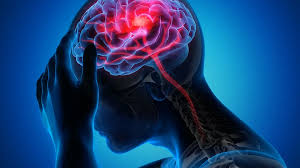
The World Health Assembly (WHA) recently passed the first-ever resolution on strokes, urging member states to recognise the medical condition as a public health priority.
- Stroke is a medical emergency that occurs when blood flow to the brain is interrupted, either due to a blockage or bleeding.
- This lack of blood flow can lead to brain cell death and serious complications.
- A stroke can cause lasting brain damage, long-term disability, or even death.
- The types of strokes are:
- Ischaemic stroke: A blood clot blocks a blood vessel in your brain, leading to loss of blood flow.
- Haemorrhagic stroke: Intracerebral haemorrhage (ICH) by rupture of a blood vessel in the brain leading to bleeding.
- Transient ischaemic attack (TIA): A short period of symptoms similar to those of a stroke, caused by a brief blockage of blood flow to the brain. A TIA usually lasts only a few minutes and doesn’t cause long-term damage.
- Most of the stroke burden is attributable to 10 modifiable risk factors, including high blood pressure, air pollution, smoking, high LDL cholesterol, diet high in sodium, high fasting blood glucose, kidney dysfunction, excess body weight, physical inactivity, and harmful use of alcohol.
- Non‑modifiable risk factors are:
- Age
- A prior stroke
- Pre-existing cardiac conditions (e.g., atrial fibrillation and heart failure) and chronic kidney disease.
- The symptoms of a stroke often happen quickly. They include:
- Sudden numbness or weakness of the face, arm, or leg (especially on one side of the body).
- Sudden confusion, trouble speaking, or understanding speech.
- Sudden trouble seeing in one or both eyes.
- Sudden difficulty walking, dizziness, loss of balance, or coordination.
- Sudden severe headache with no known cause.
- Treatment:
- Treatments for stroke include medicines, surgery, and rehabilitation.
- Prevention of another stroke is also important, since having a stroke increases the risk of getting another one.
- Prevention may include heart-healthy lifestyle changes and medicines.
Indian Cybercrime Coordination Centre : In News

The Indian Cybercrime Coordination Centre (I4C) recently identified a sophisticated phishing campaign targeting Apple iPhone users whose devices have been lost or stolen, according to an advisory issued by the agency.
- I4C has been established under the Ministry of Home Affairs (MHA) to act as a nodal point at the National level in the fight against cybercrime.
- It is designed to provide a framework and ecosystem for law enforcement agencies (LEAs) to deal with cybercrime in a coordinated and comprehensive manner.
- I4C brings together academia, industry, public, and government in the prevention, detection, investigation, and prosecution of cybercrimes.
- Headquarters: New Delhi.
- Objectives:
- To act as a nodal point to curb Cybercrime in the country.
- To strengthen the fight against Cybercrime committed against women and children.
- Facilitate easy filing of cybercrime-related complaints and identifying cybercrime trends and patterns.
- To act as an early warning system for LEAs for proactive cybercrime prevention and detection.
- Awareness creation among the public about preventing cybercrime.
- Assist states/UTs in the capacity building of Police Officers, Public Prosecutors and Judicial Officers in the area of cyber forensics, investigation, cyber hygiene, cyber-criminology, etc.
- Identify the research problems and needs of LEAs and take up R&D activities in developing new technologies and forensic tools in collaboration with academia/research institutes within India and abroad.
- Suggest amendments, if required, in cyber laws to keep pace with fast-changing technologies and international cooperation.
- To coordinate all activities related to the implementation of Mutual Legal Assistance Treaties (MLAT) with other countries related to cybercrimes in consultation with the concerned nodal authority in MHA.
- Components:
- National Cybercrime Threat Analytics Unit (TAU)
- National Cybercrime Reporting Portal (NCRP)
- National Cybercrime Training Centre (NCTC)
- National Cybercrime Research and Innovation Centre
- Platform for Joint Cyber Crime Coordination Team
- Cybercrime Ecosystem Management Unit
- National Cybercrime Forensic Laboratory (Investigation) Ecosystem
Phishing:
- It is a type of cyberattack that uses deceptive messages from seemingly reputable sources to trick victims into revealing sensitive information like login credentials, passwords, or financial data for malicious use.
- Attackers utilize various sophisticated methods, including domain spoofing, fake websites, and generative AI, to execute a phishing attack via email, SMS, phone calls, or social media.
- The most common examples of phishing are used to support other malicious actions, such as account takeovers, ransomware attacks, or business email compromise.
Himalayan Tricarinate Hill Turtle:
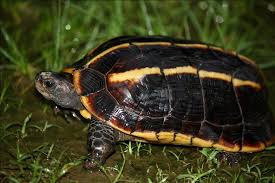
Forest officials recently found the rare Himalayan Tricarinate Hill Turtle in the Udanti Sitanadi Tiger Reserve forests of Chhattisgarh, marking an unusual sighting of the Himalayan species in central India.
- It is a small, terrestrial turtle species belonging to the family Geoemydidae.
- It derives its name from the three distinct keels on its shell, which provide it with a striking appearance.
- Scientific Name: Melanochelys tricarinata
- It is found along the narrow sub-Himalayan belt, stretching across northeastern India, southern Nepal, southern Bhutan, and northern Bangladesh.
- The species primarily inhabits temperate forests, as well as grasslands and foothills of the Himalayas.
- It is characterised by a highly domed carapace with three longitudinal keels.
- It has a small olive-to-dark coloured head with a narrow snout.
- It has scaly limbs adapted for terrestrial movement.
- Conservation Status:
- IUCN Red List: Endangered
Hutti Gold Mines Company Limited:
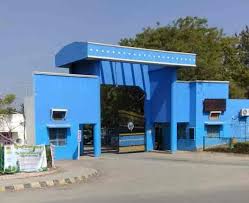
Hutti Gold Mines, the only functional gold mine in the country, earned a whopping ₹633.34 crores more in 2025-26, thanks to the skyrocketing price of gold in the world market.
- Hutti Gold Mines Company Limited (HGML) is a Government of Karnataka undertaking established in 1947.
- It has the unique distinction of being the only producer of primary gold in the country.
- HGML has been active in the exploration, development, and exploitation of gold deposits occurring in Karnataka.
- The company’s corporate office is situated in Bangalore.
- It currently processes the ore from the Hutti Gold mine and two satellite mines, the Uti opencast mine and the Heera-Buddinni exploratory underground mine.
- The Hutti mine is probably one of the most ancient metal mines in the world, dating to the Pre-Ashokan period.
India’s Cold Water Fisheries:
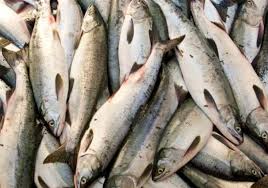
India’s cold water fisheries sector is emerging as an important component of the Blue Economy by generating livelihoods, improving nutrition, promoting eco-tourism, and supporting sustainable mountain development.
- Cold-water fisheries are practiced in high-altitude snow-fed rivers, streams, lakes, and reservoirs with temperatures ranging between 5°C and 25°C, dissolved oxygen above 6 mg/L, and pH levels between 6.5 and 8.0.
- They flourish across Jammu & Kashmir, Ladakh, Himachal Pradesh, Uttarakhand, Arunachal Pradesh, Sikkim, Meghalaya, and Nagaland, along with hill districts of West Bengal, Kerala, Karnataka, and Tamil Nadu.
- Species such as rainbow trout, golden mahseer, and snow trout are cultivated using specialized infrastructure, including hatcheries, raceways, RAS, biofloc systems, and cold chain facilities.
- Trout farming is generally practiced above 1,500 metres altitude, while mahseer culture is suitable at relatively lower elevations.
- Jammu & Kashmir has emerged as India’s leading trout-producing region, followed by Himachal Pradesh and Uttarakhand.
- Policy Initiatives:
- Under the Pradhan Mantri Matsya Sampada Yojana (PMMSY) during 2020–26, projects worth over ₹5,638.76 crore sanctioned specifically for cold-water states.
- The Fisheries and Aquaculture Infrastructure Development Fund (FIDF) approved projects worth ₹7,761.78 crore during 2018–26 for hatcheries, training centres, and fisheries infrastructure.
- The Blue Revolution Scheme (2015–20) laid the foundation for scientific trout farming through support for raceways, hatcheries, and reservoir stocking.
- Under Pradhan Mantri Matsya Kisan Samridhi Sah-Yojana (PM-MKSSY), with an outlay of ₹6,000 crore, support is being provided for aquaculture insurance, performance grants to fisheries startups/microenterprises, and value chain efficiency.
- The Government has also issued Model Guidelines for Cold Water Fisheries Development, 2026, covering site selection, hatchery standards, disease management, biosecurity, branding, certification, e-trading, and skill development.
- India is also strengthening international collaborations with Norway and Iceland for knowledge exchange.



