
Today’s Current Affairs: 1st jun 2026 for UPSC IAS exams, State PSC exams, SSC CGL, State SSC, RRB, Railways, Banking Exam & IBPS, etc
Table of Contents
Mettur Dam:
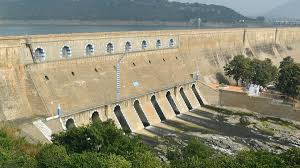
The probability of the Mettur dam getting opened on the scheduled date appears to be remote, in view of the poor storage and the forecast of a poor southwest monsoon (June-September) this year.
- Mettur Dam is located at Mettur, Salem District, in Tamil Nadu.
- It is one of the largest dams in India and the largest in Tamil Nadu.
- It is constructed in a gorge, where the Kaveri River enters the plains.
- Built in 1934, it took 9 years to complete. The entire work was supervised by the then Governor of Madras, Sir George Stanley.
- It was constructed for the main purpose of capturing Kaveri waters for irrigation, drinking water supply, and power generation.
- It is a masonry gravity dam.
- The reservoir formed by the dam is known as the Stanley Reservoir. It has the contribution to produce 240 MW of hydroelectricity.
- There is a park adjoining the dam on the opposite side with lawns and fountains and also has the Muniappan/Aiyanar statue in the vicinity.
- The dam receives inflows from its own catchment area, Kabini Dam, and Krishna Raja Sagara Dams located in Karnataka.
- It provides irrigation facilities to parts of Salem, the length of Erode, Namakkal, Karur, Tiruchirappali, and Thanjavur districts for 271,000 acres of farmland.
Doctrine of Promissory Estoppel:

The Supreme Court recently observed that the doctrine of promissory estoppel cannot be invoked to claim a benefit under a government policy which was never aimed to benefit a specific class of industrial unit.
- It is a legal doctrine that states that if someone reasonably relies on a promise and acts (or fails to act) in a way that causes them some harm because of that promise, the promise can be enforced.
- Promissory estoppel prevents the promisor from arguing against the enforcement of a promise.
- The doctrine applies when the promisor has made a promise to the promisee.
- The promisee must have relied on the promise and suffered a detriment due to the non-performance of the promise.
- The doctrine prevents the promisor or enterprise from going back on its word or promise.
- The doctrine enables the injured party or the promisee to recover on a promise.
- The doctrine seeks to protect the rights of a promisee or aggrieved party against the promisor.
- Thus, Promissory estoppel requirements include a clear promise (whether oral or in writing), reliance on that promise by the promisee, a detriment suffered, and a need to avoid injustice.
- The doctrine varies from country to country. Cases of promissory estoppel can result in either reliance or expectation damages, depending on the jurisdiction and circumstances.
- In a 1981 decision in Chhaganlal Keshavalal Mehta v. Patel Narandas Haribhai, the SC lists a checklist for when the doctrine can be applied.
- First, there must be a clear and unambiguous promise.
- Second, the plaintiff must have acted relying reasonably on that promise.
- Third, the plaintiff must have suffered a loss.
Giant Malabar Squirrel:
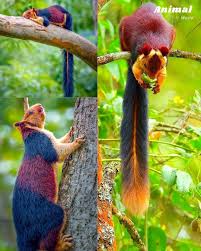
A rare Giant Malabar Squirrel has been recently spotted in the Devpur forest area of Chhattisgarh’s Barnawapara forest.
- The Malabar Giant Squirrel, also known as the Indian Giant Squirrel, is a large multicoloured tree squirrel species endemic to India.
- It is one of the largest squirrels in the world.
- Scientific Name: Ratufa indica.
- It is found primarily in the Western Ghats, Eastern Ghats, and Satpura Range.
- It is found in areas with elevation ranging from 180 to 2,300 metres in tropical deciduous, semi-deciduous, and wet evergreen forests and
- It is arboreal and spends most of its time in the upper canopy, leaping from tree to tree with incredible agility, jumping up to 6 metre length.
- It makes its shelter within holes in trees.
- It is Maharashtra’s state animal and locally known as Shekru.
- They are typically solitary animals, being seen only rarely in pairs during the breeding season.
- Instead of running, it frequently freezes or flattens itself against the tree stem when threatened.
- Conservation Status:
- IUCN Red List: Least Concern
Beaufort Castle:
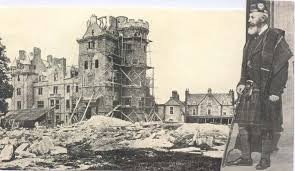
Beaufort Castle — known locally as Qalaat al-Shaqif or the “Castle of the High Rock”, is a medieval fortress situated atop a commanding hill near the city of Nabatieh in southern Lebanon.
- Originally built by Crusaders in the 12th century, the castle has changed hands multiple times throughout history, passing through Crusader, Muslim, Mamluk, and Ottoman control.
- It is one of the best-preserved examples of medieval castles in the Near East.
- Its impressive architecture, with a high castle and a low castle, demonstrates its defensive role in the Middle Ages.
- It overlooks vast stretches of southern Lebanon, the Litani River valley, and parts of northern Israel, making it a position of considerable strategic value.
- The castle has also been at the centre of fighting in the past.
- In 1982, amid the Lebanon War, Israel captured Beaufort Castle from the Palestine Liberation Organization (PLO) and held it until it withdrew from Lebanon in 2000.
Design Linked Incentive Scheme: In News

The Union Minister said that India’s design-linked incentive (DLI) scheme is showing good results.
- Design Linked Incentive Scheme is a key instrument in advancing India’s ambition to develop a strong fabless capability.
- The scheme aims to reduce import dependence, strengthen supply chain resilience, and enhance domestic value addition.
- Start-ups and MSMEs are eligible for financial incentives and design infrastructure support for semiconductor product design & deployment.
- Other domestic companies are eligible for financial incentives for deploying semiconductor designs.
- Semiconductor design across the full lifecycle—from design and development to deployment—covering Integrated Circuits (ICs), chipsets, Systems-on-Chip (SoCs), systems and IP cores.
- It is implemented by the Ministry of Electronics and Information Technology (MeitY) under the Semicon India Programme.
- Nodal Agency: C-DAC (Centre for Development of Advanced Computing).
- Financial Incentives:
- Product Design Linked Incentive:
- Reimbursement of up to 50% of eligible expenditure.
- The reimbursement is capped at ₹15 crore per application.
- The support is available to entities involved in semiconductor design for: Integrated Circuits (ICs) Chipsets Systems on Chips (SoCs) Systems & IP Cores Semiconductor-linked designs.
- Deployment Linked Incentive:
- Incentives of 6% to 4% of net sales turnover are provided for five years.
- The incentive is capped at ₹30 crore per application.
- The minimum cumulative net sales required over Years 1–5 is 1 crore for startups/ ₹ MSMEs and 5 crore for other domestic companies.
Indopottia Himalayensis : New Species Of Moss

Scientists from the Botanical Survey of India have discovered a new species of moss and named it as Indopottia himalayensis.
- It is a new moss species discovered from high-altitude forests of the Western Himalayas in Uttarakhand state.
- It is only the third species of its kind ever identified globally.
- Other two species reside far away in the Western Ghats of southern India and the mountains of Thailand.
- The research team chose the name Indopottia himalayensis as a tribute to the magnificent Himalayan mountain range.
- It is entirely terrestrial, thriving directly on soil-covered rocks.
- This moss produces a single, upright, cylindrical spore-capsule.
- This capsule features a distinctive lid that bends sideways when dry.
- Its leaves lack the specific patch of transparent, bulging cells found in its closest relatives.
- Moss is a small nonvascular spore-bearing land plant belongs to the taxonomic division Bryophyta.
- It is among the earliest land plants and has colonised some of the harshest environments on the planet, including Antarctica, volcanic fields, and deserts.
- There are three main types: peat moss, granite moss and true moss.
- Mosses are distributed throughout the world except in salt water.
- It is the small plant commonly found in damp, shady spots is already known for its resilience on Earth.
James Webb Space Telescope: In News

The NASA James Webb Space Telescope (JWST) captured weather of exoplanet which is nearly 700 light-years away.
- James Webb Space Telescope was launched in December 2021.
- It is the largest and most powerful space observatory built through collaboration between NASA, European Space Agency (ESA), and Canadian Space Agency (CSA).
- JWST orbits the L2 Lagrange Point, about 1.5 million km beyond Earth, enabling a stable position for deep-space observation.
- The telescope operates primarily in the infrared spectrum and is equipped with components such as:
- Optical Telescope Element (OTE): It collects light from distant objects.
- Integrated Science Instrument Module (ISIM): It houses all cameras and instruments.
- Sunshield: It protects sensitive instruments from solar radiation.
- Spacecraft Bus: It provides necessary operational support.
- Objectives of James Webb Space Telescope:
- To look for galaxies that formed just after the Big Bang.
- To determine the evolution of galaxies from their creation to the present.
- To examine the stages of star creation till the formation of planetary systems.
- To investigate the potential for life in planetary systems by measuring their physical and chemical features.
Ahilyabai Holkar : Tribute

The Prime Minister of India paid tributes to Lokmata Ahilyabai Holkar on her birth anniversary.
- Maharani Ahilyabai Holkar (31 May 1725 – 13 August 1795) was a ruler of the Malwa territory, a part of the Maratha Confederacy, from 1767 to 1795. She is known as Punyashlok(“One as Pure as the Sacred Chants”).
- John Keay, the British historian, gave the queen the title of ‘The Philosopher Queen’.
- She was born on May 31, 1725, in the village of Chondi in Jamkhed, Ahmednagar(Maharashtra), and her father Mankoji Rao Shinde was the village head.
- She got married to Khanderao Holkar (son of Malhar Rao Holkar) in 1733.
- Ahilyabai’s husband Khanderao Holkar was killed in the battle of Kumbher in 1754.
- Her father-in-law, Malhar Rao passed away in 1766, and in the following year, she lost her son, Male Rao.
- She ascended the throne and became the ruler of Indore on December 11, 1767.
- She had appointed Tukoji Rao Holkar as the commander of her army.
- She made Maheshwar in Madhya Pradesh as the capital of the Holkar dynasty.
- She was instrumental in rebuilding major temples, notably the Kashi Vishwanath temple in 1780, and supported infrastructure such as rest houses and public ghats at various pilgrimage sites.
- She patronised stalwarts such as Marathi poet Moropant, Shahir Ananta Gandhi, and Sanskrit scholar Khushali Ram.
- She established a textile industry in Maheshwar, which today is very famous for its Maheshwari sarees.
- Understanding the importance of education, she established many gurukuls and schools.
- In a revolutionary move for her time, she formed a women’s army and trained them in warfare, self-defense, and administrative security.



