
Coal Gasification: In News
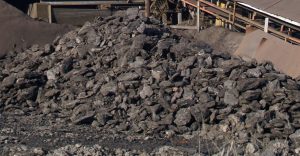
Union Coal and Mines Minister announced a ₹37,500-crore incentive package during a roadshow to promote surface coal gasification.
- Coal gasification is a chemical process that breaks down and converts coal or lignite into synthetic gas, commonly known as syngas.
- Instead of burning the solid coal directly (which produces heavy smoke and ash), gasification splits its elemental bonds under high temperature and pressure, transforming the fuel into a clean, gaseous mixture composed primarily of carbon monoxide (CO), hydrogen (H2), and carbon dioxide (CO2).
- Raw coal is pulverized and fed into a specialized gasification reactor. It is mixed with controlled streams of oxygen (or air) and steam under intense heat (typically ranging from 800OC to over 1400OC).
- Because the oxygen volume is strictly controlled, the coal does not catch fire or combust. Instead, the organic compounds undergo thermal cracking and partial oxidation, producing crude syngas.
- Indian coal features an exceptionally high ash content (often exceeding 40%) and varying calorific values. To counter this, India utilizes Pressurized Fluidized-Bed Gasification (PFBG).
- In this system, upward-blowing gas streams physically lift and suspend the heavy coal particles, creating a boiling fluid-like state.
- This allows the heat to gasify the carbon uniformly while cleanly extracting the heavy mineral ash from the bottom without melting it into slag.
- The crude syngas is cleaned to remove impurities like sulfur and tar. The refined hydrogen and carbon monoxide are then chemically recombined using catalysts to produce liquid fuels, fertilizers, or clean energy.



