
Today’s Current Affairs: 2nd jun 2026 for UPSC IAS exams, State PSC exams, SSC CGL, State SSC, RRB, Railways, Banking Exam & IBPS, etc
Table of Contents
Prison Statistics India Report 2024:
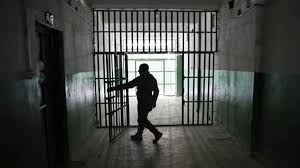
The National Crime Records Bureau (NCRB) has released its latest Prison Statistics India report for 2024. The report reveals that while the national prison occupancy rate fell to a decade-low of 112.7%, overcrowding remains a chronic structural crisis across the country.
- This ongoing crisis is primarily driven by an alarmingly high share of undertrial prisoners, sluggish capacity expansion, and severe institutional staff vacancies.
- Despite a decline in the national prison occupancy rate to 112.7% in 2024, overcrowding remains a major challenge due to the high proportion of undertrial prisoners (73%), slow judicial processes, inadequate bail access, and institutional shortages.
- Prison overcrowding undermines Article 21 and inmate dignity, disproportionately affects poor and marginalized communities, and necessitates reforms such as effective implementation of BNSS 2023, the Model Prisons Act 2023, fast-track courts, bail reforms, and expansion of open prisons.
Key Highlights of the Prison Statistics India report for 2024:
- Surpassing Sanctioned Capacity: At the end of 2024, India operated 1,333 jails with a collective sanctioned capacity of 4.53 lakh inmates.
- However, the actual inmate population exceeded 5.11 lakh, forcing the system to run well over its intended limits.
- Regional Deficits: More than half of the States and Union Territories (UTs) registered occupancy rates exceeding 100% in 2024.
- Delhi recorded the highest prison occupancy rate in India at 194.6% in 2024, followed by Meghalaya (163.5%), Jammu & Kashmir (148.3%), and Madhya Pradesh (147.1%).
- Jammu and Kashmir also witnessed a massive surge, with occupancy rates compounding from a mere 78% in 2015 to over 148% in 2023 and 2024.
- Conversely, states like Chhattisgarh drastically reduced overcrowding, dropping its occupancy rate from an extreme 234% in 2015 to 127.6% in 2024, alongside similar downward trends in Uttar Pradesh.
- Modest Capacity Growth: Though the absolute number of physical jails remains lower than the pre-pandemic era, overall prison capacity expanded by 24% between 2015 and 2024.
- This expansion was driven by targeted renovations and structural expansions across 2,268 existing prisons, alongside the new construction of over 120 prisons during this timeframe.
- However, this growth has still failed to catch up with the pace of incoming inmates in several regions.
- The systemic bottleneck is largely attributed to undertrial prisoners, who accounted for roughly 73% of the total inmate population in 2024.
- While this reflects an improvement from the 77% peak recorded during the pandemic in 2021, it remains significantly higher than pre-Covid-19 averages.
- Declining Convict Ratios: In contrast to rising pre-trial detentions, the actual share of convicted prisoners inside Indian jails dropped from 32% in 2016 to 26.6% in 2024.
- In 14 States and UTs, the concentration of undertrials sits higher than the national benchmark.
- Notably, Delhi and Bihar registered the highest undertrial concentrations, with over 87% of their entire prison populations consisting of unconvicted individuals.
- While 69.9% of undertrials were confined for periods up to 1 year, a concerning 2.4% of total undertrial prisoners (9,028 individuals) have been languishing in jail for more than 5 years without conviction.
Canada-India Trade and Investment Forum:

The Union Commerce and Industry Minister led the largest-ever Indian business delegation to Canada. Both countries launched the Canada-India Trade and Investment Forum and reaffirmed their commitment to conclude the Comprehensive Economic Partnership Agreement (CEPA) by the end of 2026.
Highlights of the Canada-India Trade and Investment Forum 2026?
- The Canada-India Trade and Investment Forum was launched as a vital platform to bring together business leaders, foster new commercial partnerships, and increase two-way engagement.
- Both nations have agreed to a pragmatic approach focusing on “low-hanging fruit” and avoiding immediate demands for concessions in sensitive sectors (such as agriculture and dairy for India).
- Canada termed the proposed CEPA a “game changer” for reviving bilateral economic ties.
- India and Canada are aiming to significantly increase their bilateral trade volume, aiming to reach USD 50 billion by 2030.
- Recognizing that trade resilience cannot rely solely on conglomerates, the updated roadmap prioritizes the inclusion of Small and Medium Enterprises (SMEs) as the operational backbone to drive untapped trade volumes.
- Canada announced it will lead a ‘Team Canada Trade Mission’ to India later in 2026, signaling strong interest from Canadian businesses in expanding their presence in the Indian market.
- The dialogues focused on deepening cooperation in mutually complementary domains such as clean energy, critical minerals, agri-food, advanced manufacturing, digital technologies, and skills development.
- In May 2026, a Memorandum of Understanding (MoU) was signed to develop secure and resilient critical mineral supply chains, aligning with the G7 Critical Minerals Action Plan.
Tylosaurus Rex:
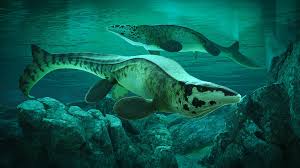
Scientists identified Tylosaurus rex as a distinct species of giant marine reptile after examining previously discovered fossils.
- Tylosaurus rex was a giant mosasaur, a group of marine reptiles that lived during the age of dinosaurs.
- It was not a dinosaur, but a sea-going reptile related to land-living lizards, with modern monitor lizards among its closest living relatives.
- Tylosaurus rex lived around 80 million years ago during the Cretaceous Period, when a large inland sea called the Western Interior Seaway divided North America into eastern and western landmasses.
- The largest known specimen, nicknamed Bunker, is about 13.2 metres long, making it larger than the famous Tyrannosaurus rex specimen Sue, which is about 12.2 metres long.
- Tylosaurus rex had a streamlined body, elongated snout, large teeth with fine serrations for cutting flesh, four paddle-like flippers and a powerful tail.
- Its heavy jaw and neck musculature, along with other anatomical features, suggests that Tylosaurus rex could subdue large prey and functioned as an apex marine predator.
- Mosasaurs were globally distributed marine reptiles that evolved from land-living lizards and became apex predators during the final phase of the dinosaur age.
- The name Tylosaurus rex means “king of the tylosaurs” and was chosen as a nod to Tyrannosaurus rex. However, the two species were not contemporaries.
Right to Be Forgotten:

The Delhi High Court has recognized the ‘Right to Be Forgotten’ (RTBF) as an intrinsic component of the Right to Privacy under Article 21 of the Constitution.
- Right to be Forgotten (RTBF) allows individuals to seek removal of personal information from digital platforms when it becomes outdated, irrelevant, or infringes upon privacy.
- The right was recognized by the Court of Justice of the European Union (CJEU) in the 2014 Google Spain case, which held that search engines must remove information that is no longer relevant or excessive upon request.
- The court ruled that the RTBF empowers citizens to seek the removal of personal data from the public digital domain when its continuous availability no longer serves a legitimate public interest.
- The court explicitly observed that even in the absence of a comprehensive statutory framework in India explicitly governing the RTBF, constitutional courts have the power to recognize and enforce this right.
- The court ordered authorities, search engine operators (like Google), and legal databases to mask personal identifiers and disable “name-based search functionality” for specified cases, ruling that these de-indexing directions will operate globally.
- While acknowledging that the principle of open justice demands court proceedings stay accessible, it does not mandate that a private citizen’s name must act as a permanent, searchable key via commercial search engines.
- Open justice ensures transparency, not the perpetual amplification of an individual’s personal or legal struggles.
- Individuals who are acquitted, discharged, or whose cases are quashed or settled have the right to have these outcomes accurately reflected online.
- The Court said personal identifiers may be masked in publicly accessible judgments, but the legal reasoning, findings and conclusions must remain intact, with unredacted records preserved for legitimate legal purposes.
Khet Bachao Abhiyan:

The Union Ministry of Agriculture and Farmers Welfare will conduct the month-long ‘Khet Bachao Abhiyan’ from 1–30 June 2026 across the country.
- Khet Bachao Abhiyan is a nationwide agricultural awareness and outreach campaign led by the Ministry of Agriculture and Farmers Welfare to promote sustainable farming practices, improve soil health, and strengthen farm-level decision-making.
- Aim is to promote balanced and judicious use of fertilizers based on soil health and scientific recommendations.
- Provide weather-based, region-specific farm advisories while linking farmers to government schemes and agricultural support
- Key Features:
- Balanced Fertilizer Use: Encourages fertilizer application based on soil testing, Integrated Nutrient Management (INM), and greater use of organic, bio-, and green manure inputs.
- Climate-Smart Farm Advisories: Farmers receive practical guidance on crop choices, diversification, water-scarcity management, and weather-related risks.
- Massive Institutional Participation: Implemented jointly by Panchayats, Krishi Vigyan Kendras (KVKs), ICAR institutes, State Governments, and Agriculture Departments.
- Panchayat-Centric Approach: Focuses on village-level implementation with active participation of local institutions and community leaders.
- Scheme Convergence: Integrates benefits of PM-KISAN, Kisan Credit Card, Pulses-Oilseeds Mission, Oil Palm Mission, Cotton Mission, mechanization support, and water conservation initiatives.
Coal Gasification: In News
Union Coal and Mines Minister announced a ₹37,500-crore incentive package during a roadshow to promote surface coal gasification.
- Coal gasification is a chemical process that breaks down and converts coal or lignite into synthetic gas, commonly known as syngas.
- Instead of burning the solid coal directly (which produces heavy smoke and ash), gasification splits its elemental bonds under high temperature and pressure, transforming the fuel into a clean, gaseous mixture composed primarily of carbon monoxide (CO), hydrogen (H2), and carbon dioxide (CO2).
- Raw coal is pulverized and fed into a specialized gasification reactor. It is mixed with controlled streams of oxygen (or air) and steam under intense heat (typically ranging from 800OC to over 1400OC).
- Because the oxygen volume is strictly controlled, the coal does not catch fire or combust. Instead, the organic compounds undergo thermal cracking and partial oxidation, producing crude syngas.
- Indian coal features an exceptionally high ash content (often exceeding 40%) and varying calorific values. To counter this, India utilizes Pressurized Fluidized-Bed Gasification (PFBG).
- In this system, upward-blowing gas streams physically lift and suspend the heavy coal particles, creating a boiling fluid-like state.
- This allows the heat to gasify the carbon uniformly while cleanly extracting the heavy mineral ash from the bottom without melting it into slag.
- The crude syngas is cleaned to remove impurities like sulfur and tar. The refined hydrogen and carbon monoxide are then chemically recombined using catalysts to produce liquid fuels, fertilizers, or clean energy.
India–Nepal Border Dispute:
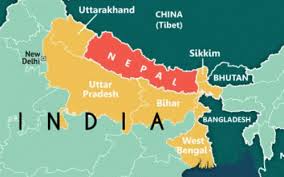
Nepal Prime Minister Balen Shah triggered a massive domestic political storm, by claiming that Nepal has also encroached on Indian territory, challenging Kathmandu’s traditional narrative.
- The India-Nepal border dispute is a long-standing territorial disagreement centered primarily around three strategic zones along their 1,850 km shared open border.
- The core structural friction involves the Kalapani-Limpiyadhura-Lipulekh tri-junction in the western sector and Susta in the eastern riverine sector.
- The open international boundary stretches across five Indian states, making its precise demarcation a vital matter of subcontinental security:
- Uttarakhand (shares the highly contested Western/Kalapani sector)
- Uttar Pradesh
- Bihar (shares the riverine Susta sector)
- West Bengal
- Sikkim
Mettur Dam:
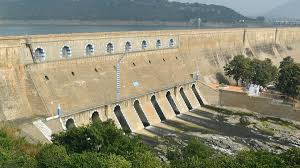
The probability of the Mettur dam getting opened on the scheduled date appears to be remote, in view of the poor storage and the forecast of a poor southwest monsoon (June-September) this year.
- Mettur Dam is located at Mettur, Salem District, in Tamil Nadu.
- It is one of the largest dams in India and the largest in Tamil Nadu.
- It is constructed in a gorge, where the Kaveri River enters the plains.
- Built in 1934, it took 9 years to complete. The entire work was supervised by the then Governor of Madras, Sir George Stanley.
- It was constructed for the main purpose of capturing Kaveri waters for irrigation, drinking water supply, and power generation.
- It is a masonry gravity dam.
- The reservoir formed by the dam is known as the Stanley Reservoir. It has the contribution to produce 240 MW of hydroelectricity.
- There is a park adjoining the dam on the opposite side with lawns and fountains and also has the Muniappan/Aiyanar statue in the vicinity.
- The dam receives inflows from its own catchment area, Kabini Dam, and Krishna Raja Sagara Dams located in Karnataka.
- It provides irrigation facilities to parts of Salem, the length of Erode, Namakkal, Karur, Tiruchirappali, and Thanjavur districts for 271,000 acres of farmland.
Giant Malabar Squirrel:
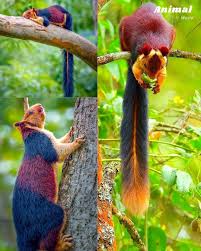
A rare Giant Malabar Squirrel has been recently spotted in the Devpur forest area of Chhattisgarh’s Barnawapara forest.
- The Malabar Giant Squirrel, also known as the Indian Giant Squirrel, is a large multicoloured tree squirrel species endemic to India.
- It is one of the largest squirrels in the world.
- Scientific Name: Ratufa indica.
- It is found primarily in the Western Ghats, Eastern Ghats, and Satpura Range.
- It is found in areas with elevation ranging from 180 to 2,300 metres in tropical deciduous, semi-deciduous, and wet evergreen forests and
- It is arboreal and spends most of its time in the upper canopy, leaping from tree to tree with incredible agility, jumping up to 6 metre length.
- It makes its shelter within holes in trees.
- It is Maharashtra’s state animal and locally known as Shekru.
- They are typically solitary animals, being seen only rarely in pairs during the breeding season.
- Instead of running, it frequently freezes or flattens itself against the tree stem when threatened.
- Conservation Status:
- IUCN Red List: Least Concern
Doctrine of Promissory Estoppel:

The Supreme Court recently observed that the doctrine of promissory estoppel cannot be invoked to claim a benefit under a government policy which was never aimed to benefit a specific class of industrial unit.
- It is a legal doctrine that states that if someone reasonably relies on a promise and acts (or fails to act) in a way that causes them some harm because of that promise, the promise can be enforced.
- Promissory estoppel prevents the promisor from arguing against the enforcement of a promise.
- The doctrine applies when the promisor has made a promise to the promisee.
- The promisee must have relied on the promise and suffered a detriment due to the non-performance of the promise.
- The doctrine prevents the promisor or enterprise from going back on its word or promise.
- The doctrine enables the injured party or the promisee to recover on a promise.
- The doctrine seeks to protect the rights of a promisee or aggrieved party against the promisor.
- Thus, Promissory estoppel requirements include a clear promise (whether oral or in writing), reliance on that promise by the promisee, a detriment suffered, and a need to avoid injustice.
- The doctrine varies from country to country. Cases of promissory estoppel can result in either reliance or expectation damages, depending on the jurisdiction and circumstances.
- In a 1981 decision in Chhaganlal Keshavalal Mehta v. Patel Narandas Haribhai, the SC lists a checklist for when the doctrine can be applied.
- First, there must be a clear and unambiguous promise.
- Second, the plaintiff must have acted relying reasonably on that promise.
- Third, the plaintiff must have suffered a loss.
Design Linked Incentive Scheme: In News

The Union Minister said that India’s design-linked incentive (DLI) scheme is showing good results.
- Design Linked Incentive Scheme is a key instrument in advancing India’s ambition to develop a strong fabless capability.
- The scheme aims to reduce import dependence, strengthen supply chain resilience, and enhance domestic value addition.
- Start-ups and MSMEs are eligible for financial incentives and design infrastructure support for semiconductor product design & deployment.
- Other domestic companies are eligible for financial incentives for deploying semiconductor designs.
- Semiconductor design across the full lifecycle—from design and development to deployment—covering Integrated Circuits (ICs), chipsets, Systems-on-Chip (SoCs), systems and IP cores.
- It is implemented by the Ministry of Electronics and Information Technology (MeitY) under the Semicon India Programme.
- Nodal Agency: C-DAC (Centre for Development of Advanced Computing).
- Financial Incentives:
- Product Design Linked Incentive:
- Reimbursement of up to 50% of eligible expenditure.
- The reimbursement is capped at ₹15 crore per application.
- The support is available to entities involved in semiconductor design for: Integrated Circuits (ICs) Chipsets Systems on Chips (SoCs) Systems & IP Cores Semiconductor-linked designs.
- Deployment Linked Incentive:
- Incentives of 6% to 4% of net sales turnover are provided for five years.
- The incentive is capped at ₹30 crore per application.
- The minimum cumulative net sales required over Years 1–5 is 1 crore for startups/ ₹ MSMEs and 5 crore for other domestic companies.
Beaufort Castle:
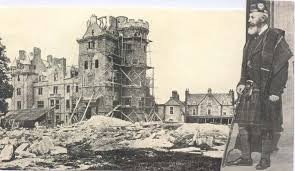
Beaufort Castle — known locally as Qalaat al-Shaqif or the “Castle of the High Rock”, is a medieval fortress situated atop a commanding hill near the city of Nabatieh in southern Lebanon.
- Originally built by Crusaders in the 12th century, the castle has changed hands multiple times throughout history, passing through Crusader, Muslim, Mamluk, and Ottoman control.
- It is one of the best-preserved examples of medieval castles in the Near East.
- Its impressive architecture, with a high castle and a low castle, demonstrates its defensive role in the Middle Ages.
- It overlooks vast stretches of southern Lebanon, the Litani River valley, and parts of northern Israel, making it a position of considerable strategic value.
- The castle has also been at the centre of fighting in the past.
- In 1982, amid the Lebanon War, Israel captured Beaufort Castle from the Palestine Liberation Organization (PLO) and held it until it withdrew from Lebanon in 2000.
Indopottia Himalayensis : New Species Of Moss

Scientists from the Botanical Survey of India have discovered a new species of moss and named it as Indopottia himalayensis.
- It is a new moss species discovered from high-altitude forests of the Western Himalayas in Uttarakhand state.
- It is only the third species of its kind ever identified globally.
- Other two species reside far away in the Western Ghats of southern India and the mountains of Thailand.
- The research team chose the name Indopottia himalayensis as a tribute to the magnificent Himalayan mountain range.
- It is entirely terrestrial, thriving directly on soil-covered rocks.
- This moss produces a single, upright, cylindrical spore-capsule.
- This capsule features a distinctive lid that bends sideways when dry.
- Its leaves lack the specific patch of transparent, bulging cells found in its closest relatives.
- Moss is a small nonvascular spore-bearing land plant belongs to the taxonomic division Bryophyta.
- It is among the earliest land plants and has colonised some of the harshest environments on the planet, including Antarctica, volcanic fields, and deserts.
- There are three main types: peat moss, granite moss and true moss.
- Mosses are distributed throughout the world except in salt water.
- It is the small plant commonly found in damp, shady spots is already known for its resilience on Earth.
James Webb Space Telescope: In News

The NASA James Webb Space Telescope (JWST) captured weather of exoplanet which is nearly 700 light-years away.
- James Webb Space Telescope was launched in December 2021.
- It is the largest and most powerful space observatory built through collaboration between NASA, European Space Agency (ESA), and Canadian Space Agency (CSA).
- JWST orbits the L2 Lagrange Point, about 1.5 million km beyond Earth, enabling a stable position for deep-space observation.
- The telescope operates primarily in the infrared spectrum and is equipped with components such as:
- Optical Telescope Element (OTE): It collects light from distant objects.
- Integrated Science Instrument Module (ISIM): It houses all cameras and instruments.
- Sunshield: It protects sensitive instruments from solar radiation.
- Spacecraft Bus: It provides necessary operational support.
- Objectives of James Webb Space Telescope:
- To look for galaxies that formed just after the Big Bang.
- To determine the evolution of galaxies from their creation to the present.
- To examine the stages of star creation till the formation of planetary systems.
- To investigate the potential for life in planetary systems by measuring their physical and chemical features.
Ahilyabai Holkar : Tribute

The Prime Minister of India paid tributes to Lokmata Ahilyabai Holkar on her birth anniversary.
- Maharani Ahilyabai Holkar (31 May 1725 – 13 August 1795) was a ruler of the Malwa territory, a part of the Maratha Confederacy, from 1767 to 1795. She is known as Punyashlok(“One as Pure as the Sacred Chants”).
- John Keay, the British historian, gave the queen the title of ‘The Philosopher Queen’.
- She was born on May 31, 1725, in the village of Chondi in Jamkhed, Ahmednagar(Maharashtra), and her father Mankoji Rao Shinde was the village head.
- She got married to Khanderao Holkar (son of Malhar Rao Holkar) in 1733.
- Ahilyabai’s husband Khanderao Holkar was killed in the battle of Kumbher in 1754.
- Her father-in-law, Malhar Rao passed away in 1766, and in the following year, she lost her son, Male Rao.
- She ascended the throne and became the ruler of Indore on December 11, 1767.
- She had appointed Tukoji Rao Holkar as the commander of her army.
- She made Maheshwar in Madhya Pradesh as the capital of the Holkar dynasty.
- She was instrumental in rebuilding major temples, notably the Kashi Vishwanath temple in 1780, and supported infrastructure such as rest houses and public ghats at various pilgrimage sites.
- She patronised stalwarts such as Marathi poet Moropant, Shahir Ananta Gandhi, and Sanskrit scholar Khushali Ram.
- She established a textile industry in Maheshwar, which today is very famous for its Maheshwari sarees.
- Understanding the importance of education, she established many gurukuls and schools.
- In a revolutionary move for her time, she formed a women’s army and trained them in warfare, self-defense, and administrative security.



